Thyrosan
Poland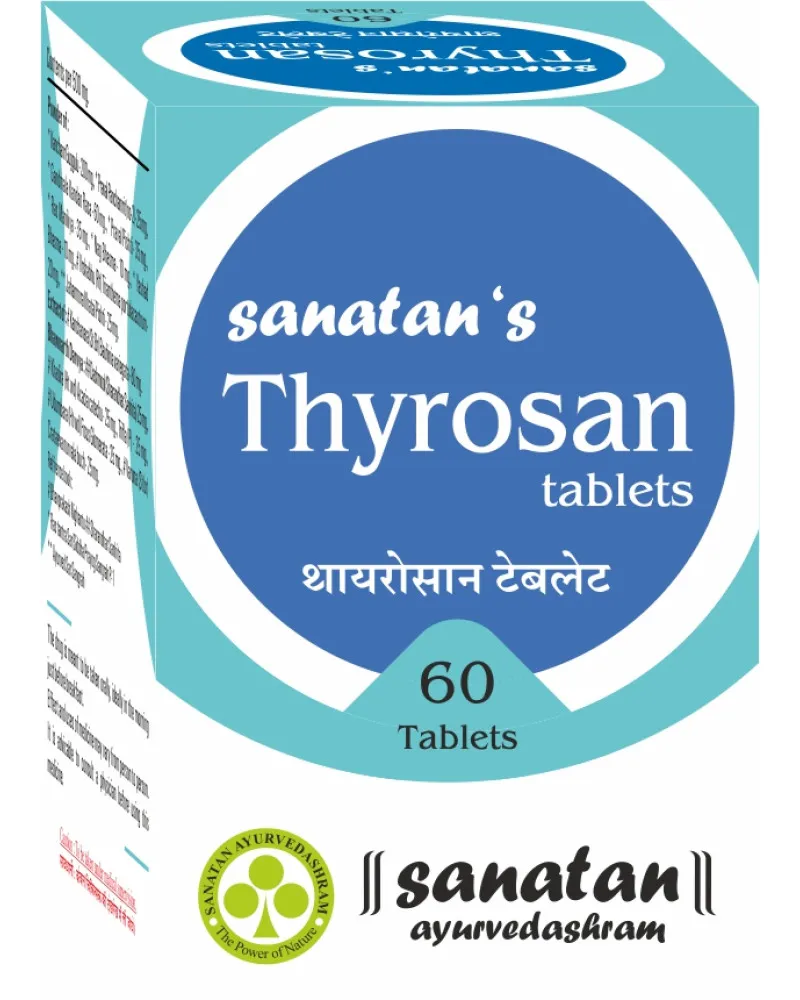
Table of Contents
Patient Information Leaflet
Thyrosan, 50 mg, tablets
Propylthiouracilum
Please read this leaflet carefully before taking this medicine, as it contains important information for you.
- Keep this leaflet, as you may need to read it again.
- If you have any further questions, please ask your doctor or pharmacist.
- This medicine has been prescribed for a specific individual. Do not pass it on to others. It may harm other people, even if their symptoms are the same.
- If you experience any side effects, including any not listed in this leaflet, tell your doctor or pharmacist. See section 4.
Table of Contents
- What Thyrosan is and what it is used for
- Important information before taking Thyrosan
- How to take Thyrosan
- Possible side effects
- How to store Thyrosan
- Contents of the pack and other information
1. What Thyrosan is and what it is used for
Thyrosan contains an active substance called propylthiouracil, which belongs to a group of medicines known as antithyroid agents. Antithyroid medicines inhibit the production of thyroid hormones:
- triiodothyronine and thyroxine – in the thyroid gland (a gland located below the larynx, where hormones regulating growth and metabolism are produced).
Thyrosan is used:
- in the treatment of hyperthyroidism, including Graves-Basedow disease and autonomous toxic adenoma of the thyroid gland;
- to prepare for thyroidectomy or radioactive iodine therapy in cases of hyperthyroidism;
- in the treatment of thyroid storm (a life-threatening condition).
2. Important information before taking Thyrosan
When not to take Thyrosan
- if you are allergic to the active substance propylthiouracil, other thiouracil derivatives, or any of the other ingredients of this medicine (listed in section 6);
- if you have liver failure;
- if you have hyperthyroidism with substernal goitre, especially when associated with tracheal compression;
- if you have haematological disorders (blood test abnormalities such as agranulocytosis, anaemia, leukopenia – deficiency of white blood cells).
Warnings and precautions
Before starting Thyrosan, discuss this with your doctor.
Exercise particular caution:
- if you have impaired liver function;
- if you have impaired kidney function;
- if you are pregnant or breastfeeding;
- if you are taking anticoagulant medicines;
- if you are scheduled for surgery.
Seek immediate medical attention:
- if you experience malaise, fever, or sore throat, as treatment must be discontinued immediately. A complete blood count must be performed urgently, as these symptoms may indicate agranulocytosis – a life-threatening severe deficiency of white blood cells.
- if symptoms of liver damage occur, such as nausea, vomiting, diarrhoea, jaundice (yellowing of the skin or eyes), dark urine, pale stools, tendency to bleed, itching, or chills. Severe liver injury, including cases requiring liver transplantation and resulting in death, has been reported in patients receiving propylthiouracil, both in adults and children.
During treatment with Thyrosan, your doctor will recommend regular monitoring of thyroid function for possible dose adjustments, as well as periodic blood tests.
Thyrosan and other medicines
Tell your doctor or pharmacist about all medicines you are currently taking or have recently taken, as well as any medicines you plan to take.
Concomitant administration of thyroxine reduces thyroid uptake of propylthiouracil, thereby weakening its effect.
Administration of iodine or prior use of iodine-containing agents (e.g. contrast media used in radiological diagnostics) may reduce the effectiveness of propylthiouracil and delay the achievement of normal thyroid function.
Medicines that suppress bone marrow function (affecting the immune system), hepatotoxic drugs, or those containing lithium may potentiate the adverse effects of Thyrosan.
Thyrosan may interfere with the action of coumarin-derived anticoagulants (e.g. warfarin), β-adrenergic receptor blockers (e.g. propranolol), and theophylline (a medicine used in asthma). Dose adjustments may be necessary.
Thyrosan with food and drink
Take the medicine during a meal.
Pregnancy and breastfeeding
Pregnancy
Some studies suggest that using Thyrosan during pregnancy may slightly increase the risk of congenital malformations in children compared to children born to women without hyperthyroidism, although other studies have not shown an increased risk. The risk is not greater than that observed in children born to women with untreated overt hyperthyroidism during pregnancy.
If you are pregnant, suspect you may be pregnant, or are planning to become pregnant, you should consult your doctor immediately. Treatment with Thyrosan during pregnancy may be necessary if the expected benefits outweigh the potential risks to you and your unborn child.
If your doctor decides that Thyrosan is necessary during pregnancy, you must strictly follow medical advice. Your doctor will prescribe the lowest effective dose possible.
Breastfeeding
The medicine passes into human milk in small amounts.
If you are breastfeeding, you should consult your doctor immediately.
If your doctor decides to use Thyrosan during breastfeeding, the newborn must be monitored due to the risk of hypothyroidism in infants.
Driving and operating machinery
Thyrosan has no effect or a negligible effect on the ability to drive and operate machinery.
3. How to use Thyrosan
This medicine should always be taken exactly as prescribed by the doctor. In case of any doubts, consult your doctor or pharmacist.
The doctor will determine the initial dose and the number of tablets to be taken each day. Depending on the individual needs of the patient, the doctor may reduce or increase the dose.
Tablets may be divided.
Adults
The usual initial dose for adults is 2 tablets every 8 hours (6 tablets per day).
In patients with severe hyperthyroidism, the doctor may increase the dose. Typically, up to 8 tablets per day may be prescribed, divided into doses every 8 hours.
After several weeks of treatment with Thyrosan, the doctor may recommend taking fewer tablets per day (so-called maintenance dose), which may continue for up to 1–2 years.
The usual maintenance dose for adults is 2 to 3 tablets per day, taken in divided doses.
Use in children
Children above 10 years of age
The usual initial dose is 3 to 6 tablets per day, divided into three doses.
Children aged 6–10 years
The usual initial dose is 1 to 3 tablets per day, divided into three doses.
Children under 6 years of age
Thyrosan should not be used in children under 6 years of age due to lack of data on safety and efficacy.
The usual maintenance dose in children is 1–2 tablets per day, administered in one or two divided doses.
Patients with renal function impairment
The dose of Thyrosan should be reduced. The doctor will recommend an appropriate dose depending on the severity of renal impairment.
Thyroid storm
In adults with thyroid storm, the doctor will individually determine the dose until the acute condition is controlled.
Taking more than the recommended dose of Thyrosan
If a patient has taken more than the prescribed dose of Thyrosan, symptoms such as nausea, vomiting, gastrointestinal disturbances, headache, fever, joint pain, itching, and swelling may occur.
Seek immediate medical attention or go to the nearest hospital. Bring the Thyrosan packaging with you.
Missed dose of Thyrosan
If a patient forgets to take one dose of Thyrosan, they should take it as soon as possible. However, if it is almost time for the next dose, the patient should wait and take only the next dose at the scheduled time.
Do not take a double dose to make up for a missed dose.
Stopping treatment with Thyrosan
The medicine should be taken for as long as prescribed by the doctor. Do not discontinue treatment without consulting your doctor first.
If you have any further questions about the use of this medicine, consult your doctor or pharmacist.
4. Possible adverse reactions
Like all medicines, this medicine can cause adverse reactions, although not everyone will experience them.
Not common (may affect up to 1 in 100 people):
Pain and dizziness, fever, sore throat, tingling sensations in the hands and feet, rash, itching, urticaria, skin inflammation, and gastrointestinal disturbances such as nausea, vomiting, loss of appetite, and diarrhoea. Disturbances of the hypothalamic-pituitary-thyroid axis (including increased TSH secretion), decreased numbers of certain types of blood cells, which may lead to worsening of general well-being (weakness, fatigue).
Rare (may affect up to 1 in 1,000 people):
Visual and hearing disturbances, liver damage, yellowing of the skin and eyes (jaundice). Liver function abnormalities may present as increased liver enzyme activity and elevated serum bilirubin levels.
Very rare (may affect fewer than 1 in 10,000 people):
Joint pain, arthritis, hair loss, and precocious puberty. Symptoms of systemic lupus erythematosus (e.g. fever, muscle pain, skin lesions).
Frequency not known (frequency cannot be estimated from available data):
Hepatitis, liver failure.
Some adverse reactions may only be detectable in blood test results. These include a reduced number of certain types of blood cells, which may lead to worsening of general well-being (weakness, fatigue).
Agranulocytosis, a life-threatening severe deficiency of white blood cells, may occur during the initial phase of treatment (1–3 months), but also later. It may appear suddenly, without warning symptoms. Periodic monitoring of blood counts does not always prevent agranulocytosis; therefore, patients should immediately report any adverse symptoms to their doctor, especially sore throat or fever.
Vasculitis associated with the presence in body fluids of a specific type of protein produced by the immune system, known as anti-neutrophil cytoplasmic antibodies (ANCA), has been reported. ANCA-associated vasculitis may manifest as kidney diseases, sometimes leading to acute renal failure, as well as lung, skin, and blood vessel lesions.
Reporting of adverse reactions
If any adverse reactions occur, including any not listed in this leaflet, inform your doctor or pharmacist. Adverse reactions can be reported directly to the Department of Monitoring Adverse Drug Reactions at the Office for Registration of Medicinal Products, Medical Devices and Biocidal Products
Al. Jerozolimskie 181C
02-222 Warsaw
Phone: +48 22 49 21 301
Fax: +48 22 49 21 309
Website: https://smz.ezdrowie.gov.pl
Reporting adverse reactions helps to provide more information on the safety of this medicine.
Adverse reactions can also be reported to the marketing authorization holder.
5. How to store Thyrosan
Keep this medicine out of the sight and reach of children.
No special storage instructions apply.
Do not use this medicine after the expiry date stated on the packaging. The expiry date refers to the last day of the stated month.
Medicines must not be disposed of via wastewater or household waste. Ask your pharmacist how to dispose of medicines no longer required. This will help protect the environment.
6. Contents of the packaging and other information
What Thyrosan contains:
- The active substance is propylthiouracil. One tablet contains 50 mg of propylthiouracil.
- The other ingredients are: microcrystalline cellulose with silicon dioxide, sodium carboxymethyl starch, magnesium stearate.
What Thyrosan looks like and contents of the pack
Thyrosan is a round, biconvex tablet with a score line on both sides.
Pack size: 20 or 90 tablets.
Marketing Authorisation Holder and Manufacturer
Marketing Authorisation Holder
SUN-FARM Sp. z o.o.
ul. Dolna 21
05-092 Łomianki
Manufacturer
SUN–FARM Sp. z o.o.
ul. Dolna 21
05-092 Łomianki
mibe GmbH Arzneimittel
Münchener Straße 15
06796 Brehna
Germany