Theophylline tramco
Poland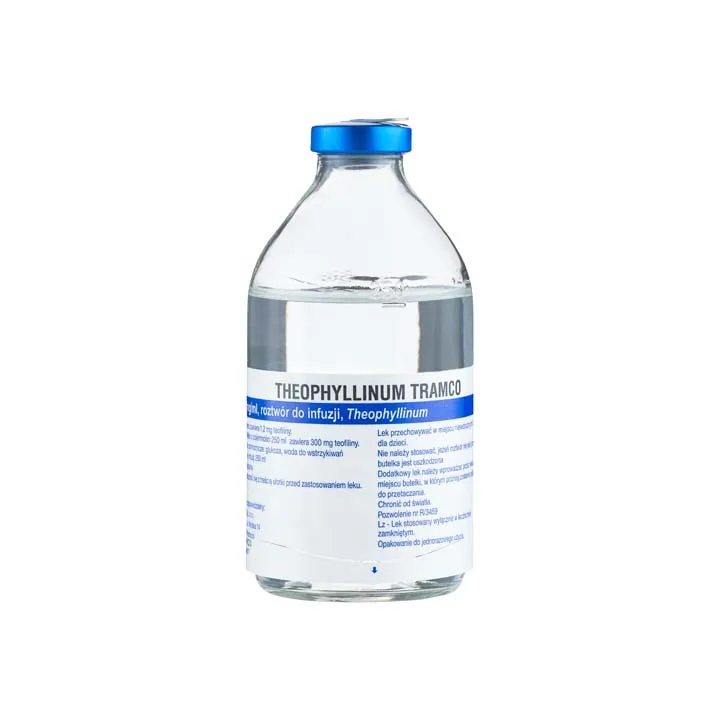
Table of Contents
- Package leaflet: Information for the user
- 1. What Theophyllinum Tramco is and what it is used for
- 2. Important information before using Theophyllinum Tramco
- 3. How to use Theophyllinum Tramco
- 4. Possible adverse reactions
- 5. How to store Theophyllinum Tramco
- 6. Contents of the packaging and other information
Package leaflet: Information for the user
Theophyllinum Tramco, 1.2 mg/ml, solution for infusion
Theophyllinum
Please read all of this leaflet carefully before using this medicine, as it contains
important information for the patient.
- Keep this leaflet, as you may need to read it again.
- If you have any further questions, please ask your doctor or pharmacist.
- This medicine has been prescribed for a specific individual. Do not pass it on to others. It may harm other people, even if their symptoms are the same.
- If you experience any adverse reactions, including any not listed in this leaflet, tell your doctor or pharmacist. See section 4.
Leaflet contents:
- What Theophyllinum Tramco is and what it is used for
- Important information before using Theophyllinum Tramco
- How to use Theophyllinum Tramco
- Possible side effects
- How to store Theophyllinum Tramco
- Contents of the pack and other information
1. What Theophyllinum Tramco is and what it is used for
Theophyllinum Tramco belongs to a group of medicines called xanthines, which relax and widen the airways in the lungs and make breathing easier.
Theophyllinum Tramco is used for symptomatic treatment of breathing problems caused by diseases such as:
- Breathing difficulties, shortness of breath, chest tightness (acute asthma attack),
- Wheezing or coughing (bronchospasm),
- Asthma,
- Chronic bronchitis,
- Lung disease causing breathing difficulties (emphysema),
- Acute asthma attack (acute asthmatic state).
2. Important information before using Theophyllinum Tramco
When not to use Theophyllinum Tramco:
- if the patient is allergic to theophylline, substances called "xanthines" (similar to theophylline), or any of the other ingredients of this medicine (listed in section 6),
- if the patient has chest pain or has recently had a heart attack (myocardial infarction),
- if the patient has chronic liver problems (liver cirrhosis),
- in case of fluid accumulation in the lungs (acute pulmonary edema),
- in children under 6 months of age,
- if the patient has liver disease (acute hepatitis or severe liver failure),
- if the patient currently has or has had seizures (epileptic fits) in the past.
Warnings and precautions
Before starting treatment with Theophyllinum Tramco, discuss this with your doctor or
pharmacist:
- if the patient has high blood pressure (hypertension),
- if the patient has irregular heartbeat (arrhythmia),
- if the patient's heart and lungs are not functioning properly (cardiorespiratory disease) and/or has other cardiovascular diseases,
- if the patient has severe lung disease,
- if the patient is over 55 years of age (especially men),
- in case of hyperthyroidism,
- if the patient has peptic ulcer disease (stomach or duodenal ulcer),
- if the patient has a blood disorder (porphyria),
- if the patient has diabetes,
- if the patient has glaucoma,
- if the patient has fever (high body temperature),
- if the patient has a viral infection,
- if the patient is undergoing any vaccinations,
- if the patient has blood infection (sepsis),
- if the patient is receiving other treatments or taking other medicines simultaneously.
The doctor will monitor the patient during infusion. Theophylline blood levels will be monitored.
Children
This medicine must not be given to children under 6 months of age.
Caution is advised when using in infants under one year of age.
Use of Theophyllinum Tramco in patients with renal and/or hepatic impairment
Caution is advised when using in patients with liver and/or kidney dysfunction.
Use of Theophyllinum Tramco in elderly patients
Caution is advised when using in elderly patients.
Theophyllinum Tramco and other medicines
Tell your doctor or pharmacist about all medicines the patient is currently taking or has recently taken, including medicines obtained without a prescription.
The effect of any of these medicines or of Theophyllinum Tramco may be altered, especially if the patient is taking:
- ephedrine or other bronchodilators, halothane, digitalis glycosides, reserpine – these medicines may increase the toxicity of theophylline;
- macrolide antibiotics, cimetidine, furosemide, enoxacin, ciprofloxacin, clindamycin, lincomycin, fluconazole, calcium channel blockers (e.g. verapamil, diltiazem), allopurinol, propranolol, fluvoxamine, mexiletine, ticlopidine, viloxazine, methotrexate, interferon, oral contraceptives, influenza vaccines – these medicines increase theophylline blood levels;
- barbiturates, carbamazepine, primidone, rifampicin, sulfinpyrazone, St. John's wort, tobacco smoking – these decrease theophylline blood levels;
- the effects of other xanthines, phenytoin, non-depolarizing muscle relaxants, lithium salts, and cortisol may be reduced or increased when administered concurrently with theophylline.
Theophyllinum Tramco with food and drink
It is recommended not to administer this medicine with coffee, tea, chocolate, or paracetamol, as they may cause false results in theophylline blood level testing.
Pregnancy, breastfeeding, and fertility
Theophylline may be used during pregnancy only if, in the opinion of the doctor, the benefit to the mother outweighs the potential risk to the fetus.
Theophylline should not be used during the third trimester of pregnancy, as administration of theophylline near the end of pregnancy may cause neonatal hyperexcitability and tachycardia.
This medicine should not be used during breastfeeding, as theophylline passes into breast milk and may cause toxic effects in breastfed infants.
If the patient is pregnant or breastfeeding, suspects she may be pregnant, or plans to become pregnant, she should consult her doctor before using this medicine.
Driving and operating machinery
Theophylline is not expected to affect the ability to drive or operate machinery.
Theophyllinum Tramco contains glucose
This medicine contains glucose. If the patient has been diagnosed with intolerance to certain sugars, the patient should consult a doctor or pharmacist before taking this medicine.
250 ml of solution contains 13.5 mg of glucose. This should be taken into account in diabetic patients.
3. How to use Theophyllinum Tramco
Theophyllinum Tramco will be administered by a doctor or nurse.
The doctor will decide how much medicine to give and when to administer it. This depends on the patient's age, body weight, clinical condition, and reason for treatment. The amount of medicine given may also depend on other therapies being used at the same time.
Theophylline will be given as an intermittent or continuous, slow intravenous infusion.
The doctor will monitor theophylline blood levels.
After the initial dose is given, a maintenance dose will be administered based on the current theophylline blood concentration.
The Theophyllinum Tramco medicine will be administered to patients using sterile equipment (so-called administration set) and applying aseptic techniques.
If the patient notices any changes in well-being after receiving or during administration of the medicine, they should immediately inform the doctor or nurse. The doctor may stop the infusion and initiate appropriate treatment.
If another medicine is added to the Theophyllinum Tramco solution being administered, symptoms occurring during the infusion may be related to the added medicine.
4. Possible adverse reactions
Like all medicines, this medicine can cause adverse reactions, although not everyone will experience them.
The following adverse reactions have been reported for other medicines with a similar composition.
You should immediately inform the doctor or nurse if any of the following adverse reactions occur in the patient during or after completion of administration of the medicine:
- rapid heartbeat (tachycardia);
- sensation of rapid or forceful heartbeat (palpitations);
- irregular heartbeat (arrhythmias);
- chest pain (angina);
- excessive stimulation;
- anxiety;
- difficulty sleeping (insomnia);
- headaches;
- dizziness;
- tremor;
- nightmares;
- seizures;
- feeling of dizziness;
- disorientation;
- low blood pressure (hypotension);
- nausea;
- vomiting;
- gastroesophageal reflux;
- abdominal pain;
- diarrhoea;
- increased gastric acidity and ulceration;
- high levels of protein in the urine (albuminuria);
- increased urine output (diuresis);
- presence of blood in the urine (haematuria);
- fever;
- rapid breathing.
The doctor may decide to stop the infusion and initiate appropriate treatment.
Adverse effects of theophylline are most commonly due to overdose.
Other adverse reactions may occur in some individuals during treatment with Theophyllinum Tramco.
If any other adverse symptoms not listed in this leaflet occur, inform the doctor.
Reporting of adverse reactions
If any adverse reactions occur, including any adverse reactions not listed in this leaflet, inform a doctor or pharmacist. Adverse reactions can be reported directly to the Department of Monitoring of Adverse Drug Reactions at the Office for Registration of Medicinal Products, Medical Devices and Biocidal Products,
Al. Jerozolimskie 181 C
02-222 Warsaw
Phone: +48 22 49 21 301
Fax: +48 22 49 21 309
Website: https://smz.ezdrowie.gov.pl
Adverse reactions can also be reported to the marketing authorization holder.
Reporting adverse reactions enables better assessment of the benefit-risk balance of the medicine and helps to provide more information on the safety of the medicine.
5. How to store Theophyllinum Tramco
Keep the medicine out of the sight and reach of children.
Protect from light.
Do not use this medicine after the expiry date stated on the bottle and the carton after:
„EXP”. The expiry date refers to the last day of the stated month.
Do not store or reuse an opened container.
Do not use this medicine if the solution is not clear or the glass bottle is
damaged.
Medicines must not be disposed of via the sewage system or household waste. Ask your
pharmacist how to dispose of medicines no longer required. This will help protect
the environment.
6. Contents of the packaging and other information
What Theophyllinum Tramco contains
- The active substance is theophylline.
- The other components are: glucose and water for injections.
1 ml of solution contains 1.2 mg of theophylline.
250 ml of solution contains 300 mg of theophylline.
What Theophyllinum Tramco looks like and contents of the pack
This medicine is a clear, colourless infusion solution in a transparent glass bottle with a capacity of 250 ml, closed with a grey chlorobutyl rubber stopper and an aluminium cap.
Theophyllinum Tramco, 1.2 mg/ml, solution for infusion is available in cartons containing 20 glass bottles of 250 ml each.
Marketing Authorisation Holder
Tramco Sp. z o.o.
Wolskie, ul. Wolska 14
05-860 Płochocin
[Logo of the marketing authorisation holder]
Manufacturer:
Bieffe Medital S.p.A.
Via Nuova Provinciale
23034 Grosotto (So)
Italy
Information intended exclusively for medical professionals:
The total dose should be determined according to the following scheme:
Patients not currently receiving other theophylline preparations:
| Patient groups | Initial dose [mg/kg body weight/hour] | Dose for the first 12 hours [mg/kg body weight/hour] | Maintenance dose for treatment beyond 12 hours [mg/kg body weight/hour] |
| Children aged 6 months to 9 years Children aged 10 to 16 years and recently smoking adults Non-smoking adults without concomitant diseases Patients with congestive heart failure, liver insufficiency Other patients, including patients with right ventricular hypertrophy | 5 5 5 5 5 | 1.0 0.85 0.6 0.4 0.5 | 0.85 0.7 0.43 0.1 0.26 |
Method of administration and handling
Administer immediately after setting up the infusion set.
Additional medicinal products should be introduced through a puncture at the same location on the bottle where the infusion device will be placed.
Mix thoroughly.
Follow aseptic techniques.
Do not store solutions to which additional medicinal products have been added.
Parenteral medicinal products should be visually inspected for the presence of particulate matter or discoloration prior to administration.
Do not administer theophylline with infusion fluids containing ascorbic acid, chlorpromazine, codeine, corticotropin, adrenaline, hydralazine, insulin, methadone, methicillin, morphine, noradrenaline, oxytetracycline, papaverine, penicillin G, potassium, sodium phenobarbital, phenytoin, procaine, promazine, promethazine, tetracycline, vitamin B complex with ascorbic acid.