Tetraxim
Poland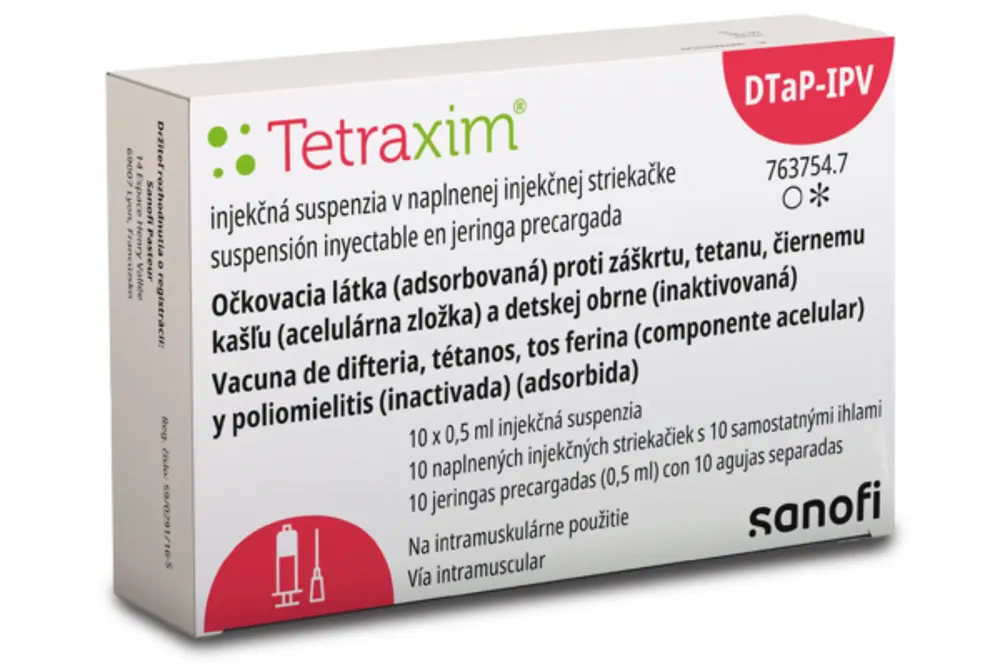
Table of Contents
Package leaflet: Information for the user
, suspension for injection in pre-filled syringe
Vaccine against diphtheria, tetanus, pertussis (acellular, component) and poliomyelitis
(inactivated), adsorbed
Please read all of this leaflet carefully before your child is vaccinated because it contains
important information for you.
- Keep this leaflet. You may need to read it again.
- If you have any further questions, ask your doctor, pharmacist or nurse.
- This vaccine has been prescribed for a specific child only. Do not pass it on to others.
- If you notice any side effects, including any not listed in this leaflet, tell your doctor, pharmacist or nurse. See section 4.
Contents of the leaflet
- What is and what it is used for
- Important information before use
- How to use
- Possible side effects
- How to store
- Contents of the package and other information
1. What is and what it is used for
(DTaP-IPV) is a vaccine used to protect against infectious diseases.
It helps protect your child against diphtheria, tetanus, pertussis and poliomyelitis.
This vaccine is used for primary vaccination in children from the age of 2 months onwards,
and as a booster vaccination in children who have previously received this or a similar vaccine.
After administration, the body's natural defence mechanisms will provide protection
against these diseases.
- Diphtheria is an infectious disease which usually first affects the throat. In the throat, the infection causes pain and swelling, which may lead to suffocation. The bacterium causing this disease also produces a toxin (poison) which may damage the heart, kidneys and nerves.
- Tetanus (often called lockjaw) is caused by the tetanus bacterium entering deep wounds. The bacterium produces a toxin (poison) which causes muscle spasms leading to inability to breathe and risk of suffocation.
- Pertussis (often called whooping cough) is a respiratory infection which may occur at any age, but most commonly affects infants and young children. The disease is characterised by increasingly severe coughing fits, which may last for several weeks. The cough may be accompanied by a "whooping" sound on inhalation.
- Poliomyelitis (often simply called polio) is caused by viruses which attack the nerves. The disease may lead to paralysis or muscle weakness, most commonly in the legs. Paralysis of muscles involved in breathing and swallowing may result in death.
Important
The vaccine helps prevent only those diseases caused by the
bacteria or viruses against which the vaccine is directed. Your child may still develop infectious diseases caused by other bacteria or viruses.
2. Important information before vaccination
To ensure the vaccine is suitable for the child, it is important to inform the doctor, pharmacist, or nurse if any of the following apply to the child.
When not to use the vaccine
- if the child is allergic to:
- the active substance of the vaccine or any of the other ingredients of the vaccine (listed in section 6);
- other vaccines containing any of the substances listed in section 6;
- any pertussis (whooping cough) vaccine;
- if the child has any active brain disease (progressive encephalopathy);
- if the child experienced a severe reaction involving the brain after receiving any pertussis vaccine.
Warnings and precautions
Before vaccination, inform the doctor or nurse:
- if the child has a fever or acute illness (e.g. fever, sore throat, cough, cold, or flu). Vaccination may need to be postponed until the child recovers.
- if any of the following symptoms occurred after previous administration of a pertussis vaccine:
- fever of 40°C or higher within 48 hours not caused by another identified condition;
- collapse or shock-like state with a hypotensive-hyporesponsive episode within 48 hours after vaccination;
- prolonged, inconsolable crying lasting 3 hours or more, occurring within 48 hours after vaccination;
- seizures with or without fever occurring within 3 days after vaccination.
- if the child is allergic (hypersensitive) to glutaraldehyde, neomycin, streptomycin, or polymyxin B. These substances are used in the manufacturing process and may be present in the vaccine in trace amounts.
- if the child has previously had febrile seizures unrelated to prior vaccination, it is especially important to monitor body temperature and administer antipyretic medications during the 48 hours following vaccination.
- if the child previously developed Guillain-Barré syndrome (temporary loss of movement and sensation) after a tetanus vaccine, or shoulder pain, weakness, and numbness (brachial neuritis) after a tetanus-containing vaccine. The doctor or nurse will decide whether to administer the vaccine.
- if the child has immunodeficiency or is undergoing immunosuppressive treatment, as the immune response to the vaccine may be weakened. In such cases, vaccination should be postponed until treatment is completed or recovery occurs. However, vaccination is recommended for children with chronic immunodeficiency (including HIV infection), even though the immune response may be limited.
- if the child has thrombocytopenia (low platelet count) or coagulation disorders (such as haemophilia), as bleeding may occur at the injection site.
Fainting may occur after, or even before, any needle injection. Therefore, inform the doctor or nurse if the child has previously fainted during injections.
Other medicines/vaccines
The vaccine may be administered simultaneously with the following vaccines:
- Act-HIB (Haemophilus influenzae type b conjugate vaccine),
- measles, mumps, rubella, varicella vaccines,
- hepatitis B vaccine, but at different injection sites.
If the child is to receive this vaccine at the same time as other vaccines not listed above, please consult the doctor or pharmacist for additional information.
Tell the doctor or pharmacist about all medicines currently or recently used by the child, as well as any medicines planned for future use.
Pregnancy and breastfeeding
Not applicable. The vaccine is intended for use in children only.
The vaccine contains phenylalanine, ethanol, and sodium
The vaccine contains 12.5 micrograms of phenylalanine in each 0.5 ml dose.
Phenylalanine may be harmful for patients with phenylketonuria, a rare genetic disorder in which phenylalanine accumulates in the body because the body cannot properly eliminate it.
The vaccine contains 2 mg of alcohol (ethanol) in each 0.5 ml dose. The small amount of alcohol in this vaccine will not cause noticeable effects.
The vaccine contains less than 1 mmol (23 mg) of sodium per dose; therefore, the vaccine is considered "sodium-free".
3. How to use
This vaccine should always be used as directed by a physician. If in doubt, consult a doctor.
Dosage:
Primary vaccination and booster dose:
Primary vaccination schedules include:
- two injections (given at least 2 months apart),
- or three injections (given at least 1 month apart), followed by a booster dose after completion of the 12th month of life.
Booster vaccinations:
A booster dose is recommended between the completed 4th year of life and the completed 13th year of life.
The vaccine should be administered in accordance with official recommendations.
Method of administration:
The vaccine should be administered by trained medical personnel who have been trained in vaccine administration and are equipped to manage rare severe allergic reactions to the vaccine.
The vaccine is given as an intramuscular injection (i.m.) into the upper leg or arm of the child. The vaccine must never be administered intravenously.
Missed dose
If a dose of the vaccine is missed, the physician will decide when the missed dose should be administered.
Overdose
Since the vaccine is administered to the child by a physician or nurse, administration of a higher than recommended dose is unlikely. If the parent / caregiver suspects that the child has received too high a dose of the vaccine or that the interval between two injections was too short, they should inform the physician or nurse.
In case of any further doubts regarding the use of this vaccine, consult a physician, nurse, or pharmacist.
4. Possible adverse reactions
Like all medicines, this vaccine may cause adverse reactions, although not everyone will experience them.
Severe allergic reactions
If any of the following symptoms occur after leaving the facility where the injection was given, seek immediate medical advice.
After administration of any vaccine, severe allergic reactions (frequency unknown) may occur. These include:
- difficulty breathing
- blue tongue or lips
- rash
- swelling of the face, throat or other parts of the body
- low blood pressure causing dizziness or collapse.
These symptoms usually occur very quickly after injection, while the child is still at the clinic or doctor's office.
Other adverse reactions
If your child experiences any of the adverse reactions listed below, if they worsen, or if you notice any adverse reactions not listed in this leaflet, tell your doctor, nurse or pharmacist.
-
Very common reactions (may affect more than 1 in 10 people):
- vomiting
- loss of appetite (feeding difficulties)
- drowsiness
- headache
- irritability
- unusual crying
- muscle pain
- redness at injection site
- pain at injection site
- swelling at injection site
- fever of 38°C or higher
- malaise.
-
Common reactions (may affect 1 in 100 people):
- diarrhoea
- sleep disturbances (insomnia)
- skin hardening at injection site.
-
Uncommon reactions (may affect 1 in 1,000 people):
- prolonged, inconsolable crying
- redness and swelling greater than 5 cm at injection site
- fever of 39°C or higher.
-
Rare reactions (may affect 1 in 10,000 people):
- fever above 40°C.
-
Adverse reactions with unknown frequency (frequency cannot be determined from available data):
- seizures with or without fever
- loss of consciousness (fainting)
- rash, redness and itching of the skin (erythema and urticaria)
- extensive local reactions at the injection site (greater than 5 cm), including swelling extending beyond one or both joints from the injection site. These reactions occur within 24 to 72 hours after vaccination and may be accompanied by redness (erythema), warmth, tenderness or pain at the injection site, resolving within 3 to 5 days without treatment. The risk appears to depend on the number of previous doses of acellular pertussis-containing vaccine, with higher risk after the fourth and fifth doses.
- enlarged lymph nodes in the neck, armpits or groin (lymphadenopathy).
Other reactions that may occur when this vaccine is administered simultaneously with a separate Haemophilus influenzae type b vaccine:
- swelling of one or both lower limbs, which may be accompanied by bluish skin discoloration (cyanosis), redness, small areas of bleeding under the skin (transient purpura), and intense crying. If such a reaction occurs, it is usually observed mainly after the first injections (primary vaccination) within the first few hours after vaccination. All symptoms resolve within 24 hours without treatment.
Possible adverse reactions (i.e. not reported directly after this vaccine, but after other vaccines containing one or more of the antigens present in this vaccine) include:
- transient loss of movement or sensation (Guillain-Barré syndrome), and loss of movement, pain and numbness in the arm and shoulder (brachial neuritis),
- episodes in which the child experiences a shock-like state or appears pale, limp and unresponsive for a period of time (hypotonic-hyporesponsive episodes),
- in prematurely born infants (born at or before 28 weeks of gestation), prolonged pauses between breaths may occur within 2–3 days after vaccination.
Reporting of adverse reactions
If your child experiences any adverse reactions, including any not listed in this leaflet, tell your doctor, pharmacist or nurse. Adverse reactions can be reported directly to the Department of Monitoring Adverse Drug Reactions of the Office for Registration of Medicinal Products, Medical Devices and Biocidal Products
Al. Jerozolimskie 181C
02 222 Warsaw
Tel.: +48 22 49 21 301
Fax: +48 22 49 21 309
Website: https://smz.ezdrowie.gov.pl
Adverse reactions can also be reported to the responsible entity.
Reporting adverse reactions helps to provide more information on the safety of the medicine.
5. How to store
Keep the vaccine out of sight and reach of children.
Store in a refrigerator (2°C – 8°C).
Do not freeze.
Do not use this vaccine after the expiry date stated on the label and carton following:
(EXP).
The expiry date refers to the last day of the stated month.
Medicines must not be disposed of via wastewater or household waste. Ask your pharmacist how to dispose of medicines no longer required. These measures help protect the environment.
6. Contents of the pack and other information
What Tetraxim contains
- The active substances are: One dose (0.5 ml) contains:
Diphtheria toxoid ..................................................................... not less than 20 I.U. (30 Lf)
Tetanus toxoid ........................................................................ not less than 40 I.U. (10 Lf)
Bordetella pertussis antigens
Pertussis toxoid 25 micrograms
Filamentous haemagglutinin 25 micrograms
Poliovirus (inactivated)
Type 1 (Mahoney) 29 D-antigen units
Type 2 (MEF-1) 7 D-antigen units
Type 3 (Saukett) 26 D-antigen units
Adsorbed on aluminium hydroxide, hydrated (0.3 milligrams Al)
Lower limit of the confidence interval (p = 0.95) and not less than 30 I.U. as mean value
Or equivalent activity determined by immunogenicity assessment
Lower limit of the confidence interval (p = 0.95)
Propagated in Vero cells
These antigen quantities are exactly the same as previously expressed as 40-8-32 D-antigen units, respectively for virus types 1, 2 and 3, measured by another appropriate immunochemical method
Aluminium hydroxide is included in this vaccine as an adsorbent. Adsorbents are substances included in certain vaccines to accelerate, enhance and/or prolong the protective effect of the vaccine.
- Other components are: Hanks' 199 medium without phenol red (a complex mixture of amino acids, including phenylalanine, mineral salts, vitamins and other substances such as glucose), formaldehyde, glacial acetic acid and (or) sodium hydroxide for pH adjustment, phenoxyethanol, anhydrous ethanol and water for injections.
The vaccine may contain trace amounts of glutaraldehyde, neomycin, streptomycin and polymyxin B, which are used during the vaccine production process.
What Tetraxim looks like and contents of the pack
The vaccine, a suspension for injection, is available in a pre-filled syringe containing a single dose (0.5 ml).
Pack sizes of 1 and 10 pre-filled syringes, without needle, with attached needle, with 1 separate needle or with 2 separate needles.
Not all pack sizes may be marketed.
Marketing Authorisation Holder
Sanofi Winthrop Industrie - 82 Avenue Raspail - 94250 Gentilly - France
Manufacturer
Sanofi Winthrop Industrie
1541 avenue Marcel Mérieux
69280 Marcy l’Etoile
France
Sanofi Winthrop Industrie
Voie de l’Institut - Parc Industriel d’Incarville
B.P 101
27100 Val de Reuil
France
SANOFI-AVENTIS Zrt.
1225 Budapest
Campona u. 1 (Harbor Park)
Hungary
This medicinal product is authorised for marketing in the Member States of the European Economic Area under the following names:
Tetraxim: Croatia, Czech Republic, Hungary, Poland, Slovakia, Spain.
Tetravac: Cyprus.
Information intended exclusively for healthcare professionals:
Preparation instructions for administration – , injection suspension in prefilled syringe
Diphtheria, tetanus, acellular pertussis (combined) and poliomyelitis (inactivated) vaccine, adsorbed
If the syringe is not supplied with an attached needle, a separate needle must be firmly attached to the syringe by turning it a quarter turn.
Shake the prefilled syringe vigorously before administration to obtain a homogeneous, whitish, turbid suspension.
The suspension should be inspected visually prior to administration. If any foreign particulate matter and/or physical changes are observed, the prefilled syringe must be discarded.
The vaccine may be used to reconstitute Act-HIB vaccine (Haemophilus influenzae type b conjugate vaccine) as follows:
Shake the prefilled syringe until the contents are homogeneous, then reconstitute the vaccine by injecting the diphtheria, tetanus, acellular pertussis and inactivated poliomyelitis vaccine suspension into the vial containing the lyophilized Haemophilus influenzae type b conjugate vaccine powder.
- Gently shake the vial until the powder is completely dissolved. After reconstitution, a whitish, turbid appearance of the suspension is normal.
- Immediately withdraw the reconstituted suspension into a syringe.
- The whitish, turbid suspension must be used immediately after reconstitution and shaken before injection.
- After reconstitution and withdrawal into the syringe, separation of the suspension into a clear phase and a gel-like phase may occur. In such a case, the syringe should be shaken vigorously again before administration.
The vaccine should be administered intramuscularly. The recommended injection site is the anterolateral aspect of the upper thigh in infants and the deltoid muscle in older children.