Tetralysal
Poland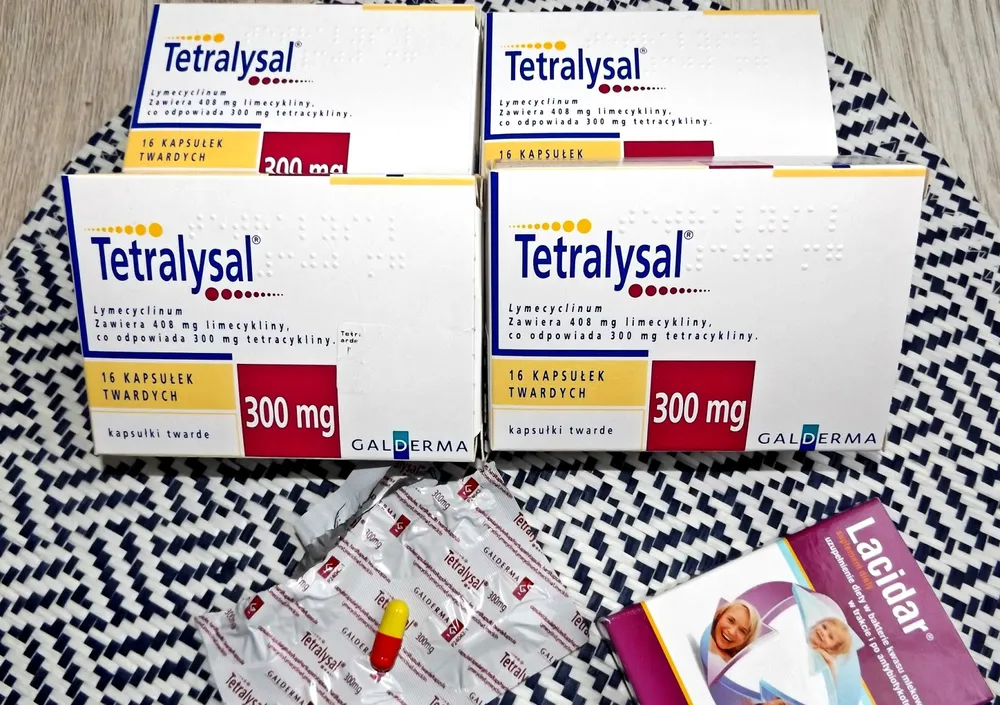
Table of Contents
PACKAGE LEAFLET: INFORMATION FOR THE USER
Warning! Keep the leaflet – the information on the immediate packaging is in a foreign language!
Tetralysal
300 mg, hard capsules
Lymecycline
Please read the entire leaflet carefully before using this medicine, as it contains
important information for the patient
- Keep this leaflet. You may need to read it again.
- If you have any further questions, please consult your doctor or pharmacist.
- This medicine has been prescribed for a specific individual. Do not pass it on to others. It may harm them even if their symptoms are the same.
- If you experience any adverse reactions, including any not listed in this leaflet, inform your doctor or pharmacist. See section 4.
Table of contents of the leaflet
- What Tetralysal is and what it is used for
- Important information before taking Tetralysal
- How to take Tetralysal
- Possible side effects
- How to store Tetralysal
- Contents of the pack and other information
1. What Tetralysal is and what it is used for
Tetralysal is an antibiotic belonging to the tetracycline group. In the treatment of acne, it acts:
- antibacterially against the microorganism Propionibacterium acnes;
- anti-inflammatory (by inhibiting the activity of certain types of white blood cells);
- by inhibiting a bacterial enzyme responsible for producing free fatty acids, which are irritant. As a result, the number of inflammatory skin lesions is reduced.
Indications for use of Tetralysal:
- moderate to severe common acne with inflammatory lesions such as papules, pustules, nodules, cysts, and infiltrations;
- rosacea.
2. Important information before using Tetralysal
When not to use Tetralysal:
- if the patient is allergic (hypersensitive) to lymecycline or any of the other ingredients of the medicine (listed in section 6);
- if the patient is allergic to other antibiotics of the tetracycline group;
- if the patient is taking medicines called retinoids (used in the treatment of skin disorders);
- in children under 8 years of age (due to the risk of permanent dental changes and discoloration of enamel);
- during pregnancy and breastfeeding.
Warning and precautions
Before starting to take Tetralysal, discuss this with your doctor.
You should stop taking Tetralysal if severe headaches occur.
Taking Tetralysal may cause irritation and ulceration of the oesophagus; to avoid this, drink plenty of fluids when taking this medicine.
In case of strong exposure to sunlight or other sources of ultraviolet (UV) radiation, Tetralysal may very rarely cause skin reactions (phototoxic effect). This effect has been observed after administration of high doses of the medicine (1200 mg/day) and simultaneous intense exposure to UV radiation (sunbathing, solarium). However, during treatment it is advisable to avoid sunlight and other sources of ultraviolet radiation (e.g. solarium).
If skin changes occur, especially redness or blisters, consult a doctor immediately, as this may be the beginning of rare, life-threatening severe skin complications.
If diarrhoea occurs during treatment or several weeks after stopping treatment, consult a doctor immediately. Diarrhoea may be a symptom of pseudomembranous colitis caused by toxins produced by excessive growth of Clostridium difficile bacteria in the intestine.
The inflammation may be mild or severe. Mild cases usually resolve after discontinuation of the medicine. In severe cases, the doctor may prescribe metronidazole or vancomycin.
Do not take drugs that inhibit peristalsis or have constipating effects.
If the patient suffers from myasthenia gravis (a disease characterised by muscle weakness), symptoms of this condition may worsen during treatment with lymecycline. Exercise caution when using Tetralysal in patients with myasthenia gravis.
If the patient suffers from systemic lupus erythematosus, he or she should consult a doctor before using this medicine.
Do not take expired medicine, as it may cause kidney damage.
Use Tetralysal with particular caution in patients with impaired kidney or liver function.
Talk to your doctor, even if the above conditions occurred in the past.
Children and adolescents
Do not give Tetralysal to children under 8 years of age due to the risk of permanent tooth discoloration and inhibition of enamel development.
Tetralysal with other medicines
Tell your doctor about all medicines you are currently taking or have recently taken, as well as any medicines you plan to take.
Studies on the interaction between lymecycline and other medicines have been conducted exclusively in adults.
Tell your doctor if you are taking any of the following medicines:
- blood-thinning medicines, e.g. warfarin;
- medicines for the treatment of HIV, e.g. didanosine;
- other medicines for the treatment of acne;
- other antibiotics, including penicillins;
- oral retinoids and products containing vitamin A (above 10,000 IU/day): risk of intracranial hypertension;
- medicines that increase urine production – diuretics.
Inform your doctor if you are taking any medicines containing lithium, as this medicine may increase lithium blood levels.
Do not take the following medicines at the same time as Tetralysal, as they may affect the proper action of the medicine. Wait at least 2 hours before or after taking Tetralysal before taking the following products:
- antacids;
- products containing iron;
- medicines for epilepsy, including barbiturates, e.g. phenobarbital, phenytoin, carbamazepine;
- medicines that reduce stomach acid, e.g. cimetidine and ranitidine;
- antacids (hydroxides and salts of magnesium, aluminium, and calcium), activated charcoal, cholestyramine, bismuth chelates, sucralfate.
The use of methoxyflurane in combination with Tetralysal is not recommended due to the risk of fatal kidney poisoning. Inform your doctor if you have a planned procedure requiring anaesthesia, as tetracyclines should not be used with certain types of anaesthetic agents.
Tetralysal may enhance the effect of oral anticoagulants (coumarin derivatives), cytostatic drugs, oral antidiabetic drugs, and glucocorticosteroids.
It may interfere with the determination of catecholamines and glucose in urine (by reduction methods), leading to falsely elevated results.
Tetralysal with food and drink
See section 3.
Pregnancy and breastfeeding
Tetralysal must not be used during pregnancy and while breastfeeding. The use of medicines such as tetracyclines may affect the normal development of teeth and cause permanent tooth discoloration.
If you are pregnant or breastfeeding, suspect you may be pregnant, or plan to have a child, you should consult your doctor before using this medicine.
Driving and operating machinery
Tetralysal does not affect the ability to drive or operate machinery.
3. How to use Tetralysal
This medicine should always be used exactly as prescribed by your doctor. If in doubt, consult your doctor or pharmacist.
Adults
The recommended dose is:
- For the treatment of acne vulgaris: 300 mg (one Tetralysal capsule) once daily for 12 weeks;
- For the treatment of rosacea: initially 600 mg (one Tetralysal capsule twice daily) for 10 days, followed by 300 mg (one Tetralysal capsule) once daily for a period of 3 to 6 months.
Swallow the capsules with a full glass of water while sitting in an upright position to avoid possible damage to the oesophagus. Taking the capsules with food or milk does not significantly affect absorption of the medicine.
Capsules containing 150 mg of the active substance are also available.
Your doctor will inform you how long you should continue taking Tetralysal.
Use in children
Tetralysal must not be used in children under 8 years of age.
Taking more Tetralysal than recommended
Overdose may cause liver damage. If you have taken more than the prescribed dose, seek immediate medical advice.
If you miss a dose
Do not take a double dose to make up for a missed dose.
Stopping Tetralysal
Do not stop treatment prematurely, as symptoms may return. Always consult your doctor if you are considering stopping this medicine.
If you have any further questions about the use of this medicine, consult your doctor or pharmacist.
4. Possible adverse reactions
Like any medicine, Tetralysal may cause adverse reactions, although they do not occur in everyone.
The adverse reactions listed below are categorized according to frequency of occurrence.
Common (occurring in 1 to 10 out of 100 patients)
- Nausea
- Abdominal pain
- Diarrhea
- Headache
Frequency not known (frequency cannot be estimated from the available data)
- Changes in blood cell counts
- Visual disturbances*
- Double vision
- Permanent loss of vision
- Inflammation of the tongue
- Intestinal inflammation
- Vomiting
- Upper abdominal pain
- Inflammation of the small and large intestine
- Pseudomembranous colitis
- Pancreatitis
- Fever
- Yellowing of the skin or eyes (jaundice)
- Hepatitis
- Changes in laboratory test results (blood tests, liver enzyme tests)
- Allergic reactions (itching of the facial skin, including around the eyes and mouth)
- Skin itching, rash, or urticaria
- Sudden, severe generalized allergic reactions associated with malaise
- Blastomycosis, candidiasis (yeast infection)
- Vaginitis
- Increased intracranial pressure
- Dizziness
- Photosensitivity
- Toxic epidermal necrolysis
- Development of acne or skin peeling over large areas, ulceration or lesions around the mouth, lips, genital or anal regions (Stevens-Johnson syndrome)
- Depression
- Nightmares
*Clinical symptoms such as visual disturbances or headaches may be caused by the development of intracranial hypertension. If symptoms of increased intracranial pressure occur during treatment with lymecycline, the drug should be discontinued. Mild intracranial hypertension has been reported during treatment with tetracyclines, which may present as headache, vomiting, visual disturbances including blurred vision, scotoma (dark spots or flashes in the visual field), diplopia (double vision), or permanent vision loss.
Additionally, the following adverse reactions may occur during treatment with other medicines belonging to the same class as Tetralysal (tetracyclines):
- Tooth discoloration and impaired enamel development, if the drug is administered to children under 8 years of age;
- changes in blood test results (reduced number of red blood cells, increased number of certain types of white blood cells);
- hyperazotemia (excess nitrogen compounds in the blood), which may be exacerbated by concomitant use of diuretic drugs.
Cases of systemic lupus erythematosus and pancreatitis have been observed in association with tetracycline therapy.
Administration of Tetralysal should be discontinued if symptoms of increased intracranial pressure occur.
Reporting of adverse reactions
If any adverse reactions occur, including any not listed in this leaflet, inform your doctor or pharmacist.
Adverse reactions can be reported directly to the Department of Monitoring Adverse Drug Reactions of the Office for Registration of Medicinal Products, Medical Devices and Biocidal Products
Al. Jerozolimskie 181C
02-222 Warsaw
Phone: +48 22 49 21 301
Fax: +48 22 49 21 309
Website: https://smz.ezdrowie.gov.pl
Reporting adverse reactions helps to gather more information on the safety of the medicine.
5. How to store Tetralysal
Keep this medicine out of the sight and reach of children.
Do not use this medicine after the expiry date stated on the packaging.
The expiry date refers to the last day of the stated month.
No special storage conditions apply.
Medicines must not be disposed of via wastewater or household waste. Ask your pharmacist how to dispose of medicines no longer required. This will help protect the environment.
6. Contents of the pack and other information
What Tetralysal contains
- The active substance is lymecycline. Each hard capsule contains 408 mg of lymecycline, equivalent to 300 mg of tetracycline.
- The other ingredients are: magnesium stearate, colloidal anhydrous silica.
- Capsule shell: gelatin, titanium dioxide (E 171), erythrosine (E 127), quinoline yellow (E 104), indigo carmine (E 132).
What Tetralysal looks like and contents of the pack
Tetralysal is available as hard, red-yellow coloured capsules.
Packs contain 16 or 28 capsules.
For more detailed information, please contact the Marketing Authorisation Holder or Parallel Importer.
Marketing Authorisation Holder in France, the country of export:
Galderma International
Tour Europlaza – La Défense 4
20, avenue André Prothin
92927 La Défense Cedex
France
Manufacturer:
Sophartex
21 rue du Pressoir
28500 Vernouillet
France
Parallel Importer:
Medezin Sp. z o.o.
ul. Zbąszyńska 3
91-342 Łódź
Poland
Repackaged in:
Medezin Sp. z o.o.
ul. Zbąszyńska 3
91-342 Łódź
Poland
CEFEA Sp. z o.o. Sp. komandytowa
ul. Działkowa 56
02-234 Warszawa
Poland
SHIRAZ PRODUCTIONS Sp. z o.o.
ul. Tymiankowa 24/28
95-054 Ksawerów
Poland
CANPOLAND SPÓŁKA AKCYJNA
ul. Beskidzka 190
91-610 Łódź
Poland
Marketing Authorisation numbers in France, the country of export:
367 597-4
34009 367 597 4 9
367 598-0
34009 367 598 0 0
Parallel Import Authorisation Number: 25/23