Tetmodis
Poland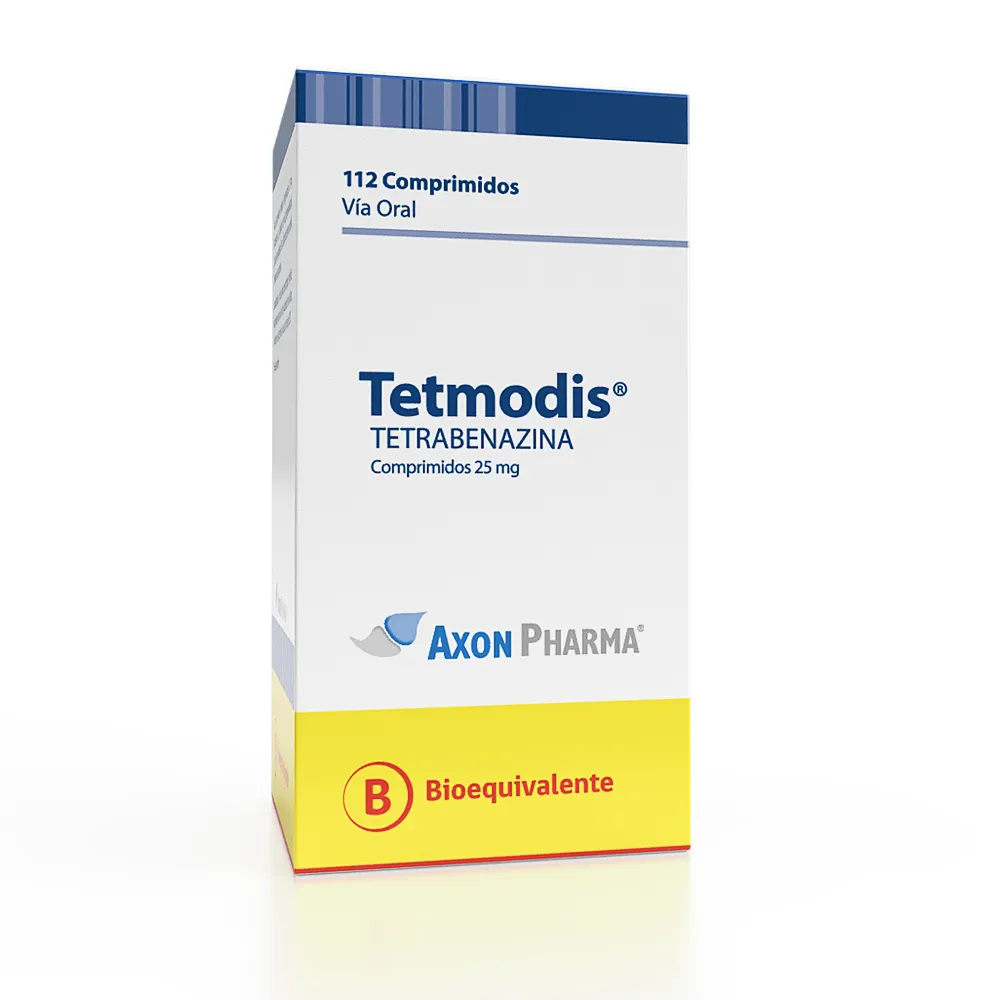
Table of Contents
Package leaflet: Information for the user
Tetmodis, 25 mg, tablets
Tetrabenazine
Please read all of this leaflet carefully before taking this medicine, because it contains
important information for you.
- Keep this leaflet. You may need to read it again.
- If you have any further questions, ask your doctor or pharmacist.
- This medicine has been prescribed for a specific individual. Do not pass it on to others. It may harm other people, even if their symptoms are the same.
- If you experience any side effects, including any not listed in this leaflet, tell your doctor or pharmacist. See section 4.
Contents of the leaflet:
- What Tetmodis is and what it is used for
- Important information before taking Tetmodis
- How to take Tetmodis
- Possible side effects
- How to store Tetmodis
- Contents of the pack and other information
1. What Tetmodis is and what it is used for
Tetmodis is a medicine belonging to a group of drugs used in the treatment of disorders of the nervous system.
Tetmodis is used in the treatment of diseases causing sudden, irregular, uncontrolled movements (hyperkinetic movement disorders in Huntington's disease).
2. Important information before taking Tetmodis
When not to take Tetmodis
- if you are allergic to tetrabenazine or any of the other ingredients of this medicine (listed in section 6);
- if you are taking reserpine (a medicine used to control high blood pressure and in the treatment of psychotic conditions);
- if you are taking medicines belonging to a group known as monoamine oxidase inhibitors (MAOIs) (medicines used in the treatment of depression);
- if you have impaired liver function;
- if you have symptoms resembling Parkinson's disease;
- if you suffer from depression;
- if you have thoughts of self-harm or suicidal thoughts;
- if you are breastfeeding;
- if you have a chromaffin cell tumour (pheochromocytoma);
- if you have prolactin-dependent tumours, such as pituitary tumours or breast cancer.
Warnings and precautions
Before starting Tetmodis, discuss with your doctor or pharmacist if:
- you have ever had hand tremors and jerking movements of the arms and legs, known as parkinsonism;
- you have high levels of prolactin in your blood (hyperprolactinaemia);
- you are prone to sudden drops in blood pressure when standing up or stretching (orthostatic hypotension);
- you have been identified as a poor or intermediate metabolizer using the CYP2D6 enzyme, as a different dose of the medicine may be required;
- you have a heart condition known as long QT syndrome or have had heart rhythm disorders;
- you develop psychiatric disturbances such as confusion or delusions, or experience muscle stiffness and elevated body temperature, which may indicate a possible condition known as neuroleptic malignant syndrome. If any of these symptoms occur, contact your doctor immediately;
- you experience an unpleasant sensation of inner restlessness, a strong urge to keep moving, or disturbances in motor coordination;
- remember that Tetmodis may bind to melanin-containing tissues, which could affect the eyes.
Children
Tetmodis is not recommended for use in children.
Tetmodis with other medicines
Tell your doctor about all medicines you are currently taking, including those obtained without a prescription.
Exercise particular caution when taking Tetmodis together with levodopa (a medicine used in the treatment of Parkinson's disease).
Do not take Tetmodis with reserpine.
Stop taking MAO inhibitors 14 days before starting treatment with tetrabenazine.
It is not recommended to take this medicine with certain types of antidepressants, alcohol, opioids, beta-blockers, antihypertensives (medicines used to treat high blood pressure), sedatives, or neuroleptics (medicines used to treat psychiatric disorders).
Medicines belonging to the group of CYP2D6 isoenzyme inhibitors (e.g. fluoxetine, paroxetine, terbinafine, moclobemide, and quinidine) may increase plasma concentrations of active dihydrotetrabenazine metabolites. If you are taking any of these medicines, a dose reduction of Tetmodis may be necessary.
Exercise particular caution if taking Tetmodis together with medicines known to prolong the QTc interval in the electrocardiogram, including certain medicines used in the treatment of psychiatric disorders (neuroleptics), some antibiotics (e.g. gatifloxacin, moxifloxacin), and certain medicines used to treat heart rhythm disorders (e.g. quinidine, procainamide, amiodarone, sotalol).
Tetmodis, food and alcohol
Drinking alcohol while taking Tetmodis may cause excessive drowsiness.
Pregnancy and breastfeeding
Tetmodis should not be used in pregnant women or in women who are breastfeeding. If you are pregnant, suspect you may be pregnant, or are planning to become pregnant, you should consult your doctor before taking this medicine.
Driving and using machines
Tetmodis may cause drowsiness and may therefore affect, to varying degrees, your ability to drive or operate machinery, depending on the dose and individual susceptibility.
Tetmodis contains lactose
The tablets contain lactose. If you have been previously diagnosed with an intolerance to certain sugars, you should consult your doctor before taking this medicine.
3. How to take Tetmodis
Tetmodis must always be taken exactly as prescribed by the doctor. If in doubt, consult a doctor or pharmacist.
The tablet(s) should be swallowed with water or a non-alcoholic drink.
Adults
Huntington's disease
The recommended starting dose is half a tablet (12.5 mg) once to three times daily. The dose may be increased by half a tablet every three or four days until optimal effect is achieved or until signs of intolerance occur (drowsiness, parkinsonism, depression).
The maximum daily dose is 8 tablets (200 mg) per day.
If there is no improvement in health status after using the maximum dose for seven days, it is unlikely that the drug will be effective.
Elderly patients
The standard dose has been administered to elderly patients without occurrence of adverse effects. However, symptoms resembling Parkinson's disease are common.
Use in children
Tetmodis is not recommended for use in children.
Patients with renal impairment
Tetmodis is not recommended for use in this patient group.
Taking more Tetmodis than recommended
If an overdose of Tetmodis is taken, patients may experience drowsiness, sweating, hypotension, and extremely low body temperature (hypothermia). The doctor will provide symptomatic treatment.
Missing a dose of Tetmodis
Do not take a double dose to make up for a missed dose. Instead, simply continue treatment by taking the next dose at the usual time.
Stopping Tetmodis
Do not stop taking Tetmodis without medical advice. Cases of malignant neuroleptic syndrome have been observed following abrupt discontinuation of tetrabenazine.
If you have any questions about how to use this medicine, consult your doctor or pharmacist.
4. Possible adverse reactions
Like all medicines, this medicine can cause adverse reactions, although not everybody will experience them.
The following adverse reactions are listed according to MedDRA classification and frequency of occurrence:
Very common (may affect more than 1 in 10 people):
Somnolence (with higher doses), depression, Parkinsonism-like symptoms (uncontrolled movements of the hands, arms, legs and head, with higher doses).
Common (may affect up to 1 in 10 people):
Disorientation, nervousness, insomnia, low blood pressure, dysphagia (difficulty swallowing), nausea, vomiting, diarrhoea, constipation.
Uncommon (may affect up to 1 in 100 people):
Psychiatric changes such as disorientation or hallucinations, muscle rigidity, fever.
Rare (may affect up to 1 in 1,000 people):
A disorder called neuroleptic malignant syndrome: if a patient develops symptoms such as disorientation or hallucinations, or develops muscle rigidity and fever, this may indicate the development of a disorder called neuroleptic malignant syndrome.
Very rare (may affect up to 1 in 10,000 people):
Muscle damage.
For the following adverse reactions, frequency cannot be estimated from the available data:
disorientation, nervousness, problems with motor coordination, need to keep moving (akathisia), uncontrolled muscle contractions (dystonia), dizziness, memory impairment, slow heart rate, dizziness upon standing up quickly from lying or sitting position, abdominal pain, dry mouth, decreased body temperature.
Reporting of adverse reactions
If any adverse reactions occur, including any adverse reactions not listed in this leaflet, inform your doctor or pharmacist. Adverse reactions can be reported directly to: Department for Monitoring of Adverse Drug Reactions, Office for Registration of Medicinal Products, Medical Devices and Biocidal Products, Al. Jerozolimskie 181C, PL-02 222 Warsaw,
Tel.: + 48 22 49 21 301
Fax: + 48 22 49 21 309
Website: https://smz.ezdrowie.gov.pl
Adverse reactions can also be reported to the marketing authorization holder.
Reporting adverse reactions helps to provide more information on the safety of this medicine.
5. How to store the medicine Tetmodis
Keep out of the sight and reach of children.
Do not use Tetmodis after the expiry date stated on the bottle or carton. The expiry date refers to the last day of the stated month.
Store in the original packaging to protect from light.
Do not store above 25°C.
Medicines should not be disposed of via wastewater or household waste. Ask your pharmacist how to dispose of medicines no longer in use. Such measures help protect the environment.
6. Contents of the pack and other information
What Tetmodis contains
- Active substance: tetrabenazine.
- Each tablet contains 25 mg of tetrabenazine.
- Other ingredients: maize starch, lactose monohydrate, talc, yellow iron oxide (E172), magnesium stearate.
What Tetmodis looks like and contents of the pack
Yellow, round tablets, with a score line on one side and the imprint “TE25” on the reverse.
The tablets are packed in a screw-top bottle containing 112 tablets.
Marketing Authorisation Holder and Manufacturer
Marketing Authorisation Holder:
Walter Ritter GmbH + Co. KG
Spaldingstraße 110 B
20097 Hamburg, Germany
Manufacturers:
Walter Ritter GmbH + Co. KG
Brüder-Grimm-Straße 121
36396 Steinau an der Straße, Germany
AOP Orphan Pharmaceuticals GmbH
Leopold-Ungar-Platz 2
1190 Vienna, Austria
This medicinal product is authorised in the Member States of the European Economic Area and in the United Kingdom (Northern Ireland) under the following names:
Austria: Tetmodis 25 mg Tabletten
Belgium: Tetrabenazine Walter Ritter 25 mg tabletten
Bulgaria: Teтмодис 25 mg таблети
Croatia: Tetmodis 25 mg tablete
Denmark: Tetmodis 25 mg tabletter
Estonia: Tetmodis 25 mg tabletid
Finland: Tetmodis 25 mg tabletit
France: Tetmodis 25 mg, comprimé sécable
Greece: Tetmodis 25 mg δισκία
Spain: Tetmodis 25 mg comprimidos EFG
Netherlands: Tetmodis 25 mg tabletten
Ireland: Tetmodis 25 mg tablets
Lithuania: Tetmodis 25 mg tabletės
Latvia: Tetmodis 25 mg tabletes
Germany: Tetmodis 25 mg Tabletten
Norway: Tetmodis 25 mg tabletter
Poland: Tetmodis 25 mg tabletki
Portugal: Tetmodis, 25 mg, comprimidos
Czech Republic: Tetmodis
Romania: Tetmodis 25 mg comprimate
Slovakia: Tetmodis 25 mg tablety
Slovenia: Tetmodis 25 mg tablete
Sweden: Tetmodis 25 mg tabletter
Hungary: Motetis 25 mg tabletta
United Kingdom (Northern Ireland): Tetmodis 25 mg tablets