Testosterone undecanoate besins
Poland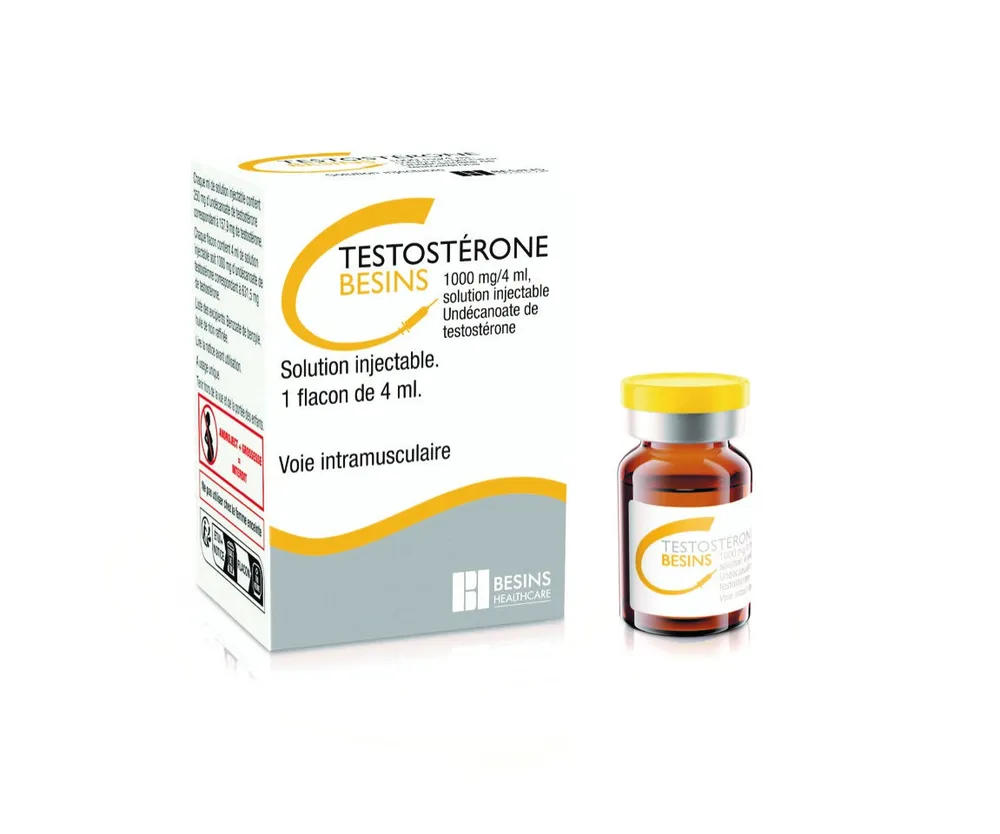
Table of Contents
- PACKAGE LEAFLET
- Package leaflet: Information for the user
- 1. What Testosterone Undecanoate Besins is and what it is used for
- 2. Important information before using Testosterone Undecanoate Besins
- 3. How to use Testosterone Undecanoate Besins
- 4. Possible adverse reactions
- 5. How to store Testosterone Undecanoate Besins
- 6. Contents of the pack and other information
- Information intended exclusively for medical professionals:
PACKAGE LEAFLET
Package leaflet: Information for the user
Testosterone Undecanoate Besins 1000 mg/4 ml, solution for injection
Testosteroni undecanoas
Please read this leaflet carefully before using this medicine because it contains important information for you.
- Keep this leaflet as you may need to read it again.
- If you have any further questions, please ask your doctor or pharmacist.
- This medicine has been prescribed for a specific individual. Do not pass it on to others. It may harm them, even if their symptoms are the same.
- If you experience any side effects, including any not listed in this leaflet, please inform your doctor or pharmacist. See section 4.
Contents of the leaflet
- What Testosterone Undecanoate Besins is and what it is used for
- Important information before using Testosterone Undecanoate Besins
- How to use Testosterone Undecanoate Besins
- Possible side effects
- How to store Testosterone Undecanoate Besins
- Contents of the pack and other information
1. What Testosterone Undecanoate Besins is and what it is used for
Testosterone Undecanoate Besins contains testosterone as the active substance, a male hormone.
Testosterone Undecanoate Besins is administered by intramuscular injection, where it can be stored and then gradually released over a certain period of time. Testosterone Undecanoate Besins is used in adult men as testosterone replacement therapy for the treatment of various conditions resulting from testosterone deficiency in the body (male hypogonadism). Diagnosis of the condition requires two independent measurements of blood testosterone concentration and clinical symptoms such as:
- impotence,
- infertility,
- reduced libido,
- fatigue,
- low mood,
- loss of bone mass caused by low hormone levels.
2. Important information before using Testosterone Undecanoate Besins
When not to use Testosterone Undecanoate Besins
- If the patient is allergic to testosterone undecanoate or any of the other ingredients of this medicine (listed in section 6),
- if the patient has androgen-dependent cancer or suspected cancer of the prostate gland or breast,
- if the patient currently has or has previously had liver tumour
Testosterone Undecanoate Besins is not intended for use in women.
Warnings and precautions
Before starting treatment with Testosterone Undecanoate Besins, you should inform your doctor if the patient has or has ever had:
- epilepsy,
- heart, kidney or liver problems,
- migraine,
- episodes of interrupted breathing during sleep (apnoea), as these may worsen,
- cancer, therefore regular monitoring of blood calcium levels may be required,
- high blood pressure or treatment for hypertension, because testosterone may increase blood pressure,
- blood clotting disorders, including: haemophilia, thrombophilia (abnormal blood clotting process increasing the risk of thrombosis – presence of blood clots in blood vessels), factors increasing the risk of venous thrombosis: previous history of blood clots in veins; smoking; obesity; cancer; immobilization; history of blood clots in the leg, lung or another organ at a young age (e.g. under 50 years) in a close family member; advanced age of the patient.
How to recognize a blood clot: painful swelling in one leg or sudden change in skin colour,
e.g. pallor, redness or blueness; sudden shortness of breath; sudden unexplained cough,
possibly accompanied by coughing up blood; sudden chest pain; severe dizziness or vertigo;
severe abdominal pain; sudden loss of vision. If any of these symptoms occur, contact a
doctor immediately.
If the patient has severe heart, liver or kidney disease, treatment with Testosterone
Undecanoate Besins may lead to serious complications, manifesting as fluid retention and, occasionally, (congestive) heart failure.
The following blood tests should be ordered by the doctor before and during treatment:
blood testosterone levels, complete blood count.
Liver function disorders
Formal studies have not been conducted in patients with liver function disorders. Testosterone
Undecanoate Besins must not be prescribed if the patient currently has or has previously had
liver tumour (see section “When not to use Testosterone Undecanoate Besins”).
Children and adolescents
Testosterone Undecanoate Besins is not intended for use in children and adolescents. There are
no available data on the use of Testosterone Undecanoate Besins in males under 18 years of age.
Elderly patients (65 years or older)
There is no need to adjust the dosage in patients over 65 years of age (see “Medical examination/monitoring”).
Muscle development and anti-doping tests
Testosterone Undecanoate Besins is not suitable for accelerating muscle development in
healthy individuals or for enhancing physical performance.
Testosterone Undecanoate Besins may yield positive results in anti-doping tests.
Misuse and dependence
This medicine should always be used exactly as prescribed by the doctor or pharmacist.
Misuse of testosterone, especially when excessive doses are used alone or in combination with other anabolic androgenic steroids, may lead to serious health problems affecting the heart and blood vessels (which may be fatal), mental health and/or the liver.
Patients misusing testosterone may develop dependence on the drug and may experience withdrawal symptoms if the dose is significantly changed or treatment is suddenly stopped. Do not misuse this medicine alone or in combination with other anabolic androgenic steroids, as this poses serious health risks. (See section “Possible side effects”)
Medical examination/monitoring
Male hormones may accelerate the development of prostate cancer and may cause enlargement of the prostate gland (benign prostatic hyperplasia). Before administering Testosterone
Undecanoate Besins, the doctor will examine the patient to ensure there is no prostate cancer.
The doctor will regularly examine the prostate and breasts, especially in elderly patients, and will regularly order blood tests.
Cases of benign (non-cancerous) and malignant (cancerous) liver tumours have been observed with the use of hormonal substances such as androgens.
Testosterone Undecanoate Besins and other medicines
You should tell your doctor or pharmacist about all medicines the patient is currently taking or has recently taken, as well as any medicines the patient plans to take, including those available without a prescription. The doctor may need to adjust the dose if the patient is taking any of the following medicines:
- ACTH hormone or corticosteroids (used to treat various diseases such as rheumatism, arthritis, allergic conditions and asthma): Testosterone Undecanoate Besins may increase the risk of fluid retention, especially in patients with impaired heart or liver function,
- blood-thinning tablets (oral anticoagulants of the coumarin derivatives group), as they may increase the risk of bleeding. The doctor will review the doses.
- medicines used to treat diabetes. Dose adjustment of glucose-lowering medication may be necessary. Like other androgens, testosterone may enhance the effect of insulin. Concomitant use of SGLT-2 inhibitors (such as empagliflozin, dapagliflozin or canagliflozin) with testosterone may increase the number of red blood cells in the blood. The doctor may need to order blood tests more frequently.
You should inform the doctor if the patient has blood clotting disorders, as this
information is important for the doctor before deciding to administer the Testosterone
Undecanoate Besins injection.
Testosterone Undecanoate Besins may also affect the results of certain laboratory tests (e.g. thyroid function). Inform your doctor or laboratory staff about the use of Testosterone Undecanoate Besins.
Pregnancy and breastfeeding
Testosterone Undecanoate Besins is not intended for use in women and must not be used in pregnant or breastfeeding women.
Effect on fertility
Regular treatment with preparations containing high doses of testosterone may reversibly suppress or reduce sperm production (see also “Possible side effects”).
Driving and operating machinery
Testosterone Undecanoate Besins has no effect on the ability to drive vehicles or operate machinery.
Testosterone Undecanoate Besins contains benzyl benzoate
Testosterone Undecanoate Besins contains 2000 mg of benzyl benzoate in each 4 ml vial, equivalent to 500 mg/ml.
3. How to use Testosterone Undecanoate Besins
Your doctor will inject Testosterone Undecanoate Besins (1 vial) very slowly into the muscle.
The injections will be administered every 10 to 14 weeks. This is sufficient to maintain testosterone
levels at an appropriate concentration, without causing hormone accumulation in the blood.
Testosterone Undecanoate Besins is intended for intramuscular injection only.
Extreme caution must be taken to avoid intravascular injection (see "Method of administration").
Initiating treatment
Your doctor will assess your blood testosterone levels before starting treatment and during its early
phases. Your doctor may recommend a second injection as early as 6 weeks to rapidly achieve the
necessary testosterone concentration. This will depend on the patient's symptoms and testosterone
levels.
Maintaining Testosterone Undecanoate Besins levels during treatment
The interval between consecutive injections should always remain within the recommended range of
10 to 14 weeks.
Your doctor will regularly monitor your blood testosterone levels toward the end of the interval
between injections to ensure they are within the normal range. If levels are too low, your doctor may
decide to administer the injections more frequently. If levels are too high, your doctor may decide to
administer them less frequently. It is essential to attend every scheduled injection appointment.
Otherwise, optimal testosterone concentration cannot be maintained.
If you feel that the effect of Testosterone Undecanoate Besins is too strong or too weak, consult your
doctor.
Use of a higher than recommended dose of Testosterone Undecanoate Besins
Symptoms of an overdose of Testosterone Undecanoate Besins include:
- irritability
- nervousness
- weight gain
- prolonged or frequent erections
If any of the above symptoms occur, consult your doctor. The doctor may decide to administer
injections less frequently or discontinue treatment.
4. Possible adverse reactions
Like all medicines, this medicine can cause adverse reactions, although not everyone will experience them.
The most frequently occurring adverse reactions are acne and pain at the injection site.
Common adverse reactions (may occur in up to 1 in 10 patients):
- abnormally high red blood cell count
- weight gain
- hot flushes
- acne
- enlarged prostate gland and related problems
- various reactions at the injection site (e.g. pain, bruising or irritation)
Uncommon adverse reactions (may occur in up to 1 in 100 patients):
- allergic reaction
- increased appetite, changes in blood test results (e.g. increased blood sugar or fat levels)
- depression, emotional disorders, insomnia, restlessness, aggression or irritability
- headache, migraine or tremor
- cardiovascular disorders, high blood pressure or dizziness
- bronchitis, sinusitis, cough, breathlessness, snoring or voice problems
- diarrhoea or nausea
- changes in liver function test results
- hair loss or various skin reactions (e.g. itching, redness or dry skin)
- joint pain, limb pain, muscle problems (e.g. cramp, pain or stiffness) or increased blood creatine phosphokinase activity
- urinary disorders (e.g. reduced urine flow, urinary retention, need to urinate at night)
- prostate gland disorders (e.g. prostate dysplasia, hardening or inflammation of the prostate), changes in sex drive, testicular pain, pain, hardening or enlargement of the breasts, or increased levels of male and female sex hormones
- fatigue, general feeling of weakness, excessive sweating or night sweats
Rare adverse reactions (may occur in up to 1 in 1,000 patients):
- the oil solution of Testosterone Undecanoate Besins may enter the lungs (pulmonary oil microembolism), which rarely may lead to symptoms such as: cough, breathlessness, general malaise, excessive sweating, chest pain, dizziness, tingling or numbness, or fainting. These reactions may occur during or immediately after the injection and are transient. Each patient should be observed during and immediately after each injection to enable early detection of objective and subjective symptoms that may indicate pulmonary oil microembolism.
Suspected anaphylactic reactions have been reported after administration of Testosterone Undecanoate Besins.
During treatment with testosterone-containing preparations, in addition to the above-mentioned adverse reactions, the following have also been observed: nervousness, hostility, periodic breathing interruptions during sleep, various skin reactions including dandruff and oily skin, accelerated hair growth, more frequent erections, and very rarely yellowing of the skin and eyes (jaundice).
Treatment with high-dose testosterone preparations often leads to suppression or reduction of sperm production. These symptoms resolve after discontinuation of treatment.
Testosterone replacement therapy in the treatment of impaired testicular function (hypogonadism) may rarely cause prolonged, painful erections (priapism).
High doses and prolonged use of testosterone may occasionally lead to fluid retention and the development of oedema (swelling due to fluid accumulation).
Use of testosterone-containing products may be associated with a general risk of increased red blood cell count, haematocrit (percentage of red blood cells in blood), and haemoglobin concentration (oxygen-carrying component of red blood cells), as observed in periodic blood analyses.
Reporting of adverse reactions
If any adverse reactions occur in a patient, including any adverse reactions not listed in this leaflet, the patient should inform a doctor, pharmacist, nurse or midwife. Adverse reactions can be reported directly to the Department of Monitoring Adverse Drug Reactions of the Office for Registration of Medicinal Products, Medical Devices and Biocidal Products, Al. Jerozolimskie 181C, 02-222 Warsaw, tel. +48 22 49 21 301, fax +48 22 49 21 309, website https://smz.ezdrowie.gov.pl
Adverse reactions may also be reported to the marketing authorisation holder.
Reporting adverse reactions helps to provide more information on the safety of the medicine.
5. How to store Testosterone Undecanoate Besins
Keep this medicine out of sight and reach of children.
No special precautions for storage of the medicinal product are required.
Do not use this medicine after the expiry date stated on the label following the abbreviation "EXP".
The abbreviation "Lot" means batch number. The expiry date refers to the last day of the stated month.
Medicines must not be disposed of via wastewater or household waste. Ask your pharmacist how to dispose of medicines no longer required. This will help protect the environment.
6. Contents of the pack and other information
What Testosterone Undecanoate Besins contains
The active substance is testosterone undecanoate 250 mg/ml (equivalent to 157.9 mg of testosterone).
Each vial contains 1000 mg of testosterone undecanoate (equivalent to 631.5 mg of testosterone).
The other components are: benzyl benzoate and purified castor oil.
What Testosterone Undecanoate Besins looks like and contents of the pack
Testosterone Undecanoate Besins is a clear, yellowish oily liquid.
Pack contents:
A vial made of amber glass, with a bromobutyl rubber stopper for injectable products and an aluminium flip-off seal with an orange plastic cap, contained in a cardboard box.
Marketing Authorisation Holder and Manufacturer
Marketing Authorisation Holder
Besins Healthcare Ireland Limited
Plaza 4, Level 4 Custom House Plaza
Harbourmaster Place, IFSC
Dublin 1, D01 A9N3
Ireland
Manufacturer
Laboratorios Farmalán, S.A.
Calle La Vallina, s/n,
Polígono Industrial Navatejera
24193 Villaquilambre, León, Spain
This medicinal product is authorised in the European Economic Area and the United Kingdom (Northern Ireland) under the following names:
Belgium, Luxembourg: Testosterone Besins 1000 mg/4 ml solution for injection
Czech Republic: Testosteron undekanoát Besins
France: Testosterone Besins 1000 mg/4 ml solution injectable
Germany: Testosteron Besins 1000 mg/4 ml Injektionslösung
Ireland: Testosterone Besins 1000 mg/4 ml solution for injection
Italy: Testosterone undecanoato Besins
Poland: Testosterone Undecanoate Besins
Portugal: Testosterona Besins
Romania: Androject 1000 mg/4ml Soluţie injectabilă
Slovakia: Androject 1000 mg/4ml Injekčný roztok
Spain: Teneone 1000 mg/4 ml solución inyectable EFG
Sweden: Testosterone Besins 1000 mg/4 ml Injektionsvätska, lösning
For more detailed information about this medicine, please contact the local representative of the Marketing Authorisation Holder.
Besins Healthcare Poland Sp. z o.o.
Wiśniowa Street 40B/4
02-520 Warsaw, Poland
e-mail: [email protected]
Information intended exclusively for medical professionals:
During storage at low temperatures, the properties of this oil-based solution may temporarily change (e.g. increased viscosity, cloudiness). If the medicinal product has been stored at low temperatures, it should be brought to room temperature or body temperature before use.
The intramuscular injection solution should be inspected visually before administration; only clear solutions free from solid particles should be used.
The contents of the vial should be administered intramuscularly immediately after opening.
The Testosterone Undecanoate Besins medication is intended for single use only, and any unused portions of the solution must be discarded.
Route of administration
Extreme caution must be taken to avoid intravascular administration.
Like all oily solutions, the Testosterone Undecanoate Besins medicinal product must be administered exclusively intramuscularly and very slowly. Pulmonary microembolism caused by oily solutions may rarely lead to the occurrence of objective and subjective symptoms such as: cough, dyspnea, malaise, excessive sweating, chest pain, dizziness, paresthesia, or syncope. These reactions may occur during or immediately after injection and are transient. Treatment is usually supportive, e.g., by administering supplemental oxygen.
Suspected anaphylactic reactions following administration of Testosterone Undecanoate Besins have been reported.
Warnings
In patients treated with testosterone, careful and regular monitoring of the prostate gland and breasts is required according to recommended procedures (digital rectal examination and measurement of serum prostate-specific antigen [PSA] concentration). These examinations should be performed at least once a year, and twice a year in elderly patients and those at increased risk (with clinical or familial risk factors).
In addition to laboratory measurements of testosterone concentrations, the following laboratory parameters should be periodically monitored in patients undergoing long-term androgen therapy: hemoglobin, hematocrit, liver function tests, and lipid profile.
In patients with severe heart, liver, or renal insufficiency or ischemic heart disease, testosterone treatment may cause serious complications in the form of edema with or without congestive heart failure. In such cases, treatment must be discontinued immediately.
Vial handling instructions:
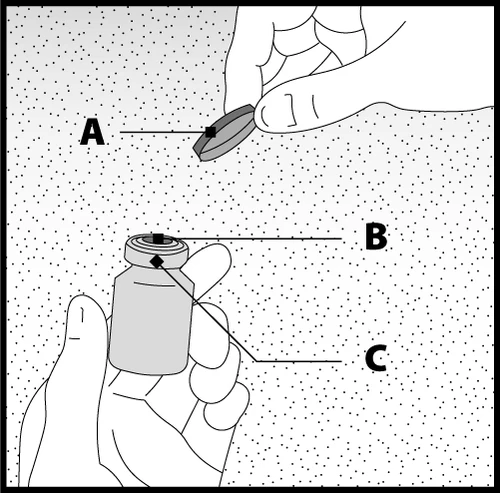
The vial is intended for single use only. The contents should be administered intramuscularly immediately after withdrawal into a syringe. After removing the plastic cap (A), do not remove the metal ring (B) or the cap (C).