Terbiderm
Poland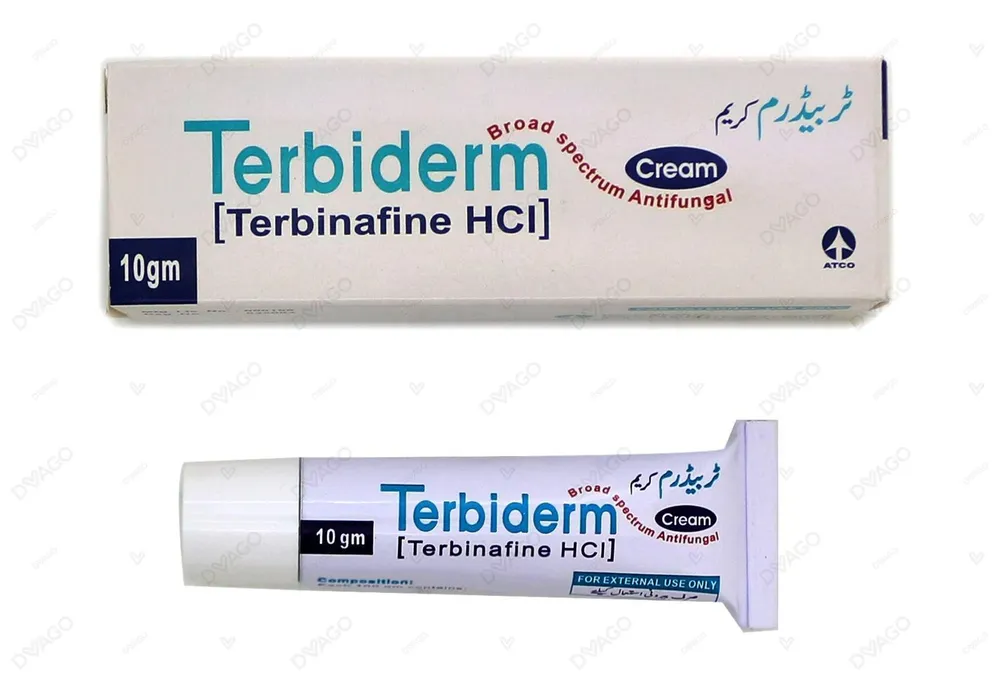
Table of Contents
Package leaflet: Information for the patient
Terbiderm, 10 mg/g, cream
Terbinafini hydrochloridum
Please read all of this leaflet carefully before using this medicine, because it contains
important information for the patient.
This medicine should always be used exactly as described in this patient leaflet or as directed by the
physician, pharmacist, or nurse.
- Keep this leaflet, as you may need to read it again.
- If you need advice or further information, please contact your pharmacist.
- If you experience any adverse reactions, including any possible side effects not listed in this leaflet, inform your doctor, pharmacist, or nurse. See section 4.
- If there is no improvement after 14 days of treatment, or if your condition worsens, consult your doctor.
Contents of the leaflet:
- What Terbiderm is and what it is used for
- Important information before using Terbiderm
- How to use Terbiderm
- Possible side effects
- How to store Terbiderm
- Contents of the pack and other information
1. What Terbiderm is and what it is used for
Terbiderm is a white or almost white cream with a slight odour intended for topical application to the skin. It contains the active substance terbinafine hydrochloride. This medicine has antifungal properties and acts against various species of fungi causing skin diseases. Terbinafine contained in Terbiderm exerts a fungicidal effect (causing fungal cell death) against dermatophytes and moulds. Against yeasts, depending on the species, it acts either fungicidally or fungistatically (inhibiting fungal growth).
Terbiderm is a topical antifungal medicine used to treat the following fungal infections:
- Athlete's foot (tinea pedis),
- Moccasin-type tinea pedis,
- Cutaneous candidiasis and fungal infection of smooth skin,
- Pityriasis versicolor,
- Cutaneous candidiasis.
Athlete's foot – affects one or both feet, most commonly between the toes. In moccasin-type tinea pedis, lesions also appear on the sole, heel, or other parts of the foot. Fungal lesions between the toes are characterized by maceration and desquamation, and may also present as vesicular eruptions. Acute flare-ups with numerous small vesicles typically occur during hot weather. Itching, pain, inflammation, and vesicle formation may be mild or severe. In chronic cases, the infection may spread to the nails (onychomycosis, either superficial or subungual). Nails become thickened, dull, and subungual accumulation of keratinous material occurs. Nail plate separation may develop, and the nail may eventually be destroyed. If nail changes as described above occur, medical advice should be sought, as Terbiderm is NOT effective in treating nail fungus. In such cases, other prescription-only medicines must be used.
Cutaneous candidiasis in skin folds – may appear in skin areas that are folded and moist, such as:
- Groin area,
- Inner thighs (lesions may be bilateral, but often more pronounced on one side; they may spread to the buttocks or upwards towards the abdomen),
- Under the breasts,
- Armpits.
Fungal lesions in these areas cause redness, itching, and epidermal desquamation.
Fungal infection of smooth skin – may occur anywhere on the body, but is most commonly seen on the non-hairy skin of the head, neck, face, and arms. Characteristic features include annular, pink to red lesions covered with papules and scales. These lesions spread peripherally and tend to clear centrally.
Pityriasis versicolor – appears on the skin as scaly, patchy lesions. These changes may only become visible during summer, as the affected areas do not tan upon sun exposure and thus appear as light-colored patches of varying size. Pityriasis versicolor mainly affects the trunk, neck, and arms, particularly during hot weather and increased sweating.
Cutaneous candidiasis – occurs mainly in skin folds and moist, sweat-prone areas, such as under the breasts and in the armpits, especially in obese individuals or those with diabetes. These lesions cause redness, itching, and skin desquamation. If there is no improvement after 14 days of treatment, or if your condition worsens, consult your doctor.
2. Important information before using Terbiderm
When NOT to use Terbiderm
- if the patient is allergic to terbinafine hydrochloride or any of the other ingredients of this medicine (listed in section 6). Warnings and precautions Before starting treatment with Terbiderm, discuss this with your doctor, pharmacist or nurse.
- Terbiderm is intended for topical use on the skin only.
- Do not use this medicine in the mouth, do not swallow.
- Avoid contact of the medicine with the eyes. If the medicine accidentally gets into the eyes, rinse thoroughly with running water. If discomfort persists in the eyes, contact your doctor.
- Infants must not have access to treated skin areas, including the breast skin.
Children and adolescents
Do not use in children under 12 years of age.
Terbiderm and other medicines
Tell your doctor or pharmacist about all medicines the patient is currently taking or has recently taken, as well as any medicines the patient plans to take.
No interactions between Terbiderm and other medicines are known.
Pregnancy, breastfeeding and fertility
If the patient is pregnant or breastfeeding, suspects she may be pregnant, or is planning to have a baby, she should consult her doctor or pharmacist before using this medicine.
Terbiderm may be used during pregnancy only if clearly needed.
Do not use Terbiderm during breastfeeding. Infants and young children must not have access to skin treated with this medicine, including the breast skin.
Driving and operating machinery
Terbiderm has no influence on the ability to drive or operate machinery.
Terbiderm contains cetyl alcohol, cetostearyl alcohol and benzyl alcohol
Cetyl alcohol and cetostearyl alcohol may cause local skin reactions (e.g. contact dermatitis).
The medicine contains 10 mg of benzyl alcohol in each gram of cream. Benzyl alcohol may cause mild local irritation. Benzyl alcohol may cause allergic reactions.
3. How to use Terbiderm
This medicine should always be used exactly as directed by the doctor or pharmacist. If in
doubt, consult your doctor or pharmacist.
In case of fungal nail infection (fungal infection within the nail plate or under the nail),
occurring with discoloration and changes in nail structure (thickening, scaling), consult a doctor, as Terbiderm is NOT effective in treating this type of infection. In such cases, oral products available from a pharmacy on prescription should be used.
Terbiderm is intended for topical use on the skin.
| Method of administration: | |
| Adults and adolescents over 12 years of age: | |
| |
| |
| |
| |
| |
| gauze, especially when using the cream overnight. | |
The following dosing regimen is recommended:
- Athlete's foot (excluding soles and sides of the feet): apply once daily for 1 week.
- Tinea pedis of the soles (moccasin-type tinea pedis) (affecting soles and sides of the feet): apply twice daily for 2 weeks.
- Cutaneous fold fungal infection: apply once daily for 1 week.
- Cutaneous fungal infection (tinea corporis): apply once daily for 1 week.
- Cutaneous candidiasis: apply once daily for 1 week.
- Pityriasis versicolor: apply once daily for 2 weeks.
The medication should be used in the recommended doses for the recommended duration, even if symptoms of infection improve within a few days after starting the cream. This will prevent recurrence of the disease, which may occur if the medication is not used regularly or is used for a shorter period than recommended. After applying Terbiderm, improvement should occur within a few days. After completion of the 7-day treatment, the drug continues to exert antifungal activity in the skin. Therefore, improvement may continue even after treatment has ended. If no improvement is observed within 2 weeks of starting treatment, consult your doctor.
Instructions during treatment with Terbiderm cream
During treatment, affected skin areas should be:
- Kept clean by regular washing,
- Gently patted dry—do not rub,
- Avoid scratching treated areas, as this may slow down the healing process or spread the infection.
The basis of prevention of fungal skin diseases includes using your own towel and personal clothing, as well as frequent washing. If you feel that the effect of the medication is too strong or too weak, consult your doctor.
Use of a higher than recommended dose of Terbiderm
If a higher than recommended dose is used, contact your doctor.
Missed dose of Terbiderm
If a dose is missed, apply the medication as soon as possible, then continue treatment according to the prescribed dosing schedule. Do not use a double dose to make up for a missed dose. Regular use of Terbiderm is essential, as adherence to the recommended regimen is fundamental to successful therapy and reduces the risk of reinfection.
4. Possible adverse reactions
Like all medicines, Terbiderm may cause adverse reactions, although not everyone experiences them.
If any of the following adverse reactions occur, which may indicate an
allergic reaction, STOP using Terbiderm and contact your doctor immediately:
- difficulty breathing or swallowing,
- swelling of the face, lips, tongue or throat,
- persistent itching with red rash or lumps.
Common adverse reactions (may occur in up to 1 in 10 people)
Skin peeling, itching.
Uncommon adverse reactions (may occur in up to 1 in 100 people)
Skin changes, crusts, skin disorders, skin discoloration, redness, burning sensation, pain, pain at the application site, irritation at the application site.
Rare adverse reactions (may occur in up to 1 in 1,000 people)
Dry skin, eczema.
If Terbiderm comes into contact with the eyes, irritation may occur.
Reporting of adverse reactions
If any adverse effects occur, including those not listed in this leaflet, inform your doctor or pharmacist. Adverse reactions can be reported directly to the Department of Monitoring Adverse Drug Reactions of the Office for Registration of Medicinal Products, Medical Devices and Biocidal Products
Al. Jerozolimskie 181C
02-222 Warsaw
Tel.: +48 22 49 21 301
Fax: +48 22 49 21 309
Website: https://smz.ezdrowie.gov.pl
Adverse reactions can also be reported to the marketing authorization holder.
Reporting adverse reactions helps to provide more information on the safety of this medicine.
5. How to store Terbiderm
Keep this medicine out of sight and reach of children.
Store in the original packaging.
Do not use this medicine after the expiry date stated on the cardboard box.
The expiry date refers to the last day of the stated month.
Medicines must not be disposed of via the sewage system or household waste. Ask your pharmacist how to dispose of medicines no longer required. This will help protect the environment.
6. Contents of the pack and other information
What Terbiderm contains
- The active substance is terbinafine hydrochloride. 1 g of cream contains 10 mg of terbinafine hydrochloride.
- Other ingredients are: sodium hydroxide, benzyl alcohol, cetyl stearyl alcohol, cetyl alcohol, cetyl palmitate, isopropyl myristate, polysorbate 60, sorbitan stearate, purified water.
What Terbiderm looks like and contents of the pack
Terbiderm is a white or almost white cream with a faint odour.
The medicine is available in an aluminium tube containing 15 g of cream with a polyethylene cap,
packaged in a cardboard box.
Marketing Authorisation Holder and Manufacturer
Gedeon Richter Plc.
Gyömrői út 19-21
1103 Budapest
Hungary
For further information about this medicine, please contact:
GEDEON RICHTER POLSKA Sp. z o.o.
Medical Department
ks. J. Poniatowskiego 5
05-825 Grodzisk Mazowiecki
Poland
Tel. +48 (22) 755 96 48
[email protected]
Fax: +48 (22) 755 96 24