Tenofovir zentiva
Poland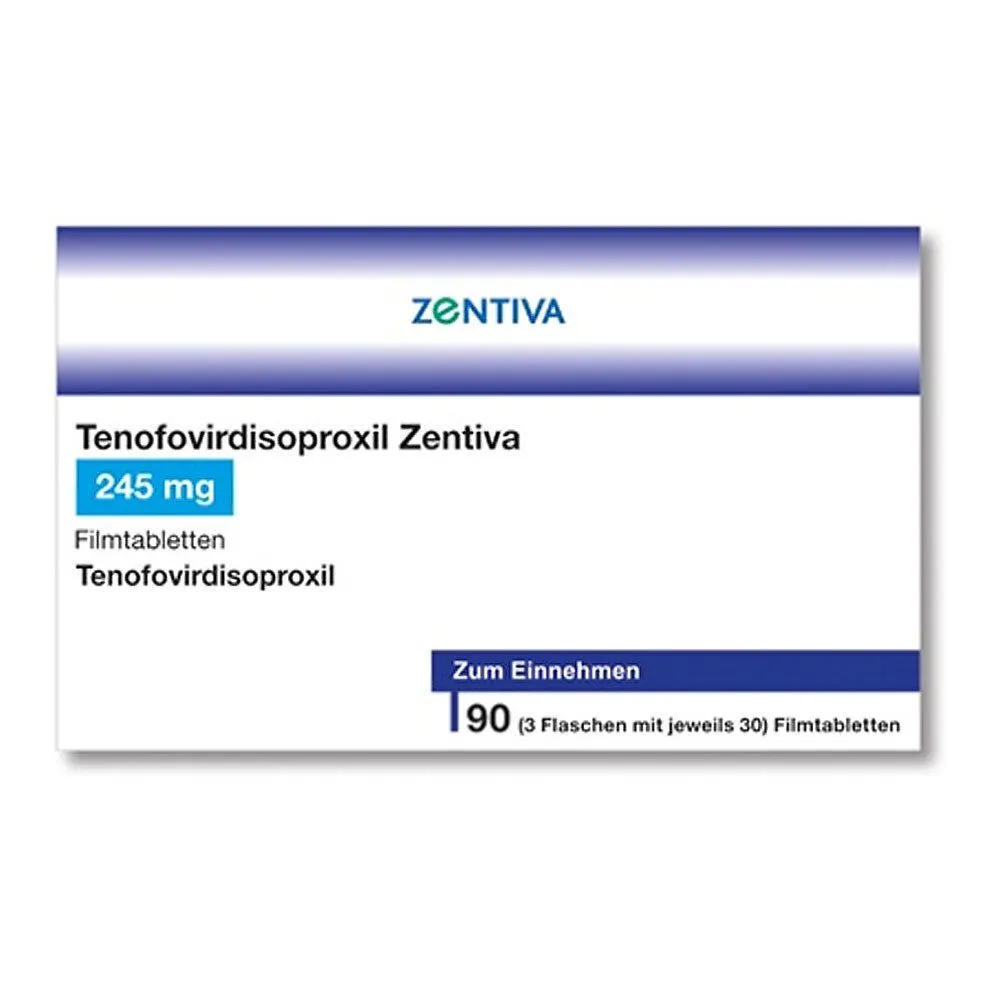
Table of Contents
Package leaflet: Information for the user
Tenofovir Zentiva, 245 mg, film-coated tablets
Tenofovir disoproxil
Read the entire leaflet carefully before taking this medicine because it contains important information for you.
- Keep this leaflet. You may need to read it again.
- If you have any further questions, ask your doctor or pharmacist.
- This medicine has been prescribed for you only. Do not pass it on to others. It may harm them, even if their symptoms are the same as yours.
- If you experience any side effects, including any not listed in this leaflet, tell your doctor or pharmacist. See section 4.
Contents of the leaflet
- What Tenofovir Zentiva is and what it is used for
- Important information before taking Tenofovir Zentiva
- How to take Tenofovir Zentiva
- Possible side effects
- How to store Tenofovir Zentiva
- Contents of the pack and other information
If Tenofovir Zentiva has been prescribed for a child, all information in this leaflet applies to the child (in this case, read "child" instead of "adult patient").
1. What Tenofovir Zentiva is and what it is used for
Tenofovir Zentiva contains the active substance tenofovir disoproxil. This active substance is an antiretroviral medicine, which is an antiviral drug used to treat HIV (human immunodeficiency virus) infection, HBV (hepatitis B virus) infection, or both. Tenofovir is a nucleotide reverse transcriptase inhibitor, commonly known as NRTI, and works by interfering with the normal function of certain enzymes—reverse transcriptase in HIV and DNA polymerase in hepatitis B virus. Both enzymes are essential for viral replication. In people infected with HIV, Tenofovir Zentiva must always be used in combination with other antiretroviral medicines.
Tenofovir Zentiva is used to treat HIV infection (Human Immunodeficiency Virus). The tablets can be used in:
- adults
- adolescents aged 12 to less than 18 years who have previously been treated with other HIV medicines that are no longer fully effective due to resistance development or have caused side effects.
Tenofovir Zentiva is also used to treat chronic hepatitis B, a disease caused by HBV. The tablets can be used in:
- adults
- adolescents aged 12 to less than 18 years.
You do not need to have HIV infection to be treated with Tenofovir Zentiva for hepatitis B virus infection.
This medicine will not cure HIV infection. People taking Tenofovir Zentiva may still develop infections or other illnesses associated with HIV.
It is also possible to transmit HBV to others; therefore, it is important to take precautions to avoid infecting other people.
2. Important information before taking Tenofovir Zentiva
When not to take Tenofovir Zentiva
- If the patient is allergic to tenofovir, tenofovir disoproxil, or any of the other ingredients of this medicine (listed in section 6). The patient concerned should immediately inform their doctor and must not take Tenofovir Zentiva.
Warnings and precautions
Tenofovir Zentiva does not reduce the risk of transmitting HBV to others through sexual contact or exposure to infected blood. Preventive measures should still be used to avoid transmission. Discuss this with your doctor or pharmacist before starting Tenofovir Zentiva.
- If the patient has had kidney disease or if tests indicate kidney problems. Tenofovir Zentiva should not be given to adolescents with kidney disease. Before starting treatment, the doctor may order blood tests to assess kidney function. Tenofovir Zentiva may affect the kidneys during treatment. During therapy, the doctor may order regular blood tests to monitor kidney function. If the patient is an adult, the doctor may recommend less frequent dosing. Do not reduce the prescribed dose unless instructed by the doctor.
Tenofovir Zentiva is generally not used together with other medicines that may harm the kidneys (see Tenofovir Zentiva and other medicines). If such combination cannot be avoided, the doctor will monitor kidney function weekly.
- If the patient has osteoporosis, a history of bone fractures, or bone problems.
Bone disorders (manifesting as persistent or worsening bone pain, and sometimes leading to fractures) may also occur due to damage to renal tubular cells (see section 4. "Possible side effects"). If the patient experiences bone pain or fractures, they should inform their doctor.
Tenofovir disoproxil may also cause a decrease in bone mineral density. The most significant bone loss was observed in clinical trials where patients were treated with tenofovir disoproxil in combination with a boosted protease inhibitor.
In general, the long-term impact of tenofovir disoproxil on bone health and the risk of future fractures in adult patients, as well as in children and adolescents, is not fully known.
In some adult HIV-infected patients receiving combination antiretroviral therapy, a bone disease called osteonecrosis (death of bone tissue due to impaired blood supply) may develop. Duration of combination antiretroviral therapy, corticosteroid use, alcohol consumption, intense immunosuppression, and increased body mass index may be among the many risk factors for developing this condition. Symptoms of osteonecrosis include joint stiffness, pain, and discomfort (especially in the hip, knee, or shoulder), and difficulty moving. If the patient experiences any of these symptoms, they should inform their doctor.
- If the patient has previously had liver disease, including hepatitis, they should consult their doctor. Patients with liver disease, including chronic viral hepatitis B or C, treated with antiretroviral medicines, are at increased risk of severe and potentially fatal liver-related adverse reactions. For patients with hepatitis, the doctor will determine the most appropriate treatment. If the patient has previously had liver disease or chronic hepatitis B, the doctor may recommend regular blood tests to monitor liver function.
Protect yourself from infections. In patients with advanced HIV infection (AIDS), after starting treatment with Tenofovir Zentiva, symptoms of infection and inflammatory conditions may appear or pre-existing infections may worsen. These symptoms may indicate immune reconstitution, where the immune system begins to fight the infection. Immediately after starting Tenofovir Zentiva, be alert for signs of inflammation or infection. If signs of inflammation or infection occur, contact your doctor immediately.
In addition to opportunistic infections, autoimmune diseases (conditions where the immune system attacks healthy body tissues) may also occur after starting antiretroviral therapy for HIV infection. Autoimmune diseases may appear several months after starting treatment. If symptoms of infection or other symptoms such as muscle weakness, weakness starting in the hands and feet and progressing toward the trunk, rapid heartbeat, tremors, or hyperactivity are observed, contact your doctor as soon as possible to begin necessary treatment.
- Patients aged 65 years and older should consult their doctor or pharmacist. Studies with Tenofovir Zentiva have not been conducted in patients over 65 years of age. Patients in this age group prescribed Tenofovir Zentiva will remain under medical supervision.
Children and adolescents
Tenofovir Zentiva can be used in:
- Adolescents aged 12 to less than 18 years infected with HIV-1, weighing at least 35 kg, and previously treated with other HIV medicines that are no longer fully effective due to resistance or caused adverse reactions.
- Adolescents aged 12 to less than 18 years infected with HBV, weighing at least 35 kg.
Tenofovir Zentiva should not be used in:
- Children under 12 years of age infected with HIV-1.
- Children under 12 years of age infected with HBV.
Dosage, see section 3. How to take Tenofovir Zentiva.
Tenofovir Zentiva and other medicines
Tell your doctor or pharmacist about all medicines you are currently taking or have recently taken, as well as any medicines you plan to take.
- Do not stop taking anti-HIV medicines prescribed by your doctor when starting Tenofovir Zentiva, if you have both HBV and HIV.
- Do not take Tenofovir Zentiva together with any medicines containing tenofovir disoproxil or tenofovir alafenamide. Do not take Tenofovir Zentiva together with medicines containing adefovir dipivoxil (a medicine used to treat chronic hepatitis B).
- It is very important to inform your doctor if you are taking other medicines that may damage the kidneys.
These include:
-
aminoglycosides, pentamidine, or vancomycin (used for bacterial infections),
-
amphotericin B (used for fungal infections),
-
foscarnet, ganciclovir, or cidofovir (used for viral infections),
-
interleukin-2 (used in cancer treatment),
-
adefovir dipivoxil (used for HBV),
-
tacrolimus (to reduce immune system response),
-
non-steroidal anti-inflammatory drugs (NSAIDs, used to relieve bone and muscle pain).
- Other medicines containing didanosine (for HIV infection): Taking Tenofovir Zentiva with other antiviral medicines containing didanosine may increase blood levels of didanosine and decrease CD4 cell count. Cases of pancreatitis and lactic acidosis (excess lactic acid in the blood), sometimes fatal, have been observed with concomitant use of tenofovir disoproxil and didanosine. The treating doctor will carefully consider whether the combination of tenofovir and didanosine is appropriate for the patient.
- Also inform your doctor if you are taking ledipasvir/sofosbuvir, sofosbuvir/velpatasvir, or sofosbuvir/velpatasvir/voxilaprevir for the treatment of hepatitis C virus infection.
Taking Tenofovir Zentiva with food and drink
Tenofovir Zentiva should be taken with food (e.g., a meal or snack).
Pregnancy and breastfeeding
If the patient is pregnant or breastfeeding, suspects she may be pregnant, or plans to become pregnant, she should consult her doctor or pharmacist before using this medicine.
- If the patient has taken Tenofovir Zentiva during pregnancy, the doctor may order regular blood tests and other diagnostic tests to monitor the child's development. In children whose mothers took NRTIs during pregnancy, the benefit of reduced risk of HIV transmission outweighs the risk of adverse effects.
- If the mother has HBV and the newborn has received medicines to prevent transmission of hepatitis B virus during delivery, breastfeeding may be possible, but the patient should first talk to her doctor for detailed information.
- Breastfeeding is not recommended for women infected with HIV, as HIV can be transmitted to the child through breast milk. If you are breastfeeding or considering breastfeeding, you should speak with your doctor as soon as possible.
- Driving and operating machinery Tenofovir Zentiva may cause dizziness. If you experience dizziness while taking Tenofovir Zentiva, do not drive or ride a bicycle, or use any tools or operate any machinery.
Tenofovir Zentiva contains lactose and sodium
Tenofovir Zentiva contains lactose. If the patient has previously been diagnosed with intolerance to certain sugars, they should contact their doctor before taking this medicine.
This medicine contains less than 1 mmol of sodium (23 mg) per tablet, i.e., essentially "sodium-free".
3. How to take Tenofovir Zentiva
This medicine should always be taken exactly as prescribed by your doctor or pharmacist. If you are unsure,
consult your doctor or pharmacist.
The recommended dose is:
- Adults: 1 tablet taken once daily with food (for example, with a meal or snack).
- Adolescents aged 12 to less than 18 years, weighing at least 35 kg: 1 tablet taken once daily with food (for example, with a meal or snack).
If you have significant difficulty swallowing, the tablet may be crushed with the back of a spoon. The
resulting powder should then be mixed with approximately 100 ml (half a glass) of water, orange juice,
or grape juice and taken immediately.
You must always take the dose prescribed by your doctor. This is important to ensure the full
effectiveness of the medicine and to reduce the risk of developing resistance to the medicine. Do not change
the dose of the medicine unless your doctor advises you to do so.
If you are an adult and have kidney problems, your doctor may recommend taking Tenofovir Zentiva
less frequently or prescribe a lower dose available on the market.
If you are infected with HBV, your doctor may suggest testing for HIV to determine whether you are
co-infected with both HBV and HIV.
Please read the patient information leaflets of other antiretroviral medicines to learn about their proper use.
Taking more Tenofovir Zentiva than recommended
Accidentally taking too many tablets of Tenofovir Zentiva may increase the risk of possible side effects
of this medicine (see section 4. Possible side effects).
Contact your doctor or the emergency department of your nearest hospital for advice. Take the medicine
packaging with you so you can show which medicine has been taken.
Missing a dose of Tenofovir Zentiva
It is important not to miss any dose of Tenofovir Zentiva.
If you miss a dose of Tenofovir Zentiva, calculate how much time has passed since it should have been taken.
- If less than 12 hours have passed since the usual time of taking the dose, take it as soon as possible, then take the next dose at the usual time.
- If more than 12 hours have passed since the time you should have taken the dose, do not take the missed dose. Wait and take the next dose at the usual time. Do not take a double dose to make up for a missed tablet.
If vomiting occurs within 1 hour after taking Tenofovir Zentiva, take another tablet. You do not need to
take another tablet if vomiting occurs more than 1 hour after taking Tenofovir Zentiva.
Stopping treatment with Tenofovir Zentiva
- Do not stop taking Tenofovir Zentiva without consulting your doctor. Stopping treatment with Tenofovir Zentiva may reduce the effectiveness of the treatment prescribed by your doctor.
- It is very important that patients with hepatitis B virus infection or those co-infected with both HIV and hepatitis B do not stop taking Tenofovir Zentiva without first consulting their doctor. In some patients, blood test results or symptoms have indicated a worsening of hepatitis after stopping Tenofovir Zentiva. Blood tests may be necessary for several months after stopping the medicine. Discontinuation of treatment is not recommended in patients with advanced liver disease or cirrhosis, as this may lead to worsening of hepatitis in some patients.
- Before stopping Tenofovir Zentiva for any reason, consult your doctor, especially if you experience any side effects or develop another illness.
- Inform your doctor immediately about any new or unusual symptoms noticed after stopping treatment, particularly those usually associated with hepatitis B virus infection.
- Before restarting Tenofovir Zentiva tablets, contact your doctor.
If you have any further questions about the use of this medicine, consult your doctor or pharmacist.
4. Possible side effects
During treatment for HIV infection, increases in body weight, as well as blood lipid and glucose levels, may occur. This is partly related to improved health and lifestyle, and in the case of blood lipid levels, sometimes to the antiretroviral treatment itself. Your doctor will monitor these changes.
Like all medicines, this medicine can cause side effects, although not everybody will experience them.
Possible serious side effects: contact your doctor immediately
Lactic acidosis (excess lactic acid in the blood) is a rare (may occur in not more than 1 in 1,000 people), but serious and potentially life-threatening side effect. The following symptoms may be signs of lactic acidosis:
- deep, rapid breathing
- drowsiness
- nausea, vomiting, and abdominal pain
If you suspect you have developed lactic acidosis, contact your doctor immediately.
Other possible serious side effects
The following side effects occur uncommonly (may occur in not more than 1 in 100 people):
- abdominal pain due to pancreatitis
- damage to renal tubular cells
The following side effects occur rarely (may occur in not more than 1 in 1,000 people):
- kidney inflammation, passing large amounts of urine, and feeling thirsty
- changes in urine test results and back pain due to kidney dysfunction, including kidney failure
- bone softening (manifesting as bone pain and sometimes leading to fractures), which may result from damage to renal tubular cells
- fatty liver
If you suspect you have experienced any of the above serious side effects, contact your doctor immediately.
Most common side effects
The following side effects occur very commonly (may occur in more than 1 in 10 people):
- diarrhoea, vomiting, nausea, dizziness, rash, feeling weak
Tests may also show:
- decreased blood phosphate levels
Other possible side effects
The following side effects occur commonly (may occur in not more than 1 in 10 people):
- headache, stomach pain, feeling tired, bloating, loss of bone density
Tests may also show:
- liver function abnormalities
The following side effects occur uncommonly (may occur in not more than 1 in 100 people):
- muscle cell breakdown, muscle pain or weakness
Tests may also show:
- decreased blood potassium levels
- increased blood creatinine levels
- pancreatic dysfunction
Muscle cell breakdown, bone softening (manifesting as bone pain and sometimes leading to fractures), muscle pain, muscle weakness, and low blood potassium or phosphate levels may result from damage to renal tubular cells.
The following side effects occur rarely (may occur in not more than 1 in 1,000 people):
- abdominal pain due to hepatitis
- swelling of the face, lips, tongue, or throat
Reporting of side effects
If any side effects occur, including any not listed in this leaflet, inform your doctor or pharmacist. Side effects can also be reported directly to the Department of Monitoring Adverse Drug Reactions, Office for Registration of Medicinal Products, Medical Devices and Biocidal Products
Al. Jerozolimskie 181 C
02-222 Warsaw
Tel.: +48 22 4921301
Fax: +48 22 4921309
Website: https://smz.ezdrowie.gov.pl
Side effects can also be reported to the marketing authorisation holder or its representative in Poland.
Reporting side effects helps provide more information on the safety of this medicine.
5. How to store Tenofovir Zentiva
Keep this medicine out of the sight and reach of children.
Do not use this medicine after the expiry date stated on the bottle and on the carton after "Expiry date (EXP):". The expiry date refers to the last day of the stated month.
No special storage conditions are required for this medicine.
After first opening the bottle, the medicine should be used within 60 days.
Medicines should not be disposed of via wastewater or household waste. Ask your pharmacist how to dispose of medicines no longer in use. This will help protect the environment.
6. Contents of the pack and other information
What Tenofovir Zentiva contains
- The active substance is tenofovir disoproxil. Each Tenofovir Zentiva tablet contains 245 mg of tenofovir disoproxil (as fumarate).
- The other ingredients are: lactose monohydrate, povidone, sodium croscarmellose (E468), microcrystalline cellulose, magnesium stearate (E572), hypromellose, titanium dioxide (E171), triacetin, indigo carmine (E132).
What Tenofovir Zentiva looks like and contents of the pack
Tenofovir Zentiva is a light blue, elongated, biconvex film-coated tablet with dimensions of approximately 17 mm x 8 mm.
Pack contents:
Tenofovir Zentiva 245 mg film-coated tablets are supplied in HDPE bottles with a child-resistant cap and a desiccant in the form of silica gel (in a container) containing 30 film-coated tablets, or in OPA/Aluminum/PVC/Aluminum blisters containing 10 film-coated tablets.
Pack sizes available: cardboard cartons containing three blisters of 10 film-coated tablets each, or one bottle of 30 film-coated tablets, or three bottles of 30 film-coated tablets each.
Not all pack sizes may be marketed.
Marketing Authorisation Holder
Zentiva, k.s., U kabelovny 130, Dolní Měcholupy, 102 37 Prague 10, Czech Republic
Importer
Zentiva, k.s., U kabelovny 130, Dolní Měcholupy, 102 37 Prague 10, Czech Republic
S.C. Zentiva S.A., B-dul Theodor Pallady nr.50, sector3, Bucharest, cod 032266, Romania
This medicinal product has been authorised in the European Economic Area countries under the following names:
Bulgaria Тенофовир Зентива 245 mg филмирани таблетки
Czech Republic Tenofovir disoproxil Zentiva k.s.
Denmark Tenofovir disoproxil Zentiva k.s.
France Tenofovir Disoproxil Zentiva Lab 245 mg, comprimé pelliculé
Germany Tenofovirdisoproxil Zentiva 245 mg Filmtabletten
Norway Tenofovir disoproxil Zentiva k.s.
Poland Tenofovir Zentiva, 245 mg, film-coated tablets
Sweden Tenofovir disoproxil Zentiva k.s.
United Kingdom
(Northern Ireland) Tenofovir Zentiva 245 mg film coated tablets
For further information about this medicinal product, please contact the Marketing Authorisation Holder's representative in Poland:
Zentiva Polska Sp. z o.o.
ul. Bonifraterska 17
00-203 Warsaw
tel.: +48 22 375 92 00