Tarivid 200
Poland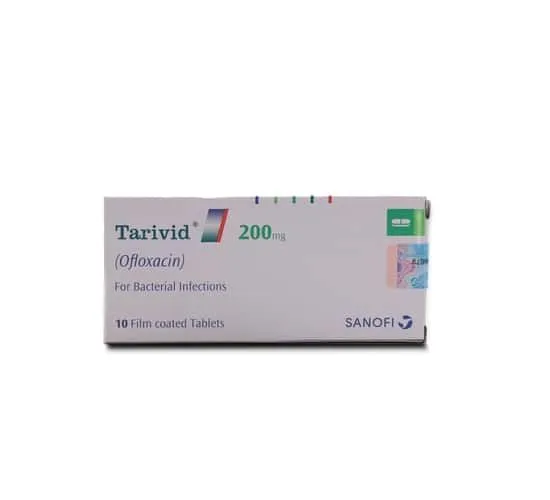
Table of Contents
Package leaflet: Information for the user
Tarivid 200
200 mg, coated tablets
Ofloxacinum
Please read all of this leaflet carefully before taking this medicine, because it contains
important information for you.
- Keep this leaflet, as you may need to read it again.
- If you have any questions, please consult your doctor or pharmacist.
- This medicine has been prescribed for a specific individual. Do not pass it on to others. It may harm other people, even if their symptoms are the same.
- If you experience any adverse reactions, including any not listed in this leaflet, tell your doctor or pharmacist. See section 4.
Contents of the leaflet
- What Tarivid 200 is and what it is used for
- What you need to know before taking Tarivid 200
- How to take Tarivid 200
- Possible side effects
- How to store Tarivid 200
- Contents of the pack and other information
1. What Tarivid 200 is and what it is used for
Tarivid 200 contains ofloxacin as the active substance, an antibiotic belonging to the group of fluorochinolones, which acts against bacteria causing infections.
Tarivid 200 is indicated in adults for the treatment of the following bacterial infections:
- acute pyelonephritis and complicated urinary tract infections,
- bacterial prostatitis, orchitis and epididymitis,
- pelvic inflammatory disease, in combination with other antibacterial agents.
For the following indications, Tarivid 200 should be used only when other antibacterial agents commonly recommended for the treatment of these infections are considered inappropriate:
- uncomplicated cystitis,
- urethritis,
- complicated skin and soft tissue infections,
- acute bacterial sinusitis,
- acute exacerbation of chronic obstructive pulmonary disease, including bronchitis,
- community-acquired pneumonia.
2. Important information before using Tarivid 200
When not to take Tarivid 200 and to contact a doctor
- If the patient is allergic to ofloxacin or any of the other ingredients in this medicine (listed in section 6). Symptoms of an allergic reaction include: rash, difficulty swallowing or breathing, swelling of the lips, face, throat or tongue.
- If the patient has ever previously experienced tendon swelling (called tendonitis), for example affecting the wrist or Achilles tendon.
- If the patient has epilepsy or an increased tendency to seizures, e.g. following head trauma, stroke, or inflammation of the central nervous system (increased risk of seizures).
- If the patient is pregnant or breastfeeding (see section "Pregnancy and breastfeeding" below).
- If the patient is under 18 years of age or still growing.
Warnings and precautions
Before using Tarivid 200
Before starting Tarivid 200, discuss with a doctor or pharmacist if the patient:
- has a tendency to seizures,
- has received an organ transplant,
- has previously had tendon disorders associated with fluoroquinolone use,
- has liver or kidney problems,
- has heart disease or heart rhythm disorders,
- suffers from myasthenia gravis,
- has diabetes and is taking antidiabetic medicines,
- has a red blood cell disorder known as "glucose-6-phosphate dehydrogenase deficiency",
- is taking medicines that reduce blood clotting,
- currently has or has previously had mental health problems,
- has been diagnosed with enlargement of a large blood vessel (aortic aneurysm or large peripheral artery),
- has previously experienced aortic dissection (tearing of the aortic wall),
- has been diagnosed with heart valve insufficiency,
- has a family history of aortic aneurysm or aortic dissection, or congenital heart valve disease, or other risk factors or predisposing conditions (e.g. connective tissue disorders such as Marfan syndrome or Ehlers-Danlos syndrome, Turner syndrome, Sjögren's syndrome [an autoimmune inflammatory disease], or vascular diseases such as Takayasu arteritis, giant cell arteritis, Behçet's disease, hypertension, or confirmed arterial atherosclerosis, rheumatoid arthritis [joint disease], or endocarditis [heart infection]).
Do not take antibacterial medicines containing fluoroquinolones or quinolones,
including Tarivid 200, if the patient has previously experienced any severe adverse reaction
during treatment with a quinolone or fluoroquinolone. In such a case, contact a doctor immediately.
In case of sudden severe abdominal, back or chest pain, go immediately to the emergency department.
Heart-related disorders
Exercise caution when using this type of medicine if:
- the patient has been diagnosed with congenital or familial QT prolongation (visible on ECG – an examination of the heart's electrical activity),
- the patient has blood electrolyte imbalances (especially low blood potassium and magnesium levels),
- the patient has a very slow heart rate (called bradycardia),
- the patient has poor heart function (heart failure),
- the patient has had a myocardial infarction,
- the patient is female or elderly (may be more susceptible to QT prolongation),
- the patient is taking other medicines that may cause changes in the ECG (see section "Tarivid 200 and other medicines").
If the patient is unsure whether any of the above apply, consult a doctor or pharmacist before
starting Tarivid 200.
Consult a doctor if, during treatment with Tarivid 200, the patient experiences any of the following symptoms:
- rash, urticaria, itching, angioedema (swelling of the skin and mucous membranes, possibly affecting the airways and potentially life-threatening), and low blood pressure,
- diarrhoea, especially severe, watery, with blood or mucus, abdominal pain and (or) fever – these may be symptoms of pseudomembranous colitis, a serious complication associated with antibiotic use,
- blisters appearing on mucous membranes, mainly in the mouth and genital organs – these may be symptoms of a severe skin allergic reaction called Stevens-Johnson syndrome,
- extensive peeling of the skin, which may be a sign of a severe skin allergic reaction called toxic epidermal necrolysis,
- seizures,
- psychotic reactions causing behaviors dangerous to the patient's safety and life,
- loss of appetite, jaundice, dark urine, itching or tender abdomen – these may be symptoms of hepatitis,
- swelling and pain around tendons, muscle pain – these may be symptoms of tendonitis or tendon rupture,
- muscle weakness, difficulty breathing,
- skin reactions following exposure to sunlight or artificial UV radiation (solarium, UV lamps) – these may be symptoms of photosensitivity, which may persist for up to 48 hours after treatment ends,
- heart rhythm disturbances,
- symptoms of superinfection caused by resistant bacteria or fungi,
- disturbances in blood glucose levels,
- weakness, tingling or numbness,
- tremors and increased or decreased muscle tone, slowed movement initiation, reduced movement, and other muscle coordination disorders,
- visual disturbances,
- easy bruising or bleeding in patients treated with vitamin K antagonists.
In case of sudden severe abdominal, back or chest pain, which may be a symptom of an aneurysm or aortic dissection, go immediately to the emergency department. The risk of these events may be higher in patients treated with systemic corticosteroids.
In case of sudden shortness of breath, especially when lying down, or observing swelling of the ankles, feet or abdomen, or experiencing palpitations (sensation of rapid or irregular heartbeat), seek medical advice immediately.
Especially in cases of severe infections or lack of response to treatment, due to the risk of resistance development, the doctor may recommend microbiological testing of the isolated bacterial strain and determine its sensitivity.
In patients treated with fluoroquinolones, including ofloxacin, abnormally high or low blood glucose levels have been reported. In diabetic patients treated concomitantly with oral antidiabetic medicines (e.g. glibenclamide) or insulin, cases of hypoglycaemic coma have been reported. In diabetic patients, the doctor will recommend close monitoring of blood glucose levels.
Rarely, pain and swelling of joints and tendon inflammation or rupture may occur. The risk is increased in elderly patients (over 60 years), organ transplant recipients, patients with kidney problems, or those treated with corticosteroids. Tendon inflammation and rupture may occur within the first 48 hours of treatment, and even several months after stopping Tarivid 200. At the first signs of tendon pain or inflammation (e.g. in the ankle, wrist, elbow, shoulder or knee), discontinue Tarivid 200, contact a doctor, and rest the affected area. Avoid excessive physical exertion, as this may increase the risk of tendon rupture.
Rarely, patients may experience symptoms of nerve damage (neuropathy), such as pain, burning, tingling, numbness and (or) weakness, especially in the feet and legs and hands and arms. In such cases, discontinue Tarivid 200 immediately and contact a doctor to prevent potentially irreversible disease progression.
Long-term, disabling and potentially irreversible serious adverse reactions
Antibacterial medicines containing fluoroquinolones and (or) quinolones, including Tarivid 200, have been associated with very rare but serious adverse reactions. Some of these were long-term (lasting months or years), disabling or potentially irreversible.
These include: tendon, muscle and joint pain in the upper and lower limbs, difficulty walking, abnormal sensations such as pricking, tingling, tickling, numbness or burning (paresthesia), fatigue, memory and concentration problems, effects on mental health (including sleep disturbances, anxiety, panic attacks, depression and suicidal thoughts), and sensory disturbances, including vision, taste, smell and hearing.
If any of these adverse reactions occur after taking Tarivid 200, contact a doctor immediately before continuing treatment. The patient and doctor will decide whether to continue treatment, also considering antibiotics from other classes.
Effect on laboratory test results
If the patient is to undergo urine testing, inform the doctor that Tarivid 200 is being taken. Tarivid 200 may affect the results of certain urine tests (e.g. false positive opioid and porphyrin tests).
If the patient is to undergo tuberculosis testing, inform the doctor that Tarivid 200 is being taken. Tarivid 200 may inhibit the growth of Mycobacterium tuberculosis and therefore the bacteriological test result for tuberculosis may be falsely negative.
Tarivid 200 and other medicines
Inform the doctor or pharmacist about all medicines currently or recently taken, and any medicines the patient plans to take. Tarivid 200 and certain other medicines may interact and affect each other's actions.
If the patient is taking other medicines that may affect heart rhythm, such as antiarrhythmic drugs (e.g. quinidine, hydroquinidine, disopyramide, amiodarone, sotalol, dofetilide, ibutilide), tricyclic antidepressants, certain antibacterial drugs (macrolide class), or certain antipsychotics, inform the doctor immediately.
The following medicines may alter the effect of Tarivid 200 or Tarivid 200 may alter the effect of some of the following medicines:
- methotrexate, used in rheumatic or oncological diseases,
- medicines that reduce blood clotting,
- iron-containing medicines (used in anaemia) or zinc,
- medicines used to treat psychiatric disorders,
- diuretics (water-excreting medicines), such as furosemide,
- antacids containing magnesium or aluminium (used for indigestion),
- glibenclamide (used in diabetes),
- probenecid (used in gout),
- cimetidine (used in gastric ulcer or indigestion),
- sucralfate (used in gastric ulcer).
The following medicines, when taken simultaneously with Tarivid 200, may increase the risk of adverse reactions:
- other antibiotics (such as: erythromycin, azithromycin or clarithromycin),
- medicines used for depression (such as: amitriptyline, clomipramine or imipramine),
- theophylline (used for respiratory disorders),
- medicines used to regulate heart rhythm (such as: amiodarone, quinidine, procainamide or disopyramide),
- medicines used to treat psychiatric disorders,
- fenbufen or non-steroidal anti-inflammatory drugs (NSAIDs) used to relieve pain and inflammation (such as: ibuprofen, diclofenac or indomethacin).
Taking Tarivid 200 with food and drink
Tablets may be taken on an empty stomach or with food. Maintain approximately a 2-hour interval between taking Tarivid 200 and antacid medicines.
Pregnancy and breastfeeding
If the patient is pregnant or breastfeeding, suspects she may be pregnant, or plans to have a child, she should consult a doctor or pharmacist before using this medicine.
The patient should not take Tarivid 200 if:
- she is pregnant, planning pregnancy, or suspects she may be pregnant,
- she is breastfeeding or planning to breastfeed.
Driving and operating machinery
During treatment with Tarivid 200, the patient may experience drowsiness, balance disturbances or dizziness, or visual disturbances. If such symptoms occur, the patient should not drive, operate tools or machinery.
Tarivid 200 contains lactose
If the patient has previously been diagnosed with intolerance to certain sugars, consult a doctor before taking Tarivid 200.
3. How to take Tarivid 200
This medicine should always be taken as directed by the physician. In case of doubt, consult
your doctor or pharmacist.
How and when to take Tarivid 200
- The medicine should be taken orally.
- Tablets should be swallowed whole with water.
- During treatment with Tarivid 200 tablets, avoid strong sunlight exposure and do not use sunlamps or sunbeds.
- Do not take iron-containing medicines (for anaemia), medicines that neutralise gastric acid (for indigestion or heartburn), or sucralfate (used in gastric ulcer) within 2 hours before or after taking Tarivid 200.
- If the patient feels the effect of the medicine is too strong or too weak, they should consult their doctor. Do not change the dosage independently.
- The duration of treatment depends on the severity of the infection.
- In severe infections, treatment usually lasts 7 to 10 days. Treatment should not last longer than 2 months.
- Daily doses are usually divided into two equal doses (morning and evening). Equal intervals (12 hours) should be maintained between doses taken during the day.
- Doses up to 400 mg may be taken as a single dose in the morning. Higher doses should be taken as two separate doses, in the morning and evening, approximately 12 hours apart.
What dose of the medicine should be taken
- The doctor will decide how many Tarivid 200 tablets the patient should take, how often, and how long the treatment should last.
- The dose depends on the type and severity of the infection.
The usual dose in adults, including elderly people, is 200 mg to 400 mg daily. The dose depends on the site and type of infection.
| Indications for use | Doses |
| 200 mg – 400 mg (1–2 tablets) 2 × daily |
| Complicated skin and soft tissue infections | 400 mg (2 tablets) 2 × daily |
In some cases, the physician may recommend a higher daily dose of the medicinal product (600 mg or even 800 mg).
Elderly patients
In elderly patients, renal function should be carefully monitored. The physician will adjust the dosage accordingly. See also section 2 "Heart-related disorders".
Renal disorders
If the patient has any kidney problems, the physician may recommend a reduced dose of Tarivid 200.
Hepatic function disorders
In patients with severe hepatic function disorders (such as cirrhosis with ascites), elimination may be reduced; therefore, a daily dose higher than 400 mg is not recommended.
Use in children and adolescents
Tarivid 200 must not be used in children and adolescents.
Overdose of Tarivid 200
If an overdose of Tarivid 200 is taken, contact a physician immediately or go to the nearest hospital, as specialized medical assistance may be required. Bring the medicinal product packaging with you so the physician knows which medicinal product has been taken. Symptoms may include: feeling disoriented, dizziness, loss of consciousness, seizure, nausea, or blood in stool. Since the medicinal product was placed on the market, the following neurological symptoms have been observed: feeling disoriented, seizures, seeing, feeling or hearing things that do not exist (hallucinations), and tremor.
Missed dose of Tarivid 200
If the patient forgets to take a dose of Tarivid 200, they should take it as soon as they remember. However, if it is almost time for the next dose, the missed dose should be skipped. Do not take a double dose to make up for the missed dose.
Discontinuation of Tarivid 200
Tarivid 200 should be taken for as long as prescribed by the physician. Do not stop taking Tarivid 200 even if the patient feels better. If the patient stops taking the medicinal product, the infection may recur.
If there are any further doubts regarding the use of this medicinal product, consult a physician or pharmacist.
4. Possible adverse reactions
Like all medicines, this medicine can cause adverse reactions, although not everyone will experience them.
If any of the following adverse symptoms occur, stop taking
the medicine Tarivid 200 immediately and contact your doctor or go to the nearest
hospital emergency department (see also "Warnings and precautions" in section 2)
- Severe allergic reaction, manifesting as rash, difficulty breathing, swelling of the lips, face, throat or tongue (angioedema).
- Very severe allergic reaction, known as "anaphylactic shock", manifesting as weakness, fainting, difficulty breathing or facial swelling.
- Serious skin reaction with blistering of the skin, peeling of the skin around the lips, eyes, mouth, nose and genital organs (Stevens-Johnson syndrome), extensive peeling of the epidermis (toxic epidermal necrolysis), painful redness of the skin with nodules and blisters (erythema multiforme).
- Heart rhythm disturbances (irregular heartbeat), which may be life-threatening (ventricular arrhythmia).
- Rhabdomyolysis (breakdown of skeletal muscles): widespread muscle pain, muscle tenderness to touch, possibly accompanied by fever, fatigue and worsening kidney function.
- Hepatitis: yellowing of the skin and whites of the eyes, dark urine, itching, abdominal pain or tenderness.
- Diarrhoea, especially severe, watery, with blood or mucus, abdominal pain and (or) fever (pseudomembranous colitis).
- Sudden severe pain in the abdomen, back or chest.
- Coma caused by low blood sugar levels (hypoglycaemic coma). This is important in diabetic patients.
- Decreased blood sugar levels (hypoglycaemia) in diabetic patients taking antidiabetic medicines; symptoms may include: weakness, irritability, sweating and (or) tremors.
In patients receiving fluorochinolones, cases of dilation and weakening of the arterial wall or arterial rupture (aneurysm and dissection) have been reported, which may result in rupture and lead to death, as well as cases of heart valve insufficiency. See also section 2.
Administration of quinolone and fluoroquinolone antibiotics, in some cases independently of pre-existing risk factors, has very rarely led to long-term (lasting for months or years) or permanent adverse reactions such as tendon inflammation, tendon rupture, joint pain, limb pain, difficulty walking, abnormal sensations such as pricking, tingling, tickling, burning, numbness or pain (neuropathy), depression, fatigue, sleep disturbances, memory disturbances, and disturbances of hearing, vision, taste and smell (see "Warnings and precautions" in section 2).
Contact your doctor if any of the following adverse reactions worsen
or persist for longer than a few days:
Not very common (occur in no more than 1 in 100 patients)
- Fungal infections, secondary infections caused by microorganisms resistant to the drug
- Restlessness, sleep disturbances, problems sleeping
- Dizziness, headache
- Eye irritation
- Balance disturbances
- Cough, inflammation inside the nose and throat
- Abdominal pain, diarrhoea, nausea, vomiting
- Itching, rash
Rare (occur less frequently than in 1 in 1,000 patients)
- Anaphylactic reaction - a very serious allergic reaction, manifesting as weakness, fainting, difficulty breathing or facial swelling
- Anaphylactoid reaction - immediate systemic reaction resembling anaphylaxis
- Angioedema - a serious allergic reaction manifesting as rash, breathing difficulties caused by swelling of the lips, face, throat or tongue
- Loss of appetite
- Feeling disoriented or anxious, nightmares, psychotic disorders, e.g. seeing, feeling or hearing things that do not exist (hallucinations), depression
- Drowsiness
- Numbness or tingling in hands and feet
- Change or loss of taste and smell sensation
- Vision disturbances
- Rapid heartbeat (tachycardia)
- Fainting, confusion or dizziness caused by low blood pressure
- Shortness of breath, bronchospasm
- Inflammation of the intestine [symptoms include: watery diarrhoea with blood or mucus, abdominal pain and (or) fever]
- Increased liver enzyme activity and (or) bilirubin concentration, shown in blood tests
- Urticaria, hot flushes, excessive sweating, pustular rash
- Swelling and pain in the tendon area due to inflammation
- Increased blood creatinine concentration
- Memory disturbances
- Acute confusion (delirium)
- Seeing or hearing things that do not exist (hallucinations, paranoia), changes in beliefs and thoughts (psychotic reactions) with risk of suicidal thoughts or attempts.
Very rare (occur less frequently than in 1 in 10,000 patients)
- Feeling of fatigue, fainting, dizziness and pale skin; these may be symptoms of anaemia (deficiency of red blood cells)
- Blood disorders, i.e. reduced number of white blood cells (leukopenia) or platelets (thrombocytopenia); this may lead to weakness, easier bruising or increased susceptibility to infections
- Increased number of a certain type of white blood cells called eosinophils (eosinophilia)
- Anaphylactic shock - a rapidly developing, life-threatening allergic hypersensitivity reaction
- Anaphylactoid shock - a rapidly developing, life-threatening non-allergic hypersensitivity reaction
- Nervous system disorders (weakness, tingling or numbness)
- Tremor and increased or decreased muscle tone, slowed movement initiation, reduced movements and other disturbances in muscle coordination
- Seizures
- Tinnitus, hearing loss
- Diarrhoea, especially severe, watery, with blood or mucus, abdominal pain and (or) fever (pseudomembranous colitis)
- Yellowing of the skin and whites of the eyes (jaundice)
- Painful redness of the skin with nodules and blisters (erythema multiforme)
- Extensive peeling of the epidermis (toxic epidermal necrolysis)
- Skin hypersensitivity reactions to light (photoallergic reactions), skin eruptions
- Vasculitis, often with red or purple raised spots on the skin, possibly leading to skin necrosis
- Joint and muscle pain
- Tendon rupture, e.g. Achilles tendon, which, as with other fluoroquinolones, may occur within 48 hours of starting treatment and may be bilateral
- Acute kidney failure, possibly leading to cessation of kidney function; symptoms may include rash, high body temperature and generalised pain
Frequency not known (frequency cannot be determined from available data)
- Complete or near-complete absence of granulocytes in the blood (agranulocytosis), which may lead to increased susceptibility to infections
- Feeling of weakness, easier bruising and increased susceptibility to infections; this may be caused by reduced number of all blood cells, suppression of (haematopoietic) bone marrow function
- Syndrome of inappropriate antidiuretic hormone secretion and low blood sodium levels (SIADH)
- Increased blood sugar levels (hyperglycaemia)
- Severe depression or psychotic disorders; in some patients with depression, thoughts of self-harm or suicide may occur
- Nervousness
- Panic attack
- Tremor, uncoordinated and involuntary movements of limbs or entire body (dyskinesia)
- Loss of taste sensation, fainting
- Burning nerve pain (neuralgia)
- Eye inflammation (uveitis)
- Hearing disturbances
- Heart disorders
- very rapid heartbeat,
- life-threatening irregular heartbeat,
- heart rhythm disturbance (known as "QT prolongation", visible on ECG - an examination of the heart's electrical activity)
- Severe shortness of breath, allergic pneumonia causing breathlessness, cough and fever
- Indigestion, bloating, constipation
- Pancreatitis
- Hepatitis, sometimes severe
- Loss of appetite, yellowing of the skin and whites of the eyes, dark urine, itching, stomach irritation (abdominal pain). These may be symptoms of liver function disorders, possibly leading to liver failure resulting in death
- Serious skin reaction with blistering of the skin, peeling of the skin around the lips, eyes, mouth, nose and genital organs (Stevens-Johnson syndrome)
- Red scaly rash with subcutaneous nodules and blisters, drug eruption
- Inflammation of the mouth
- Skin redness associated with intense peeling (exfoliative dermatitis)
- Darker areas of skin (hyperpigmentation)
- Widespread muscle pain, muscle tenderness to touch, possibly accompanied by fever, fatigue and worsening kidney function - breakdown of skeletal muscles (rhabdomyolysis)
- Pain or muscle weakness, which may be particularly important in patients with myasthenia (see Warnings and precautions)
- Muscle tear or rupture
- Ligament rupture
- Arthritis
- Acute interstitial nephritis, which may cause ankle swelling or high blood pressure
- Porphyria attacks (a rare metabolic disorder) in patients with porphyria
- Weakness, fever, pain (including back, chest and limb pain)
- Persistent headache with blurred vision (benign intracranial hypertension).
Reporting of adverse reactions
If any adverse reactions occur, including any adverse reactions not listed
in this leaflet, inform your doctor or pharmacist. Adverse reactions can
be reported directly to the Department of Monitoring Adverse Drug Reactions of the Office for Registration of Medicinal Products, Medical Devices and Biocidal Products
Al. Jerozolimskie 181C
02-222 Warsaw
Tel.: + 48 22 49 21 301
Faks: + 48 22 49 21 309
Website: https://smz.ezdrowie.gov.pl
Adverse reactions can also be reported to the marketing authorisation holder or its representative
in Poland.
Reporting adverse reactions helps to provide more information on the safety of the medicine.
5. How to store Tarivid 200
Store below 25°C.
Keep the medicine out of the sight and reach of children.
Do not use this medicine after the expiry date stated on the carton. The expiry date refers to the last day of the stated month.
Medicines should not be disposed of via wastewater or household waste. Ask your pharmacist how to dispose of medicines no longer required. This will help protect the environment.
6. Contents of the pack and other information
What Tarivid 200 contains
- Each tablet contains 200 mg of ofloxacin as the active substance.
- The other ingredients of the tablets are: corn starch, monohydrate lactose, hydroxypropylcellulose, carboxymethylcellulose, magnesium stearate, methylhydroxypropylcellulose, polyethylene glycol 8000, talc, titanium dioxide (E 171).
What Tarivid 200 looks like and contents of the pack
Tarivid 200 is white to slightly yellowish, biconvex, elongated coated tablets, with a division line on both sides and embossed markings "MXI" and the Hoechst logo on both sides.
They are packed in PVC/aluminum blisters. Each pack contains 10 tablets (1 blister with 10 tablets) or 20 tablets (2 blisters with 10 tablets each), in a cardboard box.
Marketing Authorisation Holder and Manufacturer
Marketing Authorisation Holder
Sanofi-Aventis Deutschland GmbH
Brüningstrasse 50
D-65 926 Frankfurt am Main, Germany
Manufacturer
Opella Healthcare International SAS
56, Route de Choisy
60200 Compiègne
France
For more detailed information about this medicinal product, please contact the local representative of the Marketing Authorisation Holder in Poland:
Sanofi Sp. z o.o.
ul. Marcina Kasprzaka 6
01-211 Warsaw
Tel. +48 22 280 00 00