Targocid
Poland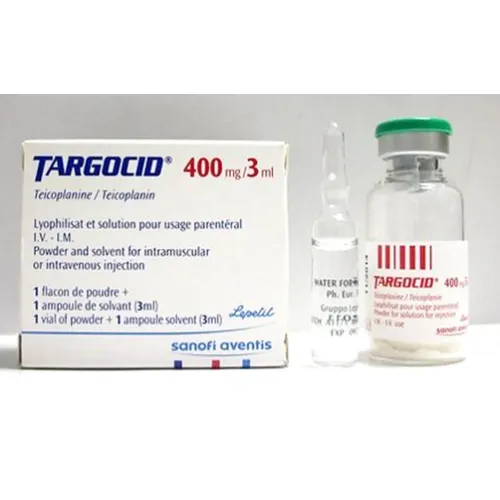
Table of Contents
- Package leaflet: Information for the user
- 1. What Targocid is and what it is used for
- 2. Important information before using Targocid
- 3. How to use Targocid
- 4. Possible adverse reactions
- 5. How to store Targocid medicine
- 6. Contents of the pack and other information
- The following information is intended for healthcare professionals only:
Package leaflet: Information for the user
Warning! Please keep the leaflet. The information on the immediate packaging is in a foreign language.
Targocid
400 mg, powder and solvent for solution for injection/infusion or oral solution
Teicoplanin
Please read all of this leaflet carefully before using this medicine, because it contains
important information for the patient.
- Keep this leaflet so that you can read it again if necessary.
- If you have any questions, please consult your doctor, pharmacist, or nurse.
- If you experience any adverse reactions, including any adverse reactions not listed in this leaflet, tell your doctor, pharmacist, or nurse. See section 4.
Leaflet contents:
- What Targocid is and what it is used for
- Important information before using Targocid
- How to use Targocid
- Possible side effects
- How to store Targocid
- Contents of the pack and other information
1. What Targocid is and what it is used for
Targocid is an antibiotic. It contains the active substance called teicoplanin.
It acts bactericidally against bacteria causing infection in the patient's body.
Targocid is used in adults and children (including newborns) for the treatment of bacterial infections of:
- skin and subcutaneous tissue – sometimes referred to as soft tissue infections,
- joints and bones,
- lungs,
- urinary tract,
- heart – sometimes referred to as endocarditis,
- abdomen – peritonitis,
- blood, when caused by any of the above conditions.
Targocid may also be used to treat certain infections caused by Clostridium difficile
- bacteria in the intestines. In this case, the medicinal solution is taken orally.
2. Important information before using Targocid
When not to use Targocid
- if the patient is allergic to teicoplanin or any of the other ingredients of this medicine (listed in section 6).
Warnings and precautions
Before starting treatment with Targocid, discuss with your doctor, pharmacist, or
nurse if:
- the patient is allergic to an antibiotic called vancomycin,
- the patient has experienced redness of the upper part of the body (red man syndrome),
- the patient has a low platelet count (thrombocytopenia),
- the patient has impaired kidney function,
Page 1 of 8
- the patient is taking other medicines that may cause hearing problems and (or) kidney function disorders. The patient may have regular tests to check whether the kidneys and (or) liver are functioning properly (see "Targocid and other medicines"). If any of the above conditions apply to the patient (or the patient is unsure), contact a doctor, pharmacist, or nurse before taking Targocid.
Severe skin reactions such as Stevens-Johnson syndrome, toxic epidermal necrolysis, drug reaction with eosinophilia and systemic symptoms (DRESS), and acute generalized exanthematous pustulosis (AGEP) have been reported following the use of teicoplanin. If the patient develops a severe rash or other skin reactions described in section 4, treatment with Targocid should be discontinued and the patient should immediately contact a doctor or seek medical help.
Diagnostic tests
During treatment, the patient may undergo blood tests, kidney function tests, liver function tests, and (or) hearing tests. This is more likely if:
- treatment will last for a long time,
- the patient is to be treated with high loading doses (12 mg/kg twice daily),
- the patient has impaired kidney function,
- the patient is taking or may take other medicines that may damage the nervous system, kidneys, or hearing.
In patients receiving Targocid for a prolonged period, there may be an increased risk of overgrowth of bacteria not susceptible to the antibiotic. This will be monitored by the treating physician.
Targocid and other medicines
Tell your doctor, pharmacist, or nurse about all medicines the patient is currently taking, has recently taken, or plans to take.
This is because Targocid may affect the action of other medicines. Likewise, some medicines may affect the action of Targocid.
In particular, inform the doctor, pharmacist, or nurse if the patient is taking any of the following medicines:
- aminoglycosides – because they must not be mixed with Targocid in the same injection. They may also cause hearing problems and (or) kidney function disorders.
- amphotericin B – a medicine used to treat fungal infections, which may cause hearing problems and (or) kidney function disorders.
- cyclosporine – a medicine affecting the immune system, which may cause hearing problems and (or) kidney function disorders.
- cisplatin – a medicine used in the treatment of malignant tumours, which may cause hearing problems and (or) kidney function disorders.
- diuretics (such as furosemide) – also known as "water pills", which may cause hearing problems and (or) kidney function disorders.
If any of the above points apply to the patient (or the patient is unsure),
contact a doctor, pharmacist, or nurse before taking Targocid.
Pregnancy, breastfeeding and effects on fertility
If the patient is pregnant, suspects she may be pregnant, or is planning to become pregnant, she should
consult a doctor, pharmacist, or nurse before using this medicine.
They will decide whether this medicine can be given during pregnancy. There is a risk of damage to the inner ear and kidney function disorders.
If the patient is breastfeeding, she should inform her doctor before taking this medicine.
The doctor will decide whether the patient can breastfeed while taking Targocid.
Page 2 of 8
Studies on fertility effects conducted in animals did not show evidence of impaired fertility.
Driving and operating machinery
During treatment with Targocid, the patient may experience pain or dizziness. If such adverse effects occur, the patient should not drive or operate any tools or machinery.
Targocid contains sodium
1 vial of the medicine contains less than 1 mmol of sodium (23 mg), meaning the medicine is considered "sodium-free".
3. How to use Targocid
The medicine is available in the following strengths: 200 mg and 400 mg.
Recommended dose
Adults and children (aged 12 years and older) with normal kidney function
Skin and soft tissue infections, lung infections, and urinary tract infections
- Initial dose (for the first three doses): 6 mg per kilogram of body weight administered every 12 hours by intravenous or intramuscular injection.
- Maintenance dose: 6 mg per kilogram of body weight administered once daily by intravenous or intramuscular injection.
Bone and joint infections, and heart infections
- Initial dose (for the first three to five doses): 12 mg per kilogram of body weight administered every 12 hours by intravenous injection.
- Maintenance dose: 12 mg per kilogram of body weight administered once daily by intravenous or intramuscular injection.
Infection caused by Clostridium difficile
The recommended dose is 100 to 200 mg orally, twice daily for 7 to 14 days.
Adults and elderly patients with impaired kidney function
If the patient has impaired kidney function, the dose usually needs to be reduced after the fourth day of treatment:
- In patients with mild to moderate kidney impairment – the maintenance dose should be administered every two days, or half the maintenance dose once daily.
- In patients with severe kidney impairment or undergoing hemodialysis – the maintenance dose should be administered every three days, or one-third of the maintenance dose once daily.
Peritonitis in patients undergoing peritoneal dialysis
The initial dose is 6 mg per kilogram of body weight, given as a single intravenous injection, followed by:
- Week 1: 20 mg/liter in each dialysis bag
- Week 2: 20 mg/liter in every other dialysis bag
- Week 3: 20 mg/liter in the dialysis bag left in overnight.
Infants (from birth to 2 months of age)
- Initial dose (on the first day): 16 mg per kilogram of body weight administered as an intravenous infusion.
- Maintenance dose: 8 mg per kilogram of body weight administered once daily as an intravenous infusion.
Children (aged 2 months to 12 years)
Page 3 of 8
- Initial dose (for the first three doses): 10 mg per kilogram of body weight administered every 12 hours by intravenous injection.
- Maintenance dose: 6 to 10 mg per kilogram of body weight administered once daily by intravenous injection.
How Targocid is administered
This medicine is usually administered by a doctor or nurse.
- The medicine will be given by intravenous (IV) or intramuscular (IM) injection.
- It may also be given as an intravenous infusion. In infants from birth to 2 months of age, only infusion administration should be used. For the treatment of certain infections, the solution may be taken orally (oral administration).
Use of a higher than recommended dose of Targocid
It is unlikely that a doctor or nurse will administer too high a dose of the medicine.
However, if the patient believes they have received too high a dose of Targocid, or if the patient becomes agitated, seek immediate advice from a doctor or nurse.
Missed dose of Targocid
The doctor or nurse will have instructions on how to administer Targocid to the patient. It is unlikely they will administer the medicine contrary to recommendations. However, if the patient has any concerns, they should consult their doctor or nurse.
Stopping Targocid treatment
Do not stop administering the medicine without first consulting a doctor, pharmacist, or nurse.
If there are any further doubts regarding the use of this medicine, consult a doctor, pharmacist, or nurse.
4. Possible adverse reactions
Like all medicines, this medicine can cause adverse reactions, although they do not occur in everyone.
Serious adverse reactions
If any of the following serious adverse reactions occur, treatment must be stopped and
medical advice must be sought immediately from a doctor or nurse – the patient may
require urgent medical attention.
Uncommon (may occur in not more than 1 in 100 patients):
- sudden, life-threatening allergic reaction – symptoms may include: difficulty breathing or wheezing, swelling, rash, itching, fever, chills.
Rare (may occur in not more than 1 in 1,000 patients):
- redness of the upper body.
Frequency not known (frequency cannot be estimated from the available data):
-
blisters on the skin, mouth, eyes or genitals – these may be symptoms of a disease called "toxic epidermal necrolysis" or "Stevens-Johnson syndrome"
-
red, scaly widespread rash with subcutaneous nodules [including in skin folds, chest, abdomen (including stomach), back and arms] and blisters, accompanied by fever – these may be symptoms of so-called "acute generalized exanthematous pustulosis (AGEP)"
-
"drug reaction with eosinophilia and systemic symptoms (DRESS)". Initially, DRESS presents as flu-like symptoms and facial rash, followed by widespread rash with high fever, increased liver enzyme activity observed in blood tests, increased number of a certain type of white blood cells (eosinophilia), and enlarged lymph nodes.
If any of the above adverse symptoms occur, a doctor or nurse must be informed immediately.
If the patient experiences any of the following serious adverse reactions, a doctor or nurse must be
informed immediately, as the patient may require urgent medical attention.
Uncommon (may occur in not more than 1 in 100 patients): -
swelling and blood clots in a vein
-
difficulty breathing or wheezing (bronchospasm)
-
more infections than usual – these may be symptoms of reduced white blood cell count.
Frequency not known (cannot be estimated from the available data):
- absence of white blood cells – symptoms may include: fever, severe chills, sore throat or mouth ulcers (agranulocytosis)
- low levels of all types of blood cells
- kidney function disorders or changes in kidney function – detectable in laboratory tests. When higher doses are administered to the patient, the frequency or severity of kidney function disorders may increase
- seizures. If any of the above adverse symptoms occur, a doctor or nurse must be informed immediately.
Other adverse reactions
Consult a doctor, pharmacist or nurse if any of the following symptoms occur:
Common (may occur in not more than 1 in 10 patients):
- rash, redness, itching
- pain
- fever.
Uncommon (may occur in not more than 1 in 100 patients):
- decreased platelet count
- increased liver enzyme activity in blood
- increased blood creatinine levels (monitoring kidney function)
- hearing loss, ringing in the ears or sensation that the patient or surrounding objects are moving
- nausea or vomiting, diarrhoea
- dizziness or headache.
Rare (may occur in not more than 1 in 1,000 patients):
- infection (abscess).
Frequency not known (cannot be estimated from the available data):
- injection site reactions – such as skin redness, pain or swelling.
Reporting of adverse reactions
If any adverse reactions occur, including any adverse reactions not listed in this leaflet, inform a doctor, pharmacist or nurse.
Adverse reactions can be reported directly to the Department of Monitoring Adverse Drug Reactions, Office for Registration of Medicinal Products, Medical Devices and Biocidal Products, Al. Jerozolimskie 181C, 02-222 Warsaw
Page 5 of 8
Tel.: + 48 22 49 21 301, Fax: + 48 22 49 21 309, Website: https://smz.ezdrowie.gov.pl
Reporting adverse reactions allows more information on the safety of the medicine to be collected.
5. How to store Targocid medicine
Keep this medicine out of sight and reach of children.
Do not use this medicine after the expiry date stated on the packaging. The expiry date refers to the last day of the stated month.
No special storage conditions are required.
Information on storage conditions of Targocid after reconstitution of the powder and the time for its use are described in the section "Practical information for healthcare professionals on preparation and handling of Targocid".
6. Contents of the pack and other information
What Targocid contains
- The active substance is teicoplanin. Each vial contains 400 mg of teicoplanin.
- The other ingredients are: sodium chloride and sodium hydroxide (for pH adjustment) in the powder, and water for injections in the solvent.
What Targocid looks like and contents of the pack
Targocid is a powder for solution for injection/infusion or oral solution with solvent supplied. The powder is a porous, homogeneous mass of ivory colour. The solvent is a clear, colourless solution.
The powder is packed in 22 ml vials made of colourless type I glass, closed with a bromobutyl rubber stopper and an aluminium green cap with a flip-off plastic seal;
The solvent is packed in ampoules made of colourless type I glass.
Pack size: 1 vial of powder and 1 ampoule of solvent.
For further information, please contact the responsible party or the parallel importer.
Marketing Authorisation Holder in Romania, the country of export:
Sanofi Romania SRL
Str. Gara Herăstrău, No. 4, Clădirea B, floors 8-9, sector 2, Bucharest, Romania
Manufacturer:
Sanofi S.p.A.
Via Valcanello, 4, 03012 Anagni, Italy
Parallel Importer:
Delfarma Sp. z o.o.
ul. Św. Teresy od Dzieciątka Jezus 111, 91-222 Łódź
Repackaged in:
Delfarma Sp. z o.o.
ul. Św. Teresy od Dzieciątka Jezus 111, 91-222 Łódź
Page 6 of 8
Marketing Authorisation Number in Romania, the country of export: 7869/2015/01
Parallel Import Licence Number: 446/22
The following information is intended for healthcare professionals only:
Practical information for healthcare professionals on the preparation and handling of
Targocid
This medicinal product is for single use only.
Administration method
The solution obtained after dissolving the powder may be administered directly or further diluted.
The solution may be given as an injection over 3 to 5 minutes or as a 30-minute infusion.
In infants from birth to 2 months of age, infusion should be used only.
The solution obtained after dissolving the powder may also be administered orally.
Reconstitution of the solution by dissolving the powder
- Slowly inject the entire contents of the supplied solvent into the vial containing the powder.
- Then gently rotate the vial in the hands until the powder is completely dissolved. If foaming occurs, allow the solution to stand for approximately 15 minutes. The resulting solution will contain 400 mg in 3.0 ml. Only clear solutions should be used. The solution may range in color from yellowish to dark yellow. The final solution is isotonic with serum and has a pH of 7.2–7.8.
| Nominal teicoplanin content per vial | 400 mg |
| Volume of the vial with powder | 22 ml |
| Volume that can be drawn from the solvent ampoule | 3.14 ml |
| Volume containing the nominal dose of teicoplanin (drawn with a 5 ml syringe and 23 G needle) | 3.0 ml |
Dilution of the solution prior to infusion
Targocid may be administered in the following infusion solutions:
- 9 mg/ml (0.9%) sodium chloride solution
- Ringer's solution
- Ringer's lactate solution
- 5% glucose solution for injection
- 10% glucose solution for injection
- 0.18% sodium chloride and 4% glucose solution
- 0.45% sodium chloride and 5% glucose solution
- Peritoneal dialysis solution containing 1.36% or 3.86% glucose.
Shelf life of the solution after reconstitution
Chemical and physical stability of the solution prepared according to instructions has been demonstrated for
24 hours at a temperature of 2 to 8°C.
From a microbiological standpoint, the medicinal product should be used immediately. If not used
immediately, responsibility for storage conditions and duration prior to use lies with the user and should usually
not exceed 24 hours at a temperature of 2 to 8°C, provided the solution was prepared under controlled and validated aseptic conditions.
Page 7 of 8
Shelf life of the diluted solution
Chemical and physical stability of the solution prepared according to instructions has been demonstrated for
24 hours at a temperature of 2 to 8°C.
From a microbiological standpoint, the medicinal product should be used immediately. If not used
immediately, responsibility for storage conditions and duration prior to use lies with the user and should usually
not exceed 24 hours at a temperature of 2 to 8°C, provided reconstitution and dilution were carried out under controlled and validated aseptic conditions.
Disposal
Any unused portions of the medicinal product or waste materials should be disposed of in accordance with
local regulations.
Page 8 of 8