Tardysol baby
PolandTable of Contents
Package leaflet: information for the patient
Tardysol Baby, 20 mg/ml, oral solution
Ferrum as Ferrosi sulfas heptahydricus
Please read carefully the entire leaflet before taking this medicine, as it contains
important information for the patient.
- Keep this leaflet, so that you can read it again if necessary.
- If you have any questions, please consult your doctor or pharmacist.
- This medicine has been prescribed for a specific individual. Do not share it with others. This medicine may harm others, even if their symptoms are the same.
- If any adverse reactions occur in the child, including any adverse reactions not listed in this leaflet, inform your doctor or pharmacist. See section 4.
Table of contents of the leaflet
- What Tardysol Baby is and what it is used for
- Important information before using Tardysol Baby
- How to use Tardysol Baby
- Possible side effects
- How to store Tardysol Baby
- Contents of the pack and other information
1. What Tardysol Baby is and what it is used for
Tardysol Baby contains iron.
This medicine is used in children aged 6 to 24 months for the treatment of iron deficiency anemia
(insufficient number of red blood cells due to inadequate iron levels).
2. Important information before using Tardysol Baby
When not to give Tardysol Baby
- if the child is allergic to iron or any of the other ingredients of this medicine (listed in section 6);
- if the child's body contains more iron than needed;
- if the child has been diagnosed with a type of anaemia (insufficient number of red blood cells) not caused by iron deficiency, or which leads to iron overload (e.g. thalassaemia, refractory anaemia, anaemia due to bone marrow failure). IF IN DOUBT ABOUT THIS MEDICINE, CONSULT A DOCTOR OR PHARMACIST.
Warnings and precautions
Before starting Tardysol Baby in a child, discuss this with a doctor or pharmacist.
- If the child is receiving Tardysol Baby due to iron-deficiency anaemia, the doctor will also investigate the underlying cause of the anaemia so that it can be treated.
- If iron-deficiency anaemia in the child is associated with inflammatory disease, treatment with Tardysol Baby will not be effective.
- According to published data, gastrointestinal wall discolouration has been reported in elderly patients with renal failure, diabetes (abnormally high blood sugar levels), and/or hypertension (high blood pressure), who were receiving medications for these conditions along with iron supplementation due to anaemia. Such discolouration may complicate gastrointestinal surgical procedures. Due to this risk, inform the surgeon about the child's iron intake prior to any planned surgery (see section 4.4).
- In case of accidental aspiration of the medicine ("wrong direction"), it may enter the child's airways. Contact with the respiratory tract may cause injuries such as necrosis (tissue death) or bronchitis (inflammation of the airways through which air passes to the lungs) or oesophagitis (inflammation of the oesophagus, the tube connecting the mouth to the stomach). These injuries may lead to bronchial stenosis. Symptoms related to such injuries may include: persistent cough, haemoptysis (coughing up blood), and/or dyspnoea (difficulty breathing), even if aspiration occurred several days or months earlier. If aspiration is suspected and the child presents at least one of these symptoms, contact a doctor or the nearest emergency department immediately for specialist evaluation and to ensure no respiratory tract damage has occurred. To reduce the risk of aspiration, follow the administration instructions provided in section 3 of this leaflet.
Children
Not applicable.
Tardysol Baby and other medicines
Inform the doctor or pharmacist about all medicines currently or recently taken by the child, as well as any medicines planned for administration.
Some medicines must not be taken at the same time as Tardysol Baby, while others require specific adjustments (e.g. timing of administration).
If the child is receiving parenteral iron (iron injections), Tardysol Baby must not be administered.
If the patient is taking any of the following medicines, a minimum interval of 2 hours must be maintained between their administration and administration of Tardysol Baby:
antibiotics (tetracyclines, fluoroquinolones)
a medicine used to treat chronic urinary tract infection (acetohydroxamic acid)
medicines used in the treatment of HIV infection (integrase inhibitors)
medicines used to treat excessive gastric acid secretion: preparations containing mineral compounds, charcoal, or medicines that neutralize gastric juice (aluminium, calcium, and magnesium salts)
medicines used in the treatment of Wilson's disease or to prevent kidney stone formation (penicillamine, trientine)
medicines used in the treatment of thyroid disorders (levothyroxine, liothyronine)
supplements and/or medicines containing zinc, calcium, or strontium.
Taking Tardysol Baby with food and drink
Calcium-rich foods may reduce iron absorption and make treatment less effective. Therefore, Tardysol Baby should be administered some time before or after meals, including before or after consumption of dairy products.
Pregnancy, breastfeeding and fertility
Tardysol Baby is not suitable for pregnant or breastfeeding women.
Other oral iron sulfate solutions are available for adults, particularly for pregnant women. For further information, consult a doctor or pharmacist.
Effects on ability to drive and use machines
Not applicable.
Tardysol Baby contains sorbitol, sodium and propylene glycol
- This medicine contains 360 mg of sorbitol in each millilitre of solution. Sorbitol (E420) is a source of fructose. If the child has previously been diagnosed with intolerance to certain sugars or hereditary fructose intolerance (HFI), a rare genetic disorder in which the patient's body cannot metabolize fructose, consult a doctor before administering this medicine to the child.
- This medicine contains less than 1 mmol (23 mg) of sodium per ml, meaning the medicine is considered "sodium-free".
- This medicine contains 12 mg of propylene glycol (E1520) in each millilitre of solution.
3. How to use Tardysol Baby
This medicine should always be used exactly as directed by a doctor or pharmacist. If in doubt,
consult a doctor or pharmacist.
Recommended dose
Dose of Tardysol Baby for the treatment of iron deficiency:
- Children with body weight from 7 to 10 kg: the usual dose is 7 to 20 mg once daily.
- Children with body weight from 10 to 15 kg: the usual dose is 10 to 30 mg once daily.
The dose is measured directly using the graduated pipette (see explanatory illustrations).
How to prepare and administer the dose
This medicine is taken orally and must be administered under supervision of an adult.
To reduce the risk of the medicine entering the child's respiratory tract, special attention must be paid
to the administration instructions provided on the detachable card at the end of this leaflet before
administering the medicine.
Tardysol Baby should always be given some time before or after a meal, including before or after
consumption of dairy products (see "Using Tardysol Baby with food and drink").
The timing of administration should be chosen according to when the child's stomach will best tolerate
the medicine.
Dose preparation
Only use the measuring pipette supplied with the Tardysol Baby package.
Before use, check that the pipette is clean.
The pipette allows oral solution to be drawn from the bottle and indicates the dose (mg) to be
administered.
The dose is read directly from the scale on the pipette.
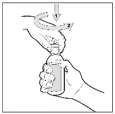
- To open the bottle, press the cap down first, then unscrew it.
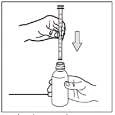
- Insert the dosing pipette into the bottle, ensuring the plunger is fully depressed.
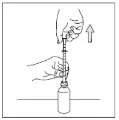
- To draw the medicine, pull the pipette plunger until the solution reaches the graduation mark closest
to the prescribed dose (graduations every 5 mg). If an air bubble is present in the drawn solution,
repeat the drawing step.
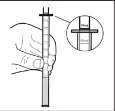
- The dose indicated by the scale will be visible above the pipette collar.
Administering the dose
Immediately after drawing the solution into the pipette, administer it slowly using the same pipette,
following the instructions on the card at the end of this leaflet.
To reduce the risk of the medicine entering the child's respiratory tract during administration, it is
essential to strictly follow the instructions for administering the medicine to young children.
The medicine should always be given some time before or after a meal, including before or after
consumption of dairy products. The medicine must be administered directly using the pipette
supplied with the package, immediately after drawing the solution from the bottle with the pipette.
- Take the awake child in your arms, holding it in a semi-sitting position in the crook of your arm, with
the head resting on your shoulder.
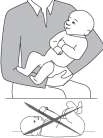
- After drawing the medicine with the pipette, immediately place the pipette into the child's mouth,
directing it towards the cheek. Slowly press the pipette plunger so that the medicine flows into the
child's mouth drop by drop.

Do not lay the child down immediately after administering the medicine.
Cleaning the pipette
- After use, close the bottle with the cap.
- Rinse the pipette thoroughly several times with water, as shown in the illustrations below:
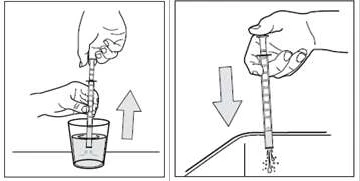
- Leave the pipette to dry on a kitchen towel, then store it together with the bottle in the cardboard
box, in a place out of sight and out of reach of children. The pipette must never be left outside the
package or leaflet.
Duration of treatment
If the child is receiving the medicine to treat iron deficiency, the treatment duration must be long
enough to correct the deficiency and replenish iron stores in the body. Treatment may last from 3 to
6 months, or even longer if the underlying cause of anemia is not effectively treated.
Administration of a higher than recommended dose of Tardysol Baby
If the child has taken a very large dose of Tardysol Baby, contact a doctor or the nearest emergency
department immediately.
Symptoms of iron overdose include:
severe irritation of the gastrointestinal tract, which may lead to tissue necrosis (necrosis of the
gastrointestinal mucosa). Main symptoms are: abdominal pain, nausea, vomiting (sometimes
containing blood), and diarrhea (sometimes with black stools).
This may be accompanied by metabolic acidosis and shock with the following main symptoms:
rapid breathing or difficulty breathing, rapid heartbeat, headache, confusion, drowsiness, fatigue,
loss of appetite, stomach pain, vomiting, and sudden drop in blood pressure, which may lead to loss
of consciousness with convulsions (coma).
Signs of impaired kidney function (marked decrease in urine output) and liver function (pain in the
upper right abdomen, yellowing of the skin or eyes, dark urine) may also occur.
Long-term consequences of overdose may include gastrointestinal stricture (stenosis), characterized
by nausea, bloating, constipation, and abdominal distension.
Missed dose of Tardysol Baby
If a dose is missed, administer it to the child as soon as possible. However, if it is almost time for the
next dose, wait until the scheduled time and then continue treatment as usual.
Do not administer a double dose to make up for a missed dose.
Stopping Tardysol Baby treatment
Tardysol Baby should be taken as directed by a doctor. Problems may occur if treatment is stopped.
If you have any further questions about using this medicine, consult a doctor or pharmacist.
4. Possible adverse reactions
Like all medicines, this medicine can cause adverse reactions, although not everyone experiences them.
The following adverse reactions may occur in children, listed from most frequent to least frequent:
Common (may affect less than 1 in 10 people):
- constipation
- diarrhoea
- abdominal distension
- abdominal pain
- change in stool color
- nausea
Uncommon (may affect less than 1 in 100 people):
- throat swelling (laryngeal oedema)
- abnormal stools
- indigestion
- vomiting
- inflammation of the stomach lining (gastritis)
- itching
- red skin rash (erythematous rash)
Frequency not known (frequency cannot be estimated from the available data):
- allergic reaction (hypersensitivity reaction)
- itchy rash (urticaria)
- tooth discoloration
- discoloration of the gastrointestinal tract wall (gastrointestinal melanosis) – see section 2)
Reporting of adverse reactions
If any adverse reactions occur, including any adverse reactions not listed in this leaflet, inform a doctor or pharmacist. Adverse reactions can be reported directly to the Department of Monitoring Adverse Drug Reactions at the Office for Registration of Medicinal Products, Medical Devices and Biocidal Products: Al. Jerozolimskie 181C, 02-222 Warsaw, tel.: 22 49-21-301, fax: 22 49-21-309, website: https://smz.ezdrowie.gov.pl
Reporting adverse reactions helps to provide more information on the safety of the medicine.
Adverse reactions can also be reported to the marketing authorization holder.
5. How to store Tardysol Baby
Keep the medicine out of the sight and reach of children.
Do not use this medicine after the expiry date stated on the outer packaging.
The expiry date refers to the last day of the stated month.
After first opening the bottle, the solution can be stored for 1 month. The medicine must be
kept away from light, in its cardboard packaging.
Between doses, the bottle and the dosing pipette should always be stored together in the box.
Medicines must not be disposed of via wastewater or household waste. Ask your pharmacist how to dispose of medicines no longer required. This will help protect the environment.
6. Contents of the pack and other information
What Tardysol Baby contains
- Each ml of oral solution contains 20 mg of iron ions in the form of ferrous sulfate heptahydrate.
- Other ingredients are: sorbitol liquid (non-crystallizing) (E420), orange flavour*, sulfuric acid, sodium propionate, sodium saccharin, purified water. * Components of the orange flavour: acetaldehyde, octanal, nonanal, decanal, ethyl butyrate, citronellal, water, citral, linalool, orange essential oil, propylene glycol (E1520).
What Tardysol Baby looks like and contents of the pack
- This medicine is a yellow to orange-coloured solution.
- 45 ml of oral solution in an amber glass bottle closed with a child-resistant stopper.
- The outer packaging contains a 2 ml pipette with graduations from 5 to 30 mg (marked every 5 mg), enabling oral administration.
This medicine is authorized for sale in the European Economic Area member states under the following names:
Belgium Tardyneo
France Tardyferon
Netherlands Tardyneo
Luxembourg Tardyneo
Marketing Authorization Holder
Pierre Fabre Medicament
Les Cauquillous
81500 Lavaur, France
Manufacturer
Pierre Fabre Medicament Production
Site Progipharm
Rue du Lycée
45500 Gien, France
For further information about this medicine, please contact the local representative of the Marketing Authorization Holder:
Pierre Fabre Medicament Polska Sp. z o.o.
ul. Belwederska 20/22
00-762 Warsaw, Poland
Tel. 22 559 63 60
Instructions for administration
Tardysol Baby, 20 mg/ml, oral solution
Ferrum as
Ferrosi sulfas heptahydricus
For children aged 6 to 24 months
To reduce the risk of choking during administration of the medicine using the dosing pipette,
strictly follow all the described procedures for administering the medicine:
The medicine should be given some time before or after a meal, including before or after giving dairy products.
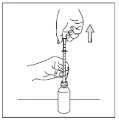
1/ Using the measuring pipette provided in the pack, draw up the solution from the bottle to the mark on the pipette scale closest to the prescribed dose (scale marks every 5 mg). Do not use any device other than the dosing pipette supplied in the package.
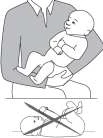
2/ Take the child in your arms, ensuring the child is awake, and hold in a semi-sitting position in the crook of your arm, with the head resting on your shoulder.
3/ Insert the medicine-filled pipette into the infant's mouth to a depth of approximately 1 cm, directing it towards the inner side of the cheek. Slowly press the pipette plunger very gradually, allowing the medicine to flow into the child's mouth drop by drop.

Warning: Do not lay the infant down immediately after administering the medicine.
There is a risk of choking during administration, which could cause the liquid to accidentally enter the child's airways. If any of the following symptoms occur:
coughing, discomfort, pallor, cyanosis (bluish discoloration) of the lips, hands or feet, difficulty breathing, or cessation of breathing (apnea), lack of movement, loss of energy or agitation,
keep the child in a sitting position and contact emergency services immediately. First, call 999 or 112.
Emergency services will advise on the immediate steps to take to assist the child.
After use, the dosing pipette should be rinsed, left to dry, and then returned to the box.
If any adverse reaction occurs in the child during treatment with Tardysol Baby, consult a doctor or pharmacist. Adverse reactions can also be reported directly via the website: https://smz.ezdrowie.gov.pl