Tafen nasal 64 mcg
Poland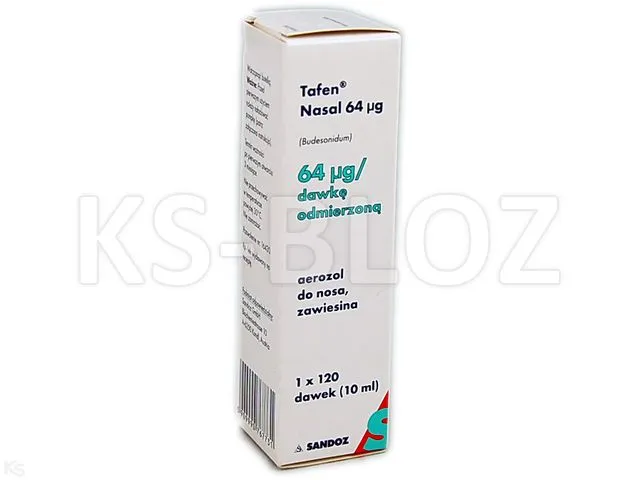
Table of Contents
Patient Information Leaflet
Tafen Nasal 64 mcg
64 micrograms/dose, nasal spray, suspension
Budesonide
Please read this leaflet carefully before using this medicine, as it contains important information for you.
- Keep this leaflet so that you can read it again if needed.
- If you have any questions, please consult your doctor or pharmacist.
- This medicine has been prescribed for a specific individual. Do not share it with others. This medicine may harm other people, even if their symptoms are the same.
- If you experience any adverse effects, including any not listed in this leaflet, tell your doctor. See section 4.
Leaflet Contents
- What Tafen Nasal 64 mcg is and what it is used for
- Important information before using Tafen Nasal 64 mcg
- How to use Tafen Nasal 64 mcg
- Possible side effects
- How to store Tafen Nasal 64 mcg
- Contents of the pack and other information
1. What Tafen Nasal 64 mcg is and what it is used for
Tafen Nasal 64 mcg contains budesonide, a synthetic corticosteroid. Corticosteroids are a group of medicines that help reduce inflammation.
Tafen Nasal 64 mcg is used for:
treatment and prevention of allergy symptoms such as hay fever (caused, for example, by grass pollen) and symptoms of perennial allergic rhinitis (chronic inflammation of the nasal mucosa) caused, for example, by house dust mites, in adults and children over 6 years of age,
treatment of symptoms of nasal polyps (small growths on the nasal mucosa) in adults.
2. Important information before using Tafen Nasal 64 mcg
When not to use Tafen Nasal 64 mcg
- if the patient is allergic to budesonide or to any of the other ingredients of this medicine (listed in section 6).
- if the patient has blood clotting disorders or nosebleeds.
- if the patient has herpes-related blisters around the mouth, nose or eyes.
Warnings and precautions
Before starting treatment with Tafen Nasal 64 mcg, discuss with a doctor or pharmacist if:
- the patient is taking other corticosteroid medicines, for example tablets, injections or inhaled corticosteroids; do not suddenly stop taking these medicines.
- the medicine has been used continuously for a long time, the doctor should examine the nasal mucosa at least once every 6 months;
- the medicine has been used in doses higher than recommended, the doctor may prescribe oral steroids during periods of stress (such as infection) or before surgery;
- the patient has nasal mucosal ulcers, use of Tafen Nasal 64 mcg is not recommended;
- the patient develops infectious blisters (herpes) around the lips, nose or eyes;
- if symptoms of infection occur, such as persistent fever;
- if the patient has diabetes, corticosteroids may increase blood glucose levels;
- if the patient has nosebleeds, use of Tafen Nasal 64 mcg is not recommended;
- the patient has recently undergone nasal surgery or nasal trauma and full recovery has not yet occurred, use of Tafen Nasal 64 mcg is not recommended;
- the patient has bacterial, viral or fungal infections of the nose; Tafen Nasal 64 mcg may be used only if additional medicines for treating these infections are prescribed;
- if the patient has had contact with someone suffering from tuberculosis, measles or chickenpox;
- the patient has impaired liver function, as budesonide levels in the body may increase; the doctor may recommend liver function tests and, depending on the results, reduce the dose;
- the patient has adrenal gland disorders and the doctor has changed their medication from another form to a nasal spray;
- the doctor has diagnosed the patient with respiratory tract infections or pulmonary tuberculosis – these are infections affecting lung function;
- in rare cases, locally administered corticosteroids may cause systemic adverse effects. These usually depend on dose, duration of treatment, concomitant or previous use of corticosteroids, and individual factors. Nasally administered corticosteroids may cause the following adverse effects: Cushing's syndrome, cushingoid features, adrenal suppression, growth retardation in children and adolescents, cataract, and increased intraocular pressure (glaucoma). Psychiatric symptoms and behavioural changes, including psychomotor hyperactivity, sleep disturbances, anxiety, depression or aggression (especially in children), occur less frequently.
If the patient experiences blurred vision or other visual disturbances, or if any symptoms occur, persist or worsen during treatment with this medicine, contact a doctor immediately.
For the medicine to be effective, the nostrils must be clear. Therefore, blow the nose before administering a dose.
Therapeutic effects may not appear until several days after starting treatment.
If nasal congestion (blocked nose) persists despite starting treatment, consult a doctor for re-evaluation of therapy.
Athletes should exercise caution, as this medicine contains an active substance that may lead to a positive result in doping control tests.
Children and adolescents
The long-term effects of locally administered corticosteroids in children are not fully known.
If the patient is a child receiving high doses of the medicine for a prolonged period, the doctor will regularly monitor their growth.
Tafen Nasal 64 mcg and other medicines
This medicine may affect the action of other medicines or be affected by them.
Inform the doctor or pharmacist about all medicines currently used, recently used, or planned for use, including those available without a prescription.
Ensure the doctor is informed about the use of:
medicines used to treat fungal infections (such as ketoconazole, itraconazole, posaconazole or voriconazole),
cyclosporine, an immunosuppressive medicine used, for example, in connection with organ transplants,
ethinylestradiol, a medicine used for contraception,
antibacterial medicines (such as erythromycin, clarithromycin, telithromycin, ciprofloxacin, levofloxacin, troleandomycin and others),
boceprevir (a medicine used to treat hepatitis C, a liver disease caused by hepatitis C virus infection),
non-steroidal anti-inflammatory drugs (NSAIDs) (e.g. containing acetylsalicylic acid), used to reduce pain, fever and inflammation,
heparin and oral anticoagulants (medicines preventing blood clots),
antiepileptic medicines used to treat epilepsy (such as carbamazepine, phenobarbital, phenytoin, sodium valproate),
cobimetinib (a medicine used to treat certain types of skin and mucosal cancers called melanomas),
medicines affecting liver metabolism, known as enzyme inducers (such as St. John's wort),
medicines containing activated charcoal, used to relieve stomach pain, gastroesophageal reflux or reduce intestinal gas.
- Some medicines may increase the effect of Tafen Nasal 64 mcg, and the doctor may wish to closely monitor the patient taking such medicines (including certain HIV medicines: saquinavir, atazanavir, indinavir, nelfinavir, ritonavir, cobicistat).
Pregnancy and breastfeeding
If the patient is pregnant or breastfeeding, suspects she may be pregnant, or is planning to have a child, she should consult a doctor or pharmacist before using this medicine.
Do not use Tafen Nasal 64 mcg during pregnancy, unless previously agreed with a doctor.
If the patient becomes pregnant during treatment, she should consult a doctor.
Budesonide passes into breast milk, but at normally used doses it is unlikely to affect the infant. Breastfeeding mothers may use Tafen Nasal 64 mcg, but only if, in the doctor’s opinion, the benefits to the mother outweigh the risks to the breastfed infant. If a woman is breastfeeding, she should inform the doctor immediately.
Prolonged treatment during breastfeeding is not recommended.
Driving and operating machinery
Tafen Nasal 64 mcg may cause blurred vision. If this occurs, the patient should not drive or operate machinery.
Tafen Nasal 64 mcg contains potassium sorbate
Tafen Nasal 64 mcg contains potassium sorbate. It may cause skin or mucosal irritation (e.g. contact dermatitis).
3. How to use Tafen Nasal 64 mcg
This medicine should always be used as directed by a doctor or pharmacist. If in doubt,
consult your doctor or pharmacist.
Tafen Nasal 64 mcg is intended for intranasal administration, according to the instructions
provided below.
Dosage
The dose should be adjusted to the individual needs of the patient. The lowest effective dose that
controls symptoms should be used.
Allergic rhinitis
Initial dose
Adults, adolescents (aged 12 years and older), and children above 6 years of age:
The recommended initial dose is 4 sprays of 64 micrograms/spray delivered by the aerosol of Tafen
Nasal 64 mcg (256 micrograms) per day.
The medicine may be used:
once daily – 2 sprays into each nostril in the morning
or
twice daily – 1 spray into each nostril in the morning and 1 spray into each nostril in the evening.
Children should be supervised by an adult during treatment.
If treatment in children is to be continued for longer than 2 months within one year, consultation
with a pediatrician is required.
It is best to start treatment approximately 14 days before the expected onset of symptoms.
For example, if a patient suffers from hay fever, treatment should be started about 2 weeks before
the usual pollen season begins and discontinued after the pollen season ends.
Maintenance dose
The effect of the medicine appears after 7 to 14 days. After this time, the doctor may reduce the dose.
Nasal polyps
Adults:
The recommended initial dose is 4 sprays of 64 micrograms/spray delivered by the aerosol of Tafen
Nasal 64 mcg (256 micrograms) per day.
The medicine may be used:
once daily – 2 sprays into each nostril in the morning
or
twice daily – 1 spray into each nostril in the morning and 1 spray into each nostril in the evening.
Once improvement is achieved, the lowest effective dose that controls symptoms should be used.
Using more than 4 recommended sprays of Tafen Nasal 64 mcg will not increase the effectiveness of the medicine.
Duration of treatment
Your doctor will inform you how long treatment with Tafen Nasal 64 mcg should last. The medicine must
be used regularly; otherwise, it will not be effective. Do not stop treatment without medical advice, even if you feel better.
If no immediate improvement is noticed, continue using the medicine regularly, as the therapeutic effect may take several days to appear.
Method of administration
- If necessary, gently blow your nose to clear the nasal passages.
- Shake the bottle. Remove the protective cap (Fig. 1).
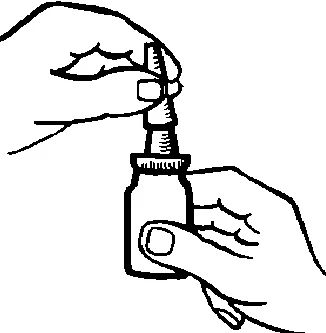
Fig. 1
- Hold the bottle as shown in Figure 2. Before first use, the pump must be primed (i.e., medicine must be loaded into the pump). This is done by moving the piston up and down several times (5–10 times), spraying the medicine into the air until a fine mist appears. Priming is sufficient for approximately 24 hours. If more than 24 hours elapse before the next dose, the pump must be re-primed. If the interval between uses is shorter, it is sufficient to spray once into the air.
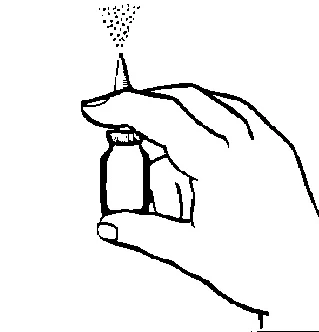
Fig. 2
- Insert the applicator tip into one nostril as shown in Figure 3 and spray once (or more times, if directed by your doctor). Repeat the same procedure in the other nostril. Note: It is not necessary to inhale during spraying.
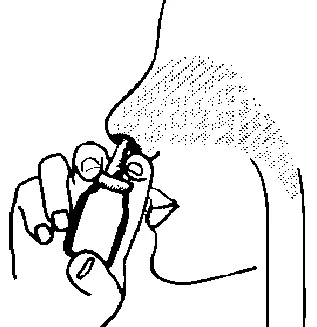
Fig. 3
- Wipe the applicator with a clean tissue and replace the protective cap.
- Store the bottle in an upright position.
Cleaning the applicator
The plastic applicator should be cleaned regularly and whenever the medicine fails to spray properly.
In such cases, first check whether the pump is primed (see above). If the pump still does not work after re-priming, clean the applicator as follows:
- Remove the plastic applicator using a clean tissue and wash it with warm (not hot) water.
- Rinse the applicator thoroughly, dry it completely, and reattach it to the bottle.
- Never use a pin or any sharp object to unblock the applicator.
- After cleaning, the pump must be re-primed (i.e., the applicator must be refilled with medicine) before reuse.
Use of a higher than recommended dose of Tafen Nasal 64 mcg
It is important that the patient uses the medicine exactly as prescribed by the doctor. Always use the
exact dose recommended. Using more or less than the prescribed dose may worsen symptoms.
If a higher than recommended dose of Tafen Nasal 64 mcg has been used, continue treatment according to the usual dosing schedule. No health problems are expected.
However, if a dose higher than the recommended 4 sprays of Tafen Nasal 64 mcg per day has been used for
more than one month, contact your doctor immediately.
Missed dose of Tafen Nasal 64 mcg
If a dose is missed at the scheduled time, use it as soon as possible, then return to the regular dosing schedule. Do not use a higher than recommended dose to make up for the missed dose.
If you have any further questions about the use of this medicine, consult your doctor or pharmacist.
4. Possible adverse effects
Like all medicines, this medicine may cause adverse effects, although not everyone will experience them.
The medicine generally only treats symptoms affecting the nose (e.g. nasal congestion or nasal discharge).
If the patient has previously been taking steroid tablets or injectable steroids, but the doctor has now prescribed Tafen Nasal 64 mcg instead, certain other symptoms (such as redness and itching of the eyes) may worsen. In such cases, the doctor will treat these symptoms separately.
Allergic reactions have been reported after using this medicine: hives, itching, skin rash, angioedema manifesting as swelling of the face, lips, tongue and (or) throat with difficulty breathing and swallowing, and a general feeling of discomfort.
If these symptoms occur after using Tafen Nasal 64 mcg, treatment with Tafen Nasal 64 mcg must be discontinued and immediate medical advice must be sought.
The following adverse effects may occur during treatment with Tafen Nasal 64 mcg:
Common adverse effects (may affect fewer than 1 in 10 people)
These effects may occur immediately after administration of the medicine:
occasional sneezing, dryness or stinging in the nose
small amount of bloody nasal discharge
nosebleeds (immediately after administration)
pain in the mouth and (or) throat
Uncommon adverse effects (may affect fewer than 1 in 100 people)
skin redness
skin irritation
muscle spasms
Rare adverse effects (may affect fewer than 1 in 1000 people)
anaphylactic reaction
bone fragility (after long-term use of the medicine)
bruising or contusions
increased intraocular pressure
blurred vision
sores or painful erosions in the nasal cavity
perforation of the nasal septum (the wall separating the nostrils)
voice disorders
slowed growth rate in children and adolescents, especially after prolonged use of high doses
adrenal suppression. This may cause loss of appetite, abdominal pain, weight loss, nausea, headache, vomiting, altered consciousness, low blood sugar levels, and seizures. Situations that may potentially trigger an adrenal crisis include: trauma, infections, surgical procedures, or sudden dose reduction.
If any of these symptoms occur, immediate medical advice must be sought.
Unknown frequency (frequency cannot be estimated from available data):
glaucoma (eye pain, redness of the eye, blurred vision)
cataract (clouding of the eye lens)
headache
nasal, oral and pharyngeal candidiasis (difficulty eating and/or swallowing, thrush (white patches in the mouth, throat or on the tongue))
Candidiasis:
With prolonged treatment, fungal infection of the nose (candidiasis) may occasionally occur. Medical advice should be sought to discuss appropriate treatment. In such cases, discontinuation of treatment until resolution of the infection is recommended.
Systemic effects:
Intranasal corticosteroids, when used in high doses and for prolonged periods, may have systemic effects. The following symptoms may occur:
- hypercortisolism (manifesting as weight gain, moon face, fatigue and/or increased abdominal girth)
Potassium sorbate, an ingredient of this medicine, may cause local irritation of the skin or mucous membranes, e.g. nasal mucosa.
Reporting of adverse effects
If any adverse effects occur, including any not listed in this leaflet, inform your doctor or pharmacist. Adverse effects can be reported directly to the Department of Monitoring Adverse Drug Reactions at the Office for Registration of Medicinal Products, Medical Devices and Biocidal Products:
Al. Jerozolimskie 181C, 02-222 Warsaw,
tel.: + 48 22 49 21 301, fax: + 48 22 49 21 309, website: https://smz.ezdrowie.gov.pl
Adverse effects can also be reported to the marketing authorisation holder.
Reporting of adverse effects helps to provide more information on the safety of the medicine.
5. How to store Tafen Nasal 64 mcg
Keep this medicine out of the sight and reach of children.
Do not use this medicine after the expiry date stated on the packaging after EXP.
The expiry date refers to the last day of the stated month.
Do not store above 30°C.
Do not freeze.
After 3 months of opening, discard the bottle with any remaining suspension.
Medicines must not be disposed of via wastewater or household waste. Ask your pharmacist how to dispose of medicines no longer required. These measures will help protect the environment.
6. Contents of the pack and other information
What Tafen Nasal 64 μg contains
The active substance is budesonide. One metered dose of 0.05 ml nasal aerosol suspension contains 64 micrograms (μg) of budesonide.
The other ingredients are: dispersible cellulose (microcrystalline cellulose and sodium carmellose (89:11 w/w)), polysorbate 80, potassium sorbate (E 202), anhydrous glucose, disodium edetate, concentrated hydrochloric acid, ascorbic acid (E 300), water for injections.
What Tafen Nasal 64 μg looks like and contents of the pack
Tafen Nasal 64 μg is a white or almost white, homogeneous suspension.
Tafen Nasal 64 μg is available in an amber glass bottle with a plastic spray pump and a polypropylene nasal applicator: 1 x 120 doses.
Marketing Authorisation Holder and Manufacturer
Marketing Authorisation Holder
Sandoz GmbH
Biochemiestrasse 10
A-6250 Kundl, Austria
tel. 22 209 70 00
Manufacturer
Lek Pharmaceuticals d.d.
Verovškova 57
1526 Ljubljana, Slovenia
This medicinal product is authorised in the Member States of the European Economic Area and the United Kingdom under the following names:
Germany: Budesonid Sandoz 64 Mikrogramm/Sprühstoß Nasenspray, Suspension
Denmark: Budesonid "Sandoz"
France: BUDESONIDE SANDOZ 64 microgrammes/dose, suspension pour pulvérisation nasale
Norway: Budesonid Sandoz 64 mikrogram/dose nesespray, suspensjon
Poland: TAFEN NASAL 64 µg
Sweden: Desonix 64 mikrogram/dos nässpray, suspension
United Kingdom: Budesonide 64 micrograms/actuation aqueous nasal spray