Tabcin trend
Poland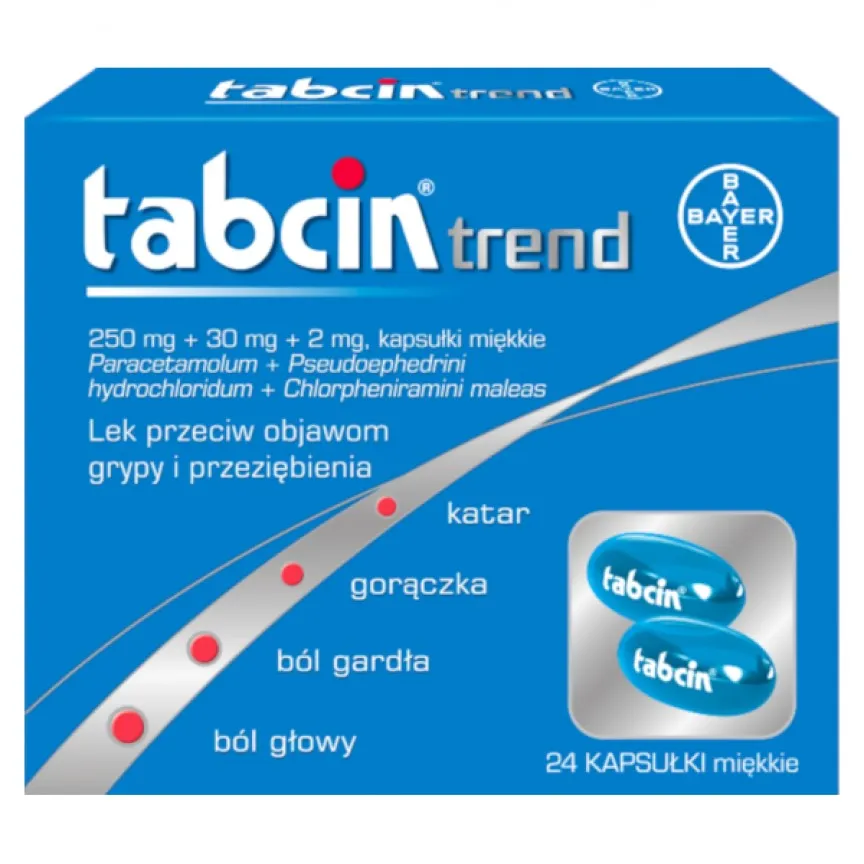
Table of Contents
Package leaflet: Information for the user
TABCIN TREND
250 mg + 30 mg + 2 mg, soft capsules
Paracetamolum + Pseudoephedrini hydrochloridum + Chlorpheniramini maleas
Please read this leaflet carefully before taking the medicine, as it contains important information for the patient.
This medicine should always be taken exactly as described in this patient information leaflet or as directed by a doctor or pharmacist.
- Keep this leaflet, as you may need to read it again.
- If you need advice or further information, please consult your pharmacist.
- If you experience any adverse reactions, including any possible side effects not listed in this leaflet, inform your doctor or pharmacist. See section 4.
- If there is no improvement after 5 days, or if fever persists for longer than 3 days from the start of treatment, or if you feel worse, you should contact your doctor.
Contents of the leaflet
- What Tabcin Trend is and what it is used for
- Important information before taking Tabcin Trend
- How to take Tabcin Trend
- Possible side effects
- How to store Tabcin Trend
- Contents of the pack and other information
1. What Tabcin Trend is and what it is used for
Tabcin Trend is a combination medicine with synergistic action of its components.
Chlorpheniramine, an antihistamine, relieves nasal catarrh symptoms (runny nose and sneezing) associated with influenza and the common cold.
Pseudoephedrine, a vasoconstrictor, reduces swelling of the nasal and sinus mucosa during colds and flu, thereby facilitating easier breathing.
Paracetamol, an analgesic and antipyretic agent, relieves pain accompanying infections, such as headache and sore throat, as well as general discomfort associated with flu and colds.
Indications
Relief of symptoms of influenza and the common cold accompanied by fever, nasal catarrh, sore throat and throat irritation, sneezing, headache, swelling of the nasal and sinus mucosa, and general malaise.
2. Information before using Tabcin Trend
When not to use Tabcin Trend
- if the patient is allergic to the active substances or any of the other ingredients of this medicine (listed in section 6);
- if the patient has a respiratory disorder such as chronic bronchitis or emphysema;
- if the patient has glaucoma, prostate enlargement, heart disease, hypertension, diabetes, or hyperthyroidism;
- if the patient has congenital glucose-6-phosphate dehydrogenase deficiency;
- if the patient is taking or has taken within the last 2 weeks monoamine oxidase inhibitors (MAOIs) or AZT (zidovudine). If in doubt whether the medicine being taken contains MAOI or AZT, consult a doctor;
- if the patient has severe liver failure (Child-Pugh score >9);
- if the patient has very high blood pressure (severe hypertension) or uncontrolled hypertension;
- if the patient has severe acute or chronic kidney disease or renal failure;
- in children under 15 years of age.
Warnings and precautions
Do not take other medicines containing paracetamol and/or sympathomimetics (such as nasal decongestants, appetite suppressants, or psychostimulants with amphetamine-like effects) at the same time.
In case of overdose, contact a doctor immediately, even if no symptoms are present, as life-threatening liver damage may occur.
Before starting Tabcin Trend, discuss with a doctor or pharmacist if:
- the patient abuses alcohol. In such cases, even small doses of paracetamol may increase the risk of liver damage;
- the patient has liver impairment (Child-Pugh score <9), infections affecting liver function (e.g. viral hepatitis), or other liver diseases. For these patients, during high-dose or long-term treatment, the doctor may recommend regular liver function tests. Long-term use of paracetamol-containing medicines may lead to severe liver failure (e.g. cirrhosis). During therapeutic doses of paracetamol, increased serum alanine aminotransferase (ALT) levels may occur;
- in patients with kidney disease, dose adjustment by a doctor may be necessary. In patients with severe renal failure (creatinine clearance <10 ml/min), the doctor should assess the benefit-risk ratio of using a paracetamol-containing medicine. Long-term use of paracetamol with other painkillers may lead to permanent kidney damage and risk of renal failure;
- the patient is taking other medicines, abusing alcohol, has sepsis, or diabetes;
- the patient has hereditary glucose-6-phosphate dehydrogenase deficiency, as there may be a risk of hemolytic anemia (accelerated breakdown of red blood cells);
- the patient has liver impairment (e.g. due to alcohol abuse or jaundice) or Gilbert's syndrome (inherited hyperbilirubinemia). Patients should consult a doctor before taking the medicine, who may decide to reduce the dose or extend the interval between doses.
Contact a doctor immediately if:
- sore throat is severe, persists beyond 2 days, or is accompanied by fever, headache, rash, nausea, or vomiting;
- the patient develops skin redness, blisters on lips, eyes, or oral mucosa, or skin peeling;
- fever with generalized skin erythema and pustular rash. In such cases, discontinue the medicine. See section 4;
- the patient consumes alcohol or takes sedatives while taking the medicine, as the medicine may cause drowsiness, and alcohol and sedatives may further enhance this effect;
- gastrointestinal symptoms occur, such as sudden abdominal pain or rectal bleeding due to inflammatory disease of the large intestine (ischemic colitis). In such cases, discontinue the medicine. See section 4;
- sudden loss of vision occurs due to reduced blood flow in the optic nerve. In such cases, discontinue the medicine. See section 4;
- the patient has severe illnesses, including severe kidney dysfunction or sepsis (when bacteria and their toxins circulate in the blood, leading to organ damage), malnutrition, chronic alcoholism, or is also taking flucloxacillin (an antibiotic). Cases of a serious condition called metabolic acidosis (abnormality in blood and body fluids) have been reported in patients taking paracetamol regularly over a long period or taking paracetamol with flucloxacillin. Symptoms of metabolic acidosis may include: severe breathing difficulties, including rapid deep breathing, drowsiness, nausea, and vomiting.
Cases of posterior reversible encephalopathy syndrome (PRES) and reversible cerebral vasoconstriction syndrome (RCVS) have been reported after using medicines containing pseudoephedrine.
PRES and RCVS are rare conditions that may be associated with reduced blood flow to the brain.
If symptoms suggestive of PRES or RCVS occur, immediately discontinue Tabcin Trend and seek immediate medical help (symptoms, see section 4 "Possible side effects").
Tabcin Trend and other medicines
Inform your doctor or pharmacist about all medicines currently or recently taken, as well as any medicines you plan to take.
- Do not use this medicine with monoamine oxidase inhibitors (MAOIs), either during treatment or within at least 2 weeks after stopping MAOI therapy. MAOIs (components of many psychiatric drugs used in depression, Parkinson's disease, and others) enhance the effects of chlorpheniramine and pseudoephedrine.
- Drugs delaying gastric emptying, e.g. propantheline, may slow the absorption of paracetamol (one of the active ingredients in Tabcin Trend) and delay its onset of action. Drugs accelerating gastric emptying, e.g. metoclopramide, increase the absorption of Tabcin Trend.
- Concurrent use of drugs inducing liver enzymes, e.g. hypnotics and anticonvulsants (glutethimide, phenobarbital, phenytoin, carbamazepine) or rifampicin, may lead to liver failure even when taking paracetamol doses that alone would not cause such effects. A similar effect may occur with alcohol consumption.
- The interaction between paracetamol and warfarin or coumarin has not yet been fully established. Therefore, patients taking oral anticoagulants should not use paracetamol for prolonged periods without consulting a doctor.
- Concomitant use of this medicine with chloramphenicol may prolong the effect of chloramphenicol.
- Concurrent administration of paracetamol and AZT (zidovudine) may cause decreased white blood cell count (neutropenia).
- Concurrent use of paracetamol and flucloxacillin (an antibiotic) is associated with a serious risk of blood and body fluid disorder (called metabolic acidosis), which requires urgent treatment (see section 2).
Pregnancy, breastfeeding, and fertility
If the patient is pregnant or breastfeeding, suspects she may be pregnant, or is planning to have a child, she should consult a doctor or pharmacist before using this medicine.
Pregnancy
Do not use Tabcin Trend during pregnancy, especially during the first trimester.
Do not use Tabcin Trend during pregnancy due to lack of safety data for use in this period.
Breastfeeding
The components of the medicine pass into breast milk; therefore, do not use this medicine during breastfeeding.
Fertility
Paracetamol may impair fertility. This effect reverses after discontinuation of paracetamol.
Driving and operating machinery
Do not drive vehicles, as the medicine may impair psycho-physical performance.
Do not operate any machinery or use dangerous tools.
Tabcin Trend contains propylene glycol and sorbitol
The medicine contains 46 mg of propylene glycol in each capsule.
The medicine contains 54.88 – 64.42 mg of sorbitol in each capsule. Sorbitol is a source of fructose. If the patient has previously been diagnosed with intolerance to certain sugars or hereditary fructose intolerance, a rare genetic disorder in which the patient's body cannot break down fructose, the patient should consult a doctor before taking this medicine.
3. How to use Tabcin Trend
This medicine should always be taken exactly as described in the patient leaflet or as directed by
your doctor or pharmacist. If in doubt, consult your doctor or pharmacist.
Adults and adolescents (aged 15 years and above)
Recommended dose:
two capsules to be swallowed with a small amount of water.
If necessary, this dose may be repeated, but not more frequently than every 4 hours and no more than
3 times within 24 hours.
Do not exceed the recommended dose, as this may lead to difficulty falling asleep, dizziness, and
increased nervous excitability (especially in children).
Do not take this medicine for longer than 5 days. If fever persists for more than 3 days from the
start of treatment, consult a doctor.
If you feel the effect of the medicine is too strong or too weak, consult your doctor.
Taking more than the recommended dose of Tabcin Trend
The following symptoms may occur: nausea, vomiting, dizziness, drowsiness, coma, fear, tremors,
hallucinations, agitation with epileptic seizures, breathing difficulties, and problems with urination.
An increase in blood pressure, irregular heartbeat with a pulse rate exceeding 100/min (tachyarrhythmia), palpitations, motor restlessness, and insomnia may also occur.
In children, dry mouth, facial flushing, agitation, dilated and fixed pupils, fever, disorganized movements, and epileptic seizures may be observed.
The first symptoms of paracetamol overdose are: nausea, vomiting, increased sweating, and general malaise; after 3–5 days, jaundice, fever, hemorrhagic rash, hypoglycemia (decreased blood glucose concentration), metabolic acidosis including lactic acidosis (decreased blood pH), hypokalemia (decreased blood potassium concentration), hepatic fetor, and hepatic encephalopathy (brain function disturbances due to liver failure) may develop.
Management: symptomatic treatment, including gastric lavage and administration of activated charcoal within the first 6 hours after ingestion. Hemodialysis and hemoperfusion enhance drug elimination. The doctor may recommend intravenous infusion of methionine, cysteamine, or N-acetylcysteine, which are specific antidotes in paracetamol overdose; their administration is effective within 10 hours of poisoning.
In case of ingestion of a higher than recommended dose, seek immediate medical advice from a doctor or pharmacist. Prompt medical assistance is crucial in both children and adults, even if no symptoms of poisoning are yet apparent.
Missed dose of Tabcin Trend
Do not take a double dose to make up for a missed dose.
4. Possible adverse reactions
Like all medicines, this medicine can cause adverse reactions, although not everyone will experience them.
Adverse reactions occur at an unknown frequency (frequency cannot be estimated from the available data), unless otherwise stated.
- Severe disorders affecting the blood vessels in the brain, known as posterior reversible encephalopathy syndrome (PRES) and reversible cerebral vasoconstriction syndrome (RCVS)
Immediately stop using Tabcin Trend and seek medical help immediately if symptoms indicating posterior reversible encephalopathy syndrome (PRES) or reversible cerebral vasoconstriction syndrome (RCVS) occur. These include:
- sudden, severe headache,
- nausea,
- vomiting,
- confusion,
- seizures,
- visual disturbances.
Immediately stop taking the medicine and consult a doctor if any of the following occur:
- allergic reactions (rarely reported), such as skin rash or itching, sometimes associated with breathing difficulties or swelling of the lips, tongue, throat, or face (angioedema and allergic edema), increased sweating, nausea, drop in blood pressure, or shock;
- breathing difficulties (bronchospasm); in patients allergic to painkillers and anti-rheumatic drugs, such as acetylsalicylic acid or other non-steroidal anti-inflammatory drugs, symptoms of asthma may sometimes worsen (so-called "analgesic-induced asthma");
- skin rash or severe skin reactions (very rare with paracetamol, i.e. less than 1 in 10,000 patients): acute generalized exanthematous pustulosis - AGEP (frequency unknown with pseudoephedrine), characterized by sudden fever, redness of the skin, or numerous small pustules, which may appear within the first 2 days of taking Tabcin Trend. See section 2; Stevens-Johnson syndrome, presenting with blisters and erosions on the skin, in the mouth, eyes, and genital organs, fever, and joint pain; toxic epidermal necrolysis (can be fatal), presenting with ruptured large blisters under the epidermis, extensive skin erosions, peeling of large sheets of epidermis, and fever; drug rash; erythema; severe generalized rashes; erythema; very rarely, allergic reactions with inflammatory skin changes; rash; pruritus; urticaria;
- bleeding (due to reduced platelet count);
- epileptic seizure;
- inflammation of the large intestine caused by insufficient blood supply (ischemic colitis) – see section 2;
- liver function disorders (nausea, vomiting, bloating in the upper abdomen, yellowing of the skin and eyes, liver tenderness due to liver failure, hepatitis, dose-dependent liver failure, liver necrosis – including fatal cases);
- disturbances in heart rate and rhythm (reflex slowing of heart function (bradycardia), hypertension, tachycardia (accelerated heart rate), palpitations);
- blood disorders such as: reduction in granulocytes – a type of white blood cells (agranulocytosis), leading to increased susceptibility to infections; reduction in all blood cells – pancytopenia; reduced platelet count (thrombocytopenia), leading to reduced blood clotting, petechiae, and bruising; reduced white blood cell count (leukopenia) associated with paracetamol use; aplastic anemia (severe reduction in blood cells due to impaired bone marrow function, potentially causing fatigue, easy bruising, or increased susceptibility to infections);
- kidney damage, especially in cases of overdose, difficulty urinating;
- reduced blood flow in the optic nerve (ischemic optic neuropathy) – see section 2;
- serious condition causing blood to become more acidic (so-called metabolic acidosis) in patients with severe illness taking paracetamol (see section 2).
Tabcin Trend may also cause the following adverse reactions: drowsiness, dry mouth, restlessness, anxiety, dizziness, insomnia, fear, tremors, hallucinations, nausea, vomiting, gastric discomfort, diarrhea, abdominal pain, headache.
Long-term, uncontrolled use of the medicine may lead to liver fibrosis, cirrhosis, and even death.
Other adverse reactions may occur in some individuals during treatment with Tabcin Trend.
Reporting of adverse reactions
If any adverse effects occur, including any not listed in this leaflet, inform your doctor or pharmacist. Adverse reactions can be reported directly to the Department of Monitoring Adverse Drug Reactions at the Office for Registration of Medicinal Products, Medical Devices and Biocidal Products, Al. Jerozolimskie 181C, 02-222 Warsaw, Tel.: +48 22 49 21 301, Fax: +48 22 49 21 309, website: https://smz.ezdrowie.gov.pl
Adverse reactions can also be reported to the marketing authorization holder.
Reporting adverse reactions helps provide more information on the safety of this medicine.
5. How to store Tabcin Trend
Keep this medicine out of sight and reach of children.
Do not use this medicine after the expiry date stated on the packaging.
The expiry date refers to the last day of the stated month.
Store below 25ºC.
Do not dispose of medicines via the sewage system or household waste. Ask your pharmacist how to dispose of medicines you no longer use. This will help protect the environment.
6. Contents of the packaging and other information
What Tabcin Trend contains
- The active substances are:
250 mg of paracetamol (Paracetamolum), 30 mg of hydrochloride pseudoephedrine
(Pseudoephedrini hydrochloridum) and 2 mg of chlorpheniramine maleate (Chlorpheniramini
maleas).
- The other ingredients (excipients) are: polyethylene glycol 400, propylene glycol, purified water, povidone K30; capsule shell composition: sorbitol 70%, glycerol 85%, gelatin, carmine red A (E124), brilliant blue FCF (E133).
What Tabcin Trend looks like and contents of the pack
The pack contains 6, 12, 20 or 24 soft capsules.
Marketing Authorisation Holder
Bayer Sp. z o.o.
Al. Jerozolimskie 158
02-326 Warsaw
Tel.: +48 22 572 35 00
Manufacturer
Catalent Germany Eberbach GmbH
Gammelsbacher Str. 2
D - 69412 Eberbach
Germany