Syndi-35
Poland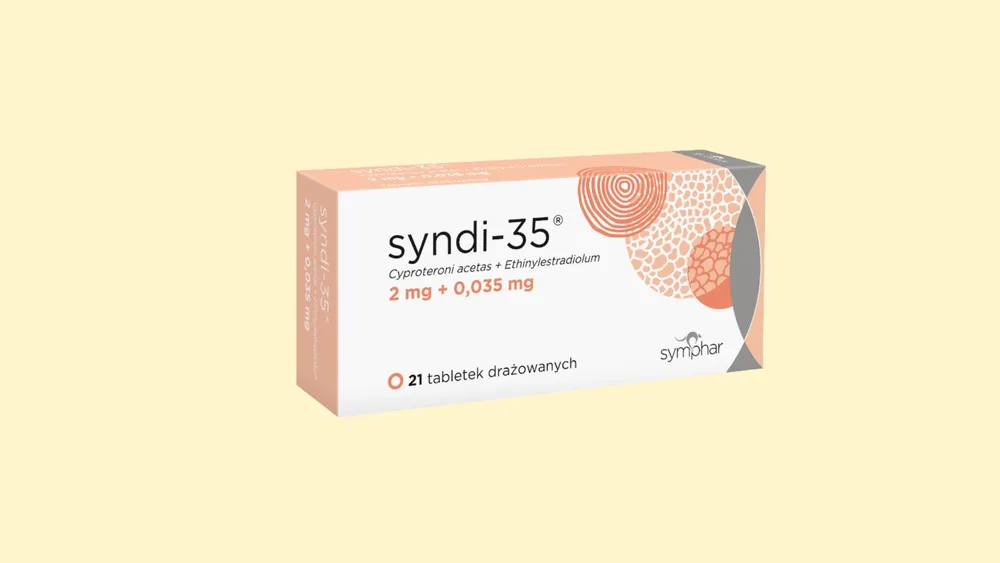
Table of Contents
Package leaflet: Information for the user
Syndi-35
2 mg + 0.035 mg, coated tablets
Cyproteroni acetas + Ethinylestradiolum
Please read all of this leaflet carefully before taking this medicine because it contains
important information for you.
- Keep this leaflet. You may need to read it again.
- If you have any further questions, ask your doctor or pharmacist.
- This medicine has been prescribed for a specific individual. Do not pass it on to others. It may harm them even if their symptoms are the same.
- If you experience any side effects, including any not listed in this leaflet, tell your doctor or pharmacist. See section 4.
Contents of the leaflet
- What Syndi-35 is and what it is used for
- What you need to know before you take Syndi-35
- How to take Syndi-35
- Possible side effects
- How to store Syndi-35
- Contents of the pack and other information
1. What Syndi-35 is and what it is used for
Syndi-35 is used in the treatment of skin disorders such as acne, very oily skin,
and excessive hair growth (hirsutism) in women of reproductive age. Due to its contraceptive properties,
this medicine should be prescribed to a patient only if the doctor considers that treatment with hormonal
contraceptives is appropriate.
A patient should use Syndi-35 for the treatment of acne only when there has been no improvement
in the skin condition after other anti-acne therapies, including topical treatments and antibiotic therapy.
2. Important information before using Syndi-35
General remarks
Before starting treatment with Syndi-35, your doctor will ask several questions about the patient's health and that of her close relatives. The doctor will also measure blood pressure and, if necessary, carry out other diagnostic tests.
This leaflet describes certain situations in which you should stop taking Syndi-35 or in which the effectiveness of Syndi-35 may be reduced. In such cases, sexual intercourse should be avoided or additional non-hormonal contraceptive methods (e.g. condoms or other mechanical methods) should be used. Do not rely on the rhythm method or body temperature monitoring, as these methods may be unreliable due to the fact that Syndi-35 alters monthly changes in body temperature and cervical mucus.
Syndi-35 does not protect against HIV infection (AIDS) or other sexually transmitted diseases.
When not to use Syndi-35
Inform your doctor if any of the following conditions apply to the patient before starting treatment with Syndi-35. In such cases, the doctor may recommend alternative treatment:
- If the patient is currently using another hormonal contraceptive.
- If the patient currently has (or has ever had) a blood clot in the leg (thrombosis), a blood clot in the lungs (pulmonary embolism), or in another part of the body.
- If the patient currently has (or has ever had) diseases that may be risk factors for future heart attack (e.g. angina pectoris causing severe chest pain) or has experienced a "mini-stroke" (transient ischaemic attack).
- If the patient has had a heart attack or stroke.
- If the patient has factors that may increase the risk of blood clots, including:
- Diabetes with vascular complications;
- very high blood pressure;
- very high levels of blood fats (cholesterol or triglycerides).
- If the patient has a blood clotting disorder (e.g. protein C deficiency).
- If the patient currently has (or has ever had) migraine with visual disturbances.
- If the patient has had or currently has severe liver disease (which may present with yellowing of the skin or generalized itching), and liver function tests remain abnormal.
- If the patient has had or currently has a hormone-dependent malignant tumour (e.g. breast cancer or genital cancers).
- If the patient has had or currently has a benign or malignant liver tumour.
- If the patient has unexplained vaginal bleeding.
- If the patient knows or suspects she is pregnant.
- If the patient is breastfeeding.
- If the patient is allergic to cyproterone acetate, ethinylestradiol, or any of the other ingredients of this medicine (listed in section 6). In such cases, symptoms such as itching, rash, or swelling may occur.
- If the patient has hepatitis C and is taking antiviral medicines containing ombitasvir with paritaprevir and ritonavir, dasabuvir, glecaprevir with pibrentasvir, or sofosbuvir with velpatasvir and voxilaprevir (see section 2 "Syndi-35 and other medicines").
- If the patient has meningioma or has ever been diagnosed with meningioma (usually a benign tumour of the tissue layer between the brain and skull).
If any of the above symptoms occur for the first time while taking Syndi-35, the medicine should be stopped immediately and medical advice sought. During this time, non-hormonal contraception should be used (see section "General remarks").
Syndi-35 must not be used in men.
Special patient groups
Children and adolescents
Syndi-35 is not indicated for use in patients before the onset of the first menstrual period.
Elderly patients
Syndi-35 is not intended for use in postmenopausal women.
Patients with liver function disorders
Syndi-35 is contraindicated in women with severe liver function disorders until liver function parameters return to normal. See section: "When not to use Syndi-35" and "Warnings and precautions".
Patients with kidney function disorders
Consult your doctor. Available data do not indicate a need to change the way Syndi-35 is used.
Warnings and precautions
When to consult a doctor
Stop taking the tablets and contact your doctor immediately if you notice symptoms suggesting a possible blood clot. Symptoms are described in section 2, "Blood clots (thrombosis)".
Before starting Syndi-35, discuss this with your doctor or pharmacist.
If you are taking Syndi-35, careful and regular medical monitoring is required in any of the following situations.
Therefore, before starting treatment with Syndi-35, inform your doctor if any of the following apply:
- Smoking habit (women over 35 years of age should stop smoking if they decide to use oral hormonal contraception),
- Diabetes,
- Obesity (body mass index above 30 kg/m²),
- High blood pressure,
- Heart valve disorder or atrial fibrillation,
- Superficial venous inflammation,
- Varicose veins,
- History of thrombosis, heart attack, or stroke in close relatives (current or past),
- Migraine (current or past),
- Epilepsy,
- High cholesterol or triglyceride levels (fats) in the blood (current or past, or in close relatives),
- Family history of breast cancer,
- Liver or gallbladder disease,
- Crohn's disease or ulcerative colitis (chronic inflammatory bowel disease),
- Polycystic ovary syndrome,
- Systemic lupus erythematosus (SLE),
- Haemolytic-uraemic syndrome (a blood clotting disorder leading to kidney failure),
- Sickle cell anaemia,
- Diseases that first occurred or worsened during pregnancy or previous use of steroid hormones [e.g. jaundice and (or) cholestatic itching, gallstone formation, hearing loss associated with otosclerosis, a blood disorder known as porphyria, blistering skin rash (herpes gestationis), a neurological disorder causing abnormal body movements (Sydenham's chorea)],
- Skin pigmentation changes (pigmentation disorders, especially on the face and neck, known as chloasma) currently or in the past; excessive exposure to sunlight or ultraviolet radiation should be avoided,
- If symptoms of angioedema occur, such as swelling of the face, tongue and (or) throat and (or) difficulty swallowing, or urticaria, potentially with breathing difficulties, contact your doctor immediately. Products containing estrogens may cause or worsen symptoms of hereditary or acquired angioedema.
If any of the above symptoms occur for the first time, recur, or worsen during treatment with Syndi-35, contact your doctor.
In cases of hirsutism, if symptoms have recently appeared or worsened, inform your doctor immediately for proper diagnosis.
Syndi-35 also acts as an oral contraceptive. The patient and doctor should discuss all standard safety rules for using oral hormonal contraception.
Syndi-35 and thrombosis
Blood clots (thrombosis)
Taking Syndi-35 may slightly increase the risk of blood clots (so-called thrombosis) in the patient. The likelihood of blood clots in women taking Syndi-35 is only slightly higher compared to women who do not take Syndi-35 or any other combined oral contraceptive. Complete recovery is not always possible, and 1–2% of cases may be fatal.
Venous blood clots
A blood clot in a vein (known as "venous thrombosis") may block a vein. This may occur in leg veins, pulmonary arteries (pulmonary embolism), or any other organ.
Using a combined oral contraceptive increases the risk of such blood clots in women compared to women who do not take any combined oral contraceptives. The risk of venous blood clots is highest during the first year of taking an oral contraceptive.
The risk is not as high as the risk of blood clots during pregnancy.
The risk of venous blood clots in women taking combined oral contraceptives is further increased:
- with age;
- if the patient smokes. When using a hormonal contraceptive such as Syndi-35, it is strongly recommended to stop smoking, especially if the patient is over 35 years of age;
- if a close relative had a blood clot in the leg, lungs, or another organ at a young age;
- if the patient is overweight;
- if the patient is undergoing surgery, is immobilized for a prolonged period due to injury or illness, or has a leg in a cast.
If any of the above conditions apply, it is important to inform the doctor about taking Syndi-35, as treatment may need to be discontinued. The treating doctor may instruct the patient to stop taking Syndi-35 several weeks before surgery or when mobility is limited. The doctor will also inform the patient when it is safe to restart Syndi-35 after regaining mobility.
Arterial blood clots
Blood clots in arteries can cause serious complications. For example, a blood clot in an artery in the heart may cause a heart attack, and in the brain may cause a stroke. This may pose a serious threat to life or lead to death.
The use of combined oral contraceptives is associated with an increased risk of arterial blood clots. This risk is further increased:
- with age;
- if the patient smokes. When using a hormonal contraceptive such as Syndi-35, it is strongly recommended to stop smoking, especially if the patient is over 35 years of age;
- if the patient is overweight;
- if the patient has high blood pressure;
- if a close relative had a heart attack or stroke at a young age;
- if the patient has high levels of fats in the blood (cholesterol or triglycerides);
- if the patient suffers from migraines;
- if the patient has heart disease (valve damage, heart rhythm disorders).
Symptoms caused by blood clots
Stop taking the tablets and contact your doctor immediately if you notice symptoms suggesting a possible blood clot, such as:
- unusual, sudden cough;
- severe chest pain, which may radiate to the left arm;
- shortness of breath;
- any unusual, severe, prolonged headache or worsening migraine;
- partial or complete loss of vision or double vision;
- slurred speech or loss of speech;
- sudden hearing, smell, or taste disturbances;
- dizziness or fainting;
- weakness or numbness in any part of the body;
- severe abdominal pain;
- severe pain or swelling in either leg.
Complete recovery after a blood clot is not always possible. Thrombosis may rarely lead to permanent disability or death.
Immediately after childbirth, women are at increased risk of blood clots. Consult your doctor for advice on how soon you can start taking Syndi-35 after delivery.
Inform your doctor if any of the above risk factors for venous or arterial blood clots are present, as Syndi-35 may not be suitable. The more risk factors present, the higher the risk of venous or arterial thrombosis. The risk also increases with the severity of each individual risk factor (see also "When not to use Syndi-35").
Syndi-35 and cancer
Breast cancer occurs slightly more frequently in women taking oral hormonal tablets than in women of the same age who do not use them. It is not known whether this difference is solely due to the treatment. It may also be due to the fact that women using hormonal contraception are examined more frequently, leading to earlier detection of breast cancer. The difference in breast cancer incidence gradually decreases and disappears within 10 years after stopping hormonal contraceptives.
Rare cases of benign or, even more rarely, malignant liver tumours have been reported in women taking combined oral contraceptives, leading to life-threatening intra-abdominal bleeding. If severe lower abdominal pain occurs, inform your doctor immediately.
These tumours may be life-threatening or fatal.
There are reports of increased incidence of cervical cancer in women using hormonal contraceptives for a long time. However, this association may not be related to taking the pills but rather to sexual practices.
Increased risk of benign brain tumour (meningioma) has been reported with long-term use of high doses (25 mg or more) of cyproterone acetate. If a patient is diagnosed with meningioma, the doctor will discontinue treatment with cyproterone-containing products, including Syndi-35, as a precaution (see section "When not to use Syndi-35").
Psychiatric disorders
Some women using hormonal contraceptives, including Syndi-35, have reported depression or low mood. Depression can be severe and may sometimes lead to suicidal thoughts. If mood changes or symptoms of depression occur, contact your doctor as soon as possible for further medical advice.
Syndi-35 and other medicines
Inform your doctor or pharmacist about all medicines currently or recently taken, as well as any medicines planned for future use.
Some medicines may reduce the effectiveness of Syndi-35 or cause unexpected bleeding.
This includes medicines used to treat:
- epilepsy (e.g. primidone, phenytoin, barbiturates, carbamazepine, oxcarbazepine, felbamate, topiramate),
- tuberculosis (e.g. rifampicin),
- other infections (e.g. enzyme-inducing antibiotics such as griseofulvin),
- herbal products containing St John's wort (Hypericum perforatum).
Other medicines may increase or decrease the levels of Syndi-35 in the blood. This includes medicines used to treat:
- HIV or hepatitis C virus infection (protease inhibitors or non-nucleoside reverse transcriptase inhibitors).
Do not use Syndi-35 if the patient has hepatitis C and is taking antiviral medicines containing ombitasvir with paritaprevir and ritonavir, dasabuvir, glecaprevir with pibrentasvir, or sofosbuvir with velpatasvir and voxilaprevir, as they may cause elevated liver function test results (increased ALT liver enzyme levels). The doctor will recommend an appropriate contraceptive method before starting these medicines.
Syndi-35 may be restarted approximately 2 weeks after stopping treatment with these medicines.
See section 2 "When not to use Syndi-35".
Syndi-35 may also affect the action of other medicines, e.g., lamotrigine, cyclosporine.
Warning: Review information on concomitant use of medicines to identify possible interactions.
Pregnancy and breastfeeding
Pregnancy
Do not take Syndi-35 during pregnancy or if pregnancy is suspected. If pregnancy is suspected, consult your doctor immediately.
Breastfeeding
Do not use Syndi-35 during breastfeeding. Consult your doctor if the patient wishes to use contraceptive tablets while breastfeeding.
Driving and operating machinery
No effect of Syndi-35 on the ability to drive or operate machinery has been observed.
Regular check-ups
While using Syndi-35, your doctor will inform you about the need for regular medical examinations.
Syndi-35 contains monohydrate lactose and sucrose
If the patient has previously been diagnosed with intolerance to certain sugars, she should consult her doctor before taking this medicine.
3. How to use Syndi-35
This medicine should always be taken as directed by your doctor. If in doubt, consult your doctor or pharmacist.
How to take Syndi-35
Regular use of Syndi-35 ensures effective therapeutic action and prevents pregnancy. Irregular intake of Syndi-35 may lead to intermenstrual bleeding and may reduce the therapeutic and contraceptive effectiveness of the medicine.
- When and how should the tablets be taken?
The blister pack contains 21 tablets. Each tablet is marked with the day of the week on which it should be taken. Tablets should be taken in the order indicated by the arrow on the pack, daily at approximately the same time, with a small amount of liquid if necessary. One tablet should be taken daily for 21 consecutive days, following the arrows on the blister. Each subsequent pack should be started after a 7-day break, during which no tablets are taken and withdrawal bleeding usually occurs. This so-called "withdrawal bleeding" typically begins 2–3 days after the last tablet and may continue into the start of the next pack.
This means that each new pack should always be started on the same day of the week, and bleeding will occur approximately on the same days each month.
- First-time use of Syndi-35
- If no oral contraceptives were used in the previous month
Tablet intake should begin on the first day of the natural menstrual cycle (i.e., the first day of menstrual bleeding). Tablets may also be started between days 2 and 5 of the cycle; in such cases, an additional mechanical contraceptive method is recommended during the first 7 days of tablet intake.
- If previously using another combined oral contraceptive, vaginal ring, or transdermal patch
It is recommended to start taking Syndi-35 on the first day after taking the last active tablet of the previous combined oral contraceptive, but no later than the first day after the usual tablet-free or placebo interval of the previous combined oral contraceptive. If using a vaginal ring or transdermal patch, Syndi-35 should preferably be started on the day of removal, but no later than the day the ring or patch would normally be reapplied.
- If previously using a progestogen-only pill (mini-pill)
You may stop taking the mini-pill on any day and start taking this medicine instead, at the same time. A mechanical contraceptive method should be used concurrently for the first 7 days.
- If previously using injectable contraception, an implant, or an intrauterine hormonal system releasing progestogen
Tablet intake should begin on the day the next injection was due or on the day of removal of the implant or intrauterine hormonal system. If sexual intercourse occurs during the first 7 days of tablet intake, mechanical contraceptive methods should be used.
- After childbirth, miscarriage, or abortion
- After a first-trimester miscarriage
Syndi-35 may be started immediately. In this case, additional contraceptive methods are not required.
- After childbirth or second-trimester miscarriage
Your doctor should advise you to start taking tablets between 21 and 28 days after childbirth or second-trimester miscarriage. If tablet intake is started later, your doctor should advise using an additional mechanical contraceptive method for the first 7 days of tablet intake. If intercourse occurred before starting Syndi-35, ensure you are not pregnant or wait until the first menstrual bleeding occurs.
If you feel the effect of Syndi-35 is too strong or too weak, consult your doctor.
Taking more than the recommended dose of Syndi-35
Symptoms may include nausea, vomiting, or genital bleeding (especially in young girls). There are no reports of severe adverse effects following the simultaneous ingestion of multiple Syndi-35 tablets.
If you have taken more than the recommended dose or if a child has taken the medicine, inform your doctor immediately.
Duration of treatment
Your doctor will inform you how long you should take Syndi-35.
Missed dose of Syndi-35
If less than 12 hours have passed since the missed tablet, the contraceptive effectiveness of Syndi-35 is not reduced. Take the missed tablet as soon as possible and continue taking the next tablet at the usual time.
If more than 12 hours have passed since the missed tablet, the effectiveness of Syndi-35 may be reduced. The more consecutive tablets missed, the higher the risk of pregnancy. The risk is particularly high if tablets are missed at the beginning or end of the pack. In such cases, follow the rules below (see also the chart below).
-
More than 1 tablet missed from the current pack
Consult your doctor. -
1 tablet missed in the 1st week of the current pack
Take the missed tablet as soon as possible (even if this means taking two tablets at once), and continue taking the next tablets at the usual time. Use additional contraceptive methods (e.g., condoms) for the next 7 days.
If sexual intercourse occurred in the week before the missed tablet, pregnancy is possible. Inform your doctor immediately.
-
1 tablet missed in the 2nd week of the current pack
Take the missed tablet as soon as possible (even if this means taking two tablets at once), and continue taking the next tablets at the usual time. The contraceptive effectiveness of Syndi-35 is maintained, and additional contraceptive methods are not necessary. However, if previous dosing errors occurred or more than one tablet was missed, use an additional (mechanical) contraceptive method for 7 days. -
1 tablet missed in the 3rd week of the current pack
You may choose one of the following options without needing additional contraceptive methods, provided correct dosing was maintained during the 7 days preceding the missed dose. Otherwise, follow the first of the two options below and use an additional contraceptive method for the next 7 days.-
Take the missed tablet as soon as possible (even if this means taking two tablets at once), and continue taking the next tablets at the usual time. Start the next pack immediately after finishing the current one, i.e., without a 7-day break. Withdrawal bleeding will occur after finishing the second pack, but spotting or bleeding may occur during tablet intake from this pack.
-
Alternatively, do not take the remaining tablets from the current pack and take a 7-day break (including the day the tablet was missed). If the patient wishes to start a new blister on the same day as usual, tablet intake from the next pack should begin after a break shorter than 7 days.
-
If tablets are forgotten and no expected bleeding occurs during the first tablet-free interval, pregnancy may be possible. Contact your doctor before starting the next pack.
Missed tablet management chart
Missed more than
1 tablet from current pack → Consult your doctor
| Occurred during: | Action | |------------------|--------| | Week 1 | - Occurred during week before missed tablet | - Did not occur | | | - Take missed tablet | | | | - Use additional contraceptive method for 7 days | | | | - Complete tablet intake from pack | | | | - Take missed tablet | | | Week 2 (only 1 tablet missed, delay >12 hours but <24 hours) | - Complete tablet intake from pack | | | | - Take missed tablet | | | | - Do not take a 7-day break | | | | - Continue tablet intake from next pack | | | Week 3 | - Discard remaining tablets from pack | | | | - Take break (no more than 7 days, including day of missed tablet) | | | | - Continue tablet intake from next pack | |
Management in case of:
- Gastrointestinal disturbances (vomiting)
If vomiting occurs within 3 to 4 hours after taking a tablet, the active ingredients of Syndi-35 may not be fully absorbed. In such cases, follow the recommendations for a missed tablet. If the patient does not wish to change the tablet-taking schedule, she should take an additional tablet from a new (extra) pack. Additional contraceptive methods should be used in case of severe gastrointestinal disorders.
- Unexpected bleeding
In some women, during the first few months of taking Syndi-35, irregular genital bleeding (spotting or intermenstrual bleeding) may occur, similar to other hormonal contraceptives. Despite this, continue taking the tablets. These issues usually resolve after 3 cycles of Syndi-35 use. If bleeding persists, becomes heavy, or recurs, report it to your doctor.
Discontinuation of Syndi-35
If you have any further doubts regarding the use of this medicine, consult your doctor or pharmacist.
4. Possible adverse reactions
Like any medicine, this medicine may cause adverse reactions, although not everyone experiences them.
You should inform your doctor about any adverse reactions, especially if they are severe or prolonged, as well as about any changes in health that appear to be caused by taking Syndi-35.
Serious adverse reactions
Serious adverse reactions associated with the use of Syndi-35 and their accompanying symptoms are described in the following sections of the leaflet: "Syndi-35 and thrombosis / Syndi-35 and cancer".
Please read these sections for additional information and consult your doctor immediately if necessary.
You should contact your doctor immediately if the patient experiences any of the following symptoms of angioedema: swelling of the face, tongue and (or) throat and (or) difficulty swallowing, or hives, potentially with breathing difficulties (see also section "Warnings and precautions").
Other possible adverse reactions
Below are symptoms reported by women taking Syndi-35, although they may not necessarily have been caused by the medicine.
These symptoms may occur during the first few months of using Syndi-35 and usually diminish over time.
The following adverse reactions may occur during treatment:
Common (less frequent than in 1 out of 10 people):
- nausea,
- abdominal pain,
- weight gain,
- headache,
- breast pain,
- breast tenderness,
- depressed mood,
- mood changes.
Uncommon (less frequent than in 1 out of 100 people):
- vomiting, diarrhoea,
- fluid retention,
- migraine,
- decreased libido,
- rash, urticaria,
- breast enlargement.
Rare (less frequent than in 1 out of 1000 people):
- intolerance to contact lenses,
- irritability,
- weight loss,
- increased libido,
- vaginal discharge, galactorrhea,
- nodular erythema, erythema multiforme,
- venous thrombosis.
Frequency not known (cannot be estimated from available data):
increased blood pressure.
In women with hereditary angioedema, exogenous estrogens may cause the onset or worsening of symptoms (see section "Warnings and precautions").
Other adverse reactions may occur in some individuals during treatment.
Reporting of adverse reactions
If any adverse symptoms occur, including any adverse reactions not listed in this leaflet, you should inform your doctor or pharmacist. Adverse reactions can be reported directly to the Department of Monitoring Adverse Drug Reactions at the Office for Registration of Medicinal Products, Medical Devices and Biocidal Products, Al. Jerozolimskie 181C, 02-222 Warsaw, Tel.: + 48 22 49 21 301, Fax: + 48 22 49 21 309, website: https://smz.ezdrowie.gov.pl
Adverse reactions can also be reported to the marketing authorization holder.
Reporting adverse reactions helps to provide more information on the safety of the medicine.
5. How to store Syndi-35
Keep this medicine out of the sight and reach of children.
Store below 25°C.
Keep in the original packaging. Do not use this medicine after the expiry date stated on the carton and blister after: EXP. The expiry date refers to the last day of the stated month.
Medicines should not be disposed of via wastewater or household waste. Ask your pharmacist how to dispose of medicines no longer required. Such measures help protect the environment.
6. Contents of the packaging and other information
What Syndi-35 contains
The active substances in this medicinal product are cyproterone acetate 2 milligrams and ethinylestradiol 35 micrograms.
Other components of the medicinal product are:
Tablet core:
Monohydrate lactose
Corn starch
Povidone K25
Talc
Magnesium stearate
Coating:
Sucrose
Calcium carbonate
Talc
Titanium dioxide (E 171)
Povidone K 90
Macrogol 6000
Glycerol 85%
Yellow iron oxide (E 172)
Glycol montan wax
What Syndi-35 looks like and contents of the packaging
Syndi-35 tablets are round, yellow, sugar-coated tablets. One package contains 1 blister with 21 tablets or 3 blisters with 21 tablets each.
Marketing Authorisation Holder and Manufacturer
Marketing Authorisation Holder
Symphar Sp. z o.o.
Koszykowa 65
00-667 Warsaw
Manufacturer
Symphar Sp. z o.o.
Chełmżyńska 249
04-458 Warsaw