Symbicort
Poland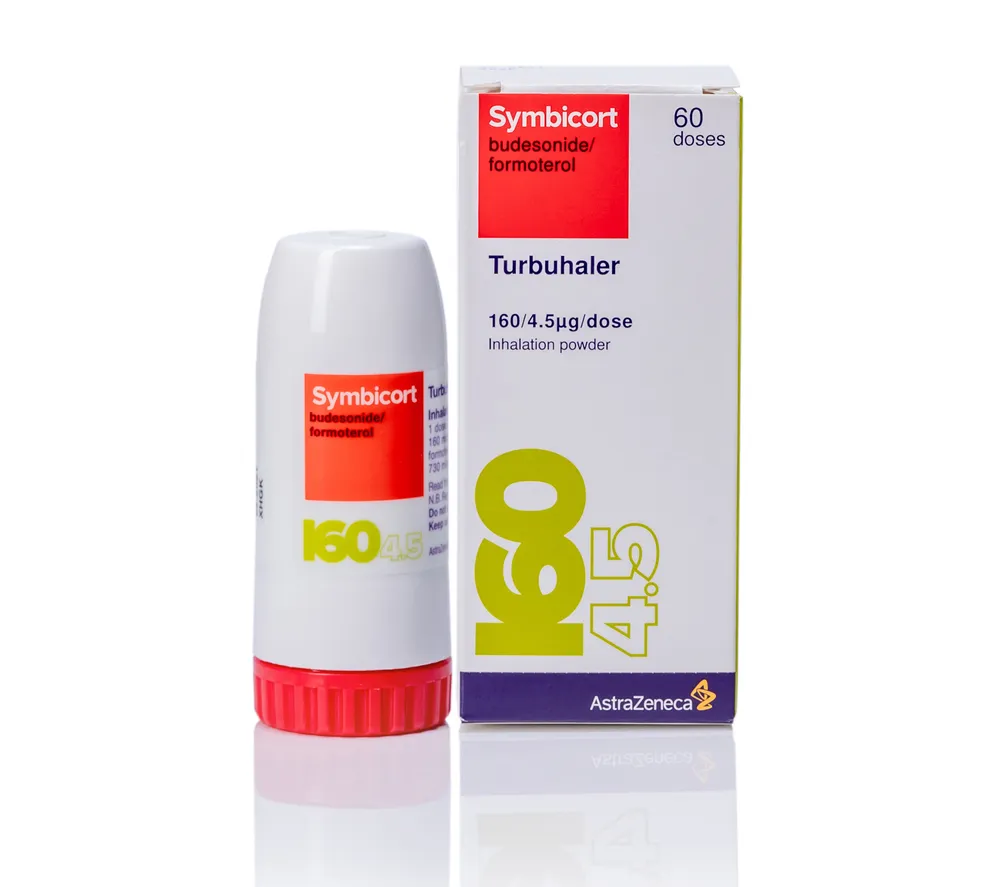
Table of Contents
Patient Information Leaflet
Symbicort, (160 micrograms + 4.5 micrograms)/inhalation dose, inhalation aerosol, suspension
Budesonide + Formoterol fumarate dihydrate
Please read this leaflet carefully before using this medicine, because it contains important information for you.
- Keep this leaflet. You may need to read it again.
- If you have any questions, ask your doctor or pharmacist.
- This medicine has been prescribed for you personally. Do not pass it on to others. It may harm them, even if their symptoms are the same as yours.
- If you experience any side effects, talk to your doctor or pharmacist. This includes any possible side effects not listed in this leaflet. See section 4.
Leaflet contents:
- What Symbicort is and what it is used for
- What you need to know before using Symbicort
- How to use Symbicort
- Possible side effects
- How to store Symbicort
- Contents of the pack and other information
1. What Symbicort is and what it is used for
Symbicort is a medicine in an inhaler used to treat symptoms of chronic obstructive pulmonary disease (COPD) in adults aged 18 years and older. COPD is a chronic lung disease affecting the airways, often caused by smoking. Symbicort contains two different active substances: budesonide and formoterol fumarate dihydrate.
- Budesonide belongs to a group of medicines called corticosteroids. It works by reducing and preventing inflammation and swelling in the lungs.
- Formoterol fumarate dihydrate belongs to a group of medicines called long-acting beta\2-adrenergic agonists or bronchodilators. It works by relaxing the muscles in the airways, making breathing easier.
Do not use this medicine as a reliever inhaler for immediate relief of symptoms.
2. Important information before using Symbicort
When not to use Symbicort:
- if the patient is allergic to budesonide, formoterol, or any of the other ingredients of this medicine (listed in section 6).
Warnings and precautions
Before starting treatment with Symbicort, speak with your doctor or pharmacist if the patient has:
- diabetes
- a lung infection
- high blood pressure or has ever had heart problems (including heart rhythm disorders, very fast heartbeat, narrowed arteries, or heart failure)
- thyroid or adrenal gland disorders
- low blood potassium levels
- severe liver disease. If the patient experiences blurred vision or other vision disturbances, contact a doctor.
Children and adolescents
Symbicort is not recommended for use in children and adolescents under 18 years of age.
Symbicort and other medicines
Tell your doctor or pharmacist about all medicines the patient is currently taking or has recently taken, as well as any medicines they plan to take.
In particular, inform your doctor or pharmacist if the patient is taking any of the following medicines:
- Beta-blockers (such as atenolol or propranolol), used to treat high blood pressure, including eye drops (such as timolol used in the treatment of glaucoma).
- Medicines used for rapid or irregular heartbeat (such as quinidine).
- Medicines such as digoxin, commonly used in the treatment of heart failure.
- Diuretics (such as furosemide), used to treat high blood pressure.
- Oral steroids (such as prednisolone).
- Xanthine derivatives (e.g. theophylline or aminophylline). These are medicines commonly used in the treatment of COPD or asthma.
- Other bronchodilators (such as salbutamol).
- Tricyclic antidepressants (such as amitriptyline) and the antidepressant nefazodone.
- Phenothiazine medicines (such as chlorpromazine and prochlorperazine).
- Medicines known as HIV protease inhibitors (such as ritonavir), used in the treatment of HIV infection.
- Medicines used to treat infections (such as ketoconazole, itraconazole, voriconazole, posaconazole, clarithromycin, and telithromycin).
- Medicines used in Parkinson's disease (such as levodopa).
- Medicines used in thyroid disorders (such as levothyroxine).
If the patient is taking any of the medicines listed above or has any doubts about using other medicines, they should contact their doctor or pharmacist before using Symbicort.
The patient should also inform their doctor or pharmacist if they are scheduled to undergo general anaesthesia due to a surgical or dental procedure.
Pregnancy, breastfeeding, and fertility
- If the patient is pregnant or planning to become pregnant, she should inform her doctor before using Symbicort – Symbicort should not be used without medical advice.
- If a patient being treated with Symbicort becomes pregnant, she should not stop taking Symbicort but should contact her doctor immediately.
- A breastfeeding woman should speak with her doctor before using Symbicort.
Driving and operating machinery
Symbicort has no effect or has a negligible effect on the ability to drive vehicles, use tools, or operate machinery.
3. How to use Symbicort
- This medicine should always be used exactly as prescribed by the doctor. If in doubt, consult your doctor or pharmacist.
- It is important to use Symbicort every day, even if the patient currently has no symptoms of COPD.
The usual dose of this medicine is 2 inhalations twice daily. Symbicort is not recommended for use in children and adolescents under 18 years of age.
If the patient is taking oral steroid tablets for COPD, the doctor may reduce the number of oral steroid tablets when initiating Symbicort treatment. If the patient has been taking oral steroids in tablet form for a prolonged period, the doctor may occasionally recommend blood tests. After reducing the dose of oral steroids, the patient may feel worse, and respiratory symptoms may even worsen. Symptoms such as nasal congestion, runny nose, fatigue, or muscle or joint pain and rash (skin eruption) may occur. If any of these symptoms concern the patient or if symptoms such as headache, tiredness, nausea or vomiting occur, the patient should contact the doctor immediately. Additional medicines may be required if allergy symptoms or joint inflammation occur. If the patient has any doubts about continuing Symbicort treatment, they should consult their doctor.
The doctor may consider adding oral steroid tablets to the usual treatment regimen during periods of stress (e.g. chest infection or prior to surgery).
Important information about COPD symptoms
If the patient experiences breathlessness or wheezing while using Symbicort, they should continue using Symbicort but contact their doctor as soon as possible, as additional treatment may be necessary.
Contact the doctor immediately if:
- The patient experiences difficulty breathing or frequently wakes up at night due to breathlessness.
- The patient experiences chest tightness in the morning upon waking or if chest tightness lasts longer than usual.
- These symptoms may indicate inadequate control of COPD and may require immediate initiation of different or additional treatment.
Patients with COPD may also be prescribed other bronchodilator medicines by their doctor, such as anticholinergics (e.g. tiotropium bromide and ipratropium bromide).
Information about Symbicort
- Before using Symbicort for the first time, remove the inhaler from its foil packaging. Discard the foil packaging and the desiccant (drying agent) inside. If the desiccant has escaped from its pouch, do not use the inhaler.
- After removing the inhaler from the foil packaging, it may be used for 3 months. Write the expiry date (3 months after opening the foil package) on the inhaler label to help remember when to stop using the inhaler.
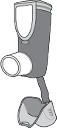
- The parts of the inhaler are shown in the figure. The inhaler comes pre-assembled in the packaging. Do not disassemble it. If the canister becomes loose, reattach it to the inhaler and continue using it.
Preparing the Symbicort inhaler for use
The inhaler should be prepared for use in the following situations:
- When using a new Symbicort inhaler for the first time.
- If the inhaler has not been used for more than 7 days.
- If the inhaler has been dropped.
To prepare the inhaler for use, follow these instructions:
- Shake the inhaler vigorously for at least 5 seconds to mix the contents of the aerosol canister.
- Remove the protective cap from the mouthpiece by gently pressing the side tabs. The strap on the cap will remain attached to the inhaler.
- Hold the inhaler upright. Then press the dose counter (at the top of the inhaler) to release one spray into the air. You may use one or both hands, as shown in the figures.
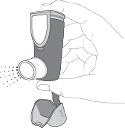
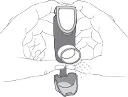
- Release pressure from the dose counter.
- Wait 10 seconds, shake the device vigorously, and repeat steps 3 and 4.
- The inhaler is now ready for use.
Using the inhaler
To perform an inhalation, always follow the instructions below.
- Shake the inhaler vigorously for at least 5 seconds to mix the contents of the aerosol canister.
- Remove the protective cap from the mouthpiece by gently pressing the side tabs. Check that the mouthpiece is not blocked.
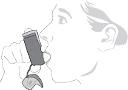
- Hold the inhaler upright (with one or both hands). Breathe out slowly and calmly.
- Gently place the inhaler mouthpiece between the teeth. Close lips around the mouthpiece (seal lips tightly).
- Begin to breathe in slowly and deeply through the mouth. At the same time, press firmly on the dose counter (at the top of the inhaler) to release a spray. Continue breathing in for a short time after pressing the counter. Breathing in at the same time as pressing the counter ensures the medicine reaches the lungs.
- Hold your breath for 10 seconds, or as long as possible without discomfort.
- Before exhaling, release pressure from the dose counter and remove the inhaler from the mouth. Keep the inhaler upright.
- Then breathe out slowly. To perform a second inhalation, shake the inhaler vigorously for at least 5 seconds and repeat steps 3 to 7.
- Replace the protective cap on the mouthpiece.
- Rinse the mouth with water after taking the morning and evening doses. Do not swallow the water.
Using a spacer device
Your doctor, nurse or pharmacist may recommend using a spacer device (e.g. AeroChamber Plus Flow Vu or AeroChamber Plus). Follow the instructions provided in the leaflet included with the spacer device.
Cleaning the Symbicort inhaler
- Wipe the inner and outer surfaces of the mouthpiece with a dry cloth at least once a week.
- Do not use water or other liquids, and do not remove the medicine canister from the inhaler.
How to know when to replace the Symbicort inhaler
- The counter at the top of the inhaler shows how many sprays remain in the Symbicort inhaler. Initially, it shows 120 sprays when the canister is full.
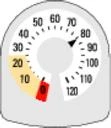
- Each time the patient takes a dose or sprays into the air, the arrow moves, counting down to zero ("0").
- When the arrow enters the yellow-marked area, approximately 20 sprays remain.
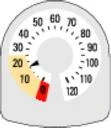
- When the arrow reaches "0", stop using the Symbicort inhaler. The inhaler may still seem to work and feel full, but continued use will not deliver the correct dose of medicine.
Using more than the recommended dose of Symbicort
If more than the recommended dose of Symbicort is used, consult a doctor or pharmacist immediately. The following symptoms may occur: tremors, headache, and rapid heartbeat.
Missing a dose of Symbicort
- If a dose is missed, take it as soon as remembered. However, if it is almost time for the next dose, skip the missed dose.
- Do not take a double dose to make up for a missed dose.
Stopping Symbicort treatment
Before stopping Symbicort, consult your doctor or pharmacist.
Stopping Symbicort may lead to worsening of COPD symptoms.
If you have any further questions about the use of this medicine, consult your doctor or pharmacist.
4. Possible adverse effects
Like all medicines, this medicine can cause adverse effects, although not everyone will experience them.
Symbicort treatment must be stopped immediately and the patient should contact a doctor immediately
if the patient experiences any of the following symptoms:
- Swelling of the face, particularly around the mouth (tongue and (or) throat and (or) difficulty swallowing), rash or hives occurring together with breathing difficulties (angioedema) and (or) sudden feeling of weakness (fainting). These may indicate an allergic reaction. This occurs rarely, in less than 1 in 1,000 patients.
- Sudden worsening of wheezing and breathlessness occurring immediately after inhalation of the medicine. If any of these symptoms occur, Symbicort must be stopped immediately and a rescue inhaler should be used. Immediate contact with a doctor is required, as treatment may need to be changed. These symptoms occur very rarely, in less than 1 in 10,000 patients.
Other possible adverse effects:
Common (may occur in up to 1 in 10 patients)
- Palpitations (awareness of heartbeat), tremors. If such symptoms occur, they are usually mild and tend to disappear during continued use of Symbicort.
- Oral candidiasis (fungal infection in the mouth). The risk of oral candidiasis is reduced if the patient rinses the mouth with water after using Symbicort.
- Mild throat irritation, cough, and hoarseness.
- Headache.
- Pneumonia (lung infection) in patients with COPD. Inform the doctor if any of the following symptoms occur during treatment with Symbicort; these may be signs of lung infection:
- Fever or chills.
- Increased mucus production, change in mucus color.
- Worsening cough or increased breathing difficulties.
Uncommon (may occur in up to 1 in 100 patients)
- Anxiety, nervousness, or restlessness.
- Sleep disturbances.
- Dizziness.
- Nausea.
- Rapid heartbeat.
- Skin bruising.
- Muscle cramps.
- Blurred vision.
Rare (may occur in up to 1 in 1,000 patients)
- Rash, itching.
- Bronchospasm (constriction of airway muscles causing wheezing). If wheezing occurs immediately after using the medicine, Symbicort must be stopped and the doctor contacted immediately.
- Low blood potassium levels.
- Irregular heartbeat.
Very rare (may occur in up to 1 in 10,000 patients)
- Depression.
- Behavioural changes, particularly in children.
- Pain or pressure in the chest (symptoms of angina).
- Increased blood sugar (glucose) levels.
- Taste disturbances, such as unpleasant taste in the mouth.
- Changes in blood pressure.
Inhaled glucocorticosteroids may affect the production of steroid hormones in the body,
especially if used long-term at high doses. Symptoms include:
- Changes in bone mineral density (bone thinning)
- Cataract (clouding of the lens in the eye)
- Glaucoma (increased pressure in the eye)
- Slowed growth rate in children and adolescents
- Effects on the adrenal glands (small glands located near the kidneys).
The likelihood of these symptoms is significantly lower with inhaled glucocorticosteroids
than with oral glucocorticosteroid tablets.
Reporting of adverse effects
If any adverse effects occur, including any not listed in this leaflet, inform your doctor, pharmacist, or nurse. Adverse effects can be reported directly to the Department of Monitoring Adverse Drug Reactions, Office for Registration of Medicinal Products, Medical Devices and Biocidal Products
Al. Jerozolimskie 181C
02 222 Warsaw
Tel.: + 48 22 49 21 301
Fax: + 48 22 49 21 309
Website: https://smz.ezdrowie.gov.pl
Adverse effects can also be reported to the marketing authorisation holder.
Reporting adverse effects helps provide more information on the safety of the medicine.
5. How to store Symbicort
- Keep the medicine out of the sight and reach of children.
- Do not use this medicine after the expiry date stated on the label, the cardboard box, and the foil under EXP. The expiry date refers to the last day of the stated month.
- As with most pressurized inhalers, the effectiveness of this medicine may be reduced if the container is cold. For best results, the medicine should be stored at room temperature before use. Do not store in a refrigerator or freeze. Protect from frost and direct sunlight.
- After removing the inhaler from the foil, it may be used for 3 months. Enter the expiry date (3 months after opening the foil packaging) on the label of the inhaler to help remember when to stop using the device.
- After using the inhaler, always firmly replace the protective cap over the mouthpiece and snap it into place.
- Medicines must not be disposed of via wastewater or household waste. Ask your pharmacist how to dispose of medicines no longer required. This will help protect the environment. Warning: The container holds contents under pressure. Do not expose to temperatures above 50°C. Do not pierce the container. Even if the container appears empty, do not crush, pierce, or burn it.
6. Contents of the pack and other information
What Symbicort contains
The active substances in Symbicort are budesonide and formoterol fumarate dihydrate. Each spray (inhalation dose) of Symbicort contains 160 micrograms of budesonide and 4.5 micrograms of formoterol fumarate dihydrate.
Other ingredients are: apaflopropane (HFA 227), povidone, and macrogol. The inhaler does not contain chlorofluorocarbons.
This medicine contains fluorinated greenhouse gases.
Each inhaler contains 10.6 g of apaflopropane (HFC-227ea), equivalent to 0.034 tonnes of CO\2\ (global warming potential GWP = 3220).
What Symbicort looks like and contents of the pack
Symbicort is an inhalation medicine. The pressurized container, fitted with a dose counter, contains a white suspension for inhalation. The container is equipped with a red plastic actuator with a white plastic mouthpiece and an integrated grey plastic protective cap. Each inhaler contains 120 sprays (inhalation doses) after preparation for use. Each inhaler is individually packed in a foil pack containing a desiccant.
Symbicort, (160 micrograms + 4.5 micrograms)/inhalation dose, inhalation aerosol, suspension (Budesonidum + Formoteroli fumaras dihydricus) is available in packs containing one inhaler.
Marketing Authorisation Holder and Manufacturer
Marketing Authorisation Holder:
AstraZeneca AB
151 85 Södertälje
Sweden
Manufacturer:
AstraZeneca Dunkerque Production
224 Avenue de la Dordogne
59640 Dunkerque
France
This medicinal product is authorised in the European Economic Area countries under the following names:
| Country | Brand name and strength of the product |
| Austria | Symbicort 160 Microgram /4.5 Microgram/Inhalation Pressurised inhalation, suspension |
| Belgium | Symbicort 160 microgram /4.5 microgram/inhalatie, aërosol, suspensie Symbicort 160 microgrammes /4.5 microgrammes/inhalation, suspension pour inhalation en flacon pressurisé Symbicort 160 Mikrogramm /4.5 Mikrogramm/Inhalation, Druckgasinhalation, Suspension |
| Bulgaria | Symbicort 160 microgram /4.5 microgram/inhalation Pressurised suspension for inhalation |
| Croatia | Symbicort 160 mikrograma /4.5 mikrograma po potisku, stlačeni inhalat, suspenzija |
| Cyprus | Symbicort 160 microgrammes /4.5 microgrammes/inhalation |
| Czech Republic | Symbicort 160 mikrogramů /4.5 mikrogramů |
| Denmark | Symbicort 160 microgram /4.5 microgram/inhalation |
| Estonia | Symbicort |
| Finland | Symbicort 160 microg /4.5 microg/inhalation |
| France | Symbicort 200 microgrammes /6 microgrammes par inhalation |
| Germany | Symbicort 160 Mikrogramm /4.5 Mikrogramm pro Inhalation Druckgasinhalation, Suspension |
| Greece | Symbicort 160 microgrammes /4.5 microgrammes/inhalation |
| Hungary | Symbicort 4.5 microgramm /160 microgramm pressurised inhalation suspension |
| Iceland | Symbicort 160 microgram /4.5 microgram/inhalation |
| Ireland | Symbicort 200 micrograms /6 micrograms/inhalation |
| Italy | Symbicort 160 microgrammi /4.5 microgrammi/erogazione, sospensione pressurizzata per inalazione |
| Latvia | Symbicort 160 mikrogrami /4.5 mikrogrami/inhalācijā, izsmidzinājumā, aerosols inhalācijām zem spiediena |
| Lithuania | Symbicort 160 mikrogramų/4.5 mikrogramų/išpurškime suslėgtoji įkvepiamoji suspensija |
| Luxembourg | Symbicort 160 microgrammes /4.5 microgrammes/inhalation, suspension pour inhalation en flacon pressurisé |
| Malta | Symbicort 200 micrograms /6 micrograms/inhalation |
| Netherlands | Symbicort 200/6, 200 microgram /6 microgram/inhalatie |
| Norway | Symbicort 160 microgram /4.5 microgram/inhalation |
| Poland | Symbicort |
| Portugal | Symbicort 160 microgramas /4.5 microgramas/inalação Suspensão pressurizada para inalação |
| Romania | Symbicort 160 micrograme /4.5 micrograme/inhalaţie, suspensie de inhalat presurizată |
| Slovakia | Symbicort 160 mikrogramov /4.5 mikrogramov/inhalačná dávka |
| Slovenia | Symbicort 160 mikrogramov /4.5 mikrograma na vdih, inhalacijska suspenzija pod tlakom |
| Spain | Symbicort 160 microgramos /4.5 microgramos/inhalación suspensión para inhalación en envase a presión |
| Sweden | Symbicort 160 microgram /4.5 microgram/inhalation |
| United Kingdom | Symbicort 200 micrograms/6 micrograms per actuation pressurised inhalation, suspension |