Symbactin
Poland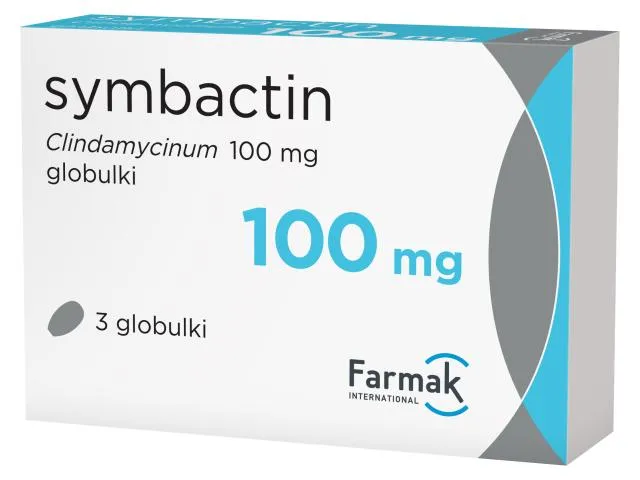
Table of Contents
Patient Information Leaflet
Symbactin, 100 mg, globules
Clindamycinum
Please read all of this leaflet carefully before using this medicine, because it contains
important information for you.
- Keep this leaflet so that you can read it again if needed.
- If you have any questions, please consult your doctor or pharmacist.
- This medicine has been prescribed for a specific individual. Do not share it with others. This medicine may harm others, even if their symptoms are the same.
- If you experience any adverse reactions, including any not listed in this leaflet, inform your doctor or pharmacist. See section 4.
Leaflet Contents
- What Symbactin is and what it is used for
- What you need to know before using Symbactin
- How to use Symbactin
- Possible side effects
- How to store Symbactin
- Contents of the pack and other information
1. What Symbactin is and what it is used for
This medicine is called Symbactin, 100 mg globules; in the remainder of this leaflet it will be referred to as Symbactin.
Symbactin is a medicine in the form of solid globules for vaginal use. After insertion into the vagina, it releases a substance called clindamycin phosphate. Clindamycin belongs to a group of medicines known as antibiotics.
Symbactin is used in the treatment of a bacterial vaginal infection called bacterial vaginosis.
2. Important information before using Symbactin
When not to use Symbactin:
- if the patient is allergic to clindamycin, another antibiotic - lincosamide, or any of the other ingredients of this medicine (listed in section 6);
- if the patient has previously experienced colitis after taking antibiotics.
Warnings and precautions
Before starting treatment with Symbactin, discuss with a doctor or pharmacist:
- if the patient has diarrhoea, or if diarrhoea usually occurs after taking antibiotics;
- if the patient has previously suffered from inflammatory bowel diseases, such as Crohn's disease or ulcerative colitis.
If, during or after treatment with Symbactin, the patient develops severe, persistent diarrhoea or bloody diarrhoea, she should consult a doctor immediately, as treatment may need to be discontinued. This could be a symptom of intestinal inflammation (pseudomembranous colitis), a complication associated with antibiotic treatment.
The patient should consult a doctor before using Symbactin if:
- the patient has kidney, liver, or immune system disorders;
- the patient is under 16 or over 65 years of age.
Symbactin should not be used in children and adolescents under 16 years of age.
As with all vaginal infections, sexual intercourse during treatment with Symbactin is not recommended. Symbactin reduces the effectiveness of condoms and vaginal diaphragms; therefore, reliance on these contraceptive methods should be avoided during treatment and for 72 hours after treatment ends.
It is not recommended to use vaginal products such as tampons or vaginal douching solutions during treatment with Symbactin.
Symbactin and other medicines
Inform your doctor or pharmacist about all medicines currently used, recently used, or planned for use. In particular, inform the doctor if the patient is taking:
- muscle relaxants, as Symbactin may enhance the effect of these medicines.
Pregnancy, breastfeeding, and fertility
If the patient is pregnant or breastfeeding, suspects she might be pregnant, or is planning to have a child, she should consult a doctor or pharmacist before using this medicine.
The use of Symbactin during the first three months of pregnancy is not recommended due to insufficient safety data available for this period.
Symbactin may be used during pregnancy only if, after thorough evaluation, the doctor decides that this medicine is appropriate for the patient.
Since the active substance of Symbactin may pass into human milk, the doctor will decide whether the patient may use this medicine during breastfeeding.
It is unlikely that the infant will receive a large amount of the active substance through breast milk. Nevertheless, if the child develops bloody diarrhoea or other symptoms of illness, medical advice should be sought immediately. In such a case, breastfeeding should be discontinued.
Driving and operating machinery
It is unlikely that Symbactin affects the ability to drive or operate machinery.
3. How to use Symbactin
This medicine should always be used as directed by your doctor. If in doubt, consult your doctor or pharmacist.
Do not use this medicine if the blister containing the globules is torn, open, or not completely sealed.
Do not store the globules at excessively high temperatures, as heat may soften and deform them.
The recommended dose is one globule, which should be inserted deeply into the vagina in the evening before going to sleep for 3 consecutive days. After application, the globule will dissolve and completely disperse.
Application of the globule:
- Remove the globule from the blister;
- Lie on your back with your knees drawn up towards your chest;
- Insert the globule into the vagina using the tip of the third (middle) finger as deeply as possible without causing discomfort.
Always wash your hands before and after applying the globule.
Use of more than the recommended dose of Symbactin
If more than the recommended dose has been used, seek immediate medical advice from a doctor.
Do not use more globules than recommended unless advised by a doctor.
Missed dose of Symbactin
If only a few hours have passed since the missed dose, the medicine should be used as soon as possible.
If it is almost time for the next dose, skip the missed dose and take the next dose at the usual time.
Try to use the globules at the same time each day.
Do not use a double dose to make up for a missed dose.
Accidental ingestion of Symbactin
If the globule is swallowed, consult a doctor. This does not pose a health risk, but the doctor will provide guidance on what to do in such a situation.
If you have any further questions about the use of this medicine, consult your doctor or pharmacist.
4. Possible adverse reactions
Like all medicines, this medicine can cause adverse reactions, although not everyone will experience them.
You should immediately inform the doctor if the patient:
- develops severe, prolonged or bloody diarrhoea (which may be accompanied by abdominal pain or fever). This is an uncommon adverse reaction that may occur after antibiotic treatment and could be a sign of a serious intestinal inflammation or inflammation of the lining of the large intestine (pseudomembranous colitis);
- experiences a very severe allergic reaction or skin reactions. These are very rare adverse reactions.
Common (may affect less than 1 in 10 people):
- fungal infections, yeast infection;
- headache;
- abdominal pain, diarrhoea, nausea;
- itching (in areas other than the injection site);
- vaginal candidiasis, vaginal discomfort, vaginal disorders.
Uncommon (may affect less than 1 in 100 people):
- vomiting;
- rash;
- upper abdominal pain or back pain;
- fever or chills, malaise (feeling of lack of energy);
- painful urination, blood in urine, cloudy or foul-smelling urine, increased frequency of urination or sudden urge to urinate;
- vaginal infection, vaginal discharge, irregular menstrual bleeding;
- pain at injection site, itching, local swelling.
Reporting of adverse reactions
If any adverse reactions occur, including any adverse reactions not listed in this leaflet, inform a doctor or pharmacist. Adverse reactions can be reported directly to the Department of Monitoring Adverse Reactions of Medicinal Products at the Office for Registration of Medicinal Products, Medical Devices and Biocidal Products
Al. Jerozolimskie 181C, 02-222 Warsaw
Tel: +48 22 49 21 301, Fax: +48 22 49 21 309
Website: https://smz.ezdrowie.gov.pl
Adverse reactions can also be reported to the marketing authorisation holder.
Reporting adverse reactions helps provide more information on the safety of this medicine.
5. How to store Symbactin
Keep this medicine out of sight and reach of children.
Do not use this medicine after the expiry date stated on the carton and blister after: EXP.
The expiry date refers to the last day of the stated month.
Store below
Do not dispose of medicines via wastewater or household waste. Ask your pharmacist how to
dispose of medicines no longer required. These measures will help protect the environment.
6. Contents of the pack and other information
What Symbactin contains
- The active substance is clindamycin phosphate. Each pellet contains 100 mg of clindamycin as clindamycin phosphate.
- The other ingredient is: hard fat.
What Symbactin looks like and contents of the pack
Symbactin is white to yellowish pellets. The pellets are packed in white PVC/PE soft blisters.
Each cardboard box contains 3 pellets.
Marketing Authorisation Holder and Manufacturer
Marketing Authorisation Holder
Farmak International Sp. z o.o.
Koszykowa 65
00-667 Warsaw, Poland
Manufacturer
HELP S.A., Pedini Ioanninon, 45500 Ioannina, Greece
QUALIMETRIX S.A., 579 Mesogeion Avenue, 15343 Agia Paraskevi, Athens, Greece