Sumatriptan sun
Poland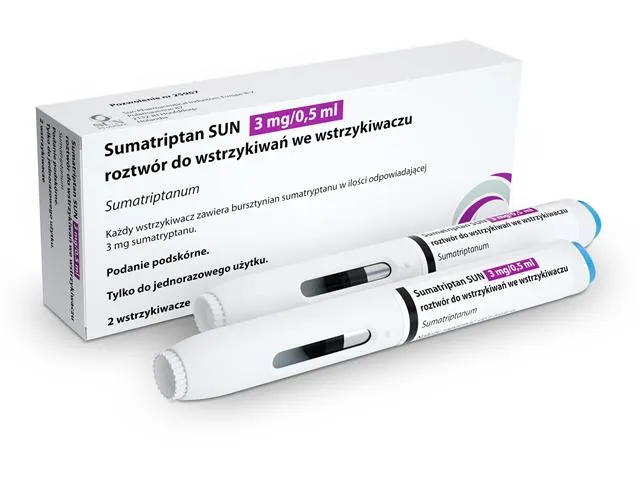
Table of Contents
Package leaflet: Information for the patient
Sumatriptan SUN, 3 mg/0.5 ml, solution for injection in a pre-filled injector
Sumatriptanum
Read this leaflet carefully before using this medicine because it contains important information for you.
- Keep this leaflet. You may need to read it again.
- If you have any further questions, ask your doctor or pharmacist.
- This medicine has been prescribed for a specific individual. Do not pass it on to others. It may harm them even if their symptoms are the same as yours.
- If you experience any adverse reactions, including any not listed in this leaflet, inform your doctor or pharmacist. See section 4.
Contents of the leaflet
- What Sumatriptan SUN is and what it is used for
- Important information before using Sumatriptan SUN
- How to use Sumatriptan SUN
- Possible side effects
- How to store Sumatriptan SUN
- Contents of the pack and other information
1. What Sumatriptan SUN is and what it is used for
The active substance in Sumatriptan SUN is sumatriptan. It belongs to a group of medicines called 5HT receptor agonists.
This medicine is used for the acute treatment of migraine headache. Migraine symptoms may be caused by temporary swelling of blood vessels in the head. It is thought to work by narrowing these blood vessels.
2. Important information before using Sumatriptan SUN
When not to use Sumatriptan SUN
- if the patient is allergic to sumatriptan or any of the other ingredients of this medicine (listed in section 6)
- if the patient has heart problems or has had a myocardial infarction
- if the patient has problems with circulation in arms and legs
- if the patient has had a stroke or mini-stroke (also known as transient ischemic attack, transient ischemic attack, TIA)
- if the patient has severe liver disease
- if the patient has moderate, severe, or mild uncontrolled hypertension
- with other medicines used to treat migraine containing ergotamine or similar medicines such as methysergide, any triptan, or 5-HT agonist
- with medicines of the MAOI (monoamine oxidase inhibitors) group, or if the patient has taken MAOIs within the last two weeks.
Warnings and precautions
Before starting treatment with Sumatriptan SUN, discuss with the doctor if:
- the patient has any of the following conditions: heart disease, including heart failure, angina pectoris, or coronary thrombosis (myocardial infarction), hypertension, liver or kidney disease, epilepsy, or brain disorder. Particularly women after menopause and men over 40 years of age should have their heart and blood vessels examined before using this medicine.
- the patient has risk factors for heart disease, such as chronic tobacco smoking or use of nicotine replacement therapy, especially in men over 40 years of age and women after menopause. In very rare cases, severe heart disease has occurred after administration of sumatriptan, even though patients previously had no symptoms of heart disease. If any of the risk factors listed above apply to the patient, this may indicate an increased risk of developing heart disease; therefore, cardiac function should be evaluated before using the medicine.
- the patient is allergic to certain antibiotics (sulphonamides); allergic reactions to sumatriptan may occur in patients allergic to sulphonamides.
- the patient is taking medicines used to treat depression (so-called SSRIs or SNRIs) or lithium (a medicine used in the treatment of bipolar disorder).
After discussing the above issues, the doctor may still recommend using the medicine but will instruct the patient on proper administration via injection.
As with other migraine treatments, medication overuse may worsen migraine symptoms and increase their frequency.
The medicine should only be used when a doctor has clearly diagnosed migraine headache.
Immediate medical help should be sought if symptoms such as confusion, rapid heartbeat, chills, sweating, and muscle tremors occur. These may be symptoms of a very serious condition called serotonin syndrome.
Sumatriptan SUN and other medicines
Before using Sumatriptan SUN, inform the doctor if:
- the patient is taking medicines used to treat migraine that contain ergotamine or its derivatives, such as ergotamine tartrate or methysergide maleate (if so, their use must be discontinued at least 24 hours before taking sumatriptan)
- the patient is taking prescription medicines used to treat depression, such as MAOIs or SSRIs (including citalopram, fluoxetine, fluvoxamine, paroxetine, and sertraline), or if the patient has taken MAOIs within the last 2 weeks
- the patient is taking lithium (a medicine used in the treatment of bipolar disorder)
- the patient is taking any prescription medicines used for weight loss or in the treatment of epilepsy
- the patient is taking any herbal product containing St. John's wort (Hypericum perforatum). Using this product together with sumatriptan may increase the likelihood of adverse effects.
The patient should tell the doctor or pharmacist about all medicines currently or recently taken, as well as any medicines planned for future use.
Pregnancy and breastfeeding
The patient should consult a doctor or pharmacist before using the medicine:
- if she is pregnant, suspects she may be pregnant, or is planning to have a child
- if she is breastfeeding. The doctor may still recommend using sumatriptan, but breastfeeding should be avoided for 12 hours after administration of Sumatriptan SUN; during this time, milk should be expressed and not given to the infant.
Some breastfeeding women have reported breast pain and/or nipple pain after using sumatriptan. The pain is usually transient and resolves within 3 to 12 hours.
Driving and operating machinery
The medicine may cause drowsiness. If the patient experiences these symptoms, driving or operating machinery should be avoided.
Sumatriptan SUN contains sodium
The medicine contains less than 1 mmol of sodium (23 mg) per dose (3 mg), meaning the medicine is considered "sodium-free".
3. How to use Sumatriptan SUN
Always use this medicine exactly as your doctor has told you. If in doubt, consult your doctor or pharmacist.
Sumatriptan SUN is usually injected into the thigh or upper arm.
Carefully read the section "How to use the injection device" located at the end of this leaflet.
The injection device delivers the dose of medicine just under the skin quickly and painlessly. Injections MUST NOT be administered in any way other than that shown in the leaflet.
Do not inject Sumatriptan SUN into a vein.
Sumatriptan SUN must not be used to prevent migraine attacks.
Use the injection device at the first signs of a migraine attack (although it will be equally effective if used at any time during the attack).
If migraine symptoms go away, but return
If migraine symptoms disappear after the first dose but return, a second injection device may be used at any time within 24 hours, provided at least one hour has passed since the first injection. Do not use more than two injection devices within 24 hours.
If migraine symptoms do not improve
Do not administer a second dose during the same attack. However, the medicine may be used during the next attack at any time during its duration within the following 24 hours, provided at least one hour has passed since the first injection. Do not use more than two injection devices within 24 hours.
If the injection does not relieve migraine symptoms, you may take regular painkillers, provided they do not contain ergotamine or its derivatives. After taking this medicine, wait at least six hours before taking any medicine containing ergotamine or its derivatives.
Use in children and adolescents (under 18 years of age)
Sumatriptan must not be used in children and adolescents under 18 years of age.
Use in elderly patients (over 65 years of age)
Experience with sumatriptan use in patients over 65 years of age is limited; therefore, it is usually not prescribed in this age group.
Use of more than the recommended dose of Sumatriptan SUN
Using more than the recommended dose of Sumatriptan SUN may lead to serious consequences.
In case of overdose, SEEK IMMEDIATE MEDICAL HELP or contact the nearest emergency department.
If you have any further questions about using this medicine, consult your doctor or pharmacist.
4. Possible adverse reactions
Like all medicines, this medicine can cause adverse reactions, although not everyone will experience them.
Serious adverse reactions
The following adverse reactions have been reported (frequency unknown).
If any of the following adverse reactions occur, you must immediately contact your doctor and not
use the medicine again, unless your doctor advises otherwise
- sudden wheezing, tremor or chest tightness, eyelid, facial or lip swelling, skin rash – red spots or hives (skin lumps), which may be signs of an allergic reaction
- seizure attack (usually in people with a history of epilepsy)
- inflammation of the large intestine (part of the intestine), which may present as pain in the lower left part of the abdomen and/or bloody diarrhoea with fever (ischaemic colitis)
- Raynaud's phenomenon, which may manifest as paleness or bluish discoloration of the skin and/or pain in fingers, toes, ears, nose or jaw in response to cold or stress
- chest pain (angina pectoris)
- myocardial infarction (heart attack)
Other adverse reactions
Very common (may affect more than 1 in 10 people)
- transient pain at the injection site
- stinging/burning, redness, swelling, bruising and bleeding at the injection site
Common (may affect less than 1 in 10 people)
- facial flushing (lasting several minutes), dizziness, feeling weak, fatigue, drowsiness
- short-term increases in blood pressure shortly after taking the medicine
- nausea or vomiting – when these are not part of a migraine attack
- pain, unusual sensations including tingling, numbness, feeling of heat or cold, heaviness, pressure or tightness. These symptoms usually resolve quickly but may be intense and affect any part of the body, including the chest or throat. If these symptoms persist or are particularly troublesome, especially chest pain or heart-related pain radiating to the arms, you should immediately consult a doctor, as in isolated cases such symptoms have been caused by a heart attack
- shortness of breath
- muscle pain
Rare (may affect less than 1 in 1,000 people)
- chest pain
Very rare (may affect less than 1 in 10,000 people)
- liver function disorders: if the patient has had blood tests to check liver function and has used sumatriptan, the doctor should be informed, as the medicine may affect test results
Unknown (frequency cannot be estimated from available data)
- tremor, muscle spasms, involuntary eye movements
- visual disturbances, including flickering vision, double vision and blurred vision. Cases of permanent visual damage have also been reported.
- low blood pressure, which may lead to fainting, particularly when standing up
- slowed or rapid heartbeat, palpitations (awareness of rapid heartbeats), changes in heart rhythm
- diarrhoea
- neck stiffness
- joint pain
- restlessness, excessive sweating
- In patients who have recently experienced trauma or have an inflammatory condition (such as rheumatism or colitis), pain or worsening of pain may occur at the site of injury or inflammation.
- difficulty swallowing
Reporting of adverse reactions
If any adverse reactions occur, including any adverse reactions not listed in
this leaflet, inform your doctor, pharmacist, or nurse. Adverse reactions can be
reported directly to the Department of Monitoring Adverse Drug Reactions of the Office for Registration of Medicinal Products, Medical Devices and Biocidal Products:
Al. Jerozolimskie 181C, 02-222 Warsaw, tel.: 22 49-21-301, fax: 22 49-21-309
Website: https://smz.ezdrowie.gov.pl .
Adverse reactions can also be reported to the marketing authorization holder.
Reporting adverse reactions helps provide more information on the safety of the medicine.
5. How to store Sumatriptan SUN
Keep this medicine out of the sight and reach of children.
Do not use this medicine after the expiry date stated on the packaging. The expiry date refers to the last day of the stated month.
There are no special requirements regarding storage temperature. Store in the original packaging to protect from light.
Do not use the medicine if any solid particles are visible in the solution.
Medicines must not be disposed of via the sewage system or household waste. Ask your pharmacist how to dispose of medicines no longer required. Such measures help protect the environment.
6. Contents of the package and other information
What Sumatriptan SUN contains
- The active substance is sumatriptan. Each autoinjector contains sumatriptan succinate equivalent to 3 mg of sumatriptan.
- The other ingredients are sodium chloride and water for injections.
What Sumatriptan SUN looks like and contents of the pack
The autoinjector contains a clear, colourless or slightly yellowish solution for injection without visible
particles. Each pack contains 1, 2 or 6 autoinjectors.
Not all pack sizes may be marketed.
Marketing Authorisation Holder
Sun Pharmaceutical Industries Europe B.V.
Polarisavenue 87
2132 JH Hoofddorp
The Netherlands
Manufacturer
Sun Pharmaceutical Industries Europe B.V.
Polarisavenue 87
2132 JH Hoofddorp
The Netherlands
Terapia S.A.
Str. Fabricii nr 124
400632 Cluj-Napoca,
Romania
This medicinal product is authorised in the member states of the European Economic Area under the following names:
Germany Sumatriptan Lupin
Spain Sumatriptán SUN
France Sumatriptan SUN
Italy Sumatriptan SUN Pharma
The Netherlands Sumatriptan SUN
Norway Sumatriptan SUN
Romania Sumatriptan SUN
Sweden Sumatriptan SUN
United Kingdom Sumatriptan
How to use Sumatriptan SUN, 3 mg/0.5 ml, solution for injection in pre-filled autoinjector
This leaflet explains how to use the autoinjector containing Sumatriptan SUN.
Read the leaflet carefully TWICE before administering the injection. If you have any questions,
please consult your doctor or pharmacist.
For patients prescribed a 3 mg dose only.
View of the autoinjector from the front
Figure 1
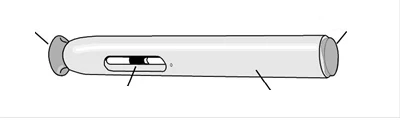
Figure 1
NOTES
- Check the appearance of Sumatriptan SUN in the viewing window. It must be a clear, colourless to slightly yellow solution. Do not inject if the solution is discoloured, cloudy, or contains flakes, clumps, or particles.
- Do not remove the white needle cap from the autoinjector until you are ready to administer the dose.
- NEVER reattach the white needle cap onto the autoinjector.
- NEVER press the white needle cap with your thumb, fingers, or hand.
How to use the autoinjector
a) Wash your hands thoroughly.
b) Find a comfortable, well-lit place and place everything you need within easy reach (autoinjector, alcohol swab or sterile wipes).
c) Identify an injection site with adequate fatty tissue, such as the upper arm or thigh (Figure 2). Do not inject into areas where the skin is tender, bruised, red, or hard.
Figure 2
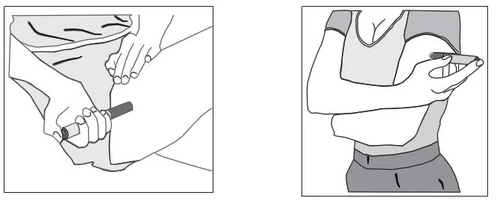
d) Clean the injection site with alcohol or a sterile wipe and allow the skin to dry completely. Do not touch the area after cleaning.
e) Remove the autoinjector from its packaging.
f) Hold the autoinjector in one hand and gently pull off the white needle cap using the other hand (Figure 3). Do not twist the cap and do not reattach it, as this may damage the needle inside the autoinjector.
Figure 3
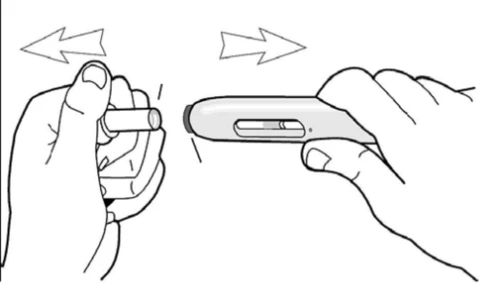
How to begin administering the injection
- Hold the open end of the autoinjector perpendicular (at a 90º angle) to the injection site. Press the safety needle shield firmly against the skin to unlock it. The autoinjector will work only when the safety needle shield is fully retracted (Figure 4).
Hold the autoinjector firmly against the skin.
Figure 4
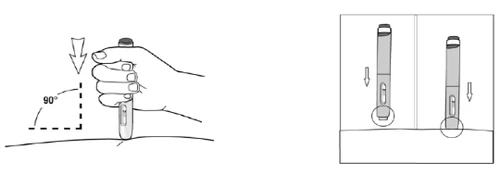
- Press and then release the blue activation button (first click). Delivery of the medication begins (Figure 5a).
Figure 5a and 5b
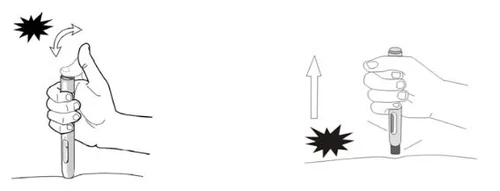
- Do not remove the autoinjector from the skin surface.
- Wait until you hear a second click. The viewing window will turn blue, confirming that the injection is complete (Figure 5b).
- Lift the autoinjector straight up and away from the injection site. The injection is now complete.
If the viewing window does not turn blue, do not reuse the autoinjector. - The safety needle shield will automatically extend to cover and lock the needle in place. The needle will no longer be visible. There is no need to replace the white needle cap (Figure 6).
Figure 6
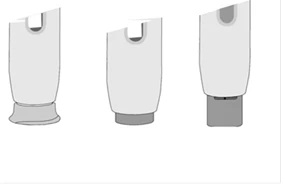
NEVER REUSE THE AUTOINJECTOR.
If there is any suspicion that the patient did not receive the full dose, do not repeat the injection with a new autoinjector.
(7) If a drop of blood appears at the injection site, wipe it gently with a tissue or sanitary wipe. Do not rub the injection site. A bandage may be applied if necessary.