Sumamigren control
Poland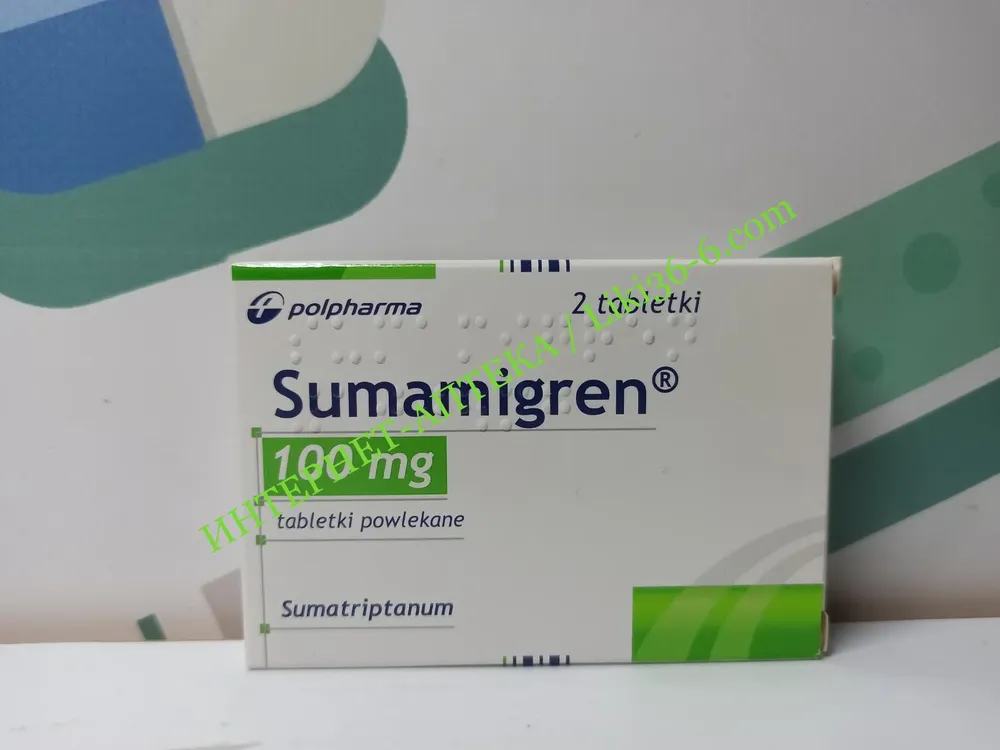
Table of Contents
- Package leaflet: Information for the user
- 1. What Sumamigren Control is and what it is used for
- 2. Important information before using Sumamigren Control
- 3. How to use Sumamigren Control
- 4. Possible adverse reactions
- 5. How to store Sumamigren Control
- 6. Contents of the packaging and other information
Package leaflet: Information for the user
Sumamigren Control, 50 mg, coated tablets
Sumatriptanum
Please read all of this leaflet carefully before taking this medicine because it contains
important information for you.
- Keep this leaflet, as you may need to read it again.
- If you have any further questions, please ask your doctor.
- This medicine has been prescribed for a specific individual. Do not pass it on to others. It may harm other people, even if their symptoms are the same.
- If you experience any side effects, including any not listed in this leaflet, tell your doctor or pharmacist. See section 4.
Contents of the leaflet
- What Sumamigren Control is and what it is used for
- Important information before taking Sumamigren Control
- How to take Sumamigren Control
- Possible side effects
- How to store Sumamigren Control
- Contents of the pack and other information
1. What Sumamigren Control is and what it is used for
Sumamigren Control is used for the acute treatment of migraine attacks with or without aura.
Sumamigren Control should only be taken once migraine symptoms have started.
This medicine should not be used preventively.
2. Important information before using Sumamigren Control
When not to use Sumamigren Control
- if the patient is allergic to sumatriptan or any of the other ingredients of this medicine (listed in section 6)
- if the patient has been diagnosed with: symptoms of ischaemic heart disease, Prinzmetal's angina (a type of ischaemic heart disease), peripheral vascular disease, previous myocardial infarction, stroke or transient ischaemic attack
- if the patient has been diagnosed with severe hepatic insufficiency
- if the patient has been diagnosed with moderate or severe arterial hypertension or mild uncontrolled hypertension
- if the patient is currently taking medicines containing ergotamine or its derivatives, including methysergide (vasoconstrictive agents used, among others, in the treatment of migraine) or any other medicine from the group of triptans or other 5-HT receptor agonists (medicines used in the treatment of migraine)
- if the patient is taking or has taken within the previous 2 weeks antidepressant medicines from the group of MAO inhibitors (medicines used in diseases of the nervous system, mainly in the treatment of depression).
Warnings and precautions
Before starting treatment with Sumamigren Control, discuss this with your doctor or
pharmacist.
Tell your doctor if the patient has:
- headache, but migraine has not previously been diagnosed
- headache different from that usually occurring during a migraine attack
- shortness of breath, pain or pressure in the chest (which may radiate to the jaw or shoulders) of unknown cause
- risk factors for heart disease (men over 40 years of age, postmenopausal women, overweight individuals, diabetes, high cholesterol levels, tobacco smokers, family history of heart disease)
- impaired liver or kidney function
- history of seizures or susceptibility to their occurrence
- allergy to sulphonamide drugs, because after administration of sumatriptan there is a possibility of allergic reactions of varying severity: from skin changes to anaphylactic shock
- mild controlled hypertension, because transient increase in arterial pressure and peripheral vascular resistance may occur
- acute or chronic pain or other conditions treated with buprenorphine. Concomitant use of this medicine with Sumamigren Control may lead to serotonin syndrome, a potentially life-threatening condition (see section "Sumamigren Control and other medicines").
Rare cases of serotonin syndrome have been reported when sumatriptan was used concomitantly with selective serotonin reuptake inhibitors (medicines used in the treatment of depression), including changes in mental status, autonomic disturbances (gastrointestinal and circulatory disorders, excessive sweating, excessive salivation) and neuromuscular disturbances. Serotonin syndrome has also been reported during concomitant use of triptans and serotonin and noradrenaline reuptake inhibitors as well as buprenorphine.
If concomitant treatment with sumatriptan and a selective serotonin reuptake inhibitor or serotonin and noradrenaline reuptake inhibitor (medicines used in the treatment of depression) or buprenorphine is clinically justified, the patient should remain under close medical supervision.
When sumatriptan is used concomitantly with products containing St. John's wort (Hypericum perforatum), adverse reactions may occur more frequently.
Overuse of medications for acute treatment of migraine attacks, including triptans and analgesics, may be associated with worsening of headaches in susceptible patients (medication-overuse headache, MOH). In any patient experiencing increased frequency or severity of migraine during treatment, the doctor should consider the diagnosis of medication-overuse headache. In such patients, discontinuation of treatment may be necessary.
Children and adolescents
Use of Sumamigren Control is not recommended in children and adolescents.
Elderly patients
Use of Sumamigren Control is not recommended in elderly patients (over 65 years of age).
Sumamigren Control and other medicines
Tell your doctor about all medicines the patient is currently taking or has recently taken, as well as any medicines the patient plans to take.
After taking Sumamigren Control, no medicines containing ergotamine or its derivatives should be taken for 6 hours, and no medicines from the group of triptans or other 5-HT receptor agonists for 24 hours. Conversely, after taking any medicine containing ergotamine, another triptan or other 5-HT receptor agonist, Sumamigren Control should not be used for at least 24 hours.
Sumamigren Control should not be used concomitantly with MAO inhibitors or within two weeks after discontinuation of medicines from this group.
When sumatriptan is used concomitantly with products containing St. John's wort (Hypericum perforatum), adverse reactions may occur more frequently.
Rare cases of serotonin syndrome (including changes in mental status, autonomic disturbances and neuromuscular disturbances) have been reported during concomitant use of sumatriptan and selective serotonin reuptake inhibitors. Serotonin syndrome has also been reported during concomitant use of triptans and serotonin and noradrenaline reuptake inhibitors (see: Warnings and precautions).
Sumamigren Control should not be used concomitantly with buprenorphine without prior consultation with a doctor. This medicine may interact with Sumamigren Control and may cause symptoms such as involuntary rhythmic muscle contractions, including those affecting eye movements, agitation, hallucinations, coma, excessive sweating, tremor, increased reflexes, increased muscle tone, body temperature above 38°C. If such symptoms occur, contact a doctor.
Pregnancy and breastfeeding
If the patient is pregnant or breastfeeding, suspects she may be pregnant, or is planning to have a child, she should consult a doctor or pharmacist before using this medicine.
Sumatriptan passes into breast milk. Therefore, during the 12 hours following administration of Sumamigren Control, breastfeeding should be avoided. Milk expressed during this time should be discarded and not used to feed the child.
Some breastfeeding women have reported breast and/or nipple pain after taking sumatriptan. The pain is usually transient and resolves within 3 to 12 hours.
Driving and operating machinery
Drowsiness may occur as a result of a migraine attack or after taking Sumamigren Control. In such cases, driving vehicles or operating machinery should not be undertaken.
Sumamigren Control contains lactose
If the patient has previously been diagnosed with intolerance to certain sugars, the patient should contact a doctor before taking this medicine.
Sumamigren Control contains carmine red (E 124)
This medicine may cause allergic reactions.
Sumamigren Control contains sodium
The medicine contains less than 1 mmol (23 mg) of sodium per tablet, meaning the medicine is considered "sodium-free".
3. How to use Sumamigren Control
This medicine should always be used as directed by a doctor or pharmacist. If in doubt,
consult a doctor or pharmacist.
Sumamigren Control should be used only after the onset of migraine attack symptoms; it should not
be used prophylactically. Tablets should be swallowed whole with water. The line on the tablet is not
intended for breaking the tablet.
Do not use a higher dose than recommended.
The recommended dose of Sumamigren Control in adults is 50 mg, taken as soon as possible after
the first symptoms of migraine appear. However, the medicine is equally effective when administered at any stage of the headache attack. Some patients may require a dose of 100 mg – follow the doctor's instructions.
If migraine symptoms do not subside after the first dose, taking a second dose during the same attack is not advisable. In such a case, treatment with paracetamol, acetylsalicylic acid, or another non-steroidal anti-inflammatory drug may be used.
If symptoms recur, additional doses of Sumamigren Control may be taken, but not earlier than two hours after the first dose.
Do not exceed a total dose of 300 mg of sumatriptan within 24 hours.
Use of Sumamigren Control is not recommended in children, adolescents, or elderly patients (over 65 years of age).
Use of a higher than recommended dose of Sumamigren Control
If a higher than recommended dose is taken, contact a doctor or pharmacist immediately.
4. Possible adverse reactions
Like all medicines, this one may cause adverse reactions, although not everyone experiences them.
The following adverse reactions have been reported at the frequencies listed below:
Common (affects less than 1 in 10 patients):
- pain, numbness, tingling, heaviness, tightness, warmth or cold sensation, stiffness in various parts of the body, including the chest and throat.
These symptoms may be intense but are transient and usually short-lived. If symptoms persist or worsen,
contact your doctor immediately. Do not take further doses of Sumamigren Control without consulting
your doctor.
Other common adverse reactions:
- dizziness
- fatigue
- drowsiness
- weakness
- transient increase in blood pressure shortly after administration of the medicine
- skin redness
- shortness of breath
- nausea and vomiting
- muscle pain.
Uncommon (affects less than 1 in 1,000 patients)
Other adverse reactions occurring uncommonly:
- chest pain.
Rare (affects less than 1 in 10,000 patients):
- liver function abnormalities (if liver function tests are performed, inform your doctor that you are taking Sumamigren Control, as it may affect test results).
Frequency not known (cannot be estimated from available data):
If any of the following symptoms occur, stop using the medicine immediately and contact your doctor:
- severe chest pain radiating to the jaw and upper limbs
- sudden wheezing or chest tightness
- swelling of the eyelids, face or lips
- anaphylactic shock (drop in blood pressure, weakness, fainting)
- seizures
- rash with red spots or hives
- lower abdominal pain and (or) severe rectal bleeding.
Other adverse reactions with unknown frequency:
- tremor
- dystonia (abnormal muscle tone)
- visual disturbances such as nystagmus, scotoma, flickering lights, double vision, visual field defects, vision loss, including permanent visual deficits (visual disturbances may be part of a migraine attack)
- slowed or rapid heartbeat or sensation of irregular and (or) forceful heartbeat
- hypotension (excessive drop in blood pressure)
- change in normal skin color of fingers and toes
- joint pain
- neck stiffness
- excessive sweating
- diarrhoea
- feeling of anxiety
- in patients who have recently experienced trauma or have an inflammatory condition (such as rheumatism or colitis), pain or worsening of pain at the site of injury or inflammation may occur
- difficulty swallowing.
If any of the above symptoms occur, there is no need to stop using the medicine; however, inform your doctor during your next visit.
If persistent bluish discoloration of the hands or feet occurs, discontinue use of the medicine
and contact your doctor immediately.
Reporting of adverse reactions
If any adverse reactions occur, including any not listed in this leaflet, inform your doctor, pharmacist, or nurse. Adverse reactions can be reported directly to the Department of Monitoring Adverse Drug Reactions of the Office for Registration of Medicinal Products, Medical Devices and Biocidal Products
Al. Jerozolimskie 181 C
02-222 Warsaw
Tel: +48 22 49 21 301
Fax: +48 22 49 21 309
Website: https://smz.ezdrowie.gov.pl
Adverse reactions can also be reported to the marketing authorization holder.
Reporting adverse reactions helps provide more information on the safety of the medicine.
5. How to store Sumamigren Control
Keep this medicine out of the sight and reach of children.
No special storage conditions are required.
Do not use this medicine after the expiry date stated on the carton and blister pack following EXP.
The expiry date refers to the last day of the stated month.
The marking on the packaging following EXP indicates the expiry date, and following Lot/LOT indicates the batch number.
Medicines must not be disposed of via wastewater or household waste. Ask your pharmacist how to dispose of medicines no longer required. These measures will help protect the environment.
6. Contents of the packaging and other information
What Sumamigren Control contains:
- The active substance is sumatriptan in the form of sumatriptan succinate. Each coated tablet contains 50 mg of sumatriptan.
- Other components are: tablet core: monohydrate lactose, microcrystalline cellulose, sodium croscarmellose, magnesium stearate, talc, colloidal anhydrous silica. tablet coating: hypromellose, macrogol 6000, talc, titanium dioxide (E 171), triethyl citrate, and carmine red lake (E 124).
What Sumamigren Control looks like and contents of the pack
Coated tablets, elongated, biconvex, pink in colour, with a line on one side.
The line on the tablet is not intended for breaking the tablet.
Each pack contains 2 coated tablets packed in a cardboard box.
Marketing Authorisation Holder and Manufacturer
Zakłady Farmaceutyczne POLPHARMA S.A.
ul. Pelplińska 19, 83-200 Starogard Gdański
tel. + 48 22 364 61 01