Sultiame desitin
PolandTable of Contents
Package leaflet: Information for the patient
Sultiame Desitin, 20 mg/ml, oral suspension
Sultiamum
Before taking this medicine, carefully read the entire leaflet, as it contains
important information for the patient.
- Keep this leaflet. You may need to read it again.
- If you have any further questions, please consult your doctor or pharmacist.
- This medicine has been prescribed for you only. Do not give it to others. It may harm them, even if they have similar symptoms of illness.
- If any side effects occur, contact your doctor or pharmacist. This includes any possible side effects not listed in this leaflet. See section 4.
Leaflet contents
- What Sultiame Desitin is and what it is used for
- Important information before taking Sultiame Desitin
- How to take Sultiame Desitin
- Possible side effects
- How to store Sultiame Desitin
- Contents of the pack and other information
1. What Sultiame Desitin is and what it is used for
Sultiame Desitin contains the active substance sultiam, an antiepileptic medicine used in the treatment of a specific type of epilepsy.
Sultiame Desitin is used in the treatment of self-limited epilepsy with centrotemporal spikes (SeLECTS) (formerly known as Rolandic epilepsy) in children and adolescents aged 3 years and older who do not respond to or cannot tolerate other treatments, or in whom other antiepileptic drugs cannot be used.
2. Important information before taking Sultiame Desitin?
When not to take Sultiame Desitin
- if you are allergic to sultiam, other sulfonamides, or any of the other ingredients of this medicine (listed in section 6).
- in case of hyperthyroidism
- in case of high blood pressure
- in case of acute porphyria (an inherited or acquired disorder in which the body is unable to produce sufficient amounts of the red blood pigment).
Warnings and precautions
Before starting treatment with Sultiame Desitin, consult your doctor if you have:
- kidney function impairment,
- psychiatric disorders.
If allergic reactions occur during treatment with Sultiame Desitin, characterized by fever, sore throat, rash with swollen lymph nodes, and/or flu-like symptoms, contact your doctor immediately and request a blood count test. In case of acute allergic reactions, your doctor may decide to discontinue Sultiame Desitin.
Before starting treatment with Sultiame Desitin, baseline tests are recommended including blood count, liver enzymes, and kidney function, followed by weekly monitoring during the first month of treatment, then monthly thereafter. After six months of treatment, two to four follow-up visits per year are sufficient.
In a small number of patients treated with antiepileptic medicines such as sultiam, suicidal thoughts or self-harming behavior have occurred. If such thoughts occur, contact your doctor immediately.
Sultiame Desitin with other medicines
Tell your doctor or pharmacist about all medicines you are currently taking, have recently taken, or plan to take.
Sultiame Desitin may interact with the following medicines or medicine groups during concomitant therapy:
- Phenytoin: Blood levels of phenytoin may increase significantly. This combination requires close monitoring. Therefore, your doctor will frequently check phenytoin blood levels, especially in case of impaired kidney function.
- Lamotrigine: In isolated cases, blood levels of lamotrigine may increase. Therefore, during the initial phase of combination therapy, lamotrigine blood levels should be monitored more frequently.
- Primidone: Side effects of Sultiame Desitin may be intensified. In particular, it may cause unsteady gait, dizziness, and drowsiness.
- Carbamazepine: Evidence suggests that concomitant use with carbamazepine may reduce sultiam blood levels.
When sultiam is taken together with other carbonic anhydrase inhibitors (e.g., topiramate used in epilepsy and migraine treatment, or acetazolamide used in the treatment of elevated intraocular pressure), the risk of side effects may increase due to inhibition of carbonic anhydrase.
Sultiame Desitin and alcohol
Do not consume alcohol during treatment with Sultiame Desitin, as it may unpredictably alter and intensify the effect of Sultiame Desitin.
Sultiame Desitin, in interaction with alcohol, may in some cases cause a very unpleasant reaction characterized by vasodilation, pulsating headache, breathing difficulties, nausea, vomiting, rapid heartbeat, low blood pressure, visual disturbances, disorientation, shock, cardiac arrhythmias, loss of consciousness, and convulsions. These symptoms may vary greatly in nature and duration.
Pregnancy and breastfeeding
If you are pregnant, breastfeeding, think you may be pregnant, or are planning to have a baby, you should consult your doctor or pharmacist before using this medicine.
Pregnancy
There is an increased risk that this medicine may harm the unborn child. Therefore, this medicine should not be used during pregnancy unless clearly prescribed by a doctor. Women of childbearing potential taking Sultiame Desitin must use an effective method of contraception.
Do not stop treatment with Sultiame Desitin without consulting your doctor. Abrupt discontinuation or dose reduction without supervision may lead to recurrence of epileptic seizures, which could harm the pregnant woman and her unborn child.
Breastfeeding
It is not known whether the active substance in Sultiame Desitin passes into breast milk. For this reason, Sultiame Desitin should not be taken during breastfeeding.
Driving and operating machinery
This medicine, even when used as directed, may impair reaction ability, for example, the ability to drive vehicles or operate machinery.
This is particularly relevant when combined with alcohol.
Sultiame Desitin contains sodium methyl p-hydroxybenzoate (E219), sodium propyl p-hydroxybenzoate (E217), sulfur dioxide (E220), sodium, fructose, glucose, and sucrose.
Sodium methyl p-hydroxybenzoate (E219) and sodium ethyl p-hydroxybenzoate (E217) may cause allergic reactions (possibly delayed).
Sulfur dioxide (E220) may rarely cause severe hypersensitivity reactions and bronchospasm.
This medicine contains 0.0026 mg of fructose in each ml.
Glucose and sucrose: if the patient has previously been diagnosed with intolerance to certain sugars, the patient should consult a doctor before taking this medicine.
Glucose, fructose, and sucrose may be harmful to teeth.
This medicine contains less than 1 mmol of sodium (23 mg) per ml; therefore, the product is considered "sodium-free".
3. How to take Sultiame Desitin
Treatment with Sultiame Desitin should be initiated and continued under the supervision of a
physician experienced in the treatment of epilepsy.
Sultiame Desitin must always be taken exactly as prescribed by the physician. In case of doubt,
please consult your doctor or pharmacist.
Dosage
The physician usually starts with a low dose and gradually increases it over the course of a week until
an effective dose (called the maintenance dose) is reached. The usual maintenance dose is
5–10 mg (0.25–0.5 ml) per kilogram of body weight per day.
It is recommended to divide the daily dose into three single doses.
Table 1: Examples of dosing for initial dose of 2.5 mg of sultiame per kg of body weight per day
| Patient weight | Initial dose: 2.5 mg* of sultiame per kg of body weight per day | |
| Single dose (administered 3 times daily) | Total daily dose | |
| 12 – 18 kg | 0.5 – 0.75 ml (equivalent to 10 – 15 mg sultiame) | 1.5 – 2.25 ml (equivalent to 30 – 45 mg sultiame) |
| 18 – 24 kg | 0.75 – 1.0 ml (equivalent to 15 – 20 mg sultiame) | 2.25 – 3.0 ml (equivalent to 45 – 60 mg sultiame) |
| 24 – 30 kg | 1.0 – 1.25 ml (equivalent to 20 – 25 mg sultiame) | 3.0 – 3.75 ml (equivalent to 60 – 75 mg sultiame) |
| 30 – 36 kg | 1.25 – 1.5 ml | 3.75 – 4.5 ml |
| (equivalent to 25 – 30 mg sultiame) | (equivalent to 75 – 90 mg sultiame) | |
| 36 kg and above | 1.5 ml and more (equivalent to 30 mg sultiame and more) | 4.5 ml and above (equivalent to 90 mg sultiame and more) |
Table 2: Examples of dosing for a maintenance dose of 5 mg sultiame per kg body weight per
day:
| Patient weight | Maintenance dose: 5 mg* of sultiam per kg of body weight per day | |
| Single dose (administered 3 times daily) | Total daily dose | |
| 12 – 18 kg | 1.0 – 1.5 ml (equivalent to 20 – 30 mg of sultiam) | 3.0 – 4.5 ml (equivalent to 60 – 90 mg of sultiam) |
| 18 – 24 kg | 1.5 – 2.0 ml (equivalent to 30 – 40 mg of sultiam) | 4.5 – 6.0 ml (equivalent to 90 – 120 mg of sultiam) |
| 24 – 30 kg | 2.0 – 2.5 ml (equivalent to 40 – 50 mg of sultiam) | 6.0 – 7.5 ml (equivalent to 120 – 150 mg of sultiam) |
| 30 – 36 kg | 2.5 – 3.0 ml (equivalent to 50 – 60 mg of sultiam) | 7.5 – 9.0 ml (equivalent to 150 – 180 mg of sultiam) |
| 36 kg and above | 3.0 ml and above (equivalent to 60 mg of sultiam and above) | 9.0 ml and above (equivalent to 180 mg of sultiam and above) |
Method and route of administration
Sultiame Desitin is intended for oral use.
Sultiame Desitin may be taken directly from the oral syringe, or
Sultiame Desitin may be taken immediately after mixing, preferably with a small amount of water or
alternatively with orange juice, milk, yogurt, or wheat porridge, or
Sultiame Desitin may be administered via a feeding tube.
Instructions for use
Please read these instructions carefully to understand how to use this medicine.
Components of the dosing set
The dosing set consists of three parts:
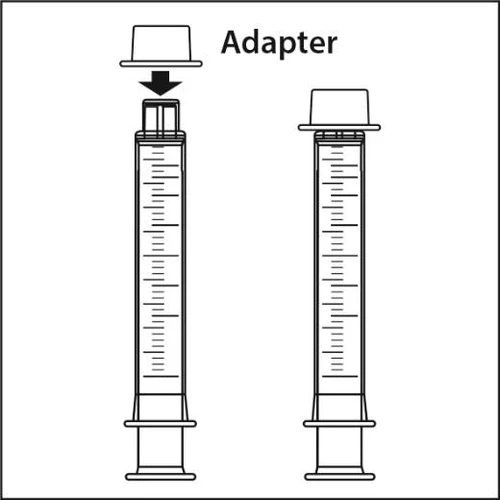
- Plastic adapter
- 10 ml oral syringe, which fits into the plastic adapter.
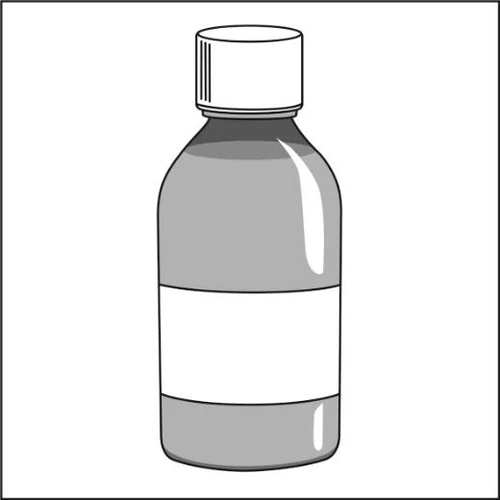
- Bottle containing the oral suspension with a child-resistant closure. The cap must always be replaced after use.
Preparing the dose of medicine
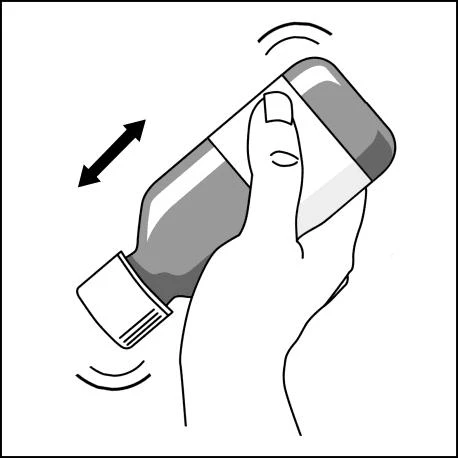
- Shake the bottle vigorously for 30 seconds with the bottle upside down. If sediment appears at the bottom of the bottle, continue shaking for another 30 seconds.
- Open the child-resistant closure by pressing down firmly and turning counterclockwise (refer to the top of the cap).
Note: Keep the cap nearby to close the bottle after each use.
- Hold the bottle vertically on a flat surface. Firmly push the plastic adapter with the oral syringe into the bottle opening as far as possible.
Note: The adapter may not be fully inserted at first, but will be pushed further into the bottle when the cap is screwed back on.
After first use, the adapter remains in the bottle.
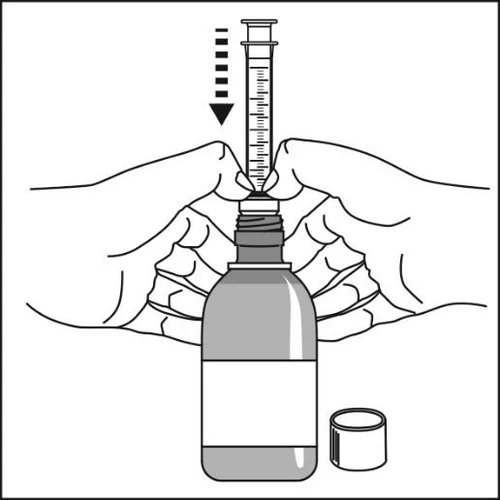
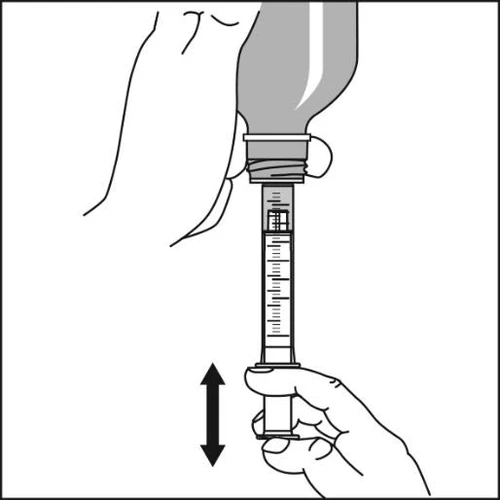
- Hold the oral syringe firmly and carefully turn the bottle upside down. Slowly pull back the plunger to fill the oral syringe with the suspension. Then fully push the plunger back in to remove any large air bubbles that may be inside the oral syringe.
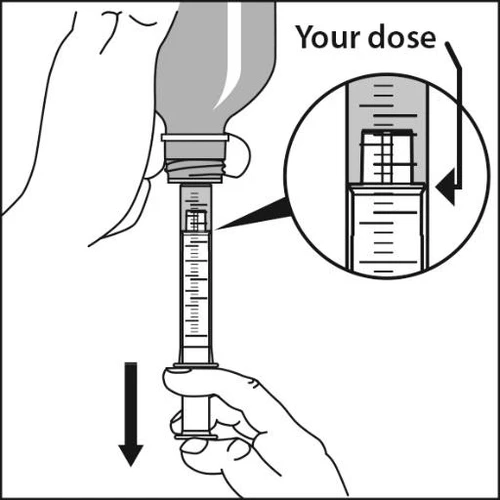
- Draw up the prescribed dose: Slowly pull back the plunger of the syringe until the upper, wider part of the plunger is exactly aligned with the mark on the barrel of the oral syringe indicating the prescribed dose.
If in doubt, consult your pharmacist.
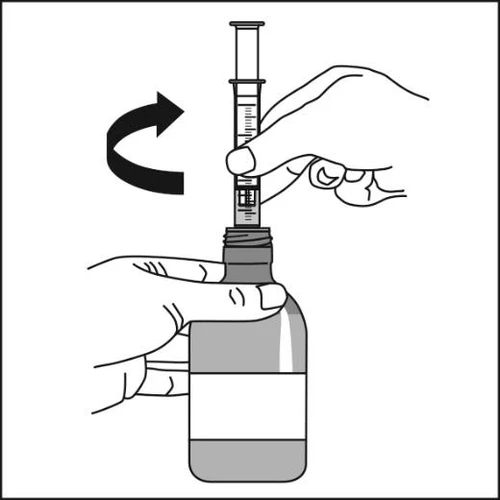
- Carefully turn the bottle and oral syringe upright. Remove the oral syringe by gently twisting it out of the adapter.
The adapter must always remain in the bottle.
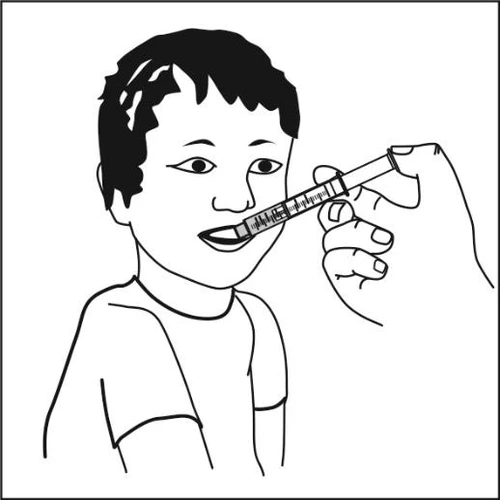
- Administer the dose directly into the mouth of the patient, who should be sitting in an upright position. Slowly press the plunger to facilitate swallowing. Immediately after administration, the patient should drink a glass of water, juice, or milk.
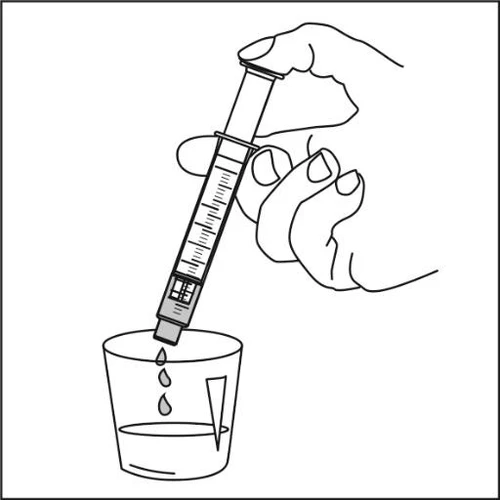
The dose may also be mixed with a small amount of water or alternatively with orange juice, milk, yogurt, or wheat porridge just before administration. Carbonated beverages or hot foods should not be taken with the suspension to avoid burping or difficulty swallowing. Mix and administer the entire mixture immediately.
- After use, replace the child-resistant closure, leaving the adapter in place.
- Cleaning: After each use, rinse the syringe thoroughly with tap water and wipe the outside with a clean, dry cloth.
Sultiame Desitin may be taken with food or between meals. If possible, maintain a regular routine for taking Sultiame Desitin.
The oral suspension may also be administered through a feeding tube. The tube should be flushed with at least 15 ml of water immediately after administration. If this method is used, prepare the dose as described above immediately before administration.
How long should Sultiame Desitin be taken?
Antiepileptic treatment is generally long-term therapy. In each individual case, a pediatric neurologist (neuropediatrician) experienced in epilepsy treatment should decide how to adjust the treatment, how long it should last, and when it should be discontinued. Do not stop taking Sultiame Desitin abruptly.
Taking more than the recommended dose of Sultiame Desitin
Adverse reactions listed in section "Possible side effects" may become more severe.
In case of overdose, consult a doctor or emergency physician immediately and, if possible, show them the medicine and this leaflet.
Missing a dose of Sultiame Desitin
Do not take a double dose to make up for a missed dose. Take the next dose at the scheduled time as directed by your doctor. Inform your doctor about the missed dose.
Stopping treatment with Sultiame Desitin
If you intend to interrupt or discontinue treatment with Sultiame Desitin, discuss this first with your doctor. Do not stop treatment with this medicine independently without consulting your doctor, as this may compromise the effectiveness of treatment and lead to recurrence of epileptic seizures.
The duration of treatment varies from person to person and will be determined by the doctor.
If you have any further questions about the use of this medicine, consult your doctor or pharmacist.
4. Possible adverse effects
Like all medicines, this medicine can cause adverse effects, although not everyone will experience them.
Very common adverse effects (may affect more than 1 in 10 people):
- Gastrointestinal discomfort (e.g. nausea, vomiting)
Common adverse effects (may affect up to 1 in 10 people):
- Breathing difficulties, and even respiratory failure (dose-dependent)
- Chest tightness, rapid heartbeat
- Tingling in the hands, feet, or face (dose-dependent)
- Dizziness, headache
- Double vision
- Hiccups, weight loss, or loss of appetite
Uncommon adverse effects (may affect up to 1 in 100 people):
- Hallucinations, anxiety, apathy
- Muscle weakness, joint pain
- Increased seizures, grand mal-type seizures
Unknown frequency (cannot be estimated from available data):
- Delayed hypersensitivity reaction involving multiple organ systems, with fever, skin rash, vasculitis (inflammation of blood vessels), lymph node swelling, joint pain, abnormal white blood cell count, as well as enlargement of the liver or spleen and severe skin reactions (Stevens-Johnson syndrome, toxic epidermal necrolysis)
- Acute kidney failure
- Worsening of vision, which may be marked, polyneuritis (inflammation of multiple nerves)
- Hepatic toxic reactions and/or elevated liver enzyme levels
- Depressed mood/depression, personality changes, abnormal behaviour (e.g. aggression, irritability, mood swings), and impaired cognitive function
- Diarrhoea
In one patient with long-standing treatment-resistant epilepsy, treatment with Sultiame Desitin led to progressive limb weakness, increased salivation, slurred speech, and increasing drowsiness progressing to coma. Symptoms resolved within a few hours after discontinuation of Sultiame Desitin.
Sultiame belongs to a group of active substances (carbonic anhydrase inhibitors) which may lead to kidney stone formation, changes in blood composition (metabolic acidosis, haemodilution, and changes in serum electrolyte levels such as decreased blood calcium), as well as fatigue/exhaustion.
Reporting of adverse effects
If any adverse effects occur, including any adverse effects not listed in this leaflet, inform your doctor, pharmacist, or nurse. Adverse effects can also be reported directly to the Department of Monitoring Adverse Drug Reactions at the Office for Registration of Medicinal Products, Medical Devices and Biocidal Products:
Al. Jerozolimskie 181C, 02-222 Warsaw, tel.: 22 49-21-301, fax: 22 49-21-309, website: https://smz.ezdrowie.gov.pl
Adverse effects can also be reported to the marketing authorisation holder.
Reporting adverse effects helps to provide more information on the safety of the medicine.
5. How to store Sultiame Desitin
Keep this medicine out of sight and reach of children.
Do not use this medicine after the expiry date stated on the bottle and the carton after EXP. The expiry date refers to the last day of the stated month.
After first opening the bottle, do not use for longer than 3 months.
Do not use the medicine if any damage to the bottle, closure, or carton is observed.
Medicines must not be disposed of via wastewater. Ask your pharmacist how to dispose of medicines no longer in use. This will help protect the environment.
6. Contents of the pack and other information
What Sultiame Desitin contains
The active substance is sultiam.
The other ingredients are: sodium methyl parahydroxybenzoate (E 219), sodium propyl
parahydroxybenzoate (E 217), sucralose (E955), sodium docucinate, xanthan gum (E415),
disodium dihydrogen phosphate dihydrate (E339), dipotassium phosphate (E340), strawberry flavour
(containing gum arabic E414), flavour with sweetness modulator (containing fructose, glucose,
sucrose, sulfur dioxide (E 220)), masking flavour (containing sucralose E955, maltodextrin
(from potato starch)), concentrated phosphoric acid (for pH adjustment), purified water.
What Sultiame Desitin looks like and contents of the pack
Sultiame Desitin oral suspension is a white suspension.
The glass bottle with a child-resistant closure contains 200 ml or 250 ml of oral suspension. It is
packaged in a cardboard box containing a 10 ml oral syringe with graduations every 0.25 ml and an adapter.
Not all pack sizes may be marketed.
Marketing Authorisation Holder
Desitin Arzneimittel GmbH
Weg Beim Jäger 214
22335 Hamburg
Germany
Telephone: +49 40 59101-0
Manufacturer
Desitin Arzneimittel GmbH
Weg Beim Jäger 214
22335 Hamburg
Germany
This medicinal product is authorised in the Member States of the European Economic Area under the following names:
Belgium Ospolot 20 mg/ml Suspension zum Einnehmen
Czech Republic Ospolot
Denmark Ospolot
Germany Ospolot 20 mg/ml Suspension zum Einnehmen
Estonia Ospolot
Spain Ospolot 20 mg/ml Suspensión oral
Finland Ospolot 20 mg/ml Oraalisuspensio
Ireland Ospolot 20 mg/ml Oral suspension
Italy Ospolot
Luxembourg Ospolot Suspension zum Einnehmen
Netherlands Ospolot 20 mg/ml Suspensie voor oraal gebruik
Norway Ospolot
Poland Sultiame Desitin
Portugal Ospolot 20 mg/ml Suspensão oral
Romania Ospolot 20 mg/ml Suspensie orală
Sweden Ospolot 20 mg/ml Oral suspension
Slovakia Ospolot 20 mg/ml Perorálna suspenzia