Sulfasalazine en krka
Poland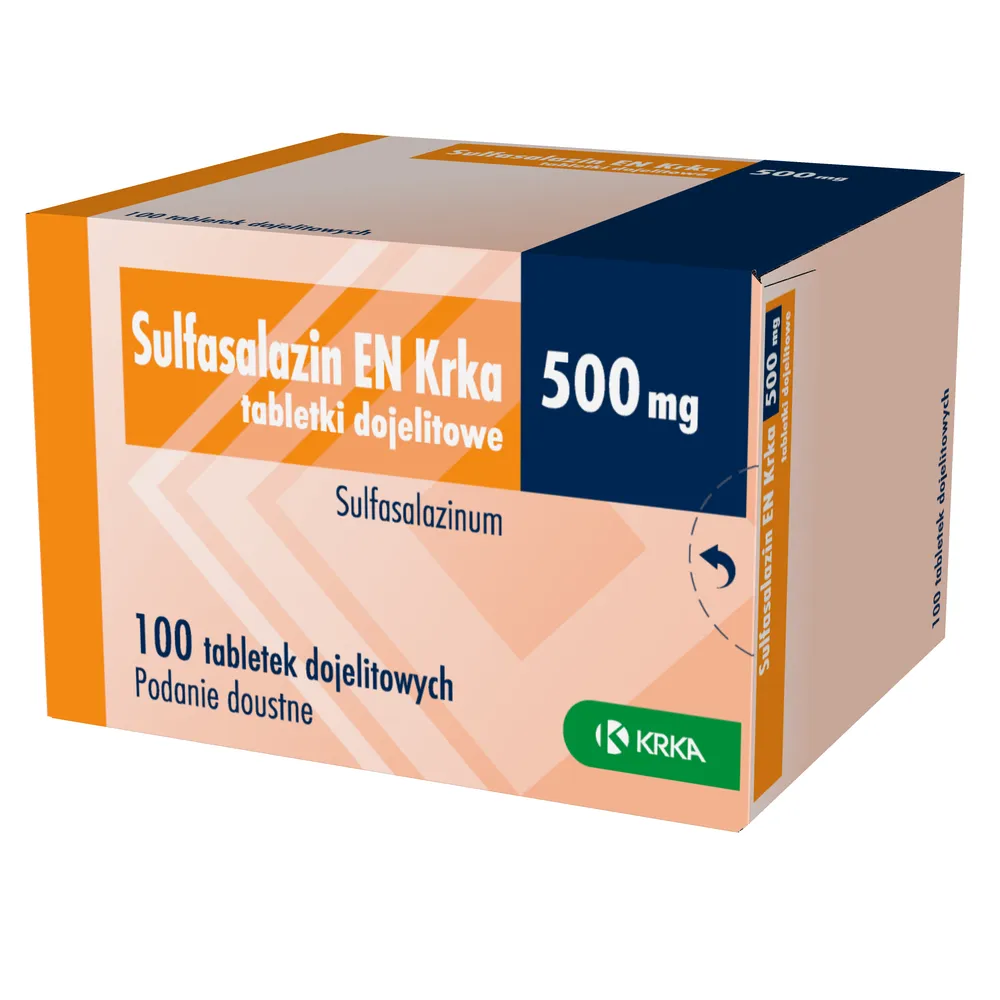
Table of Contents
- Package leaflet: Information for the patient
- 1. What Sulfasalazin EN Krka is and what it is used for
- 2. Important information before using Sulfasalazin EN Krka
- 3. How to use Sulfasalazin EN Krka
- 4. Possible adverse effects
- 5. How to store Sulfasalazin EN Krka
- 6. Contents of the package and other information
Package leaflet: Information for the patient
Sulfasalazin EN Krka, 500 mg, enteric-coated tablets
Sulfasalazinum
Please read the entire leaflet carefully before using the medicine, as it contains
important information for the patient.
- Keep this leaflet, as you may need to read it again.
- If you have any questions, please consult your doctor or pharmacist.
- This medicine has been prescribed for a specific individual. Do not share it with others. The medicine may harm another person, even if their symptoms are the same.
- If you experience any adverse reactions, including those not listed in this leaflet, inform your doctor or pharmacist. See section 4.
Table of contents of the leaflet
- What Sulfasalazin EN Krka is and what it is used for
- Important information before taking Sulfasalazin EN Krka
- How to take Sulfasalazin EN Krka
- Possible side effects
- How to store Sulfasalazin EN Krka
- Contents of the pack and other information
1. What Sulfasalazin EN Krka is and what it is used for
Sulfasalazin EN Krka is an anti-inflammatory medicine.
Sulfasalazin EN Krka is a compound of 5-aminosalicylic acid and sulfapyridine. A small portion of sulfasalazine is absorbed in the colon and mainly deposited in connective tissue. The majority of the drug is broken down into 5-aminosalicylic acid and sulfapyridine, which reduce inflammation.
Sulfapyridine reduces systemic inflammatory response; due to its poor absorption, the anti-inflammatory effect of 5-aminosalicylic acid occurs only in the colon. Sulfasalazin EN Krka does not have analgesic (pain-relieving) properties.
Sulfasalazin EN Krka is used in the treatment of:
- Rheumatoid arthritis resistant to treatment with non-steroidal anti-inflammatory drugs (NSAIDs),
- Inflammatory bowel diseases (e.g. ulcerative colitis, Crohn's disease).
2. Important information before using Sulfasalazin EN Krka
Inform your doctor about any chronic diseases, metabolic disorders,
hypersensitivity (allergy) to other medicines, and about taking any other medicines.
When not to use Sulfasalazin EN Krka
- if the patient is allergic to sulfasalazine or any of the other ingredients of this medicine (listed in section 6),
- if the patient is allergic to sulfonamides or salicylates,
- if the patient has acute intermittent porphyria or mixed porphyria,
- if the patient has urinary or intestinal obstruction,
- in children under 2 years of age.
Warnings and precautions
Before starting treatment with Sulfasalazin EN Krka, discuss with your doctor or
pharmacist if:
- the patient has severe allergy and/or bronchial asthma,
- the patient has glucose-6-phosphate dehydrogenase deficiency, as this may cause haemolytic anaemia,
- the patient has impaired kidney or liver function, or abnormal blood counts.
Drink plenty of fluids during treatment due to the risk of kidney stone formation.
Inform your doctor if you are taking or have recently taken Sulfasalazin EN Krka or
other medicines containing sulfasalazine, as they may affect blood and urine test results.
Before starting treatment, your doctor may recommend a blood test, including white blood cell smear and liver function tests, and then repeat these tests every 2 weeks during the
first 3 months of treatment.
During the following 3 months, monitoring should be performed every 4 weeks, then every 3 months, and whenever clinically indicated.
Kidney function assessment (including urine analysis) should be performed in all patients at the beginning of treatment and at least once a month during the first 3 months of treatment.
Subsequently, monitoring should be performed when clinically indicated.
The occurrence of clinical symptoms such as sore throat, fever, pallor, purpura, or jaundice
during sulfasalazine treatment may indicate bone marrow suppression, haemolysis, or
hepatotoxicity. Sulfasalazine treatment should be discontinued while awaiting blood test results.
During treatment with Sulfasalazin EN Krka, potentially life-threatening skin reactions (such as exfoliative dermatitis, Stevens-Johnson syndrome, toxic epidermal necrolysis) have been observed. These initially appear as red, target-like lesions or circular patches, often with centrally located blisters. Additional symptoms may include ulceration of the mouth, throat, nose, or genital organs, and conjunctivitis (red, swollen eyes). These life-threatening skin reactions are often accompanied by influenza-like symptoms. As the condition progresses, extensive blisters or peeling of large areas of skin may occur.
The highest risk of serious skin reactions occurs during the first weeks of treatment.
If Stevens-Johnson syndrome or toxic epidermal necrolysis occurs during treatment with Sulfasalazin EN Krka, the medicine must never be used again.
If the patient develops a rash, mucosal disorders, other hypersensitivity symptoms, or the skin symptoms listed above, medical advice should be sought immediately, and the doctor should be informed about the use of this medicine.
During treatment with Sulfasalazin EN Krka, severe, life-threatening systemic hypersensitivity reactions have been reported, such as drug reaction with eosinophilia and systemic symptoms (DRESS), characterized by rash, increased levels of a specific type of white blood cells (eosinophils) in the blood, and general symptoms.
Note that early signs of hypersensitivity may occur even in the absence of a rash.
Sulfasalazin EN Krka and other medicines
Tell your doctor or pharmacist about all medicines the patient is currently taking or has recently taken, as well as any medicines the patient plans to take.
Sulfasalazin EN Krka may:
- reduce the absorption of digoxin (used in the treatment of heart failure and atrial fibrillation),
- reduce the absorption of folic acid (recommended by a doctor as a dietary supplement), leading to folic acid deficiency.
Concomitant oral administration of sulfasalazine and mercaptopurine (used in the treatment of certain leukaemias and autoimmune diseases, i.e. conditions in which the immune system attacks its own tissues) or azathioprine (used in transplantation and treatment of autoimmune diseases) may cause bone marrow dysfunction and the development of leucopenia (reduced white blood cell count).
Sulfasalazin EN Krka with food and drink
Take tablets during meals, with a glass of water. Swallow the tablets whole; do not crush or break them.
Drink large amounts of fluids during treatment.
Pregnancy and breastfeeding
If the patient is pregnant or breastfeeding, suspects she may be pregnant, or is planning to have a child, she should consult her doctor or pharmacist before using this medicine.
As the risk associated with using this medicine during pregnancy cannot be excluded, sulfasalazine may be used during pregnancy only if absolutely necessary.
The medicine may reduce sperm count and motility, which may affect fertility. This effect is usually reversible after discontinuation of treatment.
Sulfasalazine and sulfapyridine pass into breast milk in small amounts. This is not expected to pose a risk to a healthy infant.
Caution is advised in premature infants and newborns with physiological jaundice. Bloody stools or diarrhoea have been reported in breastfed infants of mothers taking sulfasalazine. In these cases, bloody stools or diarrhoea resolved in infants after the mother discontinued sulfasalazine.
Driving and operating machinery
No effect of Sulfasalazin EN Krka on the ability to drive or operate machinery has been observed.
Sulfasalazin EN Krka contains sodium
This medicine contains less than 1 mmol (23 mg) of sodium per dose, meaning the medicine is considered "sodium-free".
3. How to use Sulfasalazin EN Krka
This medicine should always be taken exactly as directed by your doctor. If in doubt, consult your
doctor or pharmacist. Do not change the dose or stop treatment without consulting your doctor.
Tablets should be swallowed whole (do not chew or crush), as the tablet coating reduces
gastrointestinal adverse effects.
Tablets should be taken during meals with a glass of water.
Rheumatoid arthritis
Adults and elderly patients
The recommended dose is from 1 g to 3 g per day. The most commonly used dose is 2 tablets twice
daily. Treatment is initiated with lower doses, which are gradually increased according to the scheme
shown in the table below.
| Day 1-4 | Day 5-8 | Day 9 and onwards | |
| Morning | 1 enteric-coated tablet | 1 enteric-coated tablet | 2 enteric-coated tablets |
| Evening | 2 enteric-coated tablets | 2 enteric-coated tablets | 2 enteric-coated tablets |
If, after 2–3 months, the doctor determines that the patient's response to treatment is unsatisfactory, the daily dose of sulfasalazine may be increased up to a maximum of 3 g.
In patients who experience adverse reactions, the dose may be temporarily reduced.
Inflammatory bowel diseases (i.e. ulcerative colitis, Crohn's disease)
The doctor will recommend an appropriate dose depending on the clinical condition, the patient's tolerance to the medication, and the response to treatment.
It is recommended that patients who have never previously been treated with sulfasalazine should have their dose gradually increased (over several weeks). The total daily dose should be evenly divided into multiple smaller doses.
Acute phase of the disease
Adults and elderly patients
Severe exacerbations: 2 to 4 tablets 3 to 4 times daily (3 g to 8 g per day).
Mild to moderate flare-ups: 2 tablets 3 to 4 times daily.
Children
40–60 mg/kg body weight/day in 3 to 6 divided doses.
Maintenance therapy
Adults and elderly patients
The recommended maintenance dose for patients with ulcerative colitis or Crohn's disease in remission is 2 tablets 2 to 3 times daily. This treatment should not be interrupted and should be continued long-term, provided no adverse reactions occur. In case of disease flare-up, the doctor may decide to increase the dose to 2 to 4 tablets administered 3 to 4 times daily.
Children
20–30 mg/kg body weight/day in 3 to 6 divided doses.
If you feel the effect of the medicine is too strong or too weak, consult your doctor.
Use of a higher than recommended dose of Sulfasalazin EN Krka
If you take more Sulfasalazin EN Krka than recommended, contact your doctor or pharmacist immediately.
Symptoms of overdose may include: nausea, vomiting, crystalluria (crystal formation in urine), hematuria, oliguria and anuria, hypoglycemia, methemoglobinemia (loss of hemoglobin’s ability to carry oxygen) in rare cases, cyanosis, hepatic symptoms, and sulfhemoglobinemia. Hypersensitivity reactions such as blood count abnormalities (including potentially fatal agranulocytosis—lack of certain white blood cells called granulocytes), urticaria, polyneuritis, and neurological symptoms may also occur.
If you take more Sulfasalazin EN Krka than recommended, contact your doctor. Depending on the symptoms present, the doctor will initiate appropriate treatment.
Missed dose of Sulfasalazin EN Krka
Do not take a double dose to make up for a missed dose.
Take the missed dose as soon as possible, unless it is almost time for the next scheduled dose. In that case, wait and take only the next dose at the correct time.
Stopping Sulfasalazin EN Krka
The decision to discontinue treatment must be made by the doctor.
If you have any further questions about the use of this medicine, consult your doctor or pharmacist.
4. Possible adverse effects
Like all medicines, this medicine can cause adverse effects, although not everyone will experience them.
Most of the adverse effects caused by Sulfasalazin EN Krka are mild in nature.
Adverse effects usually resolve spontaneously, after dose reduction or upon discontinuation of treatment.
Adverse effects of sulfapyridine are primarily related to its blood concentration,
particularly in patients who metabolize it more slowly.
Very common adverse effects (may occur in more than 1 in 10 patients):
- gastric disturbances, nausea
Common adverse effects (may occur in up to 1 in 10 patients):
- leukopenia (reduced number of white blood cells in peripheral blood),
- loss of appetite,
- dizziness, headache, taste disturbances,
- tinnitus (ringing in the ears),
- cough,
- abdominal pain, diarrhoea, bloating, vomiting,
- itching,
- joint pain,
- proteinuria (presence of protein in urine),
- fever.
Uncommon adverse effects (may occur in up to 1 in 100 patients):
- thrombocytopenia (reduced number of platelets),
- depression,
- dyspnoea (breathing difficulties),
- alopecia (hair loss), urticaria (hives),
- facial swelling,
- increased liver enzyme activity.
Rare adverse effects (may occur in up to 1 in 1000 patients):
- nail changes,
- jaundice.
Very rare adverse effects (may occur in up to 1 in 10,000 patients):
- potentially life-threatening skin rashes: toxic epidermal necrolysis (Lyell's syndrome) – a condition characterized by large flaccid blisters on erythematous patches (especially in areas exposed to pressure), which rupture quickly, leading to extensive erosions; bullous erythema multiforme (Stevens-Johnson syndrome, fever, severe rash with blister formation on mucous membranes) (see section 2).
Adverse effects with unknown frequency (cannot be estimated from available data):
- aseptic meningitis, pseudomembranous colitis,
- agranulocytosis (complete or near-complete absence of granulocytes in blood), aplastic anaemia (failure of bone marrow to produce new red or white blood cells), haemolytic anaemia (abnormal premature destruction of red blood cells), macrocytosis (excessive enlargement of red blood cells), megaloblastic anaemia (anaemia due to vitamin B12 or folic acid deficiency), pancytopenia (reduction in all cellular blood components: red blood cells, white blood cells and platelets),
- anaphylactic shock (severe allergic reaction)* (symptoms of anaphylactic shock include: rapidly worsening general condition, itching, urticaria, pale and clammy skin, rapid and shallow breathing, dyspnoea, tachycardia, significant drop in blood pressure, vomiting, diarrhoea, swelling of throat and tongue, disturbances in consciousness), serum sickness (allergic systemic reaction to foreign protein administered parenterally, such as serum or medication),
- encephalopathy (impaired brain function), peripheral neuropathy (nerve disorders in limbs), olfactory disturbances,
- pericarditis, cyanosis,
- fibrosing alveolitis, interstitial lung disease*, eosinophilic infiltrates,
- exacerbation of symptoms in ulcerative colitis, pancreatitis,
- liver failure*, fulminant hepatitis*, hepatitis,
- drug reaction with eosinophilia and systemic symptoms (DRESS)*, angioedema*, toxic pustular skin reactions, erythema, rash, exfoliative dermatitis, lichen planus, photosensitivity,
- systemic lupus erythematosus (chronic autoimmune disease causing damage to various organs, particularly skin, joints, blood and kidneys), Sjögren's syndrome,
- nephrotic syndrome (syndrome of symptoms caused by excessive loss of protein in urine), interstitial nephritis, crystals in urine, haematuria (blood in urine),
- transient oligospermia (low sperm count in male semen),
- yellow discoloration of skin and body fluids*,
- induction of autoantibodies.
*Adverse effects identified after marketing authorization.
Severe adverse effects are very rare, but if they occur, the doctor may recommend discontinuation of treatment.
If any of the following symptoms occur – itching, rash, difficulty breathing or swallowing, swelling of eyelids, face or other body parts, unexplained fever or chills, sore throat, cough, unusual fatigue, pallor, severe abdominal pain, jaundice, skin bleeding, abnormal bruising, or central nervous system disturbances (dizziness, tinnitus, uncoordinated movements, seizures, insomnia and hallucinations) – contact a doctor immediately.
Reporting of adverse effects
If any adverse effects occur, including those not listed in this leaflet, inform a doctor or pharmacist. Adverse effects can be reported directly to the Department of Monitoring Adverse Drug Reactions at the Office for Registration of Medicinal Products, Medical Devices and Biocidal Products:
Al. Jerozolimskie 181C, 02-222 Warsaw
Tel.: +48 22 49 21 301
Fax: +48 22 49 21 309
Website: https://smz.ezdrowie.gov.pl
Adverse effects can also be reported to the marketing authorization holder.
Reporting adverse effects helps to provide more information on the safety of the medicine.
5. How to store Sulfasalazin EN Krka
Keep this medicine out of sight and reach of children.
Store below 25 °C.
Do not use this medicine after the expiry date stated on the packaging. The expiry date refers to the last day of the stated month.
Medicines must not be disposed of via wastewater or household waste. Ask your pharmacist how to dispose of medicines no longer required. This will help protect the environment.
6. Contents of the package and other information
What Sulfasalazin EN Krka contains
- The active substance is sulfasalazine. Each enteric-coated tablet contains sulfasalazine in the form of granules with povidone, equivalent to 500 mg of sulfasalazine.
- The other ingredients are: maize starch gelatinised, magnesium stearate, colloidal anhydrous silica, titanium dioxide (E 171), yellow iron oxide (E 172), talc, triethyl citrate, macrogol 6000, sodium carboxymethylcellulose, methacrylic acid-ethyl acrylate copolymer (1:1). See section 2 "Sulfasalazin EN Krka contains sodium".
What Sulfasalazin EN Krka looks like and contents of the pack
Round, slightly biconvex enteric-coated tablets, beige in colour.
Pack: 50, 100 or 300 enteric-coated tablets in blisters, in a cardboard box.
Marketing Authorisation Holder and Manufacturer
KRKA, d.d., Novo mesto, Šmarješka cesta 6, 8501 Novo mesto, Slovenia
For further information, contact the local representative of the Marketing Authorisation Holder:
Krka Polska Sp. z o.o.
ul. Równoległa 5
02-235 Warszawa
Poland
telephone: +48 22 573 75 00