Streptomycin tzf
Poland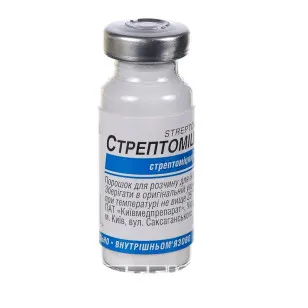
Table of Contents
- Patient Information Leaflet
- 1. What Streptomycinum TZF is and what it is used for
- 2. Important information before using Streptomycinum TZF
- 3. How to use Streptomycinum TZF
- 4. Possible adverse reactions
- 5. How to store Streptomycinum TZF
- 6. Contents of the pack and other information
- Information intended exclusively for healthcare professionals
Patient Information Leaflet
Streptomycinum TZF, 1 g, powder for solution for injection
Streptomycinum
Please read this leaflet carefully before using the medicine, as it contains important information for the patient.
- Keep this leaflet for future reference.
- If in doubt, consult a doctor or nurse.
- This medicine has been prescribed for a specific individual. Do not pass it on to others. It may harm someone else, even if their symptoms appear identical.
- If the patient experiences any adverse reactions, including any not listed in this leaflet, inform a doctor or nurse immediately. See section 4.
Table of Contents
- What Streptomycinum TZF is and what it is used for
- Important information before using Streptomycinum TZF
- How to use Streptomycinum TZF
- Possible side effects
- How to store Streptomycinum TZF
- Contents of the pack and other information
1. What Streptomycinum TZF is and what it is used for
Streptomycinum TZF contains streptomycin as the active substance, which is a natural aminoglycoside antibiotic. It acts against Mycobacterium tuberculosis as well as certain other Gram-positive and Gram-negative bacteria.
Streptomycin is used in the treatment of moderately severe and severe infections caused by susceptible microorganisms.
Tuberculosis infections, caused by Mycobacterium tuberculosis; administered in combination with other antituberculosis agents.
Non-tuberculosis infections
- Plague
- Tularemia
- Brucellosis
- Granuloma inguinale
- Chancroid
- Respiratory tract infections, endocarditis; administered in combination with other antibiotics (most commonly β-lactams)
- Pneumonia; administered in combination with other antibiotics
- Urinary tract infections
- Endocarditis; administered in combination with penicillin
- Septicaemia caused by Gram-negative bacilli; administered in combination with other antibiotics.
2. Important information before using Streptomycinum TZF
When not to use Streptomycinum TZF:
- if the patient is allergic to streptomycin or other aminoglycoside antibiotics;
- if the patient has hearing disorders and/or vestibular (balance) disturbances;
- if the patient suffers from myasthenia gravis (a disease causing muscle weakness and excessive fatigue).
Warnings and precautions
- Hearing disturbances and tinnitus may occur during treatment with streptomycin. If the patient experiences hearing or vestibular problems before or during treatment, this must be reported to the physician prior to starting streptomycin.
- If streptomycin has been prescribed for long-term treatment, the physician will order hearing tests (caloric test, audiometry) before starting treatment and periodically during therapy. If symptoms of ototoxicity occur, such as headache, nausea, vomiting, balance disturbances, and/or abnormal hearing test results, the drug must be discontinued immediately and the patient should contact the physician without delay. Prompt medical intervention in such cases may prevent permanent hearing damage.
- In patients with impaired kidney function, the toxic effects of streptomycin are intensified; therefore, if the patient has kidney disease, this should be reported to the physician before receiving streptomycin.
- During treatment with streptomycin, overgrowth of resistant microorganisms (e.g. Candida species) may occur. If symptoms of new fungal or bacterial infections develop during treatment, the drug should be discontinued immediately and the patient should contact the physician.
- If streptomycin is used to treat a venereal disease (e.g. granuloma inguinale, chancroid), and the physician suspects concomitant syphilis infection, appropriate testing is usually recommended before, during, and after treatment.
- In patients with myasthenia gravis, streptomycin may worsen disease symptoms.
- If hearing disturbances or other severe adverse reactions occur during treatment (see section 4. Possible side effects), the drug must be discontinued immediately and the patient should contact the physician.
Children
Streptomycin should be used with great caution in young children, and recommended doses must not be exceeded. Neurological or respiratory disturbances should be carefully monitored in children.
Streptomycinum TZF and other medicines
Inform the physician or pharmacist about all medicines currently or recently taken, as well as any medicines the patient intends to use.
In particular, inform the physician if the patient is taking:
- muscle relaxants and general anesthetics;
- diuretics (e.g. ethacrynic acid, furosemide, mannitol);
- antibiotics such as: neomycin, kanamycin, gentamicin, cephaloridine, paromomycin, viomycin, polymyxin B, colistin, tobramycin;
- cyclosporine (a drug used to suppress immune system activity).
Pregnancy and breastfeeding
If the patient is pregnant or breastfeeding, suspects she may be pregnant, or is planning to become pregnant, she should consult a physician before using this medicine.
Use of this medicine during pregnancy is permitted only if absolutely necessary and when use of a safer alternative drug is not possible or contraindicated.
If a woman receives streptomycin, she should discontinue breastfeeding during treatment.
Driving and operating machinery
There is no available data on the influence of the medicine on the ability to drive or operate mechanical devices.
3. How to use Streptomycinum TZF
Streptomycinum TZF must always be used as directed by the physician. If in doubt,
consult the physician.
Streptomycinum TZF is administered by a physician or nurse as an intramuscular injection into the buttock or thigh.
The exact dosage and frequency of administration will be determined by the physician, depending on the severity
of the infection, the type of microorganism causing the infection, the patient's age and body weight.
Tuberculosis
Streptomycin is used in the initial phase of tuberculosis treatment, always in combination with other antituberculosis drugs
(e.g. isoniazid, pyrazinamide, rifampicin), usually during the first 2 months of treatment. Streptomycin is also used,
as one of the antituberculosis drugs, in intermittent therapy.
| Continuous treatment | Intermittent treatment | ||
| twice weekly | three times weekly | ||
| Adults | 15 mg/kg body weight/day max. 1 g | 25 to 30 mg/kg body weight/day max. 1.5 g | 25 to 30 mg/kg body weight/day max. 1.5 g |
| Children | 20 to 40 mg/kg body weight/day max. 1 g | 25 to 30 mg/kg body weight/day max. 1.5 g | 25 to 30 mg/kg body weight/day max. 1.5 g |
The total dose of streptomycin during a single course of treatment should not exceed 120 g.
Non-tuberculous infections
Adults
Usually 1 to 2 g per day in divided doses, depending on the microorganism's sensitivity and severity of infection, for 3 to 7 days.
Tularemia
1 to 2 g per day in divided doses for 7 to 14 days; if the disease runs without fever – 5 to 7 days.
Plague
2 g per day in two divided doses, for at least 10 days.
Endocarditis
- Caused by streptococci. Streptomycin is administered for 2 weeks in combination with penicillin. During the first week of therapy, 1 g of streptomycin is given twice daily; during the second week, 500 mg twice daily. In patients over 60 years of age, the drug should be administered at a dose of 500 mg twice daily for 2 weeks.
- Caused by enterococci. Streptomycin in combination with penicillin is administered for 6 weeks. During the first 2 weeks of treatment, 1 g is given twice daily, followed by 500 mg twice daily for the next 4 weeks.
Children
Usually 20 to 40 mg/kg body weight/day (maximum 1 g/day) in divided doses every 6 or 12 hours.
Patients over 50 years of age
Patients over 50 years of age usually receive a lower dose of the drug, and during treatment the physician usually recommends measuring serum creatinine and blood urea nitrogen levels, as well as hearing tests.
Duration of treatment
The duration of treatment depends on the severity and type of infection.
The physician will determine the appropriate duration of treatment, which should be strictly followed.
Method of administration
Streptomycin may only be administered intramuscularly.
Detailed information regarding administration of the drug and preparation of solutions is provided at the end of this leaflet, in the section "Information intended exclusively for healthcare professionals".
Use of a higher than recommended dose of Streptomycinum TZF
Since Streptomycinum TZF will be administered by a physician or nurse, administration of an incorrect dose is unlikely. However, if the patient suspects that an excessive dose has been administered, they should immediately inform the physician or go to the emergency department of the nearest hospital.
Missed dose of Streptomycinum TZF
Do not administer a double dose to make up for a missed dose.
Discontinuation of Streptomycinum TZF
It is important that the drug is used according to the recommended treatment schedule. Do not stop treatment just because the patient feels better. If the treatment course is interrupted too early, the infection may recur.
If the patient feels worse during treatment or does not feel well after completion of the recommended treatment course, they should consult their physician.
- If you have any further questions regarding the use of this medicinal product, consult your physician.
4. Possible adverse reactions
Like all medicines, this medicine can cause adverse reactions, although not everyone experiences them.
Serious adverse reactions
Occurring very rarely (less than 1 in 10,000 patients):
tinnitus, ear pain, hearing disturbances;
swelling, usually in the face or throat area, which may be life-threatening;
severe allergic reaction, which may present as sudden difficulty in breathing, speaking or swallowing, severe dizziness or collapse.
Occurring with frequency not known (cannot be estimated from available data):
severe, itchy, peeling skin rashes, especially with blister formation and pain in the eyes, mouth or genital organs.
If any of the serious adverse reactions listed above occur, seek immediate medical advice from a doctor or go directly to hospital.
Other adverse reactions that may occur during treatment
These reactions occur with frequency not known:
decrease or increase in the number of certain types of white blood cells, reduced platelet count (thrombocytopenia), abnormal breakdown of red blood cells (hemolytic anemia), manifesting as increased tendency to bleeding, bruising or infections;
sensation of pricking, tingling of the face or limbs, numbness of limbs, optic neuritis;
nausea, vomiting, disturbances in balance;
skin rashes, urticaria, itching;
muscle weakness;
kidney function disorders, increased blood creatinine and blood urea nitrogen levels – usually observed in patients with pre-existing kidney disease receiving high doses of the medicine;
pain and irritation at the injection site.
Reporting of adverse reactions
If any adverse effects occur, including any adverse effects not listed in this leaflet, inform your doctor, pharmacist or nurse. Adverse reactions can be reported directly to the Department of Monitoring Adverse Reactions of Medicinal Products, Medical Devices and Biocidal Products at the Office for Registration of Medicinal Products, Medical Devices and Biocidal Products {current address, telephone and fax number of the above Department}
e-mail: [email protected].
Reporting adverse reactions helps to provide more information on the safety of this medicine.
5. How to store Streptomycinum TZF
Keep the medicine out of sight and reach of children.
Store below 25°C. Protect from light.
Do not use this medicine after the expiry date stated on the packaging following 'EXP'.
The expiry date refers to the last day of the stated month.
Medicines must not be disposed of via wastewater or household waste. Ask your
pharmacist how to dispose of medicines no longer required. Such measures will help
protect the environment.
6. Contents of the pack and other information
What Streptomycinum TZF contains
The active substance is streptomycin in the form of streptomycin sulfate.
One vial contains 1 g of streptomycin.
The medicine does not contain any other ingredients.
What Streptomycinum TZF looks like and contents of the pack
White or almost white powder.
Pack: 1 vial in a cardboard box.
Marketing Authorisation Holder and Manufacturer
Tarchomin Pharmaceutical Works "Polfa" Joint Stock Company
A. Fleminga 2
03-176 Warsaw
Telephone number: 22 811-18-14
For further information, please contact the representative of the Marketing Authorisation Holder.
Information intended exclusively for healthcare professionals
Route of administration
Streptomycin may only be administered intramuscularly.
Adults and older children
Usually administered into the upper, outer quadrant of the buttock or into the large lateral thigh muscle groups.
In justified cases, streptomycin may be administered into the deltoid muscle, with particular caution due to the risk of nerve damage in this area.
Infants and young children
Usually administered into the large lateral thigh muscle groups. Administration into the buttocks is not recommended due to the risk of sciatic nerve injury.
Instructions for preparation of injection solution
The contents of the vial should be dissolved in at least 2 ml of water for injections or 0.9% sodium chloride solution. Solutions with a concentration exceeding 500 mg/ml should not be used.
According to good practice, the solution should be administered immediately after preparation.
Streptomycin solutions remain stable for 24 hours at a temperature of 2°C to 8°C (in a refrigerator).
Streptomycin solutions prepared under controlled and validated aseptic conditions maintain chemical stability for 5 days at temperatures from 2°C to 8°C or at 25°C.
Pharmaceutical incompatibilities
Streptomycin should not be mixed in the same syringe with drugs having an acidic or alkaline reaction.