Strepsils intensive
Poland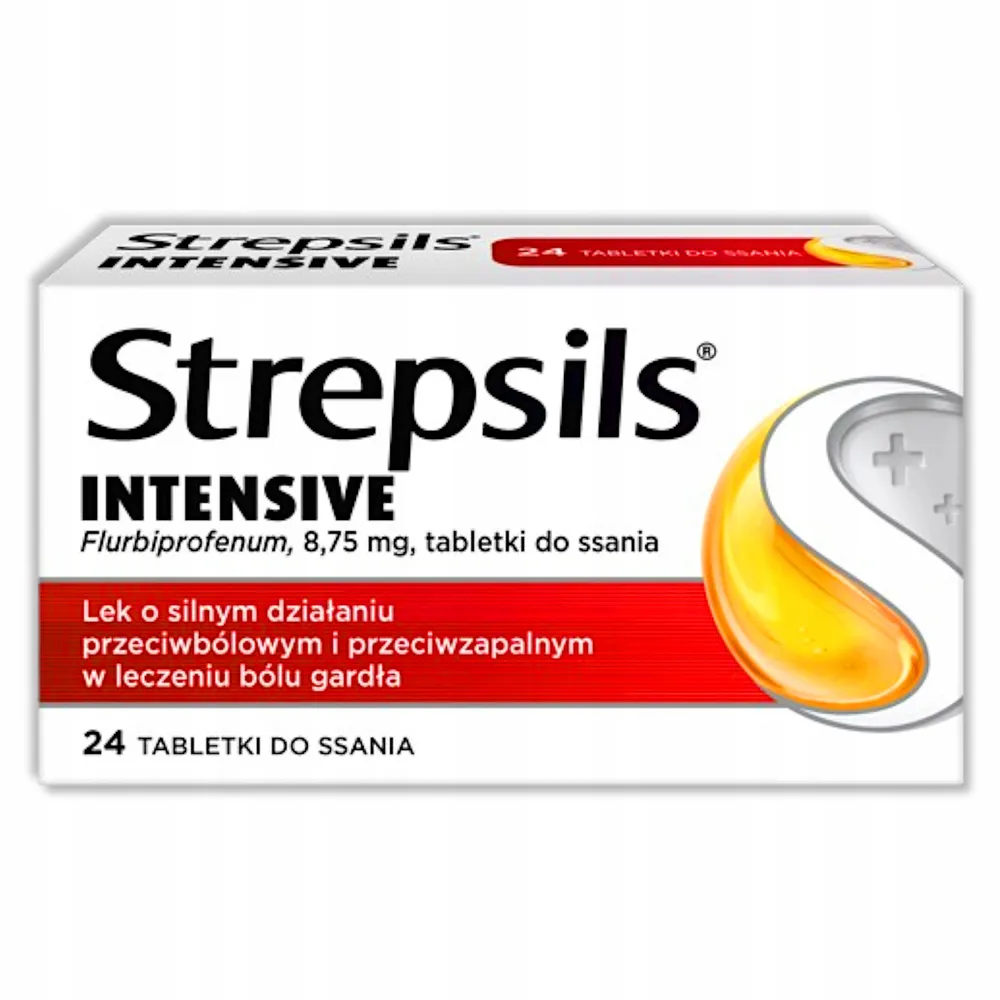
Table of Contents
Patient Information Leaflet
Strepsils Intensive, 8.75 mg, lozenges
Flurbiprofenum
Please read all of this leaflet carefully before using this medicine, because it contains
important information for you.
This medicine should always be used exactly as described in this patient leaflet or as directed by your
doctor or pharmacist.
- Keep this leaflet so that you can read it again if necessary.
- If you need advice or further information, please consult your pharmacist.
- If you experience any side effects, including any not listed in this leaflet, tell your doctor or pharmacist. See section 4.
- If there is no improvement or if you feel worse after 3 days, consult your doctor.
Contents of the leaflet
- What Strepsils Intensive is and what it is used for
- Important information before taking Strepsils Intensive
- How to take Strepsils Intensive
- Possible side effects
- How to store Strepsils Intensive
- Contents of the pack and other information
1. What Strepsils Intensive is and what it is used for
Strepsils Intensive lozenges contain flurbiprofen. This substance belongs to a group of medicines called non-steroidal anti-inflammatory drugs (NSAIDs). Strepsils Intensive has strong analgesic and anti-inflammatory effects in the treatment of sore throat. Strepsils Intensive is indicated for short-term symptomatic relief of sore throat in adults and children aged 12 years and older.
2. Important information before using Strepsils Intensive
When not to use Strepsils Intensive:
- if the patient is allergic to flurbiprofen, acetylsalicylic acid, or other non-steroidal anti-inflammatory drugs (NSAIDs), or to any of the other ingredients of this medicine (listed in section 6);
- in patients with existing or past peptic ulcer disease of the stomach and/or duodenum, or with severe colitis;
- in patients who previously experienced allergic reactions such as rhinitis, angioedema, breathing difficulties (bronchial asthma), or rash after taking acetylsalicylic acid or any other NSAIDs;
- in patients with gastrointestinal bleeding or perforation, haemorrhagic disorders, or blood cell production disorders related to previous treatment with NSAIDs;
- in patients concurrently taking other medicines from the group of non-steroidal anti-inflammatory drugs (including cyclooxygenase-2 inhibitors such as celecoxib);
- during the last 3 months of pregnancy;
- in patients with severe heart, liver, or kidney failure;
- in children under 12 years of age.
Warnings and precautions
Before starting treatment with Strepsils Intensive, consult a doctor or pharmacist:
- if the patient has or has previously had asthma or any allergy;
- if the patient is already taking any other non-steroidal anti-inflammatory drugs (NSAIDs) or acetylsalicylic acid;
- if the patient is elderly (may be more susceptible to side effects);
- if the patient has systemic lupus erythematosus or mixed connective tissue disease;
- if the patient has tonsillitis or suspects a bacterial throat infection (which may require antibiotic treatment);
- if the patient has an infection – see subsection "Infections" below;
- if the patient has been diagnosed with heart, kidney, or liver disease;
- in patients with heart failure, history of stroke, or increased risk of such conditions such as high blood pressure, diabetes, elevated blood cholesterol levels, or in smokers;
- if the patient has been diagnosed with hypertension;
- if the patient experiences chronic headaches;
- if the patient has gastrointestinal disorders;
- if the patient is in the first or second trimester of pregnancy.
Infections
Non-steroidal anti-inflammatory drugs (NSAIDs) may mask symptoms of infection such as fever and pain. This may delay appropriate treatment of infections, increasing the risk of complications. If the patient takes this medicine during an ongoing infection and symptoms persist or worsen, immediate consultation with a doctor or pharmacist is necessary.
While using Strepsils Intensive:
- At the first sign of any hypersensitivity reaction (rash, skin peeling, blisters) or other allergic symptoms, discontinue use immediately and consult a doctor.
- Report any unusual gastrointestinal symptoms (especially bleeding) to a doctor.
- If there is no improvement or new symptoms appear, consult a doctor.
- Medicines such as flurbiprofen may slightly increase the risk of heart attack (myocardial infarction) or stroke. The risk is greater with high doses or prolonged use. Do not exceed the recommended dose or duration of treatment (see section 3).
Children and adolescents
Do not use in children and adolescents under 12 years of age.
Strepsils Intensive and other medicines
Inform your doctor or pharmacist about all medicines currently taken, recently taken, or planned for use, including those available without a prescription. In particular, inform your doctor or pharmacist if you are taking any of the following medicines:
- antihypertensive drugs or drugs for heart failure;
- diuretics (including potassium-sparing diuretics);
- anticoagulants;
- antiplatelet agents and selective serotonin reuptake inhibitors (SSRIs);
- drugs for gout;
- other non-steroidal anti-inflammatory drugs or steroids (such as prednisolone);
- cardiac glycosides;
- cyclosporine (a medicine used to suppress the immune system);
- phenytoin (a medicine used to treat epilepsy);
- methotrexate (an anticancer medicine);
- quinolone antibiotics;
- tacrolimus;
- zidovudine;
- lithium (an antidepressant medicine).
Taking medicines such as flurbiprofen may be associated with a small increased risk of heart attack (myocardial infarction) or stroke. This risk increases with long-term use of high doses. Do not use higher doses or for longer than recommended.
This medicine belongs to the group of non-steroidal anti-inflammatory drugs, which may adversely affect fertility in women. This effect is reversible and resolves after discontinuation of treatment.
If you have difficulty becoming pregnant, consult your doctor before taking flurbiprofen.
Strepsils Intensive and alcohol
Alcohol may increase the risk of adverse reactions, particularly gastrointestinal bleeding.
Pregnancy, breastfeeding, and fertility
If the patient is pregnant or breastfeeding, suspects she may be pregnant, or is planning to become pregnant, she should consult a doctor or pharmacist before using this medicine. Do not use Strepsils Intensive during the last 3 months of pregnancy.
Do not use Strepsils Intensive during the first 6 months of pregnancy unless absolutely necessary and advised by a doctor. If treatment is necessary during this period, use the lowest effective dose for the shortest possible duration.
Flurbiprofen belongs to a group of medicines that may adversely affect female fertility. This effect is reversible upon discontinuation of the medicine.
It is unlikely that occasional use of Strepsils Intensive will affect female fertility. However, inform your doctor before using this medicine if you have difficulty becoming pregnant.
Driving and operating machinery
Strepsils Intensive has no effect on the ability to drive or operate machinery.
Strepsils Intensive contains sucrose and glucose
Each lozenge contains approximately 1.407 g of sucrose and 1.069 g of glucose.
Each lozenge contains 2.5 g of carbohydrates, equivalent to approximately 0.25 carbohydrate exchange units. This should be considered in patients with diabetes.
If the patient has previously been diagnosed with intolerance to certain sugars, consult a doctor before taking this medicine.
Strepsils Intensive contains invert sugar (present in honey)
If the patient has previously been diagnosed with intolerance to certain sugars, consult a doctor before taking this medicine.
Strepsils Intensive contains gluten (derived from wheat starch present in glucose syrup)
Strepsils Intensive contains a very small amount of gluten (derived from wheat starch present in glucose syrup) and is considered "gluten-free". Therefore, it is very unlikely to cause problems in patients with coeliac disease.
One lozenge contains no more than 21.38 micrograms of gluten.
Patients with wheat allergy (other than coeliac disease) should not use this medicine.
Strepsils Intensive contains lemon flavour
Strepsils Intensive contains lemon flavour consisting of citral, citronellol, d-limonene, farnesol, geraniol, and linalool. Citral, citronellol, d-limonene, farnesol, geraniol, and linalool may cause allergic reactions.
Strepsils Intensive contains sulphur dioxide (E 220)
Due to the presence of sulphur dioxide (E 220) (contained in glucose syrup), Strepsils Intensive may rarely cause severe hypersensitivity reactions and bronchospasm.
Strepsils Intensive contains butylated hydroxyanisole (E 320)
Due to the presence of butylated hydroxyanisole (E 320) (contained in lemon flavour), Strepsils Intensive may cause local skin reactions (e.g. contact dermatitis) or irritation of the eyes and mucous membranes.
3. How to use Strepsils Intensive
This medicine should always be taken exactly as described in this patient information leaflet or as directed by a doctor or pharmacist. If in doubt, consult a doctor or pharmacist.
Strepsils Intensive is intended for adults and children aged 12 years and above.
Recommended dose
One lozenge every 3 to 6 hours as needed.
The lozenge should be sucked slowly. During sucking, move the lozenge around the mouth to avoid local irritation.
Do not use more than 5 lozenges per day.
Use in children and adolescents
Do not use in children under 12 years of age.
This medicine is intended for short-term use only.
Use the lowest effective dose for the shortest duration necessary to relieve symptoms. If the patient has an infection, consult a doctor or pharmacist immediately if symptoms (such as fever and pain) persist or worsen (see section 2).
The use of Strepsils Intensive should not exceed 3 days unless otherwise advised by a doctor.
If symptoms do not improve or new symptoms occur despite taking the medicine, consult a doctor or pharmacist.
Overdose of Strepsils Intensive
If more Strepsils Intensive has been taken than recommended, contact a doctor immediately.
4. Possible adverse effects
Like all medicines, this medicine can cause adverse effects, although not everyone experiences them.
If any of the symptoms listed below occur, treatment should be discontinued and
medical advice should be sought immediately.
Adverse effects are listed below by frequency using the following categories:
Very common: ≥ 1/10
Common: ≥ 1/100, <1/10
Uncommon: ≥ 1/1,000, <1/100
Rare: ≥ 1/10,000, <1/1,000
Very rare: <1/10,000
Frequency not known (frequency cannot be estimated from available data).
Blood and lymphatic system disorders
Rare: Blood disorders (including anaemia with prolonged bleeding time)
Very rare: Thrombocytopenia (low platelet count which may cause bruising and bleeding), neutropenia (reduced number of neutrophil granulocytes), agranulocytosis (reduced number of neutrophils in the blood, which are key defence cells of the body), aplastic anaemia (reduction in all blood cells), haemolytic anaemia (reduction in red blood cells).
Frequency not known: Anaemia
Nervous system disorders
Common: Dizziness, headache, paraesthesia
Psychiatric disorders
Uncommon: Insomnia
Immune system disorders
Rare: Hypersensitivity, anaphylactic shock
Cardiac disorders
Rare: Heart failure, oedema
Vascular disorders
Frequency not known: Hypertension
Respiratory, thoracic and mediastinal disorders
Common: Throat irritation
Uncommon: Asthma exacerbation and bronchospasm, dyspnoea, wheezing, oral blisters, pharyngeal hypoaesthesia
Gastrointestinal disorders
Very common: Oral cavity disorders, taste disturbances
Common: Diarrhoea, oral ulcers, nausea, oral pain, oral paraesthesia, sore throat, abdominal pain, xerostomia (dry mouth due to impaired or absent saliva secretion)
Uncommon: Abdominal distension, constipation, dyspepsia, flatulence, painful tongue, oral sensory disturbances, vomiting
Frequency not known: Gastrointestinal bleeding, gastrointestinal ulceration, gastrointestinal perforation
Skin and subcutaneous tissue disorders
Uncommon: Rash, pruritus
Very rare: Stevens-Johnson syndrome, toxic epidermal necrolysis
Frequency not known: Erythema multiforme
Renal and urinary disorders
Rare: Renal failure
General disorders and administration site conditions
Frequency not known: Fever, pain
Hepatobiliary disorders
Rare: Hepatic failure
Frequency not known: Hepatitis
Reporting of adverse effects
If any adverse effects occur, including any not listed in this leaflet, inform your doctor or pharmacist. Adverse effects can be reported directly to the Department of Monitoring Adverse Drug Reactions of the Office for Registration of Medicinal Products, Medical Devices and Biocidal Products
Al. Jerozolimskie 181C, 02-222 Warsaw
Tel.: +48 22 49 21 301
Fax: +48 22 49 21 309
Website: https://smz.ezdrowie.gov.pl
Adverse effects can also be reported to the marketing authorisation holder.
Reporting adverse effects helps to provide more information on the safety of this medicine.
5. How to store Strepsils Intensive
Store below 25°C. Protect from moisture.
Keep the medicine in a place inaccessible and out of sight of children.
Do not use Strepsils Intensive after the expiry date stated on the packaging.
The expiry date refers to the last day of the stated month.
Medicines should not be disposed of via wastewater or household waste. Ask your pharmacist how to dispose of medicines no longer in use. This will help protect the environment.
6. Contents of the pack and other information
What Strepsils Intensive contains:
- The active substance is flurbiprofen. Each lozenge contains 8.75 mg of flurbiprofen.
- Other components are: macrogol 300, potassium hydroxide, lemon flavour, levomenthol, glucose syrup, sucrose syrup, honey.
What Strepsils Intensive looks like and contents of the pack
Pack contents:
8, 16, 24, 32, 36 lozenges.
Not all pack sizes may be marketed.
Marketing Authorisation Holder and Importer
Marketing Authorisation Holder
Reckitt Benckiser (Poland) S.A.
ul. Okunin 1
05 – 100 Nowy Dwór Mazowiecki
tel. 0 801 88 88 07
Importer
RB NL Brands B.V.
WTC Schiphol Airport,
Schiphol Boulevard 207,
1118 BH Schiphol,
The Netherlands