Srivasso
Poland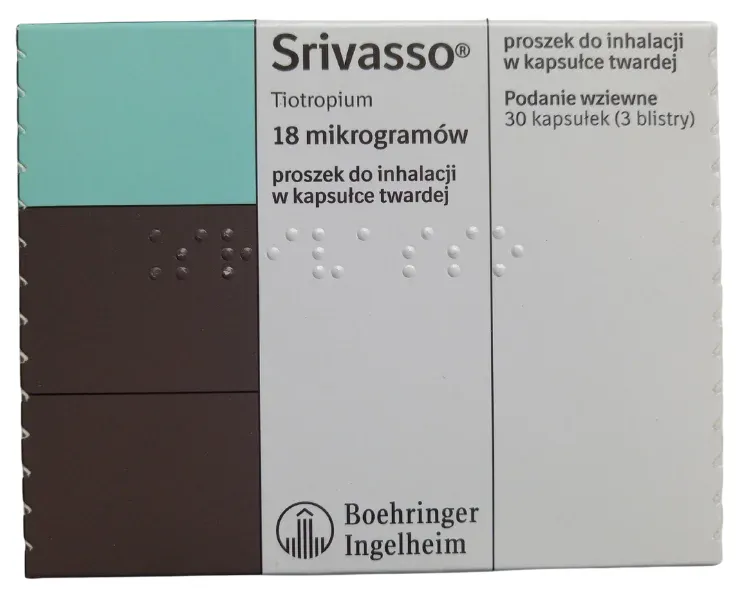
Table of Contents
Patient Information Leaflet
Srivasso, 18 micrograms, inhalation powder in hard capsule
tiotropium
Please read all of this leaflet carefully before you start using this medicine, because it contains
important information for you.
- Keep this leaflet. You may need to read it again.
- If you have any further questions, ask your doctor or pharmacist.
- This medicine has been prescribed for you only. Do not pass it on to other people. It may harm them, even if their symptoms are the same as yours.
- If you get any side effects, including any not listed in this leaflet, tell your doctor or pharmacist. See section 4.
Leaflet contents:
- What Srivasso is and what it is used for
- What you need to know before you use Srivasso
- How to use Srivasso
- Possible side effects
- How to store Srivasso
- Contents of the pack and other information
1. What Srivasso is and what it is used for
Srivasso helps people with chronic obstructive pulmonary disease (COPD) to breathe better. COPD is a long-term lung disease that causes breathlessness and cough. The term COPD refers to chronic bronchitis and emphysema. COPD is a chronic condition, so Srivasso must be taken every day, not only when breathing problems or other symptoms of COPD occur.
Srivasso is a long-acting bronchodilator medicine that helps open the airways and allows air to flow in and out of the lungs more easily. Regular use of Srivasso may also help reduce persistent breathlessness caused by the disease and help lessen the impact of the disease on daily life. The medicine also helps maintain physical activity for longer. Daily use of Srivasso can also help prevent sudden, short-term worsening of COPD symptoms, which may last for several days.
The effect of the medicine lasts for 24 hours, so it should be taken only once daily.
For correct dosage and instructions on how to use Srivasso, see section 3. How to use Srivasso and the Instructions for Use and Handling of the HandiHaler inhalation device, located at the end of this leaflet.
2. Important information before using Srivasso
When not to use Srivasso
- if the patient is allergic to tiotropium or any of the other ingredients of this medicine (listed in section 6),
- if the patient is allergic to atropine or its derivatives, such as ipratropium or oxitropium.
Warnings and precautions
Before starting treatment with Srivasso, discuss this with your doctor or pharmacist.
- The patient should contact the doctor if they have narrow-angle glaucoma, prostate problems, or difficulty passing urine.
- The patient should contact the doctor if they have kidney function disorders.
- Srivasso is indicated for maintenance therapy in patients with chronic obstructive pulmonary disease (COPD). It should not be used to treat sudden attacks of breathlessness or wheezing.
- Immediately after administration of Srivasso, immediate hypersensitivity reactions such as rash, swelling, itching, wheezing, or shortness of breath may occur. In such a case, contact your doctor immediately.
- As with other inhaled medicines, chest tightness, cough, wheezing, or shortness of breath may occur immediately after using Srivasso. In such a case, contact your doctor immediately.
- Care must be taken to prevent the powder from entering the eyes during inhalation, as this may cause the onset or worsening of symptoms of narrow-angle glaucoma, an eye condition. Eye pain or discomfort, blurred vision, seeing halos around lights, or changes in color vision, together with red eyes, may be signs of acute narrow-angle glau0coma. These eye symptoms may be accompanied by headache, nausea, and vomiting. If symptoms of narrow-angle glaucoma occur, discontinue tiotropium bromide and contact your doctor immediately, preferably an ophthalmologist.
- Dryness of the oral mucosa occurring during treatment with Srivasso, due to its anticholinergic effect, may over time lead to dental caries; therefore, maintaining good oral hygiene is important.
- If the patient has had a myocardial infarction within the last 6 months, or has experienced unstable or life-threatening cardiac arrhythmia or severe heart failure within the last year, this should be reported to the doctor. The doctor will decide whether Srivasso can be used.
- Srivasso must not be used more than once daily.
Children and adolescents
Srivasso is not recommended for children and adolescents under 18 years of age.
Srivasso with other medicines
Inform your doctor or pharmacist about all medicines (including those available without a prescription) currently taken or recently taken, as well as any medicines the patient plans to take.
Inform your doctor or pharmacist about other medicines used for lung disease, such as ipratropium or oxitropium.
No adverse effects have been reported when Srivasso is used together with other medicines commonly used in the treatment of COPD, such as: short-acting inhaled medicines, e.g. salbutamol, methylxanthines, e.g. theophylline, or oral and inhaled steroids, e.g. prednisolone.
Pregnancy and breastfeeding
If the patient is pregnant or breastfeeding, suspects she may be pregnant, or is planning to have a baby, she should consult her doctor or pharmacist before using this medicine. Do not use this medicine unless advised by a doctor.
Driving and using machines
If dizziness, blurred vision, or headache occur, do not drive or operate machinery.
Srivasso contains lactose monohydrate
When used as recommended (one capsule per day), each dose of the medicine delivers 5.5 mg of lactose monohydrate. If the patient has previously been diagnosed with intolerance to certain sugars or allergy to milk proteins (which may be present in small amounts in this ingredient: lactose monohydrate), the patient should contact their doctor before taking this medicine.
3. How to use Srivasso
This medicine should always be used as directed by a doctor or pharmacist. If in doubt, consult a doctor or pharmacist.
One capsule (18 micrograms of tiotropium) should be inhaled once daily. Do not use a higher dose than recommended.
The capsule should be taken at the same time each day. This is important because Srivasso works for 24 hours.
The capsules are for inhalation only. Do not take orally.
Do not swallow the capsules.
The HandiHaler inhaler, into which the Srivasso capsule is inserted, pierces the capsule, allowing the powder inside to be inhaled.
Patients should ensure they have the HandiHaler inhalation device and that they are using it correctly.
Read the instructions for use and handling of the HandiHaler inhaler, which are located at the end of this leaflet.
Ensure that you do not exhale into the HandiHaler inhalation device.
If you experience any difficulties using the HandiHaler inhaler, contact your doctor, nurse, or pharmacist.
The HandiHaler inhaler should be cleaned once a month. Cleaning instructions for the HandiHaler inhaler are provided at the end of this leaflet; see: "Instructions for use and handling of the HandiHaler inhaler".
Avoid getting Srivasso in the eyes. This may cause blurred vision, eye pain, and/or eye redness. Immediately rinse the eyes with warm water and promptly consult a doctor for further advice.
If you feel that breathing difficulties are worsening, contact your doctor as soon as possible.
Use in children and adolescents
Srivasso is not recommended for children and adolescents under 18 years of age.
Taking more Srivasso than recommended
If more Srivasso is taken than recommended (more than one capsule per day), contact a doctor immediately. The risk of adverse effects may increase, such as dry mouth, constipation, difficulty in urination, rapid heartbeat, or blurred vision.
Missed dose of Srivasso
If a patient forgets to take a dose, it should be taken as soon as remembered. Never take two doses at the same time or on the same day. The next dose should be taken at the usual time.
Stopping Srivasso
Before stopping Srivasso, consult a doctor or pharmacist.
After discontinuing Srivasso, symptoms of COPD may worsen.
If you have any further questions about the use of this medicine, consult your doctor or pharmacist.
4. Possible adverse effects
Like all medicines, this medicine can cause adverse effects, although they do not occur in everyone.
The adverse effects listed below have been reported by patients during treatment with this medicine.
The adverse effects are listed according to their frequency of occurrence: common, uncommon,
rare or frequency not known.
Common: may affect fewer than 1 in 10 people
- Dryness of the oral mucosa (usually mild in severity)
Uncommon: may affect fewer than 1 in 100 people
- Dizziness
- Headache
- Taste disturbances
- Blurred vision
- Irregular heartbeat (atrial fibrillation)
- Sore throat
- Hoarseness (dysphonia)
- Cough
- Heartburn (gastroesophageal reflux disease)
- Constipation
- Fungal infections of the mouth and throat (oral and pharyngeal candidiasis)
- Rash
- Difficulty in passing urine (urinary retention)
- Painful urination
Rare: may affect fewer than 1 in 1,000 people
- Difficulty falling asleep (insomnia)
- Seeing rainbow-colored halos around light sources or altered color vision, together with redness of the eyes (glaucoma)
- Increased intraocular pressure
- Irregular heartbeat (supraventricular tachycardia)
- Increased heart rate (tachycardia)
- Sensation of rapid heartbeat (palpitations)
- Chest tightness associated with cough, wheezing or shortness of breath occurring immediately after inhalation of the medicine (bronchospasm)
- Nosebleeds
- Laryngitis
- Sinusitis
- Intestinal obstruction or absence of intestinal peristalsis (intestinal obstruction, including paralytic ileus)
- Gingivitis
- Glossitis
- Difficulty swallowing (dysphagia)
- Stomatitis
- Nausea
- Hypersensitivity, including immediate reactions
- Severe allergic reaction which may cause swelling of the face or throat (angioedema)
- Urticaria
- Itching
- Urinary tract infection
Frequency not known (frequency cannot be estimated from available data):
- Loss of body water (dehydration)
- Dental caries
- Severe allergic reactions (anaphylactic reactions)
- Skin infections or skin ulceration
- Dry skin
- Joint swelling
Serious adverse effects such as allergic reactions, which may cause swelling of the face or throat (angioedema), or other hypersensitivity reactions (such as sudden drop in blood pressure or dizziness), may occur alone or as part of a severe allergic reaction (anaphylactic reaction) following administration of Srivasso. Additionally, as with other inhaled medicines, some patients may experience unexpected chest tightness, cough, wheezing or breathlessness immediately after inhaling the product (bronchospasm). If any of these symptoms occur, contact your doctor immediately.
Reporting of adverse effects
If any adverse effects occur, including any not listed in this leaflet, inform your doctor, pharmacist or nurse. Adverse effects can be reported directly to the Department for Monitoring Adverse Drug Reactions of the Office for Registration of Medicinal Products, Medical Devices and Biocidal Products:
Al. Jerozolimskie 181C, 02-222 Warsaw, tel.: 22 49-21-301, fax: 22 49-21-309,
website: https://smz.ezdrowie.gov.pl
Adverse effects may also be reported to the marketing authorization holder.
Reporting adverse effects helps to provide more information on the safety of this medicine.
5. How to store Srivasso
Keep this medicine out of the sight and reach of children.
Do not use this medicine after the expiry date stated on the carton and blister. The expiry date refers to the last day of the stated month.
After removing the first capsule from a blister, use the capsules from that same blister within the next 9 days, one capsule per day.
Dispose of the HandiHaler inhaler 12 months after first use.
Do not store above 25°C.
Do not freeze.
Medicines must not be disposed of via wastewater or household waste. Ask your pharmacist how to dispose of medicines no longer required. Such measures help protect the environment.
6. Contents of the pack and other information
What Srivasso contains
- The active substance is tiotropium. Each capsule contains 18 micrograms of tiotropium (as monohydrate bromide) as the active ingredient. During inhalation, 10 micrograms of tiotropium is delivered from the mouthpiece of the HandiHaler inhalation device.
- Other components are:
Excipients:
Lactose monohydrate, 200 M
Lactose monohydrate, micronized
(may contain trace amounts of milk proteins)
Capsule shell:
Gelatin
Propylene glycol
Titanium dioxide (E 171)
Yellow iron oxide (E 172)
Indigo carmine (E 132)
Printing ink:
Opacode S-1-8152 HV Black (No 10.12):
Antifoaming agent DC 1510
I.M.S. 74 OP
Black iron oxide (E 172)
Shellac
Soy lecithin
Tekprint SW-9008 Black (No 10.14):
Potassium hydroxide
Ammonium hydroxide
Black iron oxide (E 172)
Shellac
Propylene glycol
What Srivasso looks like and contents of the pack
Srivasso, powder for inhalation in hard capsules, is a light green hard capsule containing powder for inhalation. Each capsule is printed with the product code TI 01 and the company logo.
The medicine is available in the following pack sizes:
- Pack containing 30 capsules
- Pack containing 30 capsules and 1 HandiHaler inhaler
Not all pack sizes may be marketed.
Marketing Authorisation Holder and Manufacturer
The marketing authorisation holder for Srivasso is:
Boehringer Ingelheim International GmbH
Binger Strasse 173
55216 Ingelheim am Rhein
Germany
The manufacturer/importer of Srivasso and the HandiHaler inhaler is:
Boehringer Ingelheim Pharma GmbH & Co. KG
Binger Strasse 173
55216 Ingelheim am Rhein
Germany
For further information, please contact the local representative of the marketing authorisation holder:
Poland
Boehringer Ingelheim Sp. z o.o.
Tel. + 48 22 699 0 699
This medicinal product is authorised in the European Economic Area countries under the following names:
Austria, Liechtenstein, Belgium, Cyprus, Denmark, Finland, Germany, Greece, Hungary, Iceland, Luxembourg, Netherlands, Poland, Portugal, Romania, Slovenia, Sweden: Srivasso
Bulgaria: Сривасо
Instructions for use and handling of the HandiHaler inhalation device
The HandiHaler inhalation device enables administration of Srivasso capsules prescribed by a doctor for breathing difficulties. The HandiHaler inhalation device is designed exclusively for Srivasso capsules. It must not be used to administer other medicines.
The HandiHaler inhalation device is intended for single patient use and is designed for repeated use.
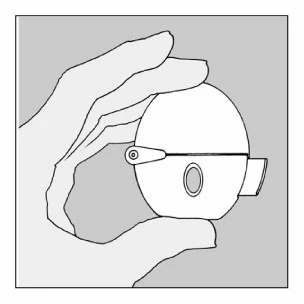
Follow your doctor's instructions carefully when using Srivasso. After first use, the HandiHaler inhalation device may be used for a period of one year for administering the medicine.
The HandiHaler inhalation device:
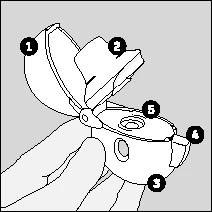
1 Upper cover
2 Mouthpiece
3 Housing with viewing window
4 Piercing button
5 Central chamber
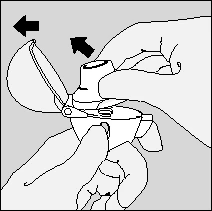
- To open the upper cover, press the piercing button fully down and then release it.
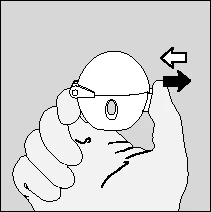
- Open the upper cover of the inhalation device by lifting it upwards. Then lift the mouthpiece up.
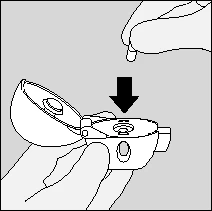
- Immediately before use, remove a Srivasso capsule from the blister pack (see section "Removing the capsule from the blister") and place it into the central chamber (5) as shown in the illustration. It does not matter which end of the capsule is inserted into the chamber.
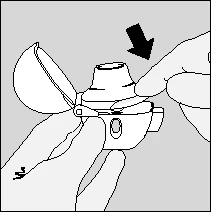
- Close the mouthpiece securely, snapping it into place (you will hear a click). Leave the upper cover open.
-
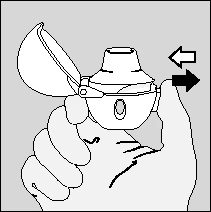
Holding the HandiHaler inhalation device with the mouthpiece pointing upwards, press the piercing button fully down once, then release it. The capsule will be pierced and the medicine prepared for inhalation.
-
Breathe out deeply.
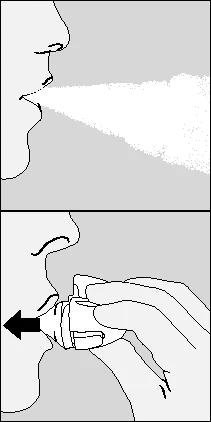
Important: Never breathe out through the mouthpiece.
- Place the HandiHaler inhalation device in your mouth and close your lips tightly around the mouthpiece. Keeping your head upright, inhale slowly and deeply so that you hear or feel the capsule vibrating. Inhale as much air as possible into your lungs. Then hold your breath for as long as comfortable, while removing the HandiHaler inhalation device from your mouth. Resume normal breathing. Repeat steps 6 and 7 once more; this will ensure complete emptying of the capsule.
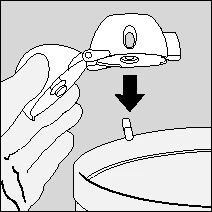
- Open the mouthpiece again. Remove the empty capsule from the inhaler and discard it.
When the HandiHaler inhalation device is not in use, the mouthpiece and upper cover should be closed.
Cleaning the HandiHaler inhalation device
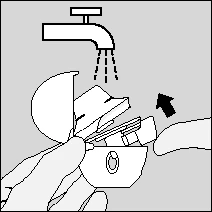
The HandiHaler inhalation device should be cleaned once a month. Open the upper cover and the mouthpiece. Then, lifting the piercing button, open the housing with viewing window. Remove any powder residue by rinsing the entire HandiHaler inhalation device under warm water. Shake off excess water and leave the device open to dry on a paper towel. Approximately 24 hours are required for complete drying; it is therefore best to clean the device immediately after use so that it is ready for the next dose. If necessary, the outer part of the mouthpiece may be wiped with a damp, but not wet, cloth.
Removing the capsule from the blister
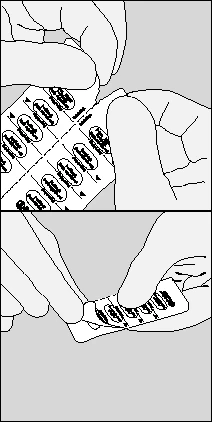
A. Separate the blister strips of Srivasso by tearing along the perforation.
B. Peel back the foil (just before use) until one capsule is exposed.
If a second capsule is accidentally exposed in the blister, discard it.
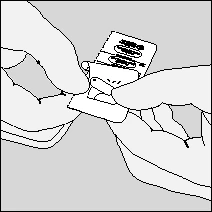
C. Remove the capsule.
The Srivasso capsule contains only a small amount of inhalation powder and is therefore only partially filled.