Spironolactone
Poland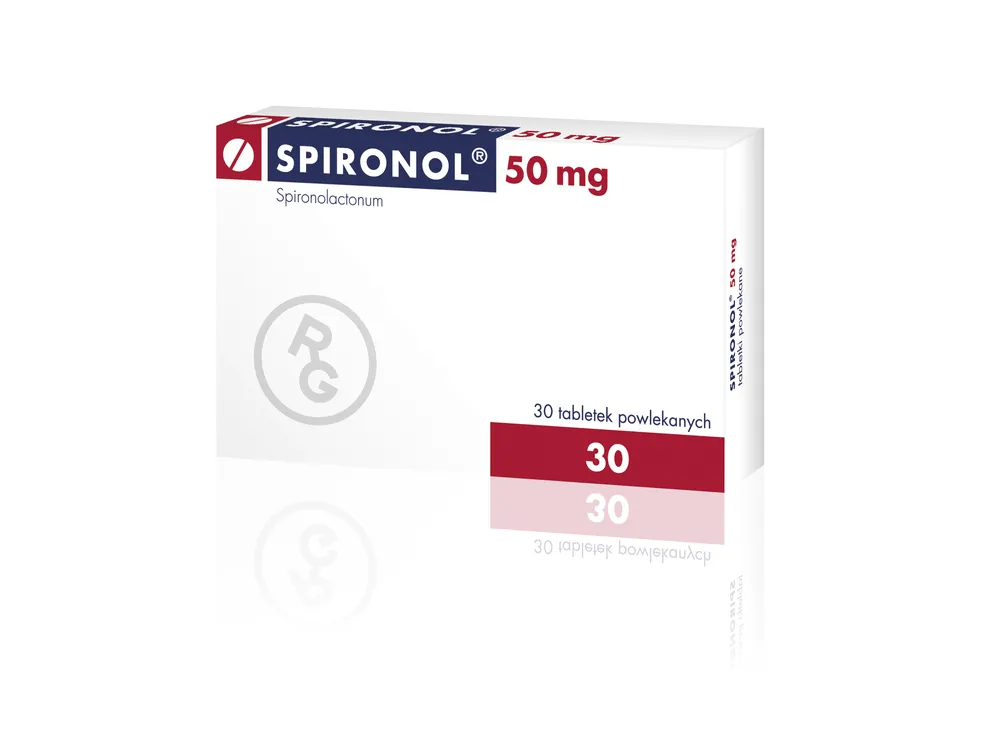
Table of Contents
Package leaflet: Information for the user
Spironol, 50 mg, coated tablets
Spironolactonum
Please read all of this leaflet carefully before taking this medicine because it contains
important information for you.
- Keep this leaflet. You may need to read it again.
- If you have any further questions, please ask your doctor or pharmacist.
- This medicine has been prescribed for you personally. Do not give it to others. It may harm them even if their symptoms are the same as yours.
- If you experience any adverse reactions, including any not listed in this leaflet, tell your doctor or pharmacist. See section 4.
Contents of the leaflet
- What Spironol is and what it is used for
- Important information before taking Spironol
- How to take Spironol
- Possible side effects
- How to store Spironol
- Contents of the pack and other information
1. What Spironol is and what it is used for
Spironol contains the active substance spironolactone. Spironol belongs to a group of medicines called diuretics, which are also known as water tablets.
You may have visited your doctor because of swollen ankles or breathlessness. These symptoms may occur when the heart's ability to pump blood is weakened due to excess fluid in the body. This is known as congestive heart failure. The need to pump excess fluid throughout the body means the heart must work harder. Your doctor has prescribed Spironol to help remove excess fluid from your body. As a result, the heart will be able to work less hard.
The excess fluid is removed through the urine, so you may need to pass water more often while taking Spironol.
Spironol may also be used in the following conditions:
- Nephrotic syndrome – a kidney disorder causing excess fluid in the body.
- Ascites – excess fluid in the abdominal cavity and oedema – fluid accumulation under the skin or in at least one body cavity (causing swelling), for example due to liver cirrhosis.
- Malignant ascites – excess fluid due to accumulation of malignant cells in the abdominal cavity.
- Primary hyperaldosteronism – excess fluid in the body caused by high levels of a hormone called aldosterone.
- Hypertension – as an additional medicine in patients who do not respond adequately to other antihypertensive drugs.
If you have any of the conditions listed above, Spironol will help remove excess fluid from your body.
If you do not feel better or feel worse after taking Spironol, please consult your doctor.
Children should only be treated under the supervision of a paediatrician.
2. Important information before using Spironol
When not to take Spironol:
- if the patient is allergic to spironolactone or any of the other ingredients of this medicine (listed in section 6);
- if the patient has Addison's disease (a deficiency of certain hormones characterized by extreme weakness, weight loss, and low blood pressure);
- if the patient has hyperkalemia (increased potassium levels in the blood);
- if the patient is unable to pass urine (anuria);
- if the patient has severe kidney disease;
- if the patient is breastfeeding;
- if the patient is taking potassium-sparing diuretics or any other medicines to correct potassium deficiency;
- if the patient is taking eplerenone (a medicine used to treat high blood pressure).
Spironolactone is contraindicated in children and adolescents with moderate or severe kidney impairment.
Warnings and precautions
Before starting to take Spironol, discuss this with your doctor or pharmacist:
- if the patient has kidney disease, particularly in children with hypertension, or liver disease. The doctor will assess the patient's condition during routine visits;
- if the patient has difficulty passing urine;
- if the patient has a condition associated with disturbances in blood electrolyte levels, such as potassium or sodium;
- if the patient has severe heart failure;
- if the patient is pregnant.
Concomitant use of Spironol with certain medicines, potassium supplements, or potassium-rich foods may lead to severe hyperkalemia (increased potassium levels in the blood). Symptoms of severe hyperkalemia may include muscle cramps, cardiac arrhythmias, diarrhea, nausea, dizziness, or headache.
In case of impaired kidney function or kidney failure, the patient may develop a dangerous increase in blood potassium levels. This may affect heart function and, in extreme cases, may lead to death.
Spironol and other medicines
Tell your doctor or pharmacist about all medicines the patient is currently taking or has recently taken, as well as any medicines the patient plans to use.
If the patient is taking abiraterone for the treatment of prostate cancer, they should inform their doctor.
Tell the doctor if the patient is taking mitotane for the treatment of malignant adrenal tumors. This medicine should not be used concomitantly with mitotane.
The doctor may adjust the dose of Spironol if the patient is taking any of the following medicines:
- digoxin or carbenoxolone;
- medicines used to treat high blood pressure, including ACE inhibitors;
- other diuretics;
- non-steroidal anti-inflammatory drugs (NSAIDs), such as aspirin, indomethacin, mefenamic acid, or ibuprofen;
- potassium supplements;
- heparin or low-molecular-weight heparin (medicines used to prevent blood clots);
- antipyrine;
- medicines that may cause hyperkalemia (increased potassium levels in the blood);
- trimethoprim and trimethoprim with sulfamethoxazole.
Spironol reduces the response to noradrenaline.
If the patient is scheduled for surgery under anesthesia, they must inform the attending physician about the use of Spironol.
Spironol with food and drink
This medicine should be taken during meals (see section 3: "How to take Spironol").
Pregnancy and breastfeeding
If the patient is pregnant or breastfeeding, suspects she may be pregnant, or is planning to have a baby, she should consult her doctor or pharmacist before using this medicine.
Pregnancy
There is limited data on the use of Spironol in pregnant women. The doctor will prescribe Spironol only if the potential benefits outweigh the potential risks.
Breastfeeding
Spironol should not be used in breastfeeding mothers. The patient should speak with her doctor, who may advise an alternative method of infant feeding during treatment with this medicine.
Driving and operating machinery
Exercise caution when driving or operating machinery.
Drowsiness and dizziness may occur during treatment with Spironol, which may affect the ability to drive and operate machinery.
Spironol contains lactose
If the patient has previously been diagnosed with intolerance to certain sugars, the patient should contact their doctor before taking this medicinal product.
Spironol coated tablets contain sodium lauryl sulfate
This medicinal product contains less than 1 mmol (23 mg) of sodium per tablet; therefore, the medicine is considered "sodium-free".
3. How to use Spironol
This medicine should always be taken as directed by the physician. If in doubt, consult a doctor or pharmacist.
The number of tablets to be taken depends on the severity of the disease. This medicine should be taken once daily, during a meal.
Adults
The adult dose ranges from 25 mg to 400 mg of spironolactone per day, depending on the condition being treated.
If in doubt, consult a doctor or pharmacist.
Elderly patients
The physician will start treatment with a low initial dose and then gradually increase it if necessary, until the desired effect is achieved.
Children and adolescents
If Spironol is taken by children, the number of tablets depends on the child's body weight. The dose is determined individually by the physician.
Taking more Spironol than recommended
In case of accidental overdose, contact a doctor immediately or go to the nearest hospital emergency department.
Symptoms of overdose include drowsiness, dizziness, nausea, vomiting, diarrhoea, feeling of dehydration, confusion. A rash may appear, consisting of flat red areas on the skin with small raised bumps. Very large overdoses may lead to changes in blood sodium and potassium levels, causing weakness, tingling, pricking or numbness of the skin and (or) muscle cramps.
If you miss a dose of Spironol
If the patient forgets to take a tablet of Spironol, they should take it as soon as possible, unless it is almost time for the next dose. Do not take a double dose to make up for a missed dose.
Stopping treatment with Spironol
Spironol should be taken for as long as directed by the physician. Do not stop taking this medicine without consulting your doctor, even if the patient feels better. Stopping treatment too early may cause the patient's condition to worsen.
If you have any further questions about the use of this medicine, consult your doctor or pharmacist.
4. Possible adverse reactions
Like all medicines, this medicine can cause adverse reactions, although not everybody gets them.
You must inform your doctor immediately if any of the following symptoms occur after taking the medicine. Although these symptoms are very rare, they may be serious:
- itching and blisters on the skin around the lips and other parts of the body (Stevens-Johnson syndrome),
- separation of the outer layer of skin from the underlying layers over the entire body surface (toxic epidermal necrolysis, TEN),
- skin rash, fever and swelling (which may be signs of more serious disorders, such as drug reaction with eosinophilia and systemic symptoms, DRESS),
- yellowing of the skin and eyes (jaundice); Spironol may cause liver function disorders,
- irregular heartbeat, which may lead to death, tingling sensation, paralysis (loss of muscle function) or breathing difficulties. These may be symptoms of increased potassium levels in the blood. Your doctor will recommend regular blood tests to monitor potassium and other electrolyte levels. If necessary, your doctor may decide to discontinue treatment.
List of other adverse reactions by frequency of occurrence:
Very common: may affect more than 1 in 10 people
- Increased potassium levels in the blood.
Common: may affect up to 1 in 10 people
- Disorientation.
- Dizziness.
- Nausea.
- Itching of the skin.
- Rash.
- Muscle cramps, including in the legs.
- Kidney failure or impaired kidney function.
- Breast enlargement in men.
- Breast pain (in men).
- General malaise.
Uncommon: may affect up to 1 in 100 people
- Changes in the breasts, such as benign breast tumours (in men).
- Electrolyte imbalances, such as high calcium levels in the blood.
- Liver function disorders.
- Skin allergy with itching and blisters, rash resembling hives.
- Menstrual disorders in women.
- Breast pain (in women).
Frequency not known: cannot be estimated from available data
- Decreased number of white blood cells in the blood.
- Decreased number of white blood cells involved in fighting infections, which makes it easier to contract infections.
- Decreased number of cells involved in blood clotting, increasing the risk of bleeding or bruising.
- Changes in sexual desire (libido) in both women and men.
- Gastrointestinal disturbances, gastric irritation.
- A condition in which blisters filled with fluid appear on the skin (pemphigoid).
- Excessive hair loss.
- Excessive hair growth.
Reporting of adverse reactions
If any adverse reactions occur, including any not listed in this leaflet, tell your doctor or pharmacist. Adverse reactions can be reported directly to the Department of Monitoring Adverse Drug Reactions of the Office for Registration of Medicinal Products, Medical Devices and Biocidal Products
Al. Jerozolimskie 181C,
02-222 Warsaw,
tel.: +48 22 49 21 301,
fax: +48 22 49 21 309,
Website: https://smz.ezdrowie.gov.pl
Adverse reactions can also be reported to the marketing authorization holder.
Reporting adverse reactions helps provide more information on the safety of the medicine.
5. How to store Spironol
Keep this medicine out of sight and reach of children.
Do not use this medicine after the expiry date stated on the packaging after "EXP".
The expiry date refers to the last day of the stated month.
Store in the original packaging to protect from moisture.
Medicines must not be disposed of via wastewater or household waste. Ask your pharmacist how to dispose of medicines no longer required. Such measures will help protect the environment.
6. Contents of the packaging and other information
What Spironol contains
The active substance is spironolactone. One tablet contains 50 mg of spironolactone.
- Other ingredients are: rice starch, lactose monohydrate, sodium lauryl sulfate, sodium carboxymethyl starch, talc, magnesium stearate, hypromellose (HPMC 606), polyethylene glycol 20,000.
What Spironol looks like and contents of the pack
Film-coated tablets, almost white to cream in colour, round, biconvex, with the imprint "50" on one side and a score line on the other side to facilitate division. Diameter approx. 9 mm.
Spironol is packed in blisters made of PVC/aluminium foil, placed in a cardboard box.
Marketing Authorisation Holder and Manufacturer
GEDEON RICHTER POLSKA Sp. z o.o.
ul. Ks. J. Poniatowskiego 5
05-825 Grodzisk Mazowiecki
Poland
tel.: (22) 755 50 81
For further information about this medicine, please contact:
GEDEON RICHTER POLSKA Sp. z o.o.
ul. Ks. J. Poniatowskiego 5
05-825 Grodzisk Mazowiecki
Tel. +48 (22) 755 96 48
[email protected]
((logo of the marketing authorisation holder))
((pharmacode))