Spastyna
Poland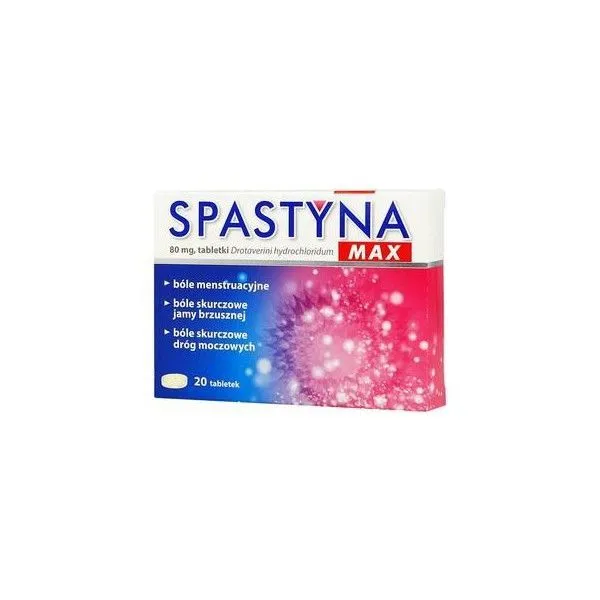
Table of Contents
Patient Information Leaflet
SPASTYNA
40 mg, tablets
Drotaverini hydrochloridum
Please read this leaflet carefully before taking this medicine, as it contains
important information for the patient.
This medicine should always be used exactly as described in this patient leaflet or as directed by
your doctor or pharmacist.
- Keep this leaflet, as you may need to read it again.
- If you need advice or further information, please consult your pharmacist.
- If you experience any adverse reactions, including any not listed in this leaflet, inform your doctor or pharmacist. See section 4.
- If there is no improvement after 10 days, or if you feel worse, you should consult your doctor.
Table of Contents
- What SPASTYNA is and what it is used for
- Important information before taking SPASTYNA
- How to take SPASTYNA
- Possible side effects
- How to store SPASTYNA
- Contents of the pack and other information
1. What SPASTYNA is and what it is used for
The active substance in SPASTYNA is drotaverine hydrochloride. This substance is used to treat spasms of smooth muscles of both neural and muscular origin. The spasmolytic effect of drotaverine is independent of the type of innervation and the location of the smooth muscles (gastrointestinal tract, urinary and genital system, circulatory system, and biliary ducts).
The drug is metabolized in the liver and is excreted mainly in the urine and to a lesser extent in the feces.
Indications
SPASTYNA is indicated for:
- Smooth muscle spasms associated with biliary tract diseases: biliary colic, cholecystitis, pericholecystitis, cholangitis, and inflammation of the Vater's papilla;
- Smooth muscle spasms of the urinary tract: nephrolithiasis, ureteric colic, pyelitis, cystitis, and painful urge to urinate;
- Additionally, as supportive treatment:
- Smooth muscle spasms of the gastrointestinal tract: gastric and duodenal ulcer, gastritis, enteritis, colitis, spasms of the gastric inlet and pylorus, irritable bowel syndrome, spastic constipation and intestinal meteorism, pancreatitis;
- Gynecological conditions: dysmenorrhea (painful menstruation).
If there is no improvement after 10 days, or if you feel worse, you should consult your doctor.
2. Important information before using the medicine SPASTYNA
When not to use SPASTYNA:
if the patient is allergic to drotaverine or to any of the other ingredients of this medicine
(listed in section 6);
if the patient has severe liver, kidney or heart failure;
if the patient has second- or third-degree atrioventricular block;
do not use in children under 6 years of age.
Warnings and precautions
Before starting treatment with SPASTYNA, consult a doctor or pharmacist.
Due to the presence of lactose, this medicine may cause gastrointestinal discomfort in patients with lactose intolerance.
Use with caution in patients with hypotension.
Exercise caution when using this medicine in pregnant women and children aged 6 years and older.
Do not use the medicine during childbirth.
Interaction of SPASTYNA with other medicines
Inform your doctor or pharmacist about all medicines currently used, recently used, or planned to be used by the patient.
Exercise caution when using SPASTYNA concomitantly with levodopa (a medicine used in Parkinson's disease), as it may reduce levodopa's antiparkinsonian effect and worsen tremors and rigidity.
Children
Do not use this medicine in children under 6 years of age.
SPASTYNA with food and drink
This medicine may be taken with or without food.
Pregnancy and breastfeeding
If the patient is pregnant or breastfeeding, suspects she may be pregnant, or is planning to become pregnant, she should consult a doctor or pharmacist before using this medicine.
Drotaverine crosses the placenta. Do not use this medicine during childbirth.
It is unknown whether drotaverine passes into human breast milk. Use of this medicine during breastfeeding is not recommended.
Driving and operating machinery
At therapeutic doses, orally administered SPASTYNA does not affect the ability to drive or operate machinery.
However, if dizziness occurs, driving or operating machinery should be avoided.
SPASTYNA contains monohydrate lactose
If the patient has previously been diagnosed with intolerance to certain sugars, the patient should consult a doctor before taking this medicine.
3. How to use the medicine SPASTYNA
This medicine should always be taken exactly as described in this patient leaflet or as directed by a doctor or pharmacist. If in doubt, consult a doctor or pharmacist.
The medicine is taken orally.
Adults: The daily dose is 120 to 240 mg, divided into 2 to 3 doses.
The maximum daily dose is 240 mg of drotaverine (6 tablets).
Children:
Clinical studies have not been conducted in children. Do not use in children under 6 years of age.
Exercise caution when administering SPASTYNA to children aged 6 years and older.
If use of SPASTYNA in children is necessary, the daily dose should be:
for children aged 6 to 12 years – 80 mg, divided into 2 doses (maximum daily dose of drotaverine is 80 mg),
for children over 12 years of age – 160 mg, divided into 2 to 4 doses (maximum daily dose of drotaverine is 160 mg).
If there is no improvement after 10 days, or if the patient feels worse, consult a doctor.
Taking more SPASTYNA than recommended
There are no reports of overdose with this medicine.
If more than the recommended dose has been taken, seek advice immediately from a doctor or pharmacist.
Missed dose of SPASTYNA
If a dose is missed, take it as soon as possible, unless it is almost time for the next dose.
Do not take two doses at the same time or within a short interval.
Do not take a double dose to make up for a missed dose.
If you have any further questions about the use of this medicine, consult your doctor or pharmacist.
4. Possible adverse effects
Like all medicinal products, this medicine can cause adverse effects, although they do not occur in everyone.
Adverse effects occurring rarely (in 1 to 10 patients per 10,000):
nausea, constipation,
headache, dizziness, insomnia,
palpitations, decreased blood pressure,
allergic reactions (angioedema, urticaria, rash, itching).
Reporting of adverse effects
If any adverse effects occur, including any adverse effects not listed in this leaflet, inform your doctor or pharmacist. Adverse effects can be reported directly to the Department of Monitoring Adverse Drug Reactions of the Office for Registration of Medicinal Products, Medical Devices and Biocidal Products
Al. Jerozolimskie 181C, 02-222 Warsaw
tel.: +48 22 49 21 301, fax: +48 22 49 21 309
Website: https://smz.ezdrowie.gov.pl
Adverse effects can also be reported to the marketing authorization holder.
Reporting adverse effects helps to provide more information on the safety of the medicine.
5. How to store SPASTYNA
Keep in the tightly closed original packaging to protect from light, at a temperature below 25°C.
Keep the medicine out of the sight and reach of children.
Do not use this medicine after the expiry date stated on the carton. The expiry date refers to the last day of the stated month.
Medicines must not be disposed of via wastewater or household waste. Ask your pharmacist how to dispose of medicines no longer required. This will help protect the environment.
6. Contents of the pack and other information
What SPASTYNA contains
- The active substance is drotaverine hydrochloride. One tablet contains 40 mg of drotaverine hydrochloride.
- The other ingredients (excipients) are: monohydrate lactose, gelatinized corn starch, povidone K 30, magnesium stearate.
What SPASTYNA looks like and contents of the pack
SPASTYNA is a yellow, round, biconvex tablet with a smooth surface.
One pack contains 20 or 40 tablets.
Marketing Authorisation Holder and Manufacturer
"PRZEDSIĘBIORSTWO PRODUKCJI FARMACEUTYCZNEJ HASCO-LEK" S.A.
51-131 Wrocław, ul. Żmigrodzka 242 E
Information on the medicine
tel.: 22 742 00 22
e-mail: [email protected]