Sotahexal 160
Poland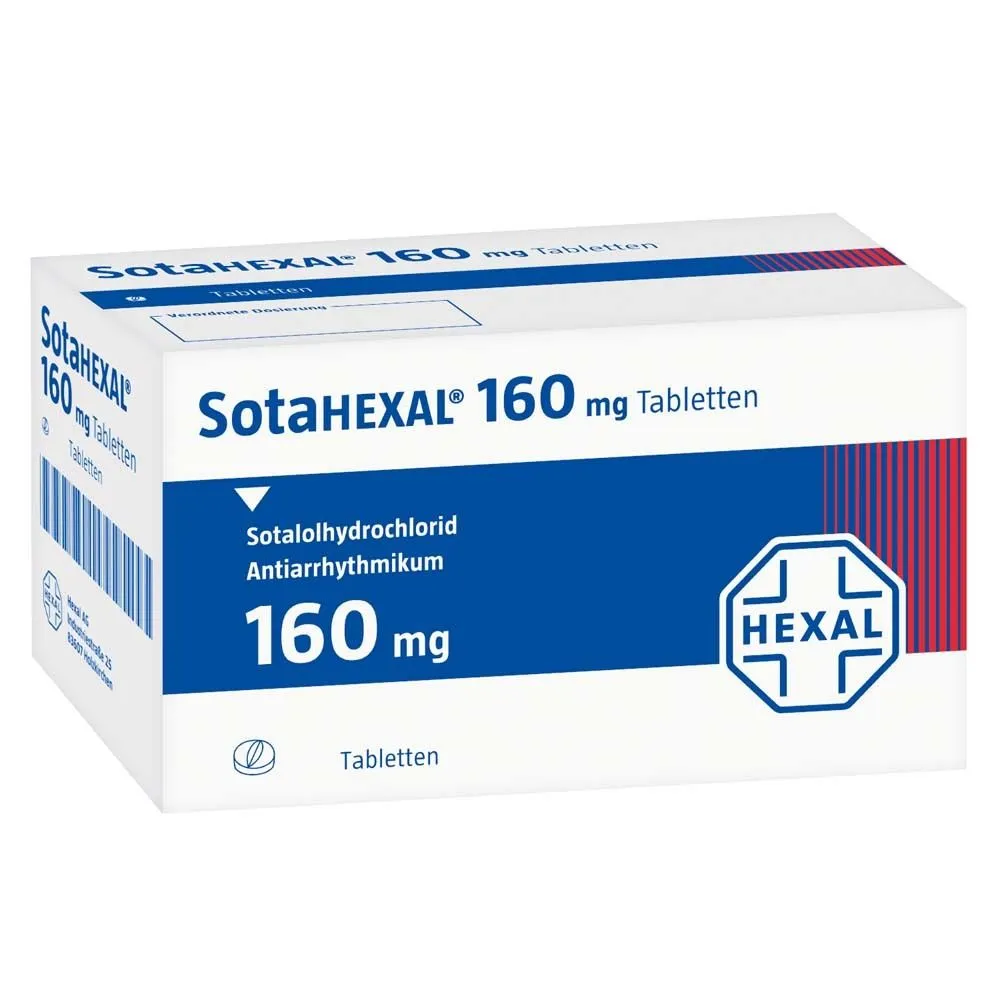
Table of Contents
Package leaflet: Information for the patient
Sotahexal 40, 40 mg, tablets
Sotahexal 80, 80 mg, tablets
Sotahexal 160, 160 mg, tablets
Sotaloli hydrochloridum
Please read the entire leaflet carefully before using this medicine, as it contains important information for the patient.
- Keep this leaflet so that you can read it again if necessary.
- If you have any questions, please consult your doctor or pharmacist.
- This medicine has been prescribed for a specific individual. Do not pass it on to others. This medicine may harm others, even if their symptoms are the same.
- If the patient experiences any adverse reactions, including any adverse reactions not listed in this leaflet, inform your doctor or pharmacist. See section 4.
Table of contents:
- What Sotahexal is and what it is used for
- Important information before taking Sotahexal
- How to take Sotahexal
- Possible side effects
- How to store Sotahexal
- Contents of the pack and other information
1. What Sotahexal is and what it is used for
Sotahexal tablets contain the active substance sotalol hydrochloride – a medicine with antiarrhythmic action.
Sotahexal is used in the treatment of supraventricular and ventricular rhythm disorders, particularly in the form of ventricular tachycardia.
2. Important information before using SotaHEXAL
When not to use SotaHEXAL
if the patient is allergic to sotalol, sulfonamides, or any of the other ingredients
of this medicine (listed in section 6). Symptoms of allergy may include rash, itching, swelling
of the face or lips, shortness of breath.
if an ECG (electrocardiogram) has shown the patient a so-called QT interval prolongation or
the patient has life-threatening arrhythmias (such as torsade de pointes), or is taking medicines
which may cause such disturbances.
if the patient suffers from or has suffered from bronchial asthma, has or has had attacks
of breathlessness, or has been diagnosed with chronic obstructive pulmonary disease.
if the patient has a slow heart rate (<45–50 beats per minute), low blood pressure,
changes in the colour of hands and feet (pallor or marked redness), severe circulatory disorders,
or heart disease (such as uncontrolled heart failure).
if the patient has recently suffered a myocardial infarction.
if the patient has metabolic acidosis or diabetic ketoacidosis.
if the patient has renal failure or untreated pheochromocytoma.
if the patient is taking an antidepressant medicine from the group of so-called MAO-A inhibitors or floctafenic.
If the patient has any doubts whether any of the above statements apply, they should
consult a doctor.
Before starting treatment with SotaHEXAL and during treatment, the doctor may recommend
the patient to have blood tests to determine potassium and magnesium levels. If the patient's blood
potassium and magnesium levels are low, the doctor may decide not to use SotaHEXAL.
During treatment, it is essential to strictly follow the doctor's recommendations for required tests.
Warnings and precautions
Before starting to take SotaHEXAL, discuss this with a doctor or pharmacist if:
the patient has previously had kidney disease, as it may be necessary to adjust the dose of
SotaHEXAL.
the patient has diabetes, as it may be necessary to adjust the dose of antidiabetic medication.
SotaHEXAL may mask or reduce warning symptoms of low blood sugar (hypoglycaemia).
the patient is taking any medicines for heart conditions or high blood pressure.
the patient has been diagnosed with hyperthyroidism, as SotaHEXAL may mask some symptoms
of the disease or worsen them if treatment is suddenly discontinued.
the patient is to undergo surgery. It is essential to inform the anaesthetist that the patient is taking SotaHEXAL.
the patient is allergic to various allergens, as SotaHEXAL may intensify allergic reactions.
the patient has severe and/or prolonged diarrhoea or is taking medicines which may reduce
the body's potassium and magnesium levels (e.g. diuretics), as this may lead to serious
heart rhythm disturbances.
If the patient is to undergo tests to investigate suspected chromaffin tumour,
they should inform the laboratory staff that they are taking SotaHEXAL.
SotaHEXAL and other medicines
Tell your doctor or pharmacist about all medicines the patient is currently taking, has recently taken,
or plans to take.
SotaHEXAL and other medicines may interact and affect each other's action. This particularly concerns:
medicines used to treat high blood pressure;
medicines used to treat heart failure or heart rhythm disorders;
antidiabetic medicines;
diuretics;
medicines used to treat asthma and other respiratory diseases;
medicines used to treat depression, anxiety, nervous system disorders, and psychiatric conditions;
antibacterial medicines (antibiotics and chemotherapeutics);
medicines used to treat allergies (e.g. hay fever);
steroid medicines;
non-steroidal anti-inflammatory drugs (NSAIDs), used to treat pain and inflammation;
laxatives.
If the patient is to undergo surgery under general anaesthesia, it is essential to inform the
anaesthetist that they are taking SotaHEXAL. It may be necessary to discontinue treatment
by gradually reducing the dose over a period of 1 week before the procedure.
SotaHEXAL with food and drink
Tablets should be taken before meals, with liquid. Food, especially milk-based meals,
reduces absorption of the medicine.
Pregnancy and breastfeeding
If the patient is pregnant or breastfeeding, suspects she may be pregnant, or is planning to become pregnant,
she should consult a doctor before using this medicine.
Pregnancy
SotaHEXAL may be used during pregnancy only if the doctor considers it necessary.
Treatment should be discontinued 2 to 3 days before the planned delivery.
Breastfeeding
Breastfeeding must not be undertaken while taking SotaHEXAL.
Driving and operating machinery
The effect of SotaHEXAL on the ability to drive and operate machinery is unknown.
Patients who experience dizziness, fatigue, or vertigo should not drive or operate machinery
without consulting a doctor or pharmacist.
SotaHEXAL contains lactose and sodium
If the patient has previously been diagnosed with intolerance to certain sugars, they should
consult a doctor before taking this medicine.
The medicine contains less than 1 mmol (23 mg) of sodium per tablet, meaning the medicine is considered "sodium-free".
3. How to use Sotahexal 160
This medicine should be taken exactly as prescribed by your doctor. If in doubt, consult your
doctor or pharmacist.
Adults
The usual dose is 80 mg to 320 mg per day. In some patients, treatment of life-threatening
ventricular arrhythmias may require higher daily doses, up to a maximum of 480 to 640 mg.
The medicine may be taken as a single dose or in divided doses, as directed by your doctor.
Your doctor may recommend lower doses for elderly patients or for patients with impaired
renal function.
It is essential to strictly follow your doctor's instructions regarding regular check-ups and
monitoring examinations.
Use in children
Sotahexal 160 is not intended for use in children.
Taking more Sotahexal 160 than prescribed
If a patient has taken too many tablets, seek medical advice immediately or go directly to the
nearest hospital. Take the medicine pack or leaflet with you so that medical staff know which
medicine has been overdosed.
Symptoms of overdose may include bradycardia, heart failure, hypotension, bronchospasm,
hypoglycaemia, and cardiac arrhythmias.
If you forget to take Sotahexal 160
If a patient forgets to take a dose, they should take it as soon as they remember, unless it is
almost time for the next dose. In that case, the missed dose should be skipped and the next
dose taken at the usual time. Never take a double dose of the medicine.
Taking the medicine at the same time each day helps to remember to take it.
Stopping Sotahexal 160 treatment
Do not stop taking Sotahexal 160 without consulting your doctor.
Sudden discontinuation of treatment may lead to life-threatening cardiovascular disorders.
If treatment must be stopped, your doctor will recommend gradually reducing the dose over
1 to 2 weeks, possibly including replacement therapy if necessary.
If you have any further questions about the use of this medicine, consult your doctor or
pharmacist.
4. Possible adverse reactions
Like all medicines, this medicine can cause adverse reactions, although not everybody will experience them.
Adverse reactions associated with the use of SotaHEXAL are usually transient, resolve after dose reduction, and rarely lead to discontinuation of treatment.
The following adverse reactions may occur during treatment with sotalol:
Common (may affect fewer than 1 in 10 people): anxiety, sleep disorders, mood changes, depression, dizziness, vertigo, headache, paraesthesia, fainting, feeling faint, taste disturbances, visual disturbances, hearing disturbances, torsade de pointes type arrhythmia, arrhythmia, dyspnoea, chest pain, slowing of heart rate (bradycardia), palpitations, changes in electrocardiogram (ECG), atrioventricular conduction disturbances, heart failure, hypotension, abdominal pain, nausea, vomiting, diarrhoea, indigestion, flatulence, dry mouth, muscle cramps, sexual dysfunction, fatigue, asthenia, fever, oedema.
Uncommon (may affect fewer than 1 in 100 people): bronchospasm in patients with bronchial asthma or history of asthma symptoms.
Rare (may affect fewer than 1 in 10,000 people): decreased tear production.
Frequency not known (cannot be estimated from available data): abnormally low number of thrombocytes in the blood, also known as platelets, Raynaud's disease, worsening of intermittent claudication, pain and coldness in limbs, rash, exacerbation of psoriasis symptoms, hair loss, excessive sweating, production of antinuclear antibodies.
Reporting of adverse reactions
If any adverse reactions occur, including any not listed in this leaflet, inform your doctor, pharmacist, or nurse. Adverse reactions can also be reported directly to the Department of Monitoring Adverse Drug Reactions, Office for Registration of Medicinal Products, Medical Devices and Biocidal Products
Al. Jerozolimskie 181C
02-222 Warsaw
Phone: +48 22 49 21 301
Fax: +48 22 49 21 309
Website: https://smz.ezdrowie.gov.pl
Reporting adverse reactions helps provide more information on the safety of this medicine.
5. How to store Sotahexal
Keep this medicine out of sight and reach of children.
Do not use this medicine after the expiry date stated on the packaging following EXP. The expiry date refers to the last day of the specified month.
No special storage conditions required.
Medicines should not be disposed of via wastewater or household waste. Ask your pharmacist how to dispose of medicines no longer required. This will help protect the environment.
6. Contents of the packaging and other information
What Sotahexal contains
The active substance is sotalol hydrochloride.
Each tablet contains 40 mg, 80 mg, or 160 mg of sotalol hydrochloride.
The other ingredients are: monohydrate lactose, maize starch, hydroxypropylcellulose,
sodium carboxymethyl starch (type A), colloidal anhydrous silica, magnesium stearate.
What Sotahexal looks like and contents of the pack
Sotahexal tablets are packed in PP/Aluminium foil blisters in a cardboard box.
The packs contain 20 or 30 tablets.
Marketing Authorisation Holder
Sandoz GmbH
Biochemiestrasse 10
6250 Kundl, Austria
Manufacturer
Salutas Pharma GmbH
Otto-von-Guericke-Allee 1
39179 Barleben, Germany
Lek S.A.
ul. Domaniewska 50 C
02-672 Warsaw, Poland
For further information, please contact:
Sandoz Polska Sp. z o.o.
ul. Domaniewska 50 C
02-672 Warsaw, Poland
tel. 22 209 70 00