Sorafenib g.l.
Poland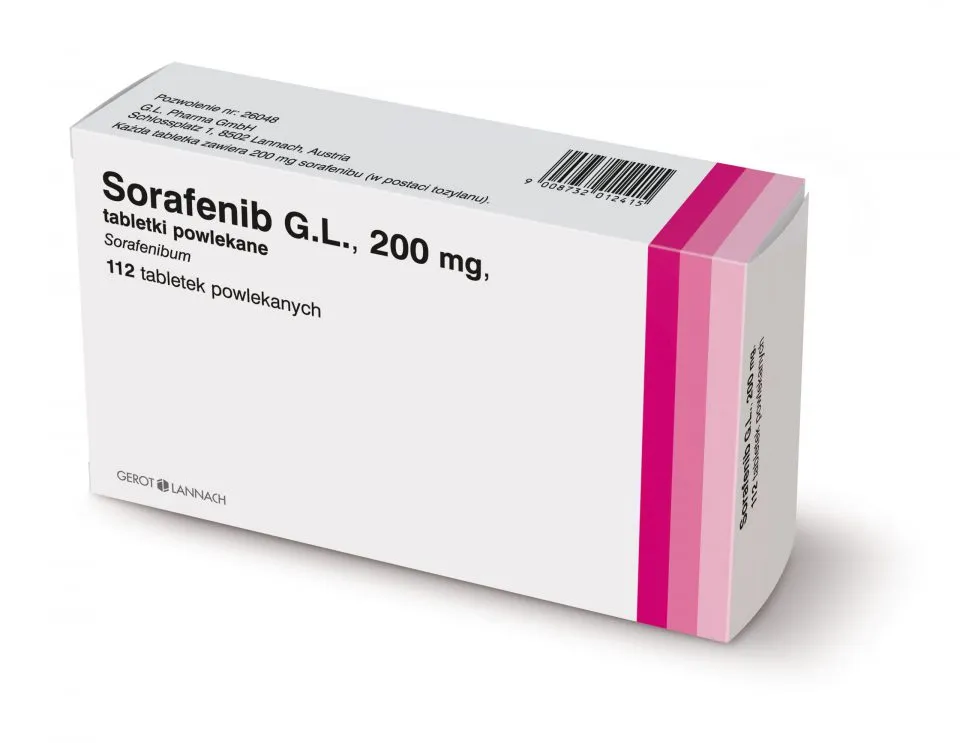
Table of Contents
Package leaflet: Information for the patient
Sorafenib G.L., 200 mg, coated tablets
Sorafenibum
Please read carefully this leaflet before taking the medicine, because it contains
important information for the patient.
- Keep this leaflet so that you can read it again if necessary.
- If you have any doubts, please consult your doctor or pharmacist.
- This medicine has been prescribed for a specific person only. Do not give it to others. The medicine may harm another person, even if their symptoms are the same.
- If you experience any adverse reactions, including any not listed in this leaflet, you should inform your doctor or pharmacist. See section 4.
Contents of the leaflet
- What Sorafenib G.L. is and what it is used for
- Important information before taking Sorafenib G.L.
- How to take Sorafenib G.L.
- Possible side effects
- How to store Sorafenib G.L.
- Contents of the package and other information
1. What Sorafenib G.L. is and what it is used for
Sorafenib G.L. is used in the treatment of liver cancer (hepatocellular carcinoma).
Sorafenib G.L. is also used in the treatment of advanced kidney cancer (advanced renal cell carcinoma) in patients in whom standard therapy has not been effective in halting disease progression or is considered inappropriate.
Sorafenib G.L. is a so-called multi-kinase inhibitor. It works by reducing the growth rate of cancer cells and by cutting off the blood supply that supports the development of cancer cells.
2. Important information before using Sorafenib G.L.
When not to take Sorafenib G.L.
- if the patient has hypersensitivity to sorafenib or any of the other components of this medicine (listed in section 6).
Warnings and precautions
Before starting treatment with Sorafenib G.L., discuss this with your doctor or pharmacist.
When to be especially careful when using Sorafenib G.L.
- If skin changes occur. Sorafenib G.L. may cause rash and skin reactions, especially on the palms of the hands and soles of the feet. Usually, these changes can be managed by the treating physician. If they do not resolve, your doctor may temporarily interrupt treatment with Sorafenib G.L. or discontinue it completely.
- If the patient has or has had high blood pressure. Sorafenib G.L. may increase blood pressure. Your doctor will monitor blood pressure values and, if elevated, may prescribe medications to lower them.
- If the patient has or has previously had an aneurysm (a weakening and dilation of a blood vessel wall) or a tear in the blood vessel wall.
- If the patient has diabetes. In patients with diabetes, blood glucose levels should be monitored regularly to assess whether the dose of antidiabetic medication needs adjustment, in order to minimize the risk of hypoglycemia.
- If any bleeding occurs or if the patient taking Sorafenib G.L. is also taking warfarin or phenprocoumon. Treatment with Sorafenib G.L. may increase the risk of bleeding. Patients taking warfarin or phenprocoumon, which reduce blood clotting to prevent thrombosis, may have an increased risk of bleeding.
- If chest pain or heart problems occur, the doctor may decide it is necessary to interrupt or completely discontinue treatment with Sorafenib G.L.
- If cardiac disorders occur, such as abnormal electrical activity, known as "QT interval prolongation."
- If surgery is planned or has recently been performed. Sorafenib G.L. may affect wound healing. Sorafenib G.L. is usually discontinued prior to surgery. Your treating doctor will decide when to resume treatment with Sorafenib G.L.
- If the patient is also taking irinotecan or receiving docetaxel, which are also anticancer medicines. Sorafenib G.L. may enhance their effects, particularly adverse effects.
- If neomycin or other antibiotics are being taken, the effectiveness of Sorafenib G.L. may be reduced.
- If severe liver dysfunction occurs, more serious adverse reactions may occur during treatment.
- In case of impaired kidney function, the doctor will monitor fluid and electrolyte balance.
- Fertility. Sorafenib G.L. may reduce fertility in both men and women. Any concerns regarding fertility should be discussed with your doctor.
- Gastrointestinal perforation. During treatment, a break in the continuity of the gastrointestinal tract wall may occur (see also section 4: Possible adverse effects). In such a case, the doctor will recommend discontinuing treatment.
- If the patient experiences any of the following symptoms, seek immediate medical attention, as they may indicate a life-threatening condition: nausea, shortness of breath, irregular heartbeat, muscle cramps, seizures, decreased urine output, and fatigue. These symptoms may be caused by a group of metabolic complications that can occur during cancer treatment, resulting from products of degradation of dying tumor cells [tumor lysis syndrome (TLS)], which may lead to impaired kidney function and acute kidney failure (see also section 4: Possible adverse effects).
You should inform your doctor if any of the above conditions apply to the patient taking Sorafenib G.L. In such cases, appropriate treatment may be required, and the doctor may decide to adjust the dose of Sorafenib G.L., or discontinue its use altogether (see also section 4: Possible adverse effects).
Children and adolescents
Studies on the use of Sorafenib G.L. in children and adolescents have not been conducted.
Sorafenib G.L. and other medicines
Some medicines may affect the action of Sorafenib G.L., or their action may be altered by Sorafenib G.L. Inform your doctor or pharmacist about any of the medicines listed below, as well as any other medicines currently or recently taken, or those planned for use, including over-the-counter medicines:
- Rifampicin, neomycin, or other medicines used to treat infections (antibiotics)
- St. John’s wort, used in the treatment of depression
- Phenytoin, carbamazepine, or phenobarbital, medicines used in epilepsy and other disorders
- Dexamethasone, a corticosteroid used in various diseases
- Warfarin or phenprocoumon, anticoagulant medicines used to prevent thrombosis
- Doxorubicin, capecitabine, docetaxel, paclitaxel, and irinotecan – anticancer medicines
- Digoxin, used in the treatment of mild to moderate heart failure
Pregnancy and breastfeeding
Avoid becoming pregnant during treatment with Sorafenib G.L. If there is any possibility that the patient could become pregnant, an effective method of contraception should be used during treatment. If pregnancy occurs during therapy, the patient should contact the doctor immediately. The doctor will decide whether treatment may be continued.
Breastfeeding must not be undertaken during treatment with Sorafenib G.L., as sorafenib may affect the growth and development of the infant.
Driving and operating machinery
There are no data indicating that Sorafenib G.L. may impair the ability to drive or operate machinery.
Sorafenib G.L. contains sodium
This medicine contains less than 1 mmol of sodium (23 mg) per dose, meaning it is essentially sodium-free.
3. How to take Sorafenib G.L.
This medicine should always be taken according to the instructions given by your doctor or pharmacist. If you are unsure,
you should consult your doctor or pharmacist.
The recommended dose of Sorafenib G.L. in adults is two tablets twice daily,
each tablet containing 200 mg.
This corresponds to a daily dose of 800 mg or four tablets.
Sorafenib G.L. should be swallowed with a glass of water, taken either on an empty stomach or with a meal low or
moderately rich in fat. Do not take this medicine with high-fat meals,
as this may reduce the effectiveness of Sorafenib G.L. If a high-fat meal is planned, the tablets should be taken at least
1 hour before or 2 hours after the meal.
This medicine should always be taken according to your doctor's instructions. If you are unsure, you should
consult your doctor or pharmacist.
It is important to take this medicine at approximately the same time each day to ensure a consistent level of the medicine in the bloodstream.
This medicine is usually taken for as long as it provides clinical benefit and as long as the person taking it does not experience intolerable side effects.
Taking more than the recommended dose of Sorafenib G.L.
You should contact your doctor immediately if the person prescribed Sorafenib G.L. (or anyone else) has taken more than the recommended dose. Taking Sorafenib G.L. in excessive amounts may increase the risk of side effects or make them more severe, particularly diarrhea and skin reactions. Your doctor may advise stopping treatment with this medicine.
Missing a dose of Sorafenib G.L.
If a dose is missed, it should be taken as soon as remembered. However, if it is almost time for the next dose, the missed dose should be skipped and treatment should continue as previously scheduled. Do not take a double dose to make up for a missed dose.
4. Possible side effects
Like all medicines, this medicine may cause side effects, although not everyone gets them.
This medicine may also affect the results of certain blood tests.
Very common:
May occur in more than 1 in 10 people
- diarrhoea
- nausea
- feeling weak or tired (fatigue)
- pain (including mouth pain, abdominal pain, bone pain, headache, tumour-related pain)
- hair loss (alopecia)
- redness or pain in the palms of the hands or soles of the feet (hand-foot syndrome)
- itching or rash
- vomiting
- bleeding (including brain haemorrhage, intestinal bleeding, respiratory tract bleeding, haemorrhage)
- increased or periodic rises in blood pressure (hypertension)
- infections
- loss of appetite (anorexia)
- constipation
- joint pain (arthralgia)
- fever
- weight loss
- dry skin
Common:
May occur in not more than 1 in 10 people
- flu-like symptoms
- indigestion (dyspepsia)
- difficulty swallowing (dysphagia)
- inflammation or dryness in the mouth, tongue pain (oral mucositis and mucosal inflammation)
- low blood calcium levels (hypocalcaemia)
- low blood potassium levels (hypokalaemia)
- low blood sugar levels (hypoglycaemia)
- muscle pain (myalgia)
- sensory disturbances in fingers and toes, such as tingling or numbness (peripheral sensory neuropathy)
- depression
- erectile dysfunction (impotence)
- voice changes (dysphonia)
- acne
- skin inflammation symptoms, dry and flaking skin (dermatitis, skin desquamation)
- heart failure
- heart attack (myocardial infarction) or chest pain
- ringing in the ears (tinnitus)
- kidney failure
- extremely high levels of protein in the urine (proteinuria)
- general weakness or loss of strength (asthenia)
- reduced number of white blood cells (leucopenia and neutropenia)
- reduced number of red blood cells (anaemia)
- low platelet count (thrombocytopenia)
- folliculitis (inflammation of hair follicles)
- reduced thyroid activity (hypothyroidism)
- low blood sodium levels (hyponatraemia)
- taste disturbances (dysgeusia)
- redness of the face and other skin areas (flushing)
- watery nasal discharge (watery rhinitis)
- heartburn (gastroesophageal reflux disease)
- skin cancer (squamous cell carcinoma / cutaneous squamous cell carcinoma)
- thickening of the outer layer of the skin (hyperkeratosis)
- sudden, involuntary muscle cramps (muscle cramps)
Uncommon:
May occur in not more than 1 in 100 people
- inflammation of the mucous membrane (gastritis) of the stomach
- abdominal pain due to inflammation of the pancreas, inflammation of the gallbladder and/or bile ducts
- yellowing of the skin or eyes (jaundice) caused by high levels of bile pigments (hyperbilirubinaemia)
- allergic reactions (including skin reactions and allergic rhinitis)
- dehydration
- breast enlargement (gynaecomastia)
- breathing difficulties (lung disease)
- skin rash (eczema)
- increased thyroid activity (hyperthyroidism)
- various skin eruptions (erythema multiforme)
- extremely high blood pressure
- perforation of the intestinal wall (gastrointestinal perforation)
- reversible swelling of the posterior part of the brain, which may be associated with headache, disturbances in consciousness, seizures, and vision problems, including loss of vision (reversible posterior leukoencephalopathy)
- sudden, severe allergic reaction (anaphylactic reaction)
Rare:
May occur in not more than 1 in 1000 people
- allergic reaction with skin swelling (e.g. face, tongue), which may cause difficulty breathing or swallowing (angioedema)
- irregular heartbeat (prolongation of the QT interval)
- liver inflammation, which may cause nausea, vomiting, abdominal pain and jaundice (drug-induced hepatitis)
- sunburn-like rash, which may appear on skin previously exposed to radiation therapy; severity may be severe (radiation-induced dermatitis)
- severe skin and/or mucosal reactions, including painful blisters and fever, including extensive skin peeling (Stevens-Johnson syndrome and toxic epidermal necrolysis)
- abnormal breakdown of muscle tissue, which may lead to kidney problems (rhabdomyolysis)
- kidney damage causing loss of large amounts of protein (nephrotic syndrome)
- inflammation of blood vessels in the skin, which may cause a rash (leukocytoclastic vasculitis)
Unknown frequency (cannot be estimated from available data)
- nausea, shortness of breath, irregular heartbeat, muscle cramps, seizures, reduced urine output and fatigue [tumour lysis syndrome (TLS)] (see section 2).
- brain function disorders, which may be associated with, for example, drowsiness, changes in behaviour or disorientation (encephalopathy)
- enlargement and weakening of the blood vessel wall or tearing of the blood vessel wall (aneurysm and arterial dissection).
Reporting of side effects
If you experience any adverse effects, including any not listed in this leaflet, tell your doctor or pharmacist. Side effects can be reported directly to the Department of Monitoring Adverse Drug Reactions at the Office for Registration of Medicinal Products, Medical Devices and Biocidal Products:
Al. Jerozolimskie 181C,
02-222 Warsaw
Tel: +48 22 49 21 301
Fax: +48 22 49 21 309
Website: https://smz.ezdrowie.gov.pl
Side effects can also be reported directly to the marketing authorisation holder.
Reporting side effects helps provide more information on the safety of the medicine.
5. How to store Sorafenib G.L.
Keep this medicine out of the sight and reach of children.
Do not use this medicine after the expiry date stated on the packaging and blister:
EXP. The expiry date refers to the last day of the stated month.
Do not store this medicine above 30°C.
Medicines must not be disposed of via wastewater or household waste. Ask your pharmacist how to dispose of medicines that are no longer required. This will help protect the environment.
6. Contents of the package and other information
What Sorafenib G.L. contains
- The active substance is sorafenib. Each coated tablet contains 200 mg of sorafenib (as tosylate).
- The other ingredients are:
Tablet core: hypromellose 2910, sodium croscarmellose, microcrystalline cellulose, magnesium stearate, sodium lauryl sulfate.
Tablet coating: hypromellose 2910, titanium dioxide, macrogol, iron oxide red (E 172).
What Sorafenib G.L. looks like and contents of the pack
Sorafenib G.L. is a red-brown, round, biconvex coated tablet, embossed with "200" on one side and smooth on the other, with a diameter of 12.0 mm ± 5%.
Aluminium/PVC/PE/PVDC single-dose perforated blister in a cardboard box contains 112 coated tablets.
Aluminium/PVC/PE/PVDC blister in a cardboard box contains 112 coated tablets.
Not all pack sizes may be marketed.
Marketing Authorisation Holder
G.L. Pharma GmbH
Schlossplatz 1
8502 Lannach
Austria
Manufacturer
G.L. Pharma GmbH
Schlossplatz 1
8502 Lannach
Austria
Remedica Ltd
Aharnon Street,
Limassol Industrial Estate,
3056 Limassol,
Cyprus
PharOS MT Ltd.
HF62X, Hal Far Industrial Estate,
BBG3000 Birzebbugia
Malta
For further information and information on the medicinal product names in other EEA countries,
please contact the representative of the Marketing Authorisation Holder:
G.L. PHARMA POLAND Sp. z o.o.
Al. Jana Pawła II 61/313
01-031 Warsaw, Poland
Tel: 022/ 636 52 23; 636 53 02
[email protected]