Solpadeine
Poland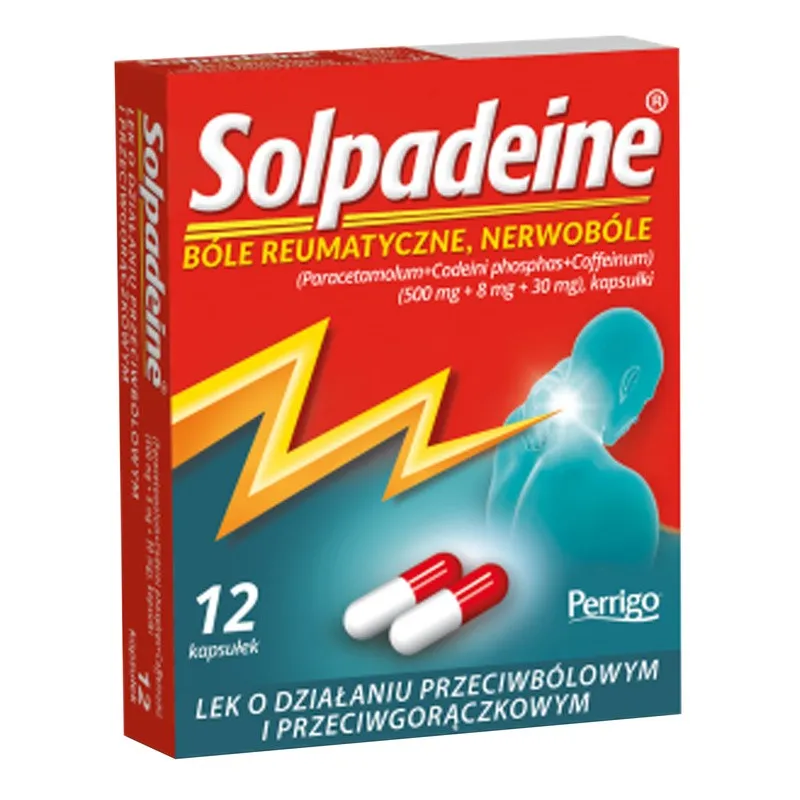
Table of Contents
Package leaflet: Information for the user
SOLPADEINE
500 mg + 8 mg + 30 mg, capsules
Paracetamolum + Codeini phosphas + Coffeinum
Please read this leaflet carefully before taking this medicine because it contains important
information for you.
This medicine should always be used exactly as described in this patient leaflet or as directed by
your doctor or pharmacist.
- Keep this leaflet so that you can read it again if necessary.
- If you need advice or further information, please consult your pharmacist.
- If you experience any adverse reactions, including any not listed in this leaflet, inform your doctor or pharmacist. See section 4.
- If there is no improvement after 3 days, or if you feel worse, consult your doctor.
Contents of the leaflet
- What Solpadeine is and what it is used for
- Important information before taking Solpadeine
- How to take Solpadeine
- Possible side effects
- How to store Solpadeine
- Contents of the package and other information
1. What Solpadeine is and what it is used for
Solpadeine contains three active substances: paracetamol, codeine phosphate, and caffeine. Its therapeutic effect results from the combined action of these active ingredients.
Paracetamol has analgesic and antipyretic properties.
Caffeine has a stimulating effect on the central nervous system and enhances the analgesic effect of paracetamol.
Codeine has analgesic and antitussive properties. Codeine belongs to a group of medicines called opioid analgesics, which relieve pain. It may be used alone or in combination with other analgesics such as paracetamol.
The onset of action occurs between 30 and 60 minutes after ingestion, and the total duration of effect is up to 4 hours.
If there is no improvement after 3 days, or if you feel worse, you should consult your doctor.
Indications for Solpadeine:
Headache, migraine, painful menstruation, toothache, neuralgia, rheumatic pain, sore throat, symptoms of influenza and cold, fever.
Due to its codeine content, Solpadeine may be used in adolescents aged 12 years and older for the short-term relief of moderate pain that has not responded to other analgesics such as paracetamol or ibuprofen used as monotherapy (see also "When not to take Solpadeine" in section 2).
2. Important information before using Solpadeine
When not to use Solpadeine
- if the patient is allergic to paracetamol, caffeine, codeine, other opioid painkillers, or any of the other ingredients of this medicine (listed in section 6),
- in patients with alcohol-related disease,
- in patients with severe liver or kidney impairment,
- in patients with respiratory insufficiency or respiratory depression,
- in patients with bronchial asthma,
- in patients suffering from chronic constipation,
- in children under 12 years of age,
- in children and adolescents (under 18 years of age) following tonsillectomy due to obstructive sleep apnoea syndrome,
- in patients who are ultra-rapid metabolisers of codeine to morphine,
- in pregnant women,
- in breastfeeding women,
- in patients taking MAO inhibitors or within 2 weeks of stopping such treatment,
- in patients dependent on opioids.
Warnings and precautions
This medicine contains codeine, which may lead to dependence (see section 4 of the leaflet).
Solpadeine should be used at the lowest effective dose and for the shortest duration necessary to relieve symptoms.
Patients who feel the need to use the medicine continuously should contact their doctor as soon as possible.
If symptoms persist or worsen, medical advice should be sought.
Do not use other products containing paracetamol or codeine while taking this medicine.
Before starting Solpadeine, consult your doctor or pharmacist if you have:
- hypotension,
- liver or kidney impairment,
- Gilbert's syndrome (hereditary non-haemolytic jaundice),
- concomitant use of other medicines affecting liver function,
- haemolytic anaemia,
- dehydration,
- chronic malnutrition,
- asthma and concomitant use of acetylsalicylic acid (cross-reactions have been observed),
- elderly, adult or adolescent patients with body weight below 50 kg,
- use of medicines that depress the central nervous system,
- respiratory disorders,
- head injury or increased intracranial pressure,
- benign prostatic hyperplasia or urinary retention,
- hypothyroidism,
- adrenal insufficiency,
- acute abdominal symptoms,
- inflammatory or obstructive bowel diseases,
- deficiency of certain enzymes (glucose-6-phosphate dehydrogenase and methemoglobin reductase),
- biliary tract diseases (e.g. gallstones) or after biliary tract surgery,
- glutathione deficiency,
- if the patient is or has ever been dependent on opioids, alcohol, prescription medicines, or illicit substances.
Regular and prolonged use of codeine (an active ingredient in this medicine) may lead to dependence and misuse, which in turn may result in overdose and (or) death. Do not use this medicine longer than necessary. This medicine must not be given to other people.
Long-term use of various types of painkillers for headache may worsen the headache. If this occurs or is suspected, medical advice should be sought and treatment discontinued. Medication-overuse headache should be suspected in patients with frequent or daily headaches despite regular use (or because of such use) of painkillers.
In patients who have undergone cholecystectomy, codeine may cause acute abdominal pain related to the biliary tract or pancreas, usually accompanied by abnormal laboratory test results.
Codeine is converted to morphine in the liver by an enzyme. Morphine is the substance responsible for codeine's effects, relieving pain and cough. Some individuals have a genetic variation in this enzyme, leading to different responses. In some people, morphine is not formed or is formed in very small amounts, resulting in insufficient pain or cough relief. In others, large amounts of morphine are produced, increasing the risk of severe adverse effects. If any of the following adverse effects occur, discontinue use of this medicine and seek immediate medical advice: slow or shallow breathing, confusion, drowsiness, pinpoint pupils, nausea or vomiting, constipation, or loss of appetite.
Laboratory tests
Paracetamol use may cause false results in certain laboratory tests (e.g. blood glucose measurement).
During treatment with Solpadeine, inform your doctor immediately if the patient develops severe illness, including severe kidney dysfunction or sepsis (when bacteria and their toxins circulate in the blood, leading to organ damage), malnutrition, chronic alcoholism, or if the patient is also taking flucloxacillin (an antibiotic). In such cases, patients using paracetamol regularly over a long period or taking paracetamol with flucloxacillin have developed a serious condition called metabolic acidosis (an imbalance in blood and body fluids). Symptoms of metabolic acidosis may include severe breathing difficulties, including rapid deep breathing, drowsiness, nausea, and vomiting.
Children and adolescents (see also "When not to use Solpadeine" and section 3)
Adolescents over 12 years of age
Solpadeine is not recommended in adolescents with respiratory disorders for the treatment of cold symptoms.
Solpadeine and other medicines
Consult your doctor if you are taking any of the following medicines:
- metoclopramide, domperidone (used for nausea and vomiting),
- cholestyramine (used to reduce high blood cholesterol levels),
- anticoagulants (e.g. warfarin) if long-term painkiller use is required,
- sedatives such as sleeping pills, tranquilisers, tricyclic antidepressants, phenothiazine antipsychotics, alcohol,
- antiepileptic medicines,
- rifampicin (an anti-tuberculosis medicine),
- MAO inhibitors (used in the treatment of depression),
- probenecid (a uricosuric agent),
- estrogens and progesterone (sex hormones),
- lithium salts (used, among others, in depression and mania),
- disulfiram (used, among others, in alcoholism treatment),
- non-steroidal anti-inflammatory drugs (including acetylsalicylic acid).
Paracetamol and other medicines
Inform your doctor or pharmacist if you are taking:
- flucloxacillin (an antibiotic), due to the serious risk of blood and body fluid disturbances (called metabolic acidosis), which require urgent treatment (see section 2).
Although there is no strong clinical evidence, a potential interaction between paracetamol and chloramphenicol should be considered when both medicines are used simultaneously, especially in malnourished patients.
Codeine enhances the respiratory depressant effect of other opioid painkillers.
Concomitant use with medicines causing dry mouth or blurred vision (anticholinergic medicines such as atropine) may lead to paralytic ileus.
Concomitant use of Solpadeine with sedatives such as benzodiazepines or their derivatives increases the risk of drowsiness, breathing difficulties (respiratory depression), coma, and may be life-threatening. Therefore, concomitant use should only be considered if no other treatment options are available.
Nevertheless, if your doctor prescribes Solpadeine together with sedatives, the dose and duration of combined treatment should be strictly limited by the doctor.
The patient should inform the doctor about all sedative medicines being taken and strictly follow the doctor's dosage instructions. It may be helpful to inform friends or family about the symptoms listed above. If any of these symptoms occur, contact a doctor immediately.
Caffeine may reduce the effect of sleeping pills and tranquilisers.
Use of Solpadeine with food, drink, and alcohol
During treatment, avoid excessive intake of caffeine (e.g. in coffee, tea, or certain beverages).
Excessive consumption of coffee or tea while taking this medicine may cause nervousness and irritability.
Do not drink alcohol while taking this medicine due to increased risk of liver damage and enhanced effects of codeine. The risk of liver damage is particularly high in fasting patients and those who regularly consume alcohol.
Pregnancy, breastfeeding, and fertility
Solpadeine is contraindicated in pregnant women due to its content of codeine and caffeine.
Solpadeine is contraindicated during breastfeeding. Codeine and morphine pass into breast milk.
There are no available data on the effect of Solpadeine on female fertility (see also "When not to use Solpadeine" in section 2).
Driving and operating machinery
This medicine may cause dizziness and drowsiness. If these symptoms occur, do not drive or operate machinery.
Solpadeine contains colourants: erythrosine (E127), patent blue V (E131), and quinoline yellow (E104)
It may cause allergic reactions.
3. How to take Solpadeine
This medicine should always be taken exactly as described in this patient information leaflet or as directed by a doctor or pharmacist. If in doubt, consult a doctor or pharmacist.
The medicine should be used at the lowest effective dose for the shortest possible duration. Do not exceed the recommended daily dose or the specified number of doses.
Do not take a higher dose than recommended.
Do not take this medicine for longer than 3 days. If pain persists after 3 days, consult a doctor.
Do not take other medicines containing paracetamol, codeine, or caffeine at the same time.
Dosage:
For oral use only.
Adults:
Orally, 1–2 capsules, up to 4 times daily. Do not take the medicine more frequently than every 4–6 hours, and do not exceed 8 capsules in 24 hours.
Adolescents aged 16–18 years:
Take 1–2 capsules every 6 hours, up to a maximum daily dose of 8 capsules (4000 mg paracetamol, 64 mg codeine, and 240 mg caffeine).
Adolescents aged 12–15 years:
Take 1 capsule every 6 hours, up to a maximum daily dose of 4 capsules (2000 mg paracetamol, 32 mg codeine, and 120 mg caffeine).
Children under 12 years of age:
Solpadeine should not be used in children under 12 years of age due to the risk of opioid toxicity associated with the variable and unpredictable metabolism of codeine to morphine.
Solpadeine is contraindicated in children under 12 years of age for the symptomatic treatment of cold due to the risk of severe respiratory depression.
(See also "When not to take Solpadeine" and "Children and adolescents" in section 2.)
Elderly patients:
Elderly patients, especially those who are frail or immobile, may require a reduced dose of Solpadeine capsules or a reduced frequency of administration.
Renal impairment:
Patients with diagnosed renal impairment must seek medical advice before taking this medicine. When administering paracetamol to patients with renal failure, it is recommended to reduce the dose and extend the minimum interval between doses to at least 6 hours. Restrictions on the use of paracetamol-containing products in patients with renal impairment are primarily due to the paracetamol content of the medicine (see "Warnings and precautions" in section 2).
Hepatic impairment:
Patients with diagnosed hepatic impairment or Gilbert's syndrome must seek medical advice before taking this medicine. Restrictions on the use of paracetamol-containing products in patients with hepatic impairment are primarily due to the paracetamol content of the medicine (see "Warnings and precautions" in section 2).
Taking more than the recommended dose of Solpadeine
If more than the recommended dose is taken, seek immediate medical advice, even if the patient feels well. Overdose may cause irreversible liver damage and respiratory depression.
4. Possible adverse effects
Like all medicines, this medicine can cause adverse effects, although not everyone will experience them.
The medicine may cause constipation.
Discontinue use of the medicine immediately and consult a doctor if any of the following occur:
- acute abdominal pain, nausea and vomiting in patients who have had their gallbladder removed, which may be symptoms of acute pancreatitis (frequency unknown),
- allergic reaction (hypersensitivity) such as: skin rash or itching, sweating, redness, urticaria, angioedema (swelling of lips, tongue, throat or face), breathing difficulties,
- anaphylactic reaction – life-threatening inadequate blood flow to organs due to hypersensitivity, manifesting as dizziness, disorientation and fainting,
- agranulocytosis – significant decrease in white blood cell count, increasing the risk of life-threatening infections,
- toxic epidermal necrolysis (TEN), Stevens-Johnson syndrome, presenting as blisters and erosions on the skin, in the mouth, eyes and genital organs, fever and joint pain, or rupturing large blisters, extensive skin erosions, peeling of large skin sheets, and fever, acute generalised exanthematous pustulosis,
- breathing difficulties, if similar problems occurred previously during use of acetylsalicylic acid or other non-steroidal anti-inflammatory drugs (NSAIDs),
- bruises or unexplained bleeding,
- liver function disorders manifesting as nausea, sudden weight loss, loss of appetite, yellowing of the skin and whites of the eyes (jaundice),
- symptoms of dependence, such as anxiety and irritability, feeling the need to continuously use the medicine and increasing the dose after prolonged regular use (frequency unknown).
Use of Solpadeine may cause the following:
Rarely (more than 1 in 10,000 patients but not less than 1 in 1,000 patients):
- allergy (without angioedema)
Very rarely (less than 1 in 10,000 patients):
- difficulty urinating
- anaphylaxis
- bronchospasm in patients hypersensitive to aspirin and other NSAIDs
- liver function disorders
- skin hypersensitivity reactions including skin rashes, itching, sweating, purpura, urticaria and angioedema
- cases of serious skin reactions; toxic epidermal necrolysis, drug-induced skin inflammation, Stevens-Johnson syndrome, acute generalised exanthematous pustulosis
- sterile pyuria (cloudy urine)
- thrombocytopenia
Frequency not known (frequency cannot be estimated from available data):
- nervousness,
- dizziness,
- constipation, nausea, vomiting, dyspepsia,
- dry mouth,
- acute pancreatitis in patients with a history of cholecystectomy (gallbladder removal),
- worsening of headache with prolonged use,
- drowsiness,
- difficulty urinating,
- with prolonged use of higher doses of codeine, drug dependence may occur,
- a serious condition that may cause blood acidification (so-called metabolic acidosis) in patients with severe illness taking paracetamol (see section 2).
Drinking coffee or tea while taking this medicine may cause tension, irritability,
insomnia, anxiety, headache, stomach and intestinal disturbances, unusually fast heartbeat or irregular
heart rhythm.
Reporting of adverse effects
If any adverse effects occur, including any not listed in this leaflet, inform your doctor or pharmacist. Adverse effects can be reported directly to the Department of Monitoring Adverse Drug Reactions at the Office for Registration of Medicinal Products, Medical Devices and Biocidal Products:
Al. Jerozolimskie 181C
02-222 Warsaw
Phone: +48 22 49 21 301
Fax: +48 22 49 21 309
Website: https://smz.ezdrowie.gov.pl
Adverse effects can also be reported to the marketing authorisation holder.
Reporting adverse effects helps provide more information on the safety of this medicine.
5. How to store Solpadeine
Keep the medicine out of the sight and reach of children.
Do not use this medicine after the expiry date stated on the packaging following "Expiry".
The expiry date refers to the last day of the stated month.
Store below 25°C.
Medicines should not be disposed of via wastewater or household waste. Ask your pharmacist how to dispose of medicines no longer required. Such measures help protect the environment.
6. Contents of the pack and other information
What Solpadeine contains
- The active substances are: paracetamol, codeine, and caffeine. Each capsule contains 500 mg of paracetamol, 8 mg of codeine phosphate, and 30 mg of caffeine.
- Other ingredients are: magnesium stearate, maize starch, capsule shell lower part: titanium dioxide, gelatin; capsule shell upper part: erythrosine (E127), patent blue V (E131), quinoline yellow (E104), titanium dioxide (E171), gelatin.
What Solpadeine looks like and contents of the pack
Solpadeine is a capsule.
The pack contains 12 or 24 capsules.
Marketing Authorisation Holder and Manufacturer
Marketing Authorisation Holder
Perrigo Poland Sp. z o.o.
ul. Domaniewska 48
02-672 Warsaw
tel.: +48 (22) 852 55 51
Manufacturer
Swiss Caps GmbH
Grassingerstrabe 9
83043 Bad Aibling
Germany