Sodium oxybate accord
Poland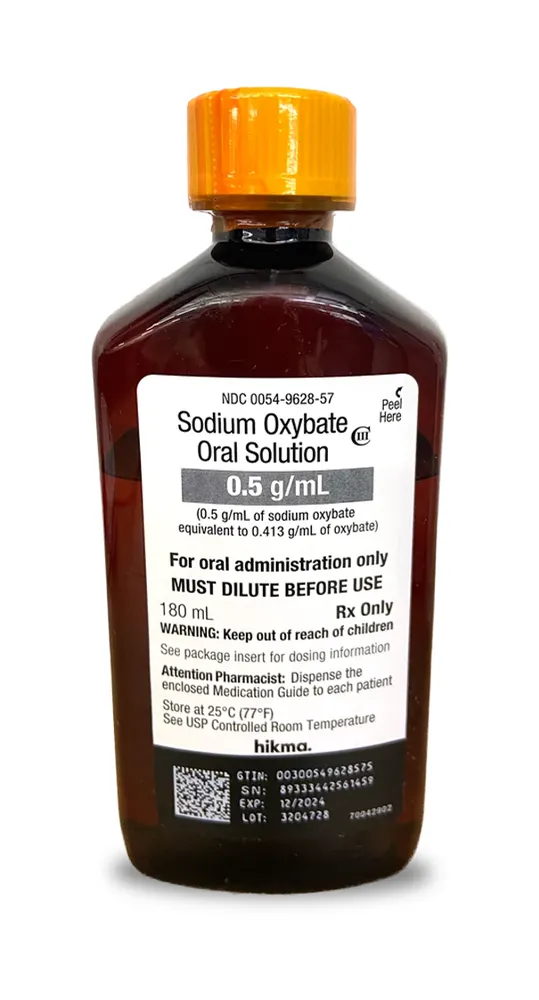
Table of Contents
- Package leaflet: Information for the user
- 1. What Sodium oxybate Accord is and what it is used for
- 2. Important information before using Sodium oxybate Accord
- 3. How to use Sodium oxybate Accord
- 4. Possible adverse effects
- 5. How to store Sodium oxybate Accord
- 6. Contents of the pack and other information
Package leaflet: Information for the user
Sodium oxybate Accord, 500 mg/ml, oral solution
Natrii hydroxybutyras
Please read all of this leaflet carefully before taking this medicine because it contains
important information for you.
- Keep this leaflet. You may need to read it again.
- If you have any further questions, ask your doctor or pharmacist.
- This medicine has been prescribed for a specific individual. Do not pass it on to others. It may harm someone else, even if their symptoms are the same.
- If you experience any adverse reactions, including any not listed in this leaflet, tell your doctor or pharmacist. See section 4.
Leaflet contents:
- What Sodium oxybate Accord is and what it is used for
- What you need to know before taking Sodium oxybate Accord
- How to take Sodium oxybate Accord
- Possible side effects
- How to store Sodium oxybate Accord
- Contents of the pack and other information
1. What Sodium oxybate Accord is and what it is used for
Sodium oxybate Accord contains the active substance sodium oxybate. Sodium oxybate
Accord works by improving sleep at night, although the exact mechanism of action is
not known.
Sodium oxybate Accord is used in adults for the treatment of narcolepsy with cataplexy.
Narcolepsy is a sleep disorder in which excessive daytime sleepiness may occur, as well as
cataplexy, sleep paralysis, hypnagogic hallucinations, and disrupted nighttime sleep. Cataplexy is a sudden
weakness or paralysis of muscles without loss of consciousness, triggered by a sudden emotional reaction such as anger, fear, joy, laughter, or surprise.
2. Important information before using Sodium oxybate Accord
When not to use Sodium oxybate Accord
- if the patient is allergic to sodium oxybate or any of the other ingredients of this medicine (listed in section 6),
- if the patient has succinic semialdehyde dehydrogenase deficiency (a rare metabolic disorder),
- if the patient suffers from severe depression,
- if the patient is being treated with opioids or barbiturates.
Warnings and precautions
Before starting treatment with Sodium oxybate Accord, discuss this with your doctor or
pharmacist:
- if there are breathing disorders or lung diseases (especially in case of obesity), because Sodium oxybate Accord may potentially cause breathing difficulties,
- if the patient suffers or has previously suffered from depressive disorders,
- if there is circulatory insufficiency, hypertension (high blood pressure), kidney or liver disease, because dose adjustment may be necessary,
- if the patient has previously abused medicines,
- if the patient suffers from epilepsy, use of Sodium oxybate Accord is not recommended in this case,
- if the patient suffers from porphyria (a rare metabolic disorder).
If any of the above situations apply, inform your doctor before starting treatment.
While taking Sodium oxybate Accord, inform your doctor immediately if nocturnal enuresis and incontinence, both urinary and faecal, disorientation, hallucinations, episodes of sleepwalking or disturbances in thinking occur. Although these symptoms do not occur frequently, if they do occur, they are usually mild to moderate.
In elderly patients, the doctor will recommend careful monitoring to assess whether the treatment is achieving the desired effects.
Sodium oxybate Accord has well-known addictive properties. Cases of dependence have occurred following illicit use of sodium oxybate.
Your doctor will ask whether you have ever abused any medicines before starting and during treatment with Sodium oxybate Accord.
Children and adolescents
This medicine should not be given to children and adolescents.
Sodium oxybate Accord and other medicines
Tell your doctor or pharmacist about all medicines you are currently taking, have recently taken, or plan to take.
In particular, Sodium oxybate Accord should not be used together with sleep medicines and medicines that reduce the activity of the central nervous system (the central nervous system consists of the brain and spinal cord).
You should also inform your doctor or pharmacist if you are taking any of the following medicines:
- medicines that increase nervous system activity and antidepressants,
- medicines that may be processed in a similar way by the body (e.g. valproic acid, phenytoin or ethosuximide used in the treatment of seizures),
- topiramate (used in the treatment of epilepsy),
- if the patient is taking valproic acid concurrently, the dose of Sodium oxybate Accord should be adjusted, as this may lead to interactions.
Taking Sodium oxybate Accord with food, drink and alcohol
Do not drink alcohol while taking Sodium oxybate Accord, as the effect of the medicine may be intensified.
Pregnancy and breastfeeding
If you are pregnant, think you may be pregnant, are planning to become pregnant, or are breastfeeding, you should consult your doctor or pharmacist before using this medicine.
Only a small number of women have used Sodium oxybate Accord during pregnancy, and in a few cases spontaneous abortions occurred. The risk of using Sodium oxybate Accord in pregnant women is unknown; therefore, use of Sodium oxybate Accord is not recommended during pregnancy and in women attempting to become pregnant.
Patients taking Sodium oxybate Accord must stop breastfeeding, as Sodium oxybate Accord passes into breast milk. Changes in sleep patterns have been observed in newborns breastfed by mothers taking Sodium oxybate Accord.
Driving and operating machinery
Sodium oxybate Accord affects the ability to drive and operate machinery. Do not drive, operate heavy machinery, or perform any dangerous activities requiring full attention for at least 6 hours after taking Sodium oxybate Accord. When first using Sodium oxybate Accord, and until you know whether the medicine causes drowsiness the following day, take special care when driving, operating heavy machinery, or performing any activities that may be dangerous or require full concentration.
Sodium oxybate Accord contains sodium
Monitoring salt intake is recommended because Sodium oxybate Accord contains sodium (a component of table salt), which may be important if the patient has previously had problems with high blood pressure, heart or kidney disease. If the patient takes two nightly doses of 2.25 g sodium oxybate each, they ingest 0.82 g of sodium; if taking two doses of 4.5 g sodium oxybate each, they ingest 1.6 g of sodium. Adjustment of dietary salt intake may be necessary.
3. How to use Sodium oxybate Accord
This medicine should always be used exactly as directed by your doctor or pharmacist. If in doubt,
consult your doctor or pharmacist.
The recommended starting dose is 4.5 g per day, administered in two equal doses of 2.25 g each.
Your doctor may gradually increase the dose up to the maximum dose of 9 g per day, given as two
equal doses of 4.5 g each.
Sodium oxybate Accord should be taken orally twice each night. The first dose should be taken
immediately before going to sleep, and the second dose 2.5 to 4 hours later. It may be necessary to
set an alarm to wake up for taking the second dose. Food reduces the amount of Sodium oxybate
Accord absorbed by the body, so it is best to take the medicine at scheduled times: two to three
hours after a meal. Both doses of the medicine should be prepared before going to bed. The doses
should be taken within 24 hours of preparation.
If the patient has kidney problems, dietary changes to reduce sodium intake should be considered.
If the patient has liver problems, the starting dose should be reduced by half. Your doctor may
gradually increase the dose later.
Instructions for diluting Sodium oxybate Accord
The following describes how to prepare Sodium oxybate Accord. Please read carefully and follow
each step exactly as instructed.
The cardboard package of Sodium oxybate Accord contains: 1 bottle, a dosing syringe, an adapter, and
two measuring cups with child-resistant caps.
-
Remove the cap from the bottle by pressing down and turning it counter-clockwise (to the left). After removing the cap, place the bottle upright on a flat surface. There is a protective foil seal on top of the bottle, which must be removed before first use. While holding the bottle upright, attach the provided adapter to the neck of the bottle. This step should only be performed the first time the bottle is opened. The adapter can remain on the bottle for subsequent uses.
-
Insert the tip of the dosing syringe into the center opening of the bottle and firmly push the syringe in (see Figure 1).
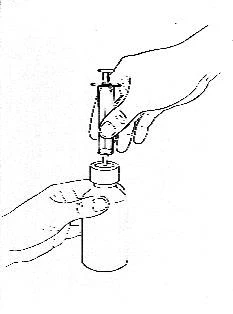
Figure 1
- Holding the bottle and syringe with one hand, turn the bottle upside down and draw the prescribed dose into the syringe by pulling the plunger with the other hand. WARNING: The medicine will not flow into the syringe unless the bottle is inverted (see Figure 2).
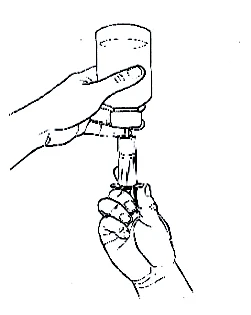
Figure 2
- Place the bottle upright and remove the syringe from the bottle opening. Press the plunger to empty the medicine from the syringe into one of the provided measuring cups (see Figure 3). Repeat the procedure for the second measuring cup. Then add approximately 60 ml of water (about 4 tablespoons) to each measuring cup.
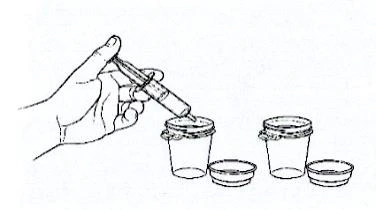
Figure 3
- Place the provided caps on both measuring cups and turn them clockwise (to the right) until a distinct click is heard, indicating that the child-resistant cap is securely locked. Rinse the syringe with water.
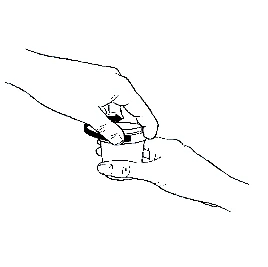
Figure 4
-
Just before going to bed, place the measuring cup containing the second dose near the bed. To ensure the second dose is taken no earlier than 2.5 hours and no later than 4 hours after the first dose, it may be necessary to set an alarm. Remove the cap from the first measuring cup by pressing down on the child-resistant safety button and turning the cap counter-clockwise (to the left). Drink the first dose completely while sitting in bed, recap the measuring cup, and immediately lie down.
-
After waking up 2.5 to 4 hours later, remove the cap from the second measuring cup. Drink the second dose completely while sitting in bed, immediately before lying down again to continue sleeping. Replace the cap on the second measuring cup.
If you feel that the effect of Sodium oxybate Accord is too strong or too weak, consult your doctor or pharmacist.
Taking more Sodium oxybate Accord than prescribed
Symptoms of overdose may include: increased motor activity, disorientation, movement disorders,
breathing difficulties, blurred vision, excessive sweating, headache, vomiting, disturbances of
consciousness leading to coma and seizures, excessive thirst, muscle cramps, and muscle weakness.
If you take more Sodium oxybate Accord than prescribed, or take it by accident, seek immediate
medical help. Bring the labelled medicine container with you, even if it is empty.
Missing a dose of Sodium oxybate Accord
If you miss the first dose, take it as soon as possible and then continue as described. If you miss the
second dose, skip it and do not take any further dose until the next evening. Do not take a double
dose to make up for a missed dose.
Stopping Sodium oxybate Accord
Sodium oxybate Accord should be taken for as long as your doctor recommends. After stopping the
medicine, cataplexy attacks may return and you may experience: insomnia, headache, anxiety,
dizziness, sleep disturbances, drowsiness, hallucinations, and thinking disorders.
If you stop taking Sodium oxybate Accord for more than 14 consecutive days, consult your doctor,
as treatment should be restarted with a lower dose.
If you have any further questions about the use of this medicine, consult your doctor or pharmacist.
4. Possible adverse effects
Like any medicine, this medicine can cause adverse effects, although they do not occur in everyone.
They are usually mild or moderate. If any of the adverse effects listed below occur, inform your doctor immediately.
Very common (may affect more than 1 in 10 people):
nausea, dizziness, headache.
Common (may affect up to 1 in 10 people):
sleep disorders, including insomnia, blurred vision, palpitations, vomiting, abdominal pain,
diarrhoea, loss of appetite, decreased appetite, weight loss, weakness, strange dreams,
fatigue, feeling drunk, sleep paralysis, somnolence, tremor, confusion/disorientation, nightmares,
sleepwalking, nocturnal enuresis, excessive sweating, depression, painful muscle cramps, oedema,
falls, joint pain, back pain, excessive daytime sleepiness, balance disorders, attention disturbances,
reduced sensitivity, particularly to touch, abnormal sensations of touch, tingling sensation (a feeling of tingling, numbness or prickling begins in part of the body, particularly in the foot or hand),
sedation, taste disturbances, restlessness, difficulty falling asleep during the night, nervousness,
sensation of spinning (dizziness), urinary incontinence, shortness of breath, snoring, nasal congestion,
rash, sinusitis, pharyngitis, increased blood pressure.
Uncommon (may affect up to 1 in 100 people):
psychosis (a mental illness which may include hallucinations, disorganised speech or behaviour and agitation),
paranoia, thought disorders, hallucinations, agitation, suicidal attempts, difficulty falling asleep,
restless legs syndrome, poor memory, myoclonus (involuntary muscle jerks), faecal incontinence,
hypersensitivity.
Frequency not known (cannot be estimated from the available data):
seizures, decreased depth or rate of breathing, urticaria, suicidal thoughts, brief interruptions in breathing during sleep, euphoria, dry mouth, facial swelling (angioedema), dehydration, panic attack, mania/bipolar affective disorder, delusions, bruxism (teeth grinding and jaw clenching), pollakiuria (increased need to urinate), nycturia (excessive urination at night), tinnitus (ringing or buzzing sounds in the ears), sleep-related eating disorders, loss of consciousness, increased appetite, irritability, aggression, dyskinesias (i.e. abnormal, uncontrolled movements of limbs) and thoughts of committing acts of violence (including harming others), seborrhoea and increased libido.
Reporting of adverse effects
If any adverse effects occur, including any adverse effects not listed in this leaflet, inform your doctor or pharmacist. Adverse effects can be reported directly to the Department of Monitoring Adverse Drug Reactions of the Office for Registration of Medicinal Products, Medical Devices and Biocidal Products:
Al. Jerozolimskie 181C, 02-222 Warsaw
tel.: + 48 22 49 21 301, fax: + 48 22 49 21 309, e-mail: [email protected]
Adverse effects can also be reported to the marketing authorisation holder.
Reporting adverse effects helps to provide more information on the safety of the medicine.
5. How to store Sodium oxybate Accord
Keep this medicine out of the sight and reach of children.
Do not use this medicine after the expiry date stated on the bottle under "Expiry date (EXP)". The expiry date refers to the last day of the stated month.
No special storage precautions apply.
After dilution in the measuring cups, the product should be used within 24 hours.
Any unused solution remaining 40 days after first opening the Sodium oxybate Accord bottle should be discarded.
Medicines should not be disposed of via wastewater or household waste. Ask your pharmacist how to dispose of medicines no longer required. These measures will help protect the environment.
6. Contents of the pack and other information
What Sodium oxybate Accord contains
The active substance is sodium oxybate. Each ml contains 500 mg of sodium oxybate.
The other ingredients are: purified water, malic acid and sodium hydroxide.
What Sodium oxybate Accord looks like and contents of the pack
Sodium oxybate Accord is supplied in amber-coloured plastic bottles with a capacity of 200 ml, containing 180 ml of oral solution, closed with a child-resistant cap. A protective seal is located on top of the bottle, under the cap. Each carton contains one bottle, a press-in adapter for the bottle, a plastic oral syringe, and two dosing cups with child-resistant caps.
Sodium oxybate Accord is a clear to slightly opalescent solution.
Marketing Authorisation Holder
Accord Healthcare Polska Sp. z o.o.
ul. Taśmowa 7
02-677 Warszawa
Poland
Manufacturer
Accord Healthcare Polska Sp. z o.o.
ul. Lutomierska 50, 95-200 Pabianice
Poland
LABORATORI FUNDACIÓ DAU
C/ C, 12-14 Pol. Ind. Zona Franca
08040 Barcelona
Spain
LABORATORIO REIG JOFRE S.A.
Gran Capitán, 10, 08970 Sant Joan Despí
Spain
The physician should provide the patient with an information kit about the medicine, including a booklet on how to take the medicine, a patient information leaflet – Frequently Asked Questions, and a Patient Warning Card.
This medicinal product is authorised in the European Economic Area countries under the following names:
| Member State | Medicinal Product Name |
| Belgium | Oxybate Accord 500 mg/ml oral solution |
| Czech Republic | Sodium oxybate Accord |
| Netherlands | Natriumoxybaat Accord 500 mg/ml, oral solution |
| Germany | Natriumoxybat Accord 500 mg/ml Lösung zum Einnehmen |
| Poland | Sodium oxybate Accord |
| Slovenia | Natrijev oksibat Accord 500 mg/ml peroralna raztopina |
| Italy | Sodio oxibato Accord |