Smofkabiven extra nitrogen ef
Poland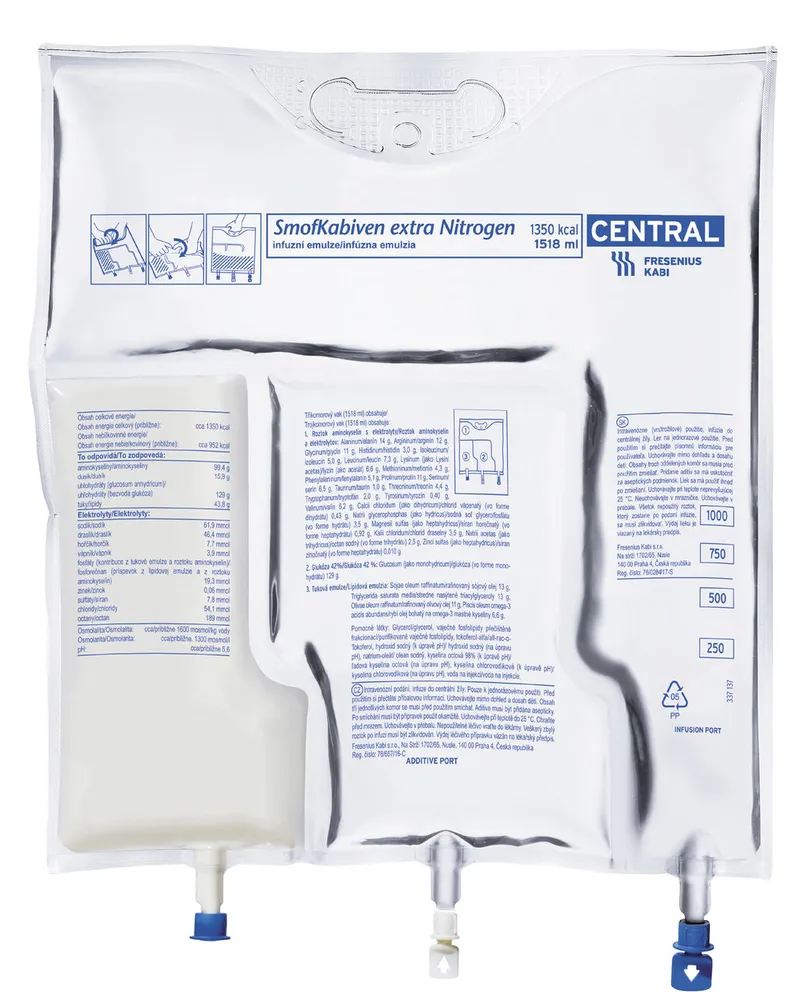
Table of Contents
- Patient Information Leaflet
- 1. What SmofKabiven extra Nitrogen EF is and what it is used for
- 2. Important information before using SmofKabiven extra Nitrogen EF
- 3. How to use SmofKabiven extra Nitrogen EF
- 4. Possible adverse reactions
- 5. How to store SmofKabiven extra Nitrogen EF
- 6. Contents of the pack and other information
- Information intended exclusively for healthcare professionals:
- 2. Mixing
- 4. Hanging the bag
Patient Information Leaflet
SmofKabiven extra Nitrogen EF, emulsion for infusion
Please read all of this leaflet carefully before this medicine is administered, as it contains
important information for the patient.
- Keep this leaflet, so that you can read it again if necessary.
- If you have any further questions, please ask your doctor, pharmacist or nurse.
- If you experience any side effects, including any not listed in this leaflet, please tell your doctor, pharmacist or nurse. See section 4.
Table of contents
- What SmofKabiven extra Nitrogen EF is and what it is used for
- Important information before administration of SmofKabiven extra Nitrogen EF
- How to use SmofKabiven extra Nitrogen EF
- Possible side effects
- How to store SmofKabiven extra Nitrogen EF
- Contents of the pack and other information
1. What SmofKabiven extra Nitrogen EF is and what it is used for
SmofKabiven extra Nitrogen EF is an infusion emulsion administered to the patient by intravenous infusion (intravenous drip). The medicine comes in a plastic bag containing amino acids (components necessary for protein formation), glucose (carbohydrates) and lipids (fats). The medicine may be used in adult patients and children aged 2 years and above.
SmofKabiven extra Nitrogen EF will be administered by trained medical personnel when other methods of nutrition are insufficient or not possible.
2. Important information before using SmofKabiven extra Nitrogen EF
Do not use SmofKabiven extra Nitrogen EF if the patient has:
- hypersensitivity to the active substances or to any of the other components of this medicine (listed in section 6);
- allergy to fish or egg protein;
- allergy to peanuts or soy (SmofKabiven extra Nitrogen EF contains soybean oil);
- excessively high levels of fats in the blood (hyperlipidemia);
- severe liver function disorders;
- blood clotting problems (coagulation disorders);
- amino acid metabolism disorder;
- severe kidney disease without possibility of dialysis;
- acute shock;
- uncontrolled increased blood glucose (hyperglycemia);
- fluid in the lungs (acute pulmonary edema);
- excess fluid in the body (overhydration);
- untreated heart failure;
- coagulation system disorder (hemophagocytic syndrome);
- unstable general condition, e.g. severe trauma, uncontrolled diabetes, acute myocardial infarction, stroke, thrombosis, metabolic acidosis (a disorder characterized by excessive amounts of acidic substances in the blood), severe infection (severe sepsis), coma, fluid deficiency (hypotonic dehydration).
SmofKabiven extra Nitrogen EF should not be used in newborns and children under 2 years of age.
Warnings and precautions
Before starting treatment with SmofKabiven extra Nitrogen EF, discuss with the doctor if the patient has:
- kidney disease;
- diabetes;
- pancreatitis;
- liver disease;
- hypothyroidism (thyroid disorders);
- sepsis (severe infection).
If fever, rash, swelling, breathing difficulties, chills, sweating, nausea or vomiting occur during infusion, medical personnel must be informed immediately, as these symptoms may be due to an allergic reaction or administration of too high a dose of the medicine.
The doctor may recommend regular blood tests to monitor liver function and other parameters.
Children and adolescents
SmofKabiven extra Nitrogen EF is not intended for use in newborns or children under 2 years of age. SmofKabiven extra Nitrogen EF may be administered to children aged 2 to 16/18 years.
SmofKabiven extra Nitrogen EF and other medicines
Inform the doctor about all medicines currently used or recently used by the patient, as well as any medicines the patient plans to use, including those available without a prescription.
Pregnancy and breastfeeding
There is no data available on the use of SmofKabiven extra Nitrogen EF during pregnancy or breastfeeding. SmofKabiven extra Nitrogen EF should be administered to pregnant or breastfeeding women only if considered necessary by the physician. SmofKabiven extra Nitrogen EF may be given during pregnancy and breastfeeding on the advice of a physician.
Driving and operating machinery
Not applicable, as this medicine is administered in a hospital setting.
3. How to use SmofKabiven extra Nitrogen EF
This medicine should always be used as directed by the physician. If in doubt, consult your
physician.
The physician will determine the individual dose based on body weight and the patient's clinical condition. SmofKabiven extra Nitrogen EF is administered only by trained medical personnel.
Administration of a higher than recommended dose of SmofKabiven extra Nitrogen EF
It is unlikely that a patient would receive an overdose of SmofKabiven extra Nitrogen EF, since this medicine is administered by trained medical personnel.
4. Possible adverse reactions
Like all medicines, this medicine can cause adverse reactions, although not everyone will experience them.
Common adverse reactions (may occur in up to 1 in 10 patients):
Slight increase in body temperature.
Uncommon adverse reactions (may occur in up to 1 in 100 patients):
elevated liver enzyme levels in blood, loss of appetite, nausea, vomiting, chills, dizziness, and headache.
Rare adverse reactions (may occur in up to 1 in 1000 patients):
low or high blood pressure, breathing difficulties, rapid heart rate (tachycardia).
Hypersensitivity reactions (which may present symptoms such as swelling, fever, drop in blood pressure, skin rash, blisters (raised red spots), redness, headache). Sensation of heat and cold. Pallor. Mild cyanosis of lips and skin (related to blood hypoxia). Pain in neck, back, bones, chest, and lower back.
Reporting of adverse reactions
If any adverse reactions occur, including any not listed in this leaflet, inform your doctor, pharmacist, or nurse. Adverse reactions can be reported directly to the Department of Monitoring Adverse Drug Reactions at the Office for Registration of Medicinal Products, Medical Devices and Biocidal Products
Al. Jerozolimskie 181C, 02-222 Warsaw
Phone: +48 22 49 21 301, Fax: +48 22 49 21 309
Website: https://smz.ezdrowie.gov.pl
Adverse reactions can also be reported to the marketing authorization holder.
Reporting adverse reactions helps to provide more information on the safety of the medicine.
5. How to store SmofKabiven extra Nitrogen EF
Keep the medicine out of the sight and reach of children.
Do not store above 25°C. Do not freeze. Store in the outer bag.
Do not use this medicine after the expiry date stated on the bag and cardboard box.
The expiry date refers to the last day of the stated month.
6. Contents of the pack and other information
What SmofKabiven extra Nitrogen EF contains
The active substances are:
g per 1000 ml
alanine 9.2
arginine 7.9
glycine 7.2
histidine 2.0
isoleucine 3.3
leucine 4.8
lysine (as acetate) 4.3
methionine 2.8
phenylalanine 3.3
proline 7.3
serine 4.3
taurine 0.65
threonine 2.9
tryptophan 1.3
tyrosine 0.26
valine 4.1
glucose (as monohydrate) 85
purified soybean oil 8.7
medium-chain triglycerides 8.7
purified olive oil 7.2
omega-3 fatty acid-rich fish oil 4.3
The other ingredients (excipients) are: glycerol, purified egg phospholipids, all-rac-α-tocopherol, sodium hydroxide (for pH adjustment), sodium oleate, glacial acetic acid (for pH adjustment), hydrochloric acid (for pH adjustment), and water for injections.
What SmofKabiven extra Nitrogen EF looks like and contents of the pack
Glucose and amino acid solutions are clear, colourless to slightly yellow, and free from particles. The fat emulsion is white and homogeneous.
Pack sizes:
1 × 506 ml, 6 × 506 ml
1 × 10¹² ml, 4 × 10¹² ml
1 × 1518 ml, 4 × 1518 ml
1 × 2025 ml, 4 × 2025 ml
1 × 2531 ml, 3 × 2531 ml
Not all pack sizes may be marketed.
Marketing Authorisation Holder and Manufacturer
Fresenius Kabi AB
Rapsgatan 7
751 74 Uppsala
Sweden
For further information, please contact the representative of the Marketing Authorisation Holder:
Fresenius Kabi Polska Sp. z o.o.
Al. Jerozolimskie 134
02-305 Warsaw
Tel.: +48 22 345 67 89
Information intended exclusively for healthcare professionals:
Warnings and precautions for use
To avoid risks associated with infusion rates exceeding the recommended speed, continuous and appropriately controlled administration is recommended, preferably using a volumetric pump.
Since the use of a central vein for infusion is associated with an increased risk of infection, strict adherence to aseptic techniques during catheter insertion and handling is advised to prevent any infection.
Monitoring of serum glucose and electrolyte concentrations, osmolarity, fluid balance and acid-base equilibrium, as well as liver enzyme tests, is recommended.
If any signs or symptoms of an anaphylactic reaction occur (such as fever, chills, rash, or dyspnea), the infusion must be stopped immediately.
SmofKabiven extra Nitrogen EF must not be administered simultaneously with blood through the same infusion set due to the risk of pseudoagglutination.
Administration method
Intravenous use, infusion into a central vein.
To ensure complete parenteral nutrition, trace elements, electrolytes, and vitamins should be added to SmofKabiven extra Nitrogen EF according to the patient's individual requirements.
Dosage
Adult patients
Recommended dosage
The dosage range is 13 to 31 ml of SmofKabiven extra Nitrogen EF/kg body weight/day, providing 0.14 to 0.32 g nitrogen/kg body weight/day (0.85 to 2.0 g amino acids/kg body weight/day) and 12 to 28 kcal/kg body weight/day total energy (8 to 19 kcal/kg body weight/day non-protein energy).
Infusion rate
The maximum infusion rate is generally 0.25 g glucose/kg body weight/hour, 0.1 g amino acids/kg body weight/hour, and 0.15 g lipids/kg body weight/hour.
The infusion rate should not exceed 1.5 ml/kg body weight/hour (corresponding to 0.13 g glucose, 0.10 g amino acids, and 0.04 g lipids/kg body weight/hour). The recommended duration of infusion is 14 to 24 hours.
Intradialytic parenteral nutrition (IDPN)
For clinically stable adult patients undergoing chronic renal replacement therapy, the maximum infusion rate for intradialytic parenteral nutrition (IDPN) is 3.0 ml/kg body weight/hour (corresponding to 0.20 g amino acids/kg body weight/hour, 0.25 g glucose/kg body weight/hour, and 0.09 g lipids/kg body weight/hour). The infused volume in IDPN should be based on the difference between oral nutrient intake and recommended nutrient intake, unavoidable nutrient losses due to renal replacement therapy, and the patient's individual metabolic tolerance. The duration of IDPN infusion typically ranges from 3 to 5 hours, depending on patient needs and the planned duration of the dialysis session. The maximum recommended daily dose remains unchanged.
Maximum daily dose
The maximum daily dose depends on the patient's clinical condition and may vary from day to day. The recommended maximum daily dose is 31 ml/kg body weight/day.
Children and adolescents
Children aged 2–11 years
Recommended dosage
The dose of up to 31 ml/kg body weight/day should be regularly adjusted according to the individual needs of pediatric patients, which vary more significantly than in adults.
Infusion rate
The recommended maximum infusion rate is 1.8 ml/kg body weight/hour (corresponding to 0.12 g amino acids/kg body weight/hour, 0.15 g glucose/kg body weight/hour, and 0.05 g lipids/kg body weight/hour).
Except in special circumstances requiring close monitoring, when the recommended maximum infusion rate is used, the infusion duration should not exceed 17 hours. The recommended infusion duration is 12 to 24 hours.
Maximum daily dose
The maximum daily dose varies depending on the patient's clinical condition and may change from day to day. The recommended maximum daily dose is 31 ml/kg body weight/day.
Adolescents aged 12–16/18 years
SmofKabiven extra Nitrogen EF may be dosed in adolescents as in adult patients.
Special precautions for removal and preparation of the medicinal product for use
Do not use if the packaging is damaged.
Use only if the amino acid and glucose solutions are clear, colorless to slightly yellow, and the lipid emulsion is white and homogeneous. The contents of the three separate compartments must be mixed before use, as well as before adding any other substances via the designated port.
After removing the protective seals, invert the bag several times to ensure thorough mixing of all components and to obtain a homogeneous mixture with no visible signs of phase separation.
For single use only. Any unused portions remaining after infusion must be discarded.
Compatibility
Compatibility data are available for the following medicinal products: Dipeptiven, Addamel N/Supliven, Glycophos, Addiphos, Vitalipid N Adult/Infant, and Soluvit N, in specified quantities and with electrolytes of defined concentrations.
When adding electrolytes, their existing quantities in the bag must be taken into account to meet the patient's clinical requirements. Available data confirm that the above-mentioned medicinal products can be added to the activated bag according to the table below:
Compatibility range: stable for 7 days, i.e., 6 days stored at 2–8 °C, followed by 24 hours at 20–25 °C.
| Unit | Maximum total content | |||||
| Bag size SmofKabiven extra Nitrogen EF | ml | 506 | 1012 | 1518 | 2025 | 2531 |
| Additive | Volume | |||||
| Dipeptiven | ml | 0 - 150 | 0 - 300 | 0 - 300 | 0 - 300 | 0 - 300 |
| Supliven/Addamel N | ml | 0 - 10 | 0 - 20 | 0 - 20 | 0 - 20 | 0 - 20 |
| Soluvit N | vial(s) | 0 - 1 | 0 - 2 | 0 - 2 | 0 - 2 | 0 - 2 |
| Vitalipid N Adult/Infant | ml | 0 - 10 | 0 - 20 | 0 - 20 | 0 - 20 | 0 - 20 |
| Electrolyte limits1 | Concentration | |||||
| Sodium | mmol/l | ≤ 150 | ≤ 150 | ≤ 150 | ≤ 150 | ≤ 150 |
| Potassium | mmol/l | ≤ 150 | ≤ 150 | ≤ 150 | ≤ 150 | ≤ 150 |
| Calcium | mmol/l | ≤ 5 | ≤ 5 | ≤ 5 | ≤ 5 | ≤ 5 |
| Magnesium | mmol/l | ≤ 5 | ≤ 5 | ≤ 5 | ≤ 5 | ≤ 5 |
| Inorganic phosphate (Addiphos) or Organic phosphate (Glycophos) | mmol/l | ≤ 15 ≤ 30 | ≤ 15 ≤ 30 | ≤ 15 ≤ 30 | ≤ 15 ≤ 30 | ≤ 15 ≤ 30 |
| Zinc | mmol/l | ≤ 0.2 | ≤ 0.2 | ≤ 0.2 | ≤ 0.2 | ≤ 0.2 |
| Selenium | µmol/l | ≤ 2 | ≤ 2 | ≤ 2 | ≤ 2 | ≤ 2 |
Warning: This table is intended to demonstrate compatibility. It does not constitute dosing guidelines.
Before prescribing the above medicinal products, please consult the approved package leaflets.
Information regarding compatibility with other additives and storage times for various mixtures is
available upon request.
All additives must be combined with the medicinal product under aseptic conditions.
Stability period after mixing the contents of the bag
Physical and chemical stability of the mixed contents of the three-compartment bag has been demonstrated for 48 hours at 20–25 °C. From a microbiological standpoint, the medicinal product should be used immediately.
Otherwise, the user is responsible for the storage period during use and for storage conditions prior to administration. This period should not generally exceed 24 hours at 2–8 °C, unless mixing was performed under controlled and validated aseptic conditions.
Stability period after mixing with additional substances
Physico-chemical stability of the mixed contents of the three-compartment bag with additional substances has been demonstrated for up to 7 days: 6 days at 2–8 °C followed by 24 hours at 20–25 °C, including infusion duration. From a microbiological standpoint, the medicinal product should be used immediately after addition of other components.
Otherwise, the user is responsible for the storage period during use and for storage conditions prior to administration. This period should not generally exceed 24 hours at 2–8 °C, unless mixing was performed under controlled and validated aseptic conditions.
SmofKabiven extra Nitrogen EF Instructions for preparing the bag for use
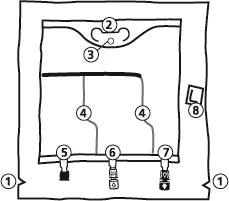
- Cut in the outer bag
- Bag handle
- Hanger hole
- Seals separating individual bag compartments
- Blind port (used only during manufacturing)
- Port for administration of additional substances
- Infusion port
- Oxygen absorber
| |
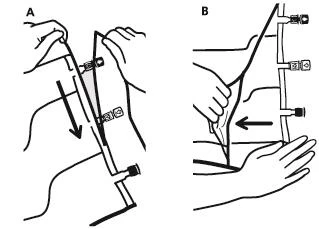 | |
- To remove the outer bag, lay it flat and starting from the slit near the ports, tear along the upper edge (A).
- Then tear the outer bag along the long edge, remove it and discard it together with the oxygen absorber (B).
2. Mixing
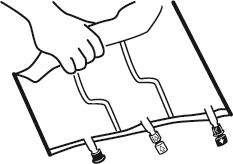
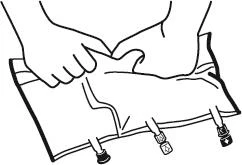
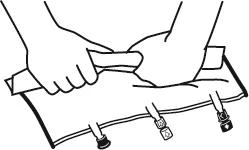
- Place the bag on a flat surface.
- Starting from the handle side, firmly roll the bag towards the ports, first using the right hand, then applying steady pressure with the left hand, until the vertical seals rupture. These open under fluid pressure. The seals may also be opened before removing the outer bag. Note: the solution mixes easily, even though the horizontal seal remains intact.
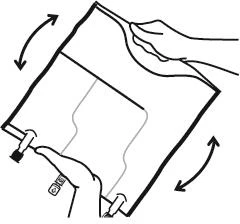
- Mix the contents of the three compartments by inverting the bag three times, which should ensure thorough mixing of the components.
| |
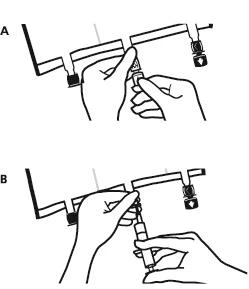 | |
- Place the bag back on a flat, level surface. Just before adding additional substances, remove the single-use closure cap marked with an arrow, which protects the white port for administration of additional substances (A).
Note: The membrane of the port for administration of additional substances is sterile.
- Hold the base of the port for administration of additional substances. Insert the needle and inject additional substances (known to be compatible) through the center of the injection site (B).
- After adding each component, mix the contents of the bag thoroughly by rotating the bag three times. Use syringes with needles of 18 to 23 G diameter and maximum length of 40 mm.
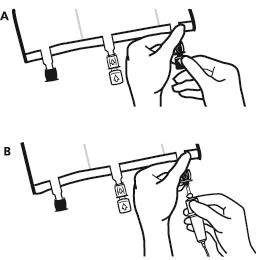
- Immediately before connecting the infusion set, remove the single-use closure cap protecting the blue infusion port (A). Note: The membrane of the infusion port is sterile.
- Use infusion sets without an air vent, or close the air vent if present.
- Hold the base of the infusion port.
- Insert the spike of the infusion set into the infusion port. To ensure proper fixation, insert the entire length of the spike. Note: The inner surface of the infusion port is sterile.
4. Hanging the bag
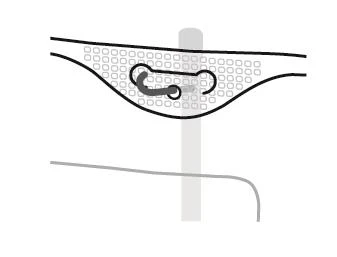
- Hang the bag using the hole located below the handle.