Skopryl plus
Poland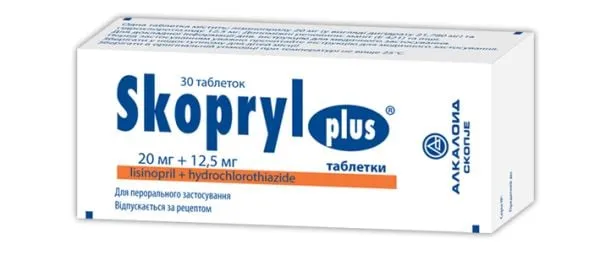
Table of Contents
Package leaflet: Information for the user
Skopryl Plus, 20 mg + 12.5 mg, tablets
Lisinoprilum + Hydrochlorothiazidum
Please read the entire leaflet carefully before taking this medicine, as it contains
important information for the patient.
- Keep this leaflet, as you may need to read it again.
- If you have any questions, please consult your doctor or pharmacist.
- This medicine has been prescribed for a specific individual. Do not pass it on to others. This medicine may harm others, even if their symptoms are the same.
- If you experience any adverse reactions, including any not listed in this leaflet, inform your doctor or pharmacist. See section 4.
Leaflet contents:
- What Skopryl Plus is and what it is used for
- Important information before taking Skopryl Plus
- How to take Skopryl Plus
- Possible side effects
- How to store Skopryl Plus
- Contents of the pack and other information
1. What Skopryl Plus is and what it is used for
Skopryl Plus tablets contain two active substances: lisinopril and hydrochlorothiazide. It is used for the treatment of high blood pressure (hypertension). If high blood pressure is not treated, the risk of heart disease and stroke increases.
Lisinopril belongs to a group of medicines called angiotensin-converting enzyme (ACE) inhibitors. It works by relaxing blood vessels, thereby lowering elevated blood pressure.
Hydrochlorothiazide belongs to a group of medicines called diuretics (water pills). It increases the amount of urine produced, helping the body eliminate excess fluid.
The combined effect of Skopryl Plus is to lower blood pressure, thereby reducing the risk of heart disease and stroke.
2. Information before taking Skopryl Plus
When not to take Skopryl Plus:
- If the patient is allergic to lisinopril and (or) hydrochlorothiazide, and (or) to any of the other components of this medicine (listed in section 6).
- If the patient has previously been treated with an ACE inhibitor and experienced an allergic reaction with symptoms such as swelling of the face, lips, tongue and (or) throat causing difficulty in swallowing or breathing (angioedema).
- If the patient is allergic to sulfonamide-derived medicines, such as certain antibiotics and antidiabetic drugs (if in doubt about which medicines are sulfonamide-derived, consult a doctor).
- If the patient has been diagnosed with hereditary or idiopathic angioedema (severe swelling of the skin, particularly around the eyes, lips, nose, tongue, larynx or hands). This means the patient was either born with this condition or the cause is unknown.
- After the third month of pregnancy (it is also advisable to avoid using Skopryl Plus in early pregnancy - see section "Pregnancy, breastfeeding and fertility").
- If the patient has severe liver function impairment.
- If the patient has severe kidney function impairment.
- If the patient is unable to pass urine (anuria).
- If the patient has high potassium levels in the blood.
- If the patient has diabetes or kidney function impairment and is being treated with a blood pressure-lowering medicine containing aliskiren.
- If the patient has taken or is currently using sacubitril with valsartan, a medicine used to treat certain types of chronic heart failure in adults, because the risk of angioedema (rapid swelling of tissues beneath the skin, such as in the throat) increases.
If any of the above points apply to the patient or if the patient has any doubts,
they should discuss this with their doctor.
Warnings and precautions
Before starting Skopryl Plus, discuss this with your doctor or pharmacist.
Tell your doctor if:
- The patient has or has had any health disorders, allergies or asthma.
- The patient has liver, kidney or heart disease.
- The patient has cerebrovascular disease (a group of diseases affecting blood flow and blood vessels in the brain).
- The patient has a certain heart condition called aortic or mitral valve stenosis.
- The patient is undergoing dialysis.
- The patient has received a kidney transplant.
- The patient has recently experienced severe vomiting or diarrhoea.
- The patient has been informed of abnormal blood levels of the following electrolytes and substances: potassium, calcium, urea, creatinine, uric acid, cholesterol or triglycerides.
- The patient has gout (painful joint swelling caused by accumulation of uric acid).
- The patient has systemic lupus erythematosus (a chronic autoimmune disease that can affect any part of the body).
- The patient develops jaundice (yellowing of the skin and (or) eyes).
- The patient has diabetes (the doctor may monitor the patient during the first month of treatment).
- The patient is pregnant, planning or suspects pregnancy. Use of Skopryl Plus is not recommended in early pregnancy and must not be taken after the third month of pregnancy, as it may severely harm the unborn child (see section "Pregnancy").
- The patient is taking any of the following medicines used to treat high blood pressure:
- An angiotensin II receptor antagonist (AIIRA), also known as a sartan – for example, valsartan, telmisartan, irbesartan, especially if the patient has kidney impairment related to diabetes,
- Aliskiren.
- Vision loss or eye pain occurs. These may be symptoms of fluid accumulation in the vascular layer surrounding the eye (excessive fluid accumulation between the choroid and sclera) or increased intraocular pressure – they may occur from several hours to weeks after taking Skopryl Plus. Without treatment, these symptoms may lead to complete vision loss. If the patient previously had an allergy to penicillin or sulfonamides, they may be at increased risk of developing these symptoms.
- If the patient previously had skin cancer or if unexpected skin changes occur during treatment. Treatment with hydrochlorothiazide, especially at high doses over a long period, may increase the risk of certain types of non-melanoma skin cancers and lip cancers. While taking Skopryl Plus, protect the skin from sunlight and UV radiation.
- If the patient previously experienced breathing or lung problems (including pneumonia or fluid accumulation in the lungs) after taking hydrochlorothiazide. If severe shortness of breath or breathing difficulties occur after taking Skopryl Plus, seek immediate medical help.
If the patient is taking any of the following medicines, the risk of angioedema
may increase:
- Racecadotril, a medicine used to treat diarrhoea.
- Medicines used to prevent organ transplant rejection and in cancer treatment (e.g. temsirolimus, sirolimus, everolimus).
- Wildagliptin, a medicine used to treat diabetes.
The doctor may recommend regular monitoring of kidney function, blood pressure and
electrolyte levels (e.g. potassium) in the blood.
See also the subsection "When not to take Skopryl Plus".
If the patient is undergoing desensitization treatment, i.e. treatment that reduces the effects
of allergy to bee or wasp venom, they should inform the doctor performing the procedure that they are taking
Skopryl Plus.
If the patient is undergoing LDL apheresis, a procedure that removes cholesterol
from the blood using a special device, they should inform the doctor performing the procedure that
they are taking Skopryl Plus.
Planned surgical procedure
Before any surgical procedure and anaesthesia (even at the dentist), the patient should
inform the doctor or dentist that they are taking Skopryl Plus, due to the possibility
of sudden drop in blood pressure.
Children and adolescents
Skopryl Plus is not intended for use in children.
Skopryl Plus and other medicines
Tell your doctor about all medicines the patient is currently taking or
has recently taken, as well as any medicines the patient plans to take. Skopryl Plus may affect
the action of other medicines, and other medicines may affect the action of Skopryl Plus.
The doctor may recommend changing the dose and (or) taking additional precautions:
- If the patient is taking an angiotensin II receptor antagonist (AIIRA) or aliskiren (see also subsections "When not to take Skopryl Plus" and "Warnings and precautions").
It is especially important to inform the doctor about taking any of the following
medicines:
- Insulin or tablets that lower blood sugar (medicines used to treat diabetes, such as wildagliptin).
- Medicines used to treat mental disorders, such as lithium salts or antipsychotics.
- Allopurinol – a medicine used to treat gout.
- Medicines used to treat cancer.
- Sotalol or procainamide – medicines used to treat heart rhythm disorders.
- Medicines used to treat indigestion (e.g. antacids).
- Medicines such as ephedrine, noradrenaline or epinephrine (adrenaline) used to treat hypotension, shock, heart failure, asthma or allergies.
- Sleeping pills or anxiolytics (sedatives).
- Cholestyramine, colestipol or lovastatin, used to treat hyperlipidaemia (high cholesterol levels in the blood).
- Diuretics (water tablets) – if the patient is already taking a diuretic, the doctor may recommend reducing its dose or even discontinuing it before starting Skopryl Plus.
- Other medicines used to treat high blood pressure, as they may enhance the blood pressure-lowering effect of Skopryl Plus.
- Steroids used to treat various diseases, including rheumatism, arthritis, allergic conditions, certain skin diseases, asthma or blood disorders.
- Non-steroidal anti-inflammatory drugs (NSAIDs) (a group of painkillers, e.g. indomethacin).
- Opioid painkillers (e.g. codeine, dextropropoxyphene, diacetylmorphine, morphine, pentazocine, pethidine).
- Immunosuppressants such as cyclosporine, used after organ transplantation and in the treatment of diseases such as rheumatoid arthritis.
- ACTH used in tests assessing adrenal gland function.
- Intravenous amphotericin B, a medicine used to treat fungal infections.
- Stimulant laxatives, medicines used to treat constipation.
- Cardiac glycosides such as digoxin, used to treat heart conditions.
- Potassium supplements (including salt substitutes), potassium-sparing diuretics (water tablets, particularly potassium-sparing diuretics) and other medicines that may increase potassium levels in the blood (e.g. trimethoprim and cotrimoxazole, a combination of trimethoprim and sulfamethoxazole, used for bacterial infections; cyclosporine, an immunosuppressant used to prevent organ transplant rejection; and heparin, a medicine used to thin the blood to prevent clots).
- Calcium supplements.
- Antidepressants and (or) antipsychotics.
- Gold salts administered by injection (used to treat rheumatoid arthritis).
- Tubocurarine (a muscle relaxant used during anaesthesia).
- Medicines most commonly used to prevent rejection of transplanted organs (sirolimus, everolimus and other mTOR inhibitors). See section "Warnings and precautions".
- Racecadotril, a medicine used to treat diarrhoea.
Remember that taking this medicine may affect blood and urine test results. You should
inform the doctor before each test that the patient is taking Skopryl Plus.
Skopryl Plus with food, drink and alcohol
This medicine can be taken regardless of meals. The effect of blood pressure-lowering
medicines may be enhanced when alcohol is consumed simultaneously, which may cause
dizziness or a "hollow" feeling in the head.
If the patient has any doubts about how much alcohol they can consume while taking Skopryl
Plus, they should consult their doctor.
Pregnancy, breastfeeding and fertility
If the patient is pregnant or breastfeeding, suspects they may be pregnant or plans to have
a child, they should consult their doctor or pharmacist.
Pregnancy
Inform the doctor about pregnancy, suspected pregnancy or planned pregnancy. The doctor will usually advise
discontinuing Skopryl Plus before planned pregnancy or immediately after confirming
pregnancy and will recommend taking another medicine instead of Skopryl Plus. Use of Skopryl Plus is not recommended in early pregnancy and must not be taken after the third month of pregnancy,
as it may severely harm the unborn child.
Breastfeeding
Inform the doctor about breastfeeding or plans to start breastfeeding. Use of Skopryl Plus is not recommended during breastfeeding. The doctor will recommend taking
another medicine if the patient wishes to breastfeed, especially if the baby is a newborn or
was born prematurely.
Driving and operating machinery
Skopryl Plus may mildly affect the ability to drive or operate machinery,
particularly at the beginning of treatment, after a dose change and when taken with alcohol.
When driving or operating machinery, consider that dizziness and fatigue may
occasionally occur.
3. How to take Skopryl Plus
This medicine should always be taken as directed by a doctor or pharmacist. In case of
doubt, consult a doctor or pharmacist.
The recommended dose is one tablet once daily. If necessary, the doctor may increase the dose to two
tablets once daily.
Skopryl Plus can be taken at any time of day, before, during, or after meals. It is advisable to choose a convenient time for taking the medicine and to take the tablet at the same time every day. This will help remember to take the medicine regularly.
Special caution is required after taking the first dose or after increasing the dose. If dizziness or a sensation of "emptiness" in the head occurs, inform the doctor immediately.
If the patient has previously been taking a diuretic, the doctor may recommend reducing its dose or even discontinuing it before starting Skopryl Plus.
Since the effect of Skopryl Plus lasts for 24 hours, the medicine is taken once daily.
The break line on the tablet is intended only to facilitate splitting the tablet for easier swallowing.
Taking more Skopryl Plus than recommended
If more Skopryl Plus has been taken than recommended, consult a doctor immediately or go to the emergency department of the nearest hospital.
The most likely symptoms of overdose are a sensation of "emptiness" in the head or dizziness caused by lowered arterial blood pressure.
If you forget to take Skopryl Plus
Do not take a double dose to make up for the missed dose. Take the next tablet at the usual time the following day.
Stopping Skopryl Plus
Continue taking the medicine for as long as your doctor recommends.
If you have any further doubts about using this medicine, consult your doctor or pharmacist.
4. Possible adverse reactions
Like all medicines, this medicine can cause adverse reactions, although not everyone experiences them.
The following terms are used to describe how often adverse reactions have been reported:
- Very common: affects at least 1 in 10 people
- Common: affects less than 1 in 10 people
- Uncommon: affects less than 1 in 100 people
- Rare: affects less than 1 in 1,000 people
- Very rare: affects less than 1 in 10,000 people
- Not known: frequency cannot be estimated from the available data
You must stop taking the tablets immediately and contact your doctor if the patient
experiences any of the following symptoms: swelling of the face, lips, tongue and (or) throat,
with difficulty swallowing or breathing. These may be symptoms of an allergic reaction. A severe
allergic reaction (anaphylactic reaction) may also occur.
The following adverse reactions have been observed:
Common: dizziness, headache, feeling faint when standing up quickly due to low blood pressure
(orthostatic hypotension) which may lead to fainting; cough, diarrhoea, vomiting, kidney disorders.
Uncommon: sensory disturbances, e.g. numbness and tingling, sensation of spinning, taste disturbances,
mood changes, sleep disturbances, heart attack or stroke in some patients (which may be due to low
blood pressure), fast heartbeat, palpitations, Raynaud's syndrome (symptoms include feeling cold in
the fingers and toes), sneezing and runny nose (rhinitis), nausea, abdominal pain, indigestion, rash,
itching, impotence, weakness and fatigue, changes in blood laboratory tests.
Rare: disorientation, dryness of the oral mucosa, urticaria, psoriasis (skin disease), hair loss,
skin redness, high blood urea levels, kidney disorders or kidney failure, breast enlargement in men,
low blood sodium levels which may cause weakness, fatigue, headache, nausea, vomiting and painful
muscle cramps.
Very rare: blood disorders which may cause fever or chills, sore throat, ulceration of the oral or
pharyngeal mucosa, weakness and fatigue, unusual bleeding or unexplained bruising; enlarged lymph
nodes, autoimmune disease (a condition in which the immune system attacks the body itself), low blood
sugar levels, wheezing, sinus pain, allergic pneumonia, pancreatitis, allergic reaction with intestinal
mucosal swelling (intestinal angioedema), hepatitis (causing nausea, fever and dark urine), jaundice
(yellowing of the skin and/or eyes), liver failure, excessive sweating, blister formation, skin disorders,
including redness and peeling of the skin, and occurrence of painful skin areas, changes in urine
volume, acute respiratory failure (symptoms include severe shortness of breath, fever, weakness and
confusion).
Very rare cases have also been reported of hepatitis progressing to liver failure in some patients. If
jaundice develops, you must inform your doctor immediately.
Cases of a condition characterized by a combination of symptoms including fever, muscle and joint
pains, and vasculitis have been reported. Photosensitivity and rash may also occur.
Other adverse reactions (frequency not known): depression, sudden flushing, pain and swelling of the
salivary glands, loss of appetite (anorexia), high blood sugar levels, presence of sugar in urine,
increased blood uric acid levels, electrolyte imbalance, increased blood cholesterol levels, gout,
akathisia (restless movement), xanthopsia (colour vision disorder in which yellow vision predominates),
transient blurred vision, visual impairment or eye pain due to increased pressure (possible symptoms of
fluid accumulation in the avascular membrane surrounding the eye (excessive fluid accumulation between
the choroid and sclera) or acute angle-closure glaucoma), vertigo (spinning sensation), vasculitis,
pulmonary oedema, constipation, photosensitivity, skin and lip malignancies (non-melanoma skin cancers),
unusual bleeding or subcutaneous bruising, gastric irritation, lupus-like reactions, reactivation of systemic
lupus erythematosus (an autoimmune disease), muscle cramps, muscle weakness, interstitial nephritis
(kidney inflammation), fever.
If any of the adverse reactions worsen or if any adverse reactions not listed in this leaflet occur, you must
immediately inform your doctor or pharmacist. It is important that the patient records which symptoms
occurred, when they occurred, and how long they lasted.
Reporting of adverse reactions
If any adverse reactions occur, including any adverse reactions not listed in this leaflet, inform your
doctor, pharmacist, or nurse. Adverse reactions can be reported directly to the Department of Monitoring
Adverse Drug Reactions of the Office for Registration of Medicinal Products, Medical Devices and
Biocidal Products, Al. Jerozolimskie 181C, 02-222 Warsaw
tel.: 22 49-21-301, fax: 22 49-21-309, Website: https://smz.ezdrowie.gov.pl
Adverse reactions can also be reported to the marketing authorization holder.
Reporting adverse reactions helps provide more information on the safety of the medicine.
5. How to store Skopryl Plus
No special precautions for storage of the medicinal product are required.
The medicine should be stored out of sight and reach of children.
Do not use this medicine after the expiry date stated on the packaging after "EXP".
The expiry date refers to the last day of the stated month.
Do not use this medicine if you notice that the packaging is damaged.
Medicines must not be disposed of via wastewater or household waste. Ask your pharmacist how to dispose of medicines no longer required. This will help protect the environment.
6. Contents of the package and other information
What Skopryl Plus contains
- The active substances are lisinopril and hydrochlorothiazide. One tablet contains 20 mg of lisinopril (as lisinopril dihydrate) and 12.5 mg of hydrochlorothiazide.
- Other ingredients are: mannitol, calcium hydrogen phosphate anhydrous, maize starch, pregelatinized maize starch, povidone (K 25), magnesium stearate and brown iron oxide 75 (E 172) (contains black iron oxide and red iron oxide).
What Skopryl Plus looks like and contents of the pack
Light brown-violet, round, biconvex tablets with a break line on one side. The diameter of the tablet is approximately 9 mm.
The break line on the tablet is intended only to facilitate breaking the tablet for easier swallowing.
Medicinal product Skopryl Plus, 20 mg + 12.5 mg, tablets is available in packs of 30 tablets.
Marketing Authorisation Holder and Manufacturer
Alkaloid – INT d.o.o.
Šlandrova ulica 4
1231 Ljubljana-Črnuče
Slovenia
tel.: +386-1-300-4290
fax: +386-1-300-4291
e-mail: [email protected]
This medicinal product is authorised for marketing in the European Economic Area countries under the following names:
Bulgaria Skopryl plus (Скоприл плюс) 20 mg/12.5 mg tablets (таблетки)
Czech Republic SKOPRYL PLUS H 20 mg/12.5 mg tablety
Hungary Skopryl plus 20 mg/12.5 mg tabletta
Poland Skopryl plus
Slovenia Skopryl HCT 20 mg/12.5 mg tablete
Romania Skopryl Plus 20 mg/12.5 mg comprimate