Bcg vaccine 10
PolandTable of Contents
- Package leaflet: Information for the user
- 1. What BCG 10 Tuberculosis Vaccine is and what it is used for
- 2. Important information before using BCG 10 Tuberculosis Vaccine
- 3. How to use BCG 10 Tuberculosis Vaccine
- 4. Possible adverse reactions
- 5. How to store BCG 10 tuberculosis vaccine
- 6. Contents of the package and other information
- Information intended exclusively for medical professionals
Package leaflet: Information for the user
BCG 10 Tuberculosis Vaccine
Powder and solvent for preparation of suspension for intradermal injection
Vaccinum tuberculosis (BCG) cryodesiccatum
Lyophilized tuberculosis (BCG) vaccine
10-dose vaccine
Please read all of this leaflet carefully before this vaccine is administered, because it contains important information for you.
- Keep this leaflet, as you may need to read it again.
- If you have any further questions, please ask your doctor, pharmacist or nurse.
- This vaccine has been prescribed for a specific individual. Do not pass it on to others.
- If you experience any adverse reactions after vaccination, including any adverse reactions not listed in this leaflet, tell your doctor, pharmacist or nurse. See section 4.
Contents of the leaflet
- What BCG 10 Tuberculosis Vaccine is and what it is used for
- Important information before using BCG 10 Tuberculosis Vaccine
- How to use BCG 10 Tuberculosis Vaccine
- Possible side effects
- How to store BCG 10 Tuberculosis Vaccine
- Contents of the pack and other information
1. What BCG 10 Tuberculosis Vaccine is and what it is used for
BCG 10 Tuberculosis Vaccine is available as a powder and solvent for preparation of a suspension for intradermal injection. BCG 10 Tuberculosis Vaccine contains live, attenuated bacteria derived from the BCG (Bacillus Calmette-Guérin) bovine bacillus strain, Moreau sub-strain.
The vaccine is intended for preventive vaccination against tuberculosis.
Vaccinations in Poland are mandatory and carried out according to the National Immunization Program approved annually by the Minister of Health.
If a child has not been vaccinated at birth, vaccination should be performed as early as possible, but no later than completion of the 15th year of life.
Booster doses of the BCG vaccine are not recommended for tuberculosis immunization.
2. Important information before using BCG 10 Tuberculosis Vaccine
When not to use BCG 10 Tuberculosis Vaccine
- BCG vaccination should not be performed:
- in individuals with known hypersensitivity to any component of the vaccine;
- in newborns with birth weight below 2000 g;
- in newborns of HIV-infected mothers until HIV infection in the infant has been excluded;
- in newborns with suspected congenital immunodeficiency disorders;
- in newborns of mothers treated during the third trimester of pregnancy with drugs such as monoclonal antibodies against TNF-alpha;
- in individuals infected with HIV (confirmed or suspected infection, even if asymptomatic);
- in individuals with primary or secondary immunodeficiency (including interferon gamma deficiency or DiGeorge syndrome);
- in individuals undergoing radiotherapy;
- in individuals treated with corticosteroids or undergoing immunosuppressive therapy (including treatment with monoclonal antibodies against TNF-alpha such as infliximab);
- in individuals with malignant diseases (e.g. leukemia, Hodgkin's disease, lymphoma or other reticuloendothelial system tumors);
- in patients after bone marrow stem cell transplantation or organ transplantation;
- in individuals with severe diseases (including severe malnutrition);
- during pregnancy; in individuals who have had tuberculosis or in individuals with a large (greater than 5 mm) tuberculin skin test reaction (RT23).
- Vaccination should be postponed in the following cases:
- in newborns with unstable clinical condition until general health improves (vaccination should be administered before discharge from the neonatal unit);
- during infections with fever;
- during exacerbation of chronic disease;
- in case of generalized skin infections.
Prematurity is not a contraindication to vaccination; vaccination is recommended in this group of patients after reaching a body weight of 2000 g.
Warnings and precautions
BCG 10 Tuberculosis Vaccine must be administered intradermally only.
Consider the risk of apnea and the need for respiratory function monitoring for 48 to 72 hours when administering the vaccine to very premature infants (born ≤28th week of gestation), especially in infants with symptoms of respiratory immaturity. Due to the significant benefits of vaccinating this group of infants, vaccination should not be omitted or delayed.
Postpone administration of BCG vaccine in newborns whose mothers received anti-TNF therapy or other potentially immunosuppressive IgG1 antibodies during pregnancy. The timing of vaccination will be determined by the physician.
BCG 10 Tuberculosis Vaccine and other medicines
Intradermal BCG vaccination may be administered simultaneously with inactivated or attenuated vaccines.
If live microorganism-containing vaccines are not administered at the same time as BCG vaccine, at least a 4-week interval should be maintained between vaccinations.
BCG vaccination should be postponed by 4 weeks if another live vaccine was administered previously.
The interval between a live microorganism-containing vaccine and a non-live vaccine is arbitrary, provided that an appropriate interval is maintained to avoid overlapping of potential adverse post-vaccination reactions with subsequent vaccinations.
Vaccines administered at the same time should not be injected into the left arm reserved for BCG vaccine.
Do not vaccinate in the left arm for at least 3 months after BCG administration due to the risk of developing regional lymphadenitis.
Pregnancy and breastfeeding
This vaccine should not be used during pregnancy.
Breastfeeding is not a contraindication for BCG vaccination.
Driving and using machines
BCG 10 Tuberculosis Vaccine has no effect or has a negligible effect on the ability to drive and use machines.
3. How to use BCG 10 Tuberculosis Vaccine
Vaccination must be performed by personnel specially trained in intradermal injection.
BCG 10 Tuberculosis Vaccine must be administered intradermally only!
Instructions for the preparation of the BCG 10 Tuberculosis Vaccine suspension and administration of the vaccine are provided in the section: Information intended exclusively for healthcare professionals, located at the end of this leaflet.
According to World Health Organization recommendations, the BCG vaccine should be administered to the mid-portion of the left upper arm (deltoid region).
Injection of the vaccine into the upper part of the arm may lead to keloid formation.
Within 2–4 weeks after vaccination, an infiltration develops at the injection site in 90–95% of vaccinated individuals, lasting for several weeks. Typically, a pustule forms at the peak of infiltration, followed by an ulcer, usually 2–5 mm in diameter and not exceeding 10 mm. The lesion heals spontaneously within 2–3 months after vaccination, leaving a whitish scar measuring several millimeters in diameter.
In some individuals, serous fluid may exude from the pustule for a prolonged period; this is not a complication and does not require medical treatment, but the area should be kept clean.
Administration of a higher than recommended dose of BCG 10 Tuberculosis Vaccine
An increased vaccine dose leads to a significant rise in the number of post-vaccination lymph node complications.
4. Possible adverse reactions
Like any medicinal product, this vaccine may cause adverse reactions, although not everybody will
experience them. Local reaction at the injection site: swelling, blister, ulceration sometimes with
serous fluid discharge, usually resolves spontaneously within 3 months after vaccination and does not
require treatment.
Enlargement of regional lymph nodes, most frequently axillary, up to 15 mm in vaccinated individuals
is considered an expected, normal post-vaccination reaction.
Severe local reactions such as:
- large ulceration (diameter greater than 1 cm),
- abscess or keloid (scar), are most frequently associated with errors in vaccination technique, incorrect dosage, or individual reaction (e.g. positive tuberculin skin test - RT23).
If local reaction occurs within 24-48 hours after BCG vaccination and an abscess develops (within
5-7 days), previous tuberculosis infection may be suspected.
Injection of the vaccine too superficially, into the upper part of the deltoid muscle, increases the risk
of keloid (scar) formation.
In case of severe local reactions or regional lymphadenitis, medical consultation is required, followed
by individual decision on further management; however, treatment is usually not necessary as these
reactions resolve spontaneously.
Severe systemic reactions following BCG vaccination are very rare (approximately 2/1,000,000)
and usually occur in individuals with immune disorders.
Disseminated BCG infection requires specialist consultation, bacteriological and immunological
diagnostic evaluation, and anti-tuberculosis treatment in hospital conditions.
In case of post-vaccination lesions which the pediatrician considers a vaccination complication, the
child should be referred to a consultant who will establish the final diagnosis and recommend further
management.
In preterm infants (born at 28 weeks of gestation or earlier), prolonged breathing pauses may
occur within 2-3 days after vaccination.
Tabulated list of adverse reactions
The table below has been prepared according to the MedDRA system organ classification
(system organ classes and preferred terms).
Frequency of occurrence was assessed according to the following criteria: very common (>1/10), common (>1/100 to <1/10), uncommon (>1/1,000 to <1/100), rare (>1/10,000 to <1/1,000), very rare (<1/10,000), unknown (frequency cannot be estimated based on available data).
| MedDRA system organ classes | Adverse reaction | Frequency |
| Infections and infestations | Impetigo/impetiginous pustule at injection site | Not known (frequency cannot be estimated from available data) |
| Injection site abscess | ||
| Disseminated BCG infection with osteitis | ||
| Osteomyelitis | ||
| Blood and lymphatic system disorders | Lymph node pain | |
| Lymph node necrosis | ||
| Lymphadenopathy | ||
| Lymphadenitis/pyogenic lymphadenitis | ||
| Psychiatric disorders | Anxiety | |
| Respiratory, thoracic and mediastinal disorders | Apnoea in very premature infants (born ≤ 28 weeks of gestation) | |
| Skin and subcutaneous tissue disorders | Scar (keloid) | |
| General disorders and administration site conditions | Fever | |
| Ulceration at injection site |
Reporting of adverse reactions
If any adverse reactions occur, including any adverse reactions not listed
in the leaflet, inform a doctor, pharmacist, or nurse. Adverse reactions
can be reported directly to the Department of Monitoring Adverse Reactions of Medicinal Products
of the Office for Registration of Medicinal Products, Medical Devices and Biocidal Products.
Al. Jerozolimskie 181C
02-222 Warsaw
Tel.: + 48 22 49 21 301
Fax: + 48 22 49 21 309
Website: https://smz.ezdrowie.gov.pl
Adverse reactions can also be reported to the responsible entity.
By reporting adverse reactions, more information on the safety of the medicine can be collected.
5. How to store BCG 10 tuberculosis vaccine
Keep out of the sight and reach of children.
Do not use this vaccine after the expiry date stated on the packaging. The expiry date refers to the last day of the stated month.
Store the vaccine in the refrigerator (2°C - 8°C). To protect from light, keep the ampoules or vials in the outer packaging.
Medicines must not be disposed of via wastewater or household waste. Ask your pharmacist how to dispose of medicines no longer required. Proper disposal helps protect the environment.
Batch number (Lot)
Expiry date (EXP)
6. Contents of the package and other information
What Szczepionka przeciwgruźlicza BCG 10 contains
- The active substance is live BCG bacilli (Bacillus Calmette-Guérin), Brazilian Moreau substrain. One dose (0.1 ml) contains: 50 micrograms (from 150,000 to 600,000) of semidry BCG bacilli mass.
One vial or ampoule of powder (10 doses) contains:
0.5 mg (from 1.5 million to 6 million) live BCG bacilli.
- The excipient is: monosodium glutamate. One ampoule of solvent contains: 1.0 ml of isotonic sodium chloride solution.
What Szczepionka przeciwgruźlicza BCG 10 looks like and contents of the pack
Before reconstitution, the powder in the ampoule or vial is dry, amorphous, white or light cream in colour.
After reconstitution, a uniform, slightly opalescent suspension is formed, without any visible clumps or flakes.
The vaccine should be used immediately after reconstitution.
Packaging
5 vials of powder and 5 ampoules of solvent, 1 ml each
1 vial of powder and 1 ampoule of solvent, 1 ml each
5 vials of powder and 5 ampoules of solvent, 1 ml each
1 vial of powder and 1 ampoule of solvent, 1 ml each
Marketing Authorisation Holder and Manufacturer
Synthavesre S.A.
20-029 Lublin, ul. Uniwersytecka 10
Tel. 81 533 82 21
fax 81 533 80 60
e-mail [email protected]
Information intended exclusively for medical professionals
Before using the vaccine, check the label for: vaccine type, number of doses in the vial or ampoule, and expiry date. Additionally, verify and ensure that the vaccine in the form of a dry powder is entirely located at the bottom of the ampoule or vial.
The neck of the ampoule containing the solvent and the ampoule with the powder, as well as the vial before and after scoring, and the vial before and after removing the plastic cap, should be thoroughly disinfected with a swab moistened with 70% ethyl alcohol, and left to dry completely.
After opening the ampoule or after piercing the rubber stopper of the vial containing the powder, introduce exactly 1 ml of isotonic sodium chloride solution into the ampoule or vial using a syringe.
The solvent should be introduced gently along the wall of the ampoule or vial. Then, withdraw the entire contents into the syringe and gently reintroduce them back into the ampoule or vial, avoiding foaming. Repeat this procedure until a uniform suspension is obtained.
The suspension drawn into the syringe should be homogeneous and slightly opalescent.
Visual inspection of the vaccine both before and after reconstitution is recommended to exclude the possibility of fibres or clumps.
The vaccine should be used immediately after reconstitution.
Only one dose of vaccine (0.1 ml) for one child should be drawn into the syringe.
The vaccine must be administered using a special tuberculin syringe with a well-fitting needle.
Before vaccination, disinfect the skin at the injection site with alcohol and wait until it is completely dry.
Grasp the skin with the thumb and index finger of one hand, and insert the needle obliquely to a depth of approximately 2 mm beneath the upper layer of skin, almost parallel to its surface.
The vaccine should be administered intradermally into the outer upper third of the left upper arm.
After administering 0.1 ml of BCG vaccine and correct injection technique, an intradermal bleb of approximately 7 mm in diameter should appear on the arm.
N o t e s
- All procedures related to opening ampoules or piercing vial stoppers, introducing solvent, and reconstituting the vaccine must be performed to avoid contamination.
- Only single-use needles and syringes should be used for BCG vaccination.
- Any unused remnants of the medicinal product or waste materials must be disposed of in accordance with local regulations.
Instructions for preparing the suspension of BCG 10 Vaccine
Correct preparation of BCG 10 Vaccine suspension:
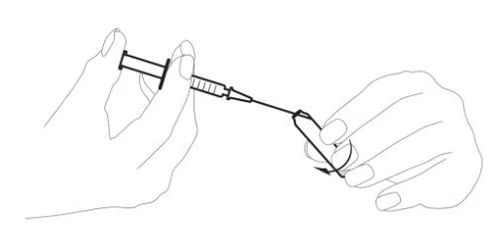
- After opening the ampoule, introduce the solvent gently along the upper inner wall of the ampoule while gently rotating it.
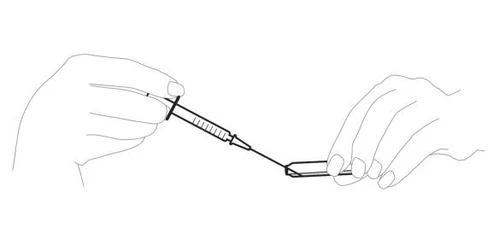
- Withdraw the entire contents into the syringe, avoiding foaming and shaking.
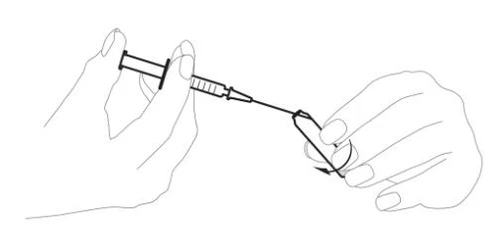
- Reintroduce the contents back into the ampoule gently along the upper inner wall, while gently rotating the ampoule.
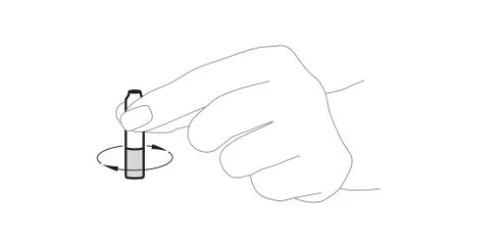
Avoid shaking and foaming.
- Gently swirl the suspension in the ampoule in a circular motion.
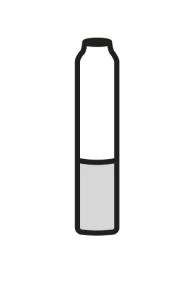
- Repeat steps 2 to 4 until a uniform suspension is obtained.
Incorrect preparation of BCG 10 Vaccine suspension:
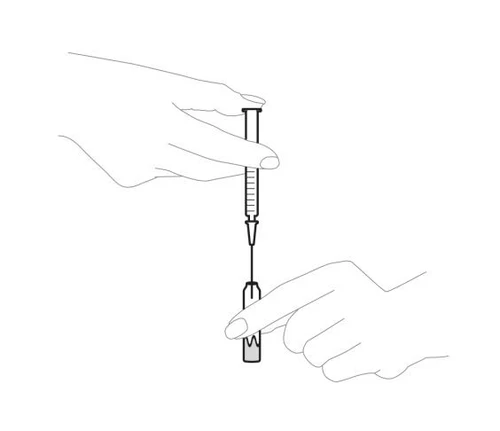
Do not introduce the solvent as a strong stream into the ampoule!
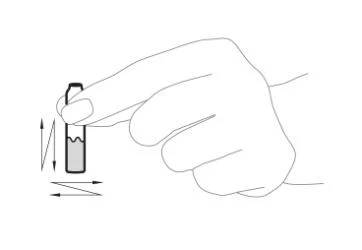
Do not shake!
Avoid foaming of the suspension in the ampoule.
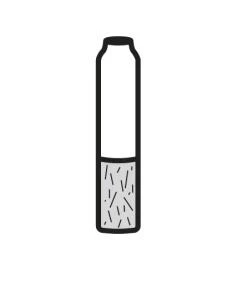
Shaking and foaming may lead to the formation of clumps and flakes.
Proper handling allows obtaining a uniform suspension of BCG 10 Vaccine.
If clumps or flakes are present, discard the ampoule/vial.