Sevorane
Poland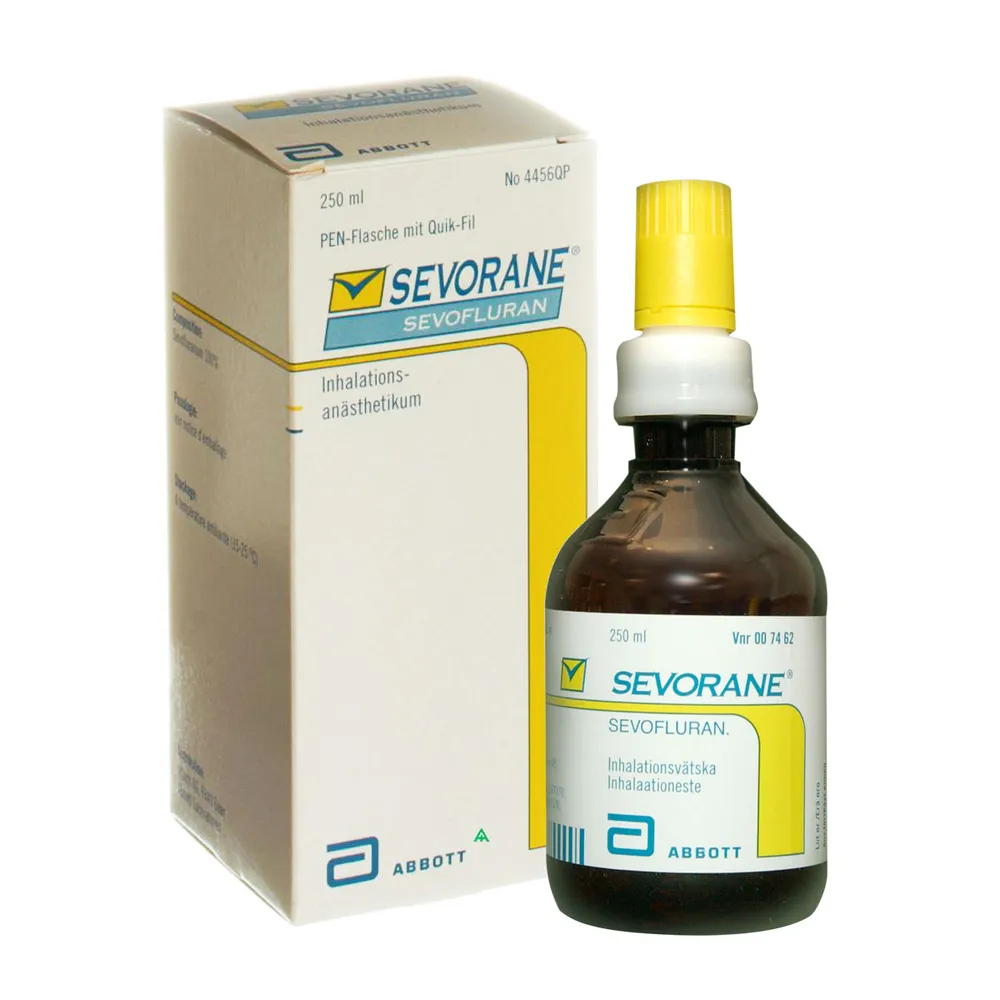
Table of Contents
- Package leaflet: Information for the patient
- 1. What Sevorane is and what it is used for
- 2. Important information before using Sevorane
- 3. How to use Sevorane
- 4. Possible adverse reactions
- 5. How to store Sevorane
- 6. Contents of the packaging and other information
- Information intended solely for healthcare professionals
Package leaflet: Information for the patient
Sevorane, 100%, inhalation liquid
Sevofluranum
Please read all of this leaflet carefully before using this medicine, because it contains
important information for you.
- Keep this leaflet, so that you can read it again if necessary.
- If you have any further questions, please ask your attending physician, surgeon or anaesthesiologist.
- If you experience any adverse reactions, including any not listed in this leaflet, tell your doctor or pharmacist. See section 4.
Contents of the leaflet
- What Sevorane is and what it is used for
- Important information before using Sevorane
- How to use Sevorane
- Possible side effects
- How to store Sevorane
- Contents of the pack and other information
1. What Sevorane is and what it is used for
Sevorane is an inhaled (breathed in by the patient) anaesthetic medicine, available as a liquid. The active substance is sevoflurane – the only component of the medicine. In a special device (vaporizer), the medicine is converted into a gas, which is then inhaled by the patient mixed with oxygen or a mixture of oxygen and nitrous oxide.
Sevorane may only be administered by an anaesthesiologist or under the supervision of an anaesthesiologist.
Sevorane is used to induce deep sleep and loss of pain sensation (general anaesthesia) in adults and children undergoing surgical procedures in hospital and outpatient settings.
2. Important information before using Sevorane
Sevorane should be administered only by an anaesthesiologist or under the supervision of an anaesthesiologist by personnel trained in the administration of general anaesthesia. Immediate access to equipment for maintaining airway patency, artificial ventilation, oxygen supply, and cardiopulmonary resuscitation must be ensured.
When not to use Sevorane
- If the patient or any member of their family has experienced a disorder called malignant hyperthermia (very high fever with hypertension, muscle rigidity, and tachycardia) during or shortly after surgery.
- If the patient has known or suspected hypersensitivity (allergy) to Sevorane or to any other halogenated general anaesthetic agent.
- If general anaesthesia is contraindicated.
If any of the above points apply to the patient, the anaesthesiologist performing the anaesthesia must be informed before the procedure.
Warnings and precautions
Special caution is required if:
- The patient has previously received general anaesthetic agents, especially if administered repeatedly within a short time interval, as some anaesthetics may occasionally cause liver damage, manifested, among others, by jaundice (yellowing of the skin).
- The patient is taking medications that may cause liver disorders.
- The patient has any other disease unrelated to surgery:
○ kidney disease,
○ heart disease, including congenital long QT syndrome,
○ liver function disorders,
○ abnormal blood pressure,
○ increased intracranial pressure,
○ neuromuscular disorders (e.g. Duchenne muscular dystrophy),
○ Pompe disease (a genetic disorder of glycogen metabolism), particularly in children,
○ mitochondrial disease (a genetic disorder caused by abnormalities in mitochondrial function and structure). - The patient has hypovolemia (reduced circulating blood volume), hypotension, or other hemodynamic disorders (affecting blood circulation).
- The patient has a tendency to seizures (especially in children and young adults).
If any of the above warnings apply to the patient, this must be reported to the physician. The physician will decide whether Sevorane can be used.
Special caution is required because Sevorane:
- May depress respiratory function and thereby potentiate the effects of narcotic drugs or other respiratory depressants used during preoperative preparation. The physician should monitor the patient's respiratory function and, if necessary, support respiration.
- May cause postoperative liver function disorders (ranging from mild to severe) or hepatitis with or without jaundice. The risk of liver damage increases with prior use of inhaled halogenated general anaesthetics, especially if administered less than three months apart.
- May cause life-threatening malignant hyperthermia. Inform the physician if this condition has occurred in the patient or any family member in the past (see section "When not to use Sevorane").
- May, in rare cases, similarly to other inhaled anaesthetic agents, cause increased serum potassium concentration, which has been associated with postoperative cardiac arrhythmias and deaths in children.
Sevorane and other medicines
Inform the physician about all medicines currently used or recently used by the patient, including those available without a prescription. This also includes herbal medicines and dietary supplements.
Sevorane can be used with the following medicines commonly administered during surgical procedures:
- Central nervous system acting agents (barbiturates, benzodiazepines, opioids),
- Autonomic nervous system acting agents (the system controlling metabolism and proper function of internal organs),
- Skeletal muscle relaxants (pancuronium, vecuronium, atracurium),
- Antibacterial agents (including aminoglycoside antibiotics),
- Hormonal agents,
- Blood products,
- Cardiovascular agents (including adrenaline).
However, caution is required when Sevorane is administered concomitantly with:
- Adrenergic agents such as isoprenaline, adrenaline, and noradrenaline due to the possible risk of ventricular arrhythmias, and indirectly acting sympathomimetics (e.g. amphetamine and ephedrine), due to the risk of acute hypertensive episode.
- Non-selective MAO inhibitors, as hypertensive crisis may occur during surgery. Therefore, it is recommended to discontinue non-selective MAO inhibitor therapy two weeks before surgery.
- Beta-adrenergic blocking agents, commonly used in the treatment of cardiovascular diseases.
- Calcium antagonists, especially dihydropyridine derivatives, because sevoflurane may cause significant hypotension, and verapamil, because concomitant administration has been associated with atrioventricular conduction disturbances.
- Substances inducing the CYP2E1 isoenzyme, such as isoniazid and alcohol, because they may increase sevoflurane metabolism and lead to significant increases in serum fluoride concentrations. Concurrent use of sevoflurane and isoniazid may enhance the hepatotoxic effects of isoniazid.
- St. John's wort (Hypericum perforatum), as severe hypotension and prolonged emergence from anaesthesia have been reported in patients using St. John's wort chronically when receiving halogenated inhaled anaesthetics.
If any of the above apply to the patient, inform the treating physician or anaesthesiologist.
Pregnancy, breastfeeding, and effects on fertility
If the patient is pregnant or suspects she may be pregnant, she must inform the physician, surgeon, or anaesthesiologist. In pregnant women, Sevorane should only be used if absolutely necessary due to lack of clinical data.
If the patient is breastfeeding, she must inform the physician. The physician will advise discontinuation of breastfeeding for 48 hours after administration of Sevorane and discard milk produced during this period.
Driving and operating machinery
Sevorane may cause temporary impairment of psychomotor performance. Therefore, patients should not drive motor vehicles or operate machinery until these effects have subsided.
3. How to use Sevorane
The dose of Sevorane administered to a patient is determined by the anaesthesiologist. It depends on the patient's age, body weight, and type of surgical procedure.
Sevorane is an inhaled (inhalational) anaesthetic gas. Sevorane is available as a liquid which is then converted into a vapour using a vapouriser specifically calibrated for sevoflurane. This allows precise control of the administered drug concentration.
4. Possible adverse reactions
Like all medicines, this medicine can cause adverse reactions, although they do not occur in everyone.
Most adverse reactions are mild or moderate in severity and transient.
Very common (occurring in more than 1 in 10 patients):
- adult patients: hypotension, nausea and vomiting;
- elderly patients: bradycardia, hypotension and nausea;
- children: agitation, cough, vomiting and nausea.
Common (occurring in 1 to 10 in 100 patients):
- confusion,
- drowsiness,
- dizziness,
- headache,
- tachycardia,
- hypertension,
- respiratory disorders,
- laryngospasm,
- excessive salivation,
- shivering,
- fever,
- abnormal blood glucose levels,
- abnormal liver function tests,
- abnormal white blood cell count,
- transient increase in serum fluoride concentration (a breakdown product of the medicine). (Transient increase in serum inorganic fluoride concentration may occur during and after anaesthesia with Sevorane. This does not affect kidney function.),
- hypothermia (significant decrease in body temperature).
Uncommon (occurring in 1 to 10 in 1,000 patients):
- complete atrioventricular block (a type of heart rhythm disorder).
Other adverse reactions reported after marketing of Sevorane, with unknown frequency:
- anaphylactic reaction (severe allergic reaction which may lead to life-threatening shock),
- anaphylactoid reaction (similar to the above, but with a different mechanism of occurrence),
- hypersensitivity,
- convulsions,
- dystonia (muscle tone disorders),
- cardiac arrest (in isolated cases),
- bronchospasm,
- dyspnea,
- wheezing,
- hepatitis,
- liver failure,
- hepatic necrosis,
- contact dermatitis,
- pruritus,
- rash,
- facial swelling,
- urticaria,
- chest discomfort,
- malignant hyperthermia (manifested, among others, by very high fever),
- QT interval prolongation (an electrical heart disturbance resulting in changes on ECG) associated with ventricular tachycardia torsade de pointes (a life-threatening irregular heartbeat).
After administration of Sevorane
The patient wakes up within a few minutes.
If any unusual or unexpected adverse symptoms occur after anaesthesia, the attending physician or anaesthesiologist should be informed immediately.
If you have any questions about Sevorane not answered in this leaflet, please consult your attending physician or anaesthesiologist.
Reporting of adverse reactions
If any adverse reactions occur, including any adverse reactions not listed in this leaflet, inform your attending physician, anaesthesiologist, pharmacist, or nurse. Adverse reactions can be reported directly to the Department of Monitoring Adverse Drug Reactions at the Office for Registration of Medicinal Products, Medical Devices and Biocidal Products:
Al. Jerozolimskie 181C
02-222 Warsaw
Phone: 22 49-21-301
Fax: 22 49-21-309
Website: https://smz.ezdrowie.gov.pl
Adverse reactions may also be reported to the responsible entity.
Reporting adverse reactions helps to provide more information on the safety of the medicine.
5. How to store Sevorane
The medicine should be stored out of the sight and reach of children.
There are no special storage requirements for this medicine.
Do not use this medicine after the expiry date (EXP) stated on the packaging. The expiry date refers to the last day of the stated month.
Medicines should not be disposed of via wastewater or household waste. Ask your pharmacist what to do with medicines no longer required. Such measures help protect the environment.
6. Contents of the packaging and other information
What Sevorane contains
Sevorane contains only sevoflurane. It does not contain any excipients or chemical stabilizers.
The water present in the medicine in trace amounts protects it against Lewis acids (substances present in the environment that may cause degradation of sevoflurane).
What Sevorane looks like and contents of the packaging
Sevorane is a clear, colourless liquid. The medicine is supplied in 250 ml bottles made of polyethylene naphthalate (PEN) with a Quik-Fil Mark II closure, packed in a cardboard box.
Marketing Authorisation Holder and Manufacturer
Marketing Authorisation Holder
AbbVie Sp. z o.o.
ul. Postępu 21B
02-676 Warsaw
Poland
Manufacturer
AbbVie S.r.l.
S.R. 148 Pontina km 52 SNC
04011 Campoverde di Aprilia (LT)
Italy
For further information, please contact the Marketing Authorisation Holder:
AbbVie Sp. z o.o.
ul. Postępu 21B
02-676 Warsaw
Poland
Tel.: + 48 22 372 78 00
Sevorane, 100%, inhalation liquid
Sevofluranum
Information intended solely for healthcare professionals
A detailed product information (Summary of Product Characteristics) should be consulted,
which is available on the website of the Office for Registration of Medicinal Products, Medical Devices
and Biocidal Products.
INSTRUCTIONS FOR THE ADMINISTERING PHYSICIAN
Warnings and precautions
See also section 2 of the patient leaflet.
QT interval prolongation
There have been isolated reports of QT interval prolongation, very rarely associated with
ventricular tachycardia of the torsade de pointes type (in exceptional cases leading to death).
Caution should be exercised when administering sevoflurane to patients who are susceptible to such
disturbances (e.g. patients with congenital long QT syndrome).
Malignant hyperthermia
In susceptible individuals, potent inhaled general anaesthetics, including sevoflurane, may trigger
an increased metabolism in skeletal muscles, leading to increased oxygen demand and a clinical
syndrome known as malignant hyperthermia.
Hypercapnia is the first sign of this syndrome, which may present with muscle rigidity, tachycardia,
increased respiratory rate, cyanosis, cardiac arrhythmias, and/or fluctuations in arterial blood pressure.
Some of these non-specific signs may also occur during light anaesthesia, acute hypoxia, hypercapnia,
and hypovolemia.
One case of malignant hyperthermia was reported in clinical trials. Additionally, cases of malignant
hyperthermia have been reported after the drug was introduced to the market. In some of these cases,
patient death occurred.
Treatment of malignant hyperthermia consists of discontinuing the triggering agent (e.g. sevoflurane),
intravenous administration of sodium dantrolene (additional information on patient management can
be found in the dantrolene sodium product information), and supportive therapy. This therapy involves
vigorous measures to restore normal body temperature, support respiration and circulation as needed,
and correction of water-electrolyte and acid-base imbalances.
Due to the risk of delayed renal failure, urine output should be monitored and maintained.
Perioperative hyperkalaemia
The use of inhaled anaesthetics has been associated with rare cases of increased serum potassium
concentration, leading to postoperative cardiac arrhythmias and deaths in children. The greatest risk
appears to be in patients with latent or overt neuromuscular disorders, especially Duchenne muscular
dystrophy. The majority, although not all, of these cases were associated with the concomitant use of
succinylcholine. In these patients, a marked increase in serum creatine kinase activity has also been
observed, and in some cases, urine changes indicating myoglobinuria. Despite the similarity of symptoms
to those observed in malignant hyperthermia, none of the patients exhibited objective or subjective
signs of muscle rigidity or a hypermetabolic state. Early and aggressive intervention is recommended,
consisting of treatment of hyperkalaemia and persistent cardiac arrhythmias, followed by evaluation
for latent neuromuscular disorders.
General warnings
Increasing the concentration of sevoflurane during maintenance of anaesthesia causes a dose-dependent
decrease in arterial blood pressure. Excessive reduction in blood pressure may be related to the depth
of anaesthesia and can be corrected by reducing the concentration of inhaled sevoflurane. Particular
caution is advised in patients with hypovolemia, hypotension, or other hemodynamic disturbances,
e.g. caused by concomitant medications.
As with all general anaesthetics, in patients with coronary artery disease, it is essential to maintain
stable hemodynamic parameters to prevent myocardial ischemia.
Before transferring the patient from the post-anaesthesia care unit, the level of emergence from general
anaesthesia should be thoroughly assessed.
Recovery of consciousness after sevoflurane administration usually occurs within a few or several
minutes. However, the effect of this agent on intellectual performance has not been studied during the
first 2–3 days after anaesthesia. As with other general anaesthetics, minor mood changes may persist
for several days after administration.
Renal impairment
Due to the limited number of studied patients, the safety of sevoflurane use in patients with renal
impairment (baseline creatinine concentration above 1.5 mg/100 ml) has not been fully established.
Therefore, sevoflurane should be used with caution in patients with renal impairment.
Neurosurgical procedures
Sevoflurane should be used cautiously in patients at risk of increased intracranial pressure. In such
patients, measures to reduce intracranial pressure should be taken, e.g. hyperventilation.
Seizures
Rare cases of seizures associated with the use of sevoflurane have been reported. Sevoflurane has
induced seizures in children and young adults as well as in elderly individuals, with or without predisposing
risk factors. The decision to use sevoflurane in patients at risk of seizures should be based on clinical
assessment. In children, the depth of anaesthesia should be limited. EEG monitoring may help determine
the optimal dose of sevoflurane and assist in avoiding the development of seizure activity in patients
predisposed to seizures (see below "Children and adolescents").
Children and adolescents
The use of sevoflurane has led to the occurrence of seizures. In many cases, these occurred in children
(from 2 months of age) and young adults, mostly without predisposing risk factors. When using sevoflurane
in patients who may be at risk of seizures, a careful clinical assessment should be made (see above
"Seizures").
Replacement of desiccated CO₂ absorbents
Rarely, reports have described severe overheating of the anaesthesia circuit, emission of fumes, or
self-ignition in the anaesthesia system when sevoflurane was passed through a desiccated CO₂ absorbent,
particularly one containing potassium hydroxide. Excessive heating of the CO₂ absorbent container may
lead to delayed increases or sudden decreases in the concentration of inhaled sevoflurane compared
to vaporizer settings.
An exothermic reaction, accelerated decomposition of sevoflurane, and formation of degradation products
may occur when the CO₂ absorbent becomes desiccated, e.g. due to prolonged passage of dry gas through
CO₂ absorbent canisters. The presence of sevoflurane degradation products (methanol, formaldehyde,
carbon monoxide, and compounds A, B, C, and D) has been detected in the breathing circuit of an
experimental anaesthetic system in which desiccated CO₂ absorbents and sevoflurane at maximum
concentration (8%) were used for prolonged periods (≥2 h).
Formaldehyde concentrations detected in the experimental anaesthetic system (using absorbents
containing sodium hydroxide) were close to levels causing mild respiratory irritation. The clinical
significance of sevoflurane degradation products formed in this extreme experimental model is unknown.
When the anaesthesiologist suspects that the CO₂ absorbent is desiccated, it should be replaced before
initiating sevoflurane administration. Drying of the absorbent does not always cause a color change in
the indicator of most CO₂ absorbents. Therefore, the absence of a significant color change does not
necessarily indicate adequate hydration. CO₂ absorbents should be replaced routinely, regardless of
the indicator color.
Information on certain interactions
Barbiturates
Sevoflurane may be administered with barbiturates commonly used during surgical procedures.
Benzodiazepines and opioids
Benzodiazepines and opioids are expected to reduce the MAC value of sevoflurane to the same extent
as with other inhaled general anaesthetics. Sevoflurane may be administered with benzodiazepines
and opioids commonly used during surgical procedures.
Mutual pharmacological potentiation when opioids such as alfentanil and sufentanil are administered
in combination with sevoflurane may lead to decreased heart rate, arterial blood pressure, and respiratory
rate.
Nitrous oxide
As with other halogenated inhaled general anaesthetics, the MAC value of sevoflurane is reduced when
administered with nitrous oxide—by approximately 50% in adults and by approximately 25% in children.
Neuromuscular blocking agents
Like other inhaled general anaesthetics, sevoflurane potentiates and prolongs the duration of
neuromuscular blockade induced by non-depolarizing muscle relaxants. Sevoflurane, when used as
a supplement during anaesthesia with alfentanil and nitrous oxide, potentiates the neuromuscular
blockade caused by pancuronium, vecuronium, or atracurium. When using these muscle relaxants in
combination with sevoflurane, their doses should be adjusted similarly to their use with isoflurane.
The effect of sevoflurane on succinylcholine and the duration of neuromuscular blockade induced by
depolarizing muscle relaxants has not been studied.
Concomitant use of succinylcholine with inhaled general anaesthetics has been associated with rare
cases of increased serum potassium concentration, leading to postoperative cardiac arrhythmias and
deaths in children.
Reducing the dose of neuromuscular blocking agent during induction of anaesthesia may result in
inadequate muscle relaxation or delayed onset of relaxation sufficient for intubation. The potentiation of
neuromuscular blocking agents occurs within minutes after initiating sevoflurane administration.
Interactions between sevoflurane and non-depolarizing neuromuscular blocking agents such as
vecuronium, pancuronium, and atracurium have been studied. No special recommendations have been
established; therefore: (1) during intubation, the dose of non-depolarizing muscle relaxants should not
be reduced, and (2) during maintenance of anaesthesia, the dose of non-depolarizing muscle relaxant
should be reduced compared to the dose used with nitrous oxide and opioid anaesthesia. Additional
doses of muscle relaxants should be administered based on monitoring of response to nerve stimulation.
Dosage and administration
Sevoflurane must be administered only using a vaporizer specifically calibrated for this product.
The concentration of sevoflurane delivered from the vaporizer must be precisely known. Because
inhaled anaesthetics have different physical properties, sevoflurane must be administered only with
a vaporizer specifically calibrated for this agent. The administration of the anaesthetic agent should be
individualized according to the patient's response. Hypotension and respiratory disturbances increase
with the depth of anaesthesia.
Inhalation administration.
Premedication
The dose of premedication should be individually adjusted according to the patient's needs and the
anaesthesiologist's judgment.
Induction of anaesthesia for surgery
Specially calibrated vaporizers should be used for dosing sevoflurane to ensure precise control of
the administered concentration.
Induction
The dose should be individually adjusted according to the patient's age and clinical condition. Prior to
administering sevoflurane, a short-acting barbiturate derivative or another intravenous induction agent
may be given, followed by inhalation of sevoflurane with oxygen or with an oxygen/nitrous oxide mixture.
In adults and children, inhaled sevoflurane concentrations not exceeding 8% generally induce surgical
anaesthesia within less than 2 minutes.
Maintenance of anaesthesia
Surgical anaesthesia can be maintained using sevoflurane concentrations of 0.5% to 3%, with or without
concomitant nitrous oxide.
MAC values (minimum alveolar concentration) of sevoflurane decrease with increasing patient age
and with concomitant administration of nitrous oxide.
MAC values according to age
| Patient age | Sevoflurane with oxygen | Sevoflurane with mixture N2O (65%)/O2 (35%) |
| 0 - 1 month* | 3.3% | |
| 1 - < 6 months 6 months - < 3 years 3 - 12 years 25 years 40 years 60 years 80 years | 3.0% 2.8% 2.5% 2.6% 2.1% 1.7% 1.4% | 2.0%** 1.4% 1.1% 0.9% 0.7% |
| * Term newborns. MAC values have not been established for preterm newborns. ** In children aged 1 - < 3 years, a mixture of 60% N2O/40% O2 was used. | ||
Emergence
The time to emergence after sevoflurane anesthesia is generally short. Therefore, analgesic agents should be administered early postoperatively to patients anesthetized with sevoflurane.
Elderly patients
MAC value decreases with age. The average sevoflurane concentration required to achieve MAC in an 80-year-old patient is approximately 50% of that in a 20-year-old patient.