Serevent disk
Poland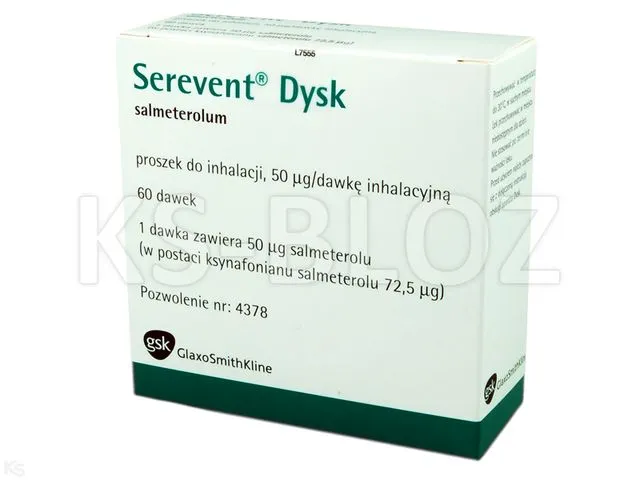
Table of Contents
Patient Information Leaflet
Serevent Disk 50 micrograms/inhalation, inhalation powder
Salmeterol
Please read all of this leaflet carefully before using this medicine, as it contains important information for you.
- Keep this leaflet, as you may need to read it again.
- If you have any questions, please ask your doctor or pharmacist.
- This medicine has been prescribed for you personally. Do not pass it on to others. It may harm someone else, even if their symptoms are the same as yours.
- If you experience any side effects, including any not listed in this leaflet, tell your doctor or pharmacist. See section 4.
Contents of the leaflet
- What Serevent Disk is and what it is used for
- Important information before using Serevent Disk
- How to use Serevent Disk
- Possible side effects
- How to store Serevent Disk
- Contents of the pack and other information
1. What Serevent Disk is and what it is used for
Serevent Disk contains the active substance: salmeterol.
- Salmeterol is a long-acting bronchodilator. Bronchodilators help keep the airways open. This makes it easier for air to flow into and out of the lungs. The effect usually begins within 10 to 20 minutes and lasts for 12 hours or longer.
- Your doctor has prescribed this medicine to prevent breathing difficulties, which may be caused by asthma. Regular use of Serevent Disk helps prevent asthma attacks, including those triggered by exercise or occurring at night.
- Regular use of Serevent Disk also helps prevent breathing difficulties caused by other chest conditions, such as chronic obstructive pulmonary disease (COPD).
- Serevent Disk helps relieve episodes of breathlessness or wheezing. However, it does not work immediately during an asthma attack or sudden wheezing. If this occurs, you must use a fast-acting bronchodilator, such as salbutamol.
- Serevent Disk is delivered as a powder in a Disk inhaler device. The medicine is inhaled directly into the lungs.
In patients with asthma, Serevent Disk must always be used in combination with an inhaled corticosteroid.
2. Important information before using Serevent Disk
When not to use Serevent Disk
- if the patient is allergic to salmeterol xinafoate or to lactose monohydrate, an excipient of the medicine.
Warnings and precautions
- If asthma or breathing difficulties worsen, contact a doctor immediately. This may be indicated by increased wheezing, a feeling of tightness in the chest, or increased use of fast-acting bronchodilators. In such cases, do not increase the number of inhalations of Serevent Disk. The condition may worsen significantly. Contact a doctor, as a change in asthma treatment may be necessary.
- If a doctor has prescribed Serevent Disk for asthma, continue taking other asthma medications previously used. These may include inhaled steroids or oral steroid tablets. Continue treatment with the previously prescribed dose, even if symptoms improve, unless otherwise advised by a doctor. Do not stop using inhaled steroids (or oral steroids) after starting Serevent Disk.
- The doctor will regularly monitor the patient’s health if the patient has hyperthyroidism, diabetes (Serevent Disk may increase blood sugar levels), or heart disease, including irregular or rapid heartbeat.
Serevent Disk and other medicines
- Inform the doctor about all medicines currently being taken. This includes asthma medications and any over-the-counter medicines. It may not be appropriate to use Serevent Disk together with other medicines.
- Inform the doctor if the patient is currently being treated with antifungal medicines containing ketoconazole or itraconazole for fungal infections, or if being treated with ritonavir for HIV infection. These medicines may increase the risk of adverse effects associated with Serevent Disk, including irregular heartbeat, or may worsen existing adverse effects.
- Avoid taking beta-blockers while using Serevent Disk, unless the doctor specifically advises their use. Beta-blockers such as atenolol, propranolol, and sotalol are mainly used to treat high blood pressure or other heart conditions. Inform the doctor about any beta-blockers currently or recently taken, as these medicines may reduce or block the effect of salmeterol.
- Serevent Disk may reduce potassium levels in the blood. If this occurs, the patient may experience irregular heartbeat, muscle weakness, or muscle cramps. This is more likely if the patient is taking Serevent Disk together with certain medicines used to treat high blood pressure (diuretics) and other medicines used for breathing difficulties, such as theophylline or steroids. The doctor may recommend blood tests to check potassium levels. If in doubt, contact the doctor.
Pregnancy and breastfeeding
If the patient is pregnant or breastfeeding, suspects she may be pregnant, or is planning to have a child, she should consult a doctor before using this medicine.
Driving and operating machinery
It is unlikely that adverse effects associated with the use of Serevent Disk will affect the ability to drive or operate machinery.
Serevent Disk contains lactose monohydrate
Each dose of Serevent Disk contains approximately 12.5 mg of lactose. In individuals with lactose intolerance, this amount of lactose usually does not cause problems. However, if a patient has previously been diagnosed with intolerance to certain sugars, the patient should consult a doctor before taking the medicine.
3. How to use Serevent Disk
This medicine should always be used exactly as directed by your doctor or pharmacist. If in doubt,
please consult your doctor or pharmacist.
- In patients with asthma, Serevent Disk should always be used in combination with an inhaled corticosteroid.
- Serevent Disk should be used daily, unless your doctor advises otherwise.
- You may notice the effect of the medicine as early as on the first day of treatment.
- Serevent Disk is intended for oral inhalation only.
- Do not exceed the recommended dose.
Adults with asthma
- The usual dose is one inhalation twice daily.
- In patients with severe asthma, your doctor may increase the dose to two inhalations twice daily.
Children with asthma
- In children aged 4 to 12 years, the usual dose is one inhalation twice daily.
- Serevent Disk is not recommended for use in children under 4 years of age.
Adults with chronic obstructive pulmonary disease (COPD)
- The usual dose is one inhalation twice daily. This does not apply to children and adolescents.
Instructions for using the Disk inhaler device
Your doctor, nurse, or pharmacist should instruct you on how to properly use the inhaler device.
They should periodically check whether you are using the inhaler correctly. Using Serevent Disk
in a way not recommended by your doctor or incorrect use of the inhaler device may result in the
medicine not producing the expected improvement in asthma or COPD.
When removed from the packaging for the first time, the inhaler device is in the closed position.
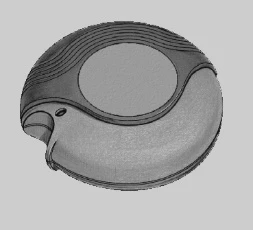
- The Disk inhaler contains Serevent as individual doses of inhalation powder.
- The Disk inhaler is equipped with a dose counter indicating how many doses of medicine remain in the device. The counter displays the dose number down to zero. Numbers from 5 to 0 appear in red as a warning that only a few doses of medicine remain in the inhaler. When the counter shows 0, the inhaler is empty.
Using the Disk inhaler
Follow the steps below:
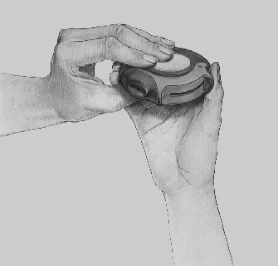
- OPENING: To open the Disk inhaler, hold the cover with one hand and place the thumb of the other hand in the indentation on the housing. Push the thumb away from you until you hear a click. After performing this step, a small opening in the mouthpiece becomes visible.
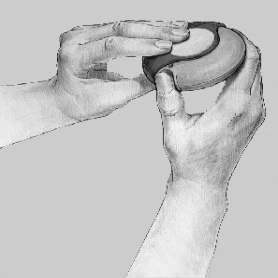
- SETTING THE DOSE: Hold the Disk inhaler with the mouthpiece facing towards you. You may hold it in either your right or left hand. Slide the lever fully away from you until you hear a distinct sound. The Disk inhaler is now ready for use. Each time the lever is moved, the next dose of powder is prepared for inhalation. Do not play with the slider, as this will release the next dose and reduce the number of remaining doses.
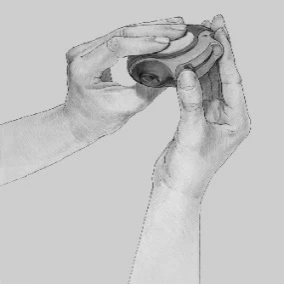
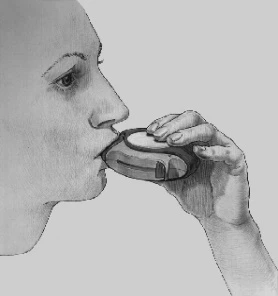
- INHALING: Before starting inhalation, please read the following instructions carefully.
- Hold the Disk inhaler at a slight distance from your mouth and breathe out calmly and deeply. Do not exhale into the Disk inhaler;
- Place the mouthpiece in your mouth; inhale deeply through your mouth (not through your nose) from the Disk inhaler;
- Hold your breath, then remove the Disk inhaler from your mouth. Hold your breath for about 10 seconds, or as long as comfortable without causing discomfort, then breathe out slowly.
- Patients may not feel or taste the medicine, even when using the Disk inhaler correctly.
- CLOSING:
- To close the Disk inhaler, insert your thumb into the housing indentation and slide it towards you.
- While closing the Disk inhaler, you will hear a "click" sound. The dose-setting slider automatically returns to its original position. The Disk inhaler is now ready for reuse.
Cleaning
To clean the mouthpiece of the Disk inhaler, wipe it with a dry, soft cloth.
Use of a higher than recommended dose of Serevent Disk
It is important to use the inhaler exactly as instructed. If you accidentally use more than the recommended dose, inform your doctor or pharmacist immediately.
Symptoms may include faster than usual heartbeat, tremors, and/or dizziness. There may also be an increase in systolic blood pressure, headache, muscle weakness, and joint pain.
Missed dose of Serevent Disk
If you miss a dose, take the next dose at your usual scheduled time. Do not take a double dose to make up for the missed dose.
If you have any doubts about using this medicine, consult your doctor or pharmacist.
4. Possible adverse reactions
Like all medicines, this medicine can cause adverse reactions, although not everyone will experience them.
To reduce the risk of adverse effects, your doctor will prescribe the lowest dose of Serevent Disk
that controls asthma or COPD. The adverse reactions observed in patients taking Serevent Disk
are listed below:
Allergic reactions: Patients may experience sudden difficulty in breathing after using Serevent Disk.
Worsening of wheezing, cough, as well as itching and swelling (usually of the face, lips, tongue, or throat) – anaphylactic reactions – may occur. If such symptoms occur, or appear suddenly after using Serevent Disk, you must contact your doctor immediately. Allergic reactions following administration of Serevent Disk are very rare (may occur in less than 1 in 10,000 patients).
Other adverse reactions are listed below:
Common adverse reactions (may occur in 1 to 10 out of 100 patients):
- muscle cramps;
- sensation of trembling; rapid or irregular heartbeat (palpitations), headache, tremors (e.g., hand tremor). The occurrence of tremors is more likely if the patient takes more than one inhalation twice daily. These adverse reactions do not last long and usually diminish during continued treatment with Serevent Disk.
Uncommon adverse reactions (may occur in 1 to 10 out of 1,000 patients):
- rash (itching and redness);
- very rapid heartbeat (tachycardia). This may occur more frequently if the patient takes more than two inhalations twice daily;
- nervousness.
Rare adverse reactions (may occur in 1 to 10 out of 10,000 patients):
- dizziness;
- insomnia or difficulty falling asleep;
- decreased potassium levels in the blood (may result in irregular heartbeat, muscle weakness, cramps).
Very rare adverse reactions (may occur in less than 1 in 10,000 patients):
- difficulty in breathing or worsening of wheezing immediately after taking Serevent Disk (paradoxical bronchospasm). If such symptoms occur, you must stop using Serevent Disk. A fast-acting inhaled medicine to ease breathing should be used and you must contact your doctor immediately;
- irregular heartbeat (cardiac arrhythmias, such as extrasystoles, atrial fibrillation, or supraventricular tachycardia). In such a case, do not discontinue Serevent Disk, but inform your doctor;
- pain in the mouth and throat;
- increased blood sugar (glucose) levels;
- nausea;
- joint pain, swelling, or chest pain.
If any of the adverse reactions worsen or if any adverse reactions not listed in this leaflet occur, inform your doctor or pharmacist.
Reporting of adverse reactions
If any adverse reactions occur, including those not listed in this leaflet, tell your doctor, pharmacist, or nurse. Adverse reactions can also be reported directly to the Department of Monitoring Adverse Drug Reactions at the Office for Registration of Medicinal Products, Medical Devices and Biocidal Products:
Al. Jerozolimskie 181C
02-222 Warsaw
Phone: +48 22 49 21 301
Fax: +48 22 49 21 309
Website: https://smz.ezdrowie.gov.pl
Adverse reactions can also be reported to the marketing authorization holder or its representative.
Reporting adverse reactions helps provide more information on the safety of this medicine.
5. How to store Serevent Disk
- Keep out of the sight and reach of children.
- Store at a temperature not exceeding 30 °C.
- Do not use Serevent Disk after the expiry date stated on the label or cardboard box. The expiry date (EXP) refers to the last day of the stated month. Batch number (Lot).
Medicines should not be disposed of via wastewater or household waste. Ask your pharmacist how to dispose of medicines no longer required. This will help protect the environment.
6. Contents of the pack and other information
What Serevent Disk contains
- Each inhalation dose (inhalation) contains 50 micrograms of the active substance – salmeterol (as salmeterol xinafoate, micronized).
- Other ingredient of the medicine: lactose monohydrate (which contains milk proteins).
What Serevent Disk looks like and contents of the pack
Powder for inhalation.
Pack:
The Diskhaler inhalation device contains a foil strip with doses placed on it. The foil protects the
powder for inhalation from atmospheric conditions.
The Diskhaler inhalation device containing 60 doses of powder, equipped with a mouthpiece and a dose counter,
packaged in a cardboard box.
Marketing Authorisation Holder and Manufacturer
Marketing Authorisation Holder
GlaxoSmithKline Trading Services Limited
12 Riverwalk
Citywest Business Campus
Dublin 24
D24 YK11
Ireland
For further information, please contact the representative of the Marketing Authorisation Holder:
GSK Services Sp. z o.o.
ul. Rzymowskiego 53
02-697 Warsaw
tel. (22) 576-90-00
GSK Logo