Seractil
Poland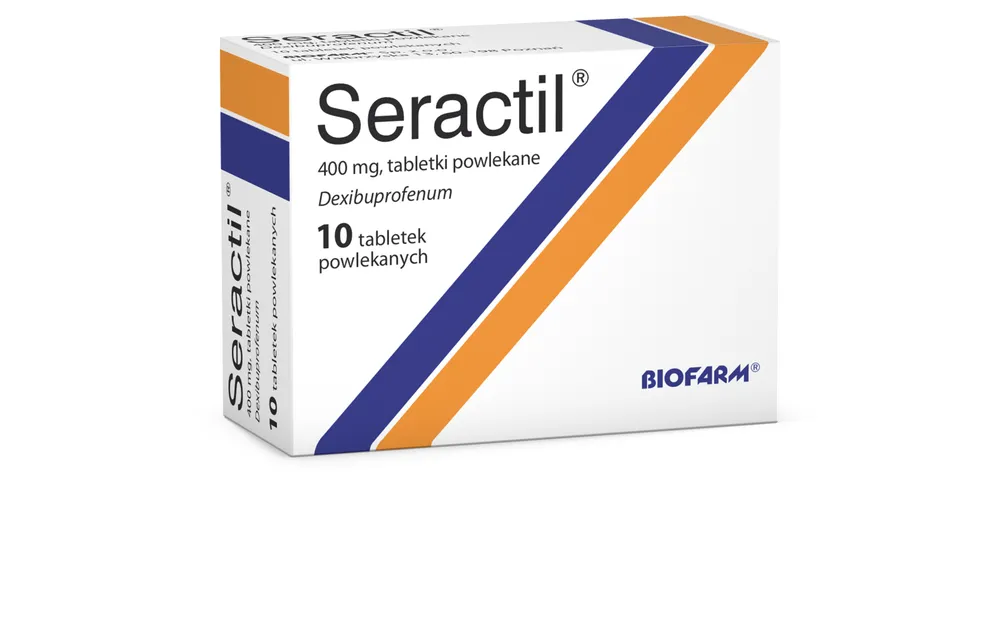
Table of Contents
- Patient Information Leaflet: Please read carefully before taking this medicine
- 1. What Seractil is and what it is used for
- 2. Important information before using Seractil
- 3. How to use Seractil
- 4. Possible adverse effects
- 5. How to store the medicine Seractil
- 6. Contents of the pack and other information
Patient Information Leaflet: Please read carefully before taking this medicine
SERACTIL
200 mg, film-coated tablets
-
Dexibuprofen *
Please read all of this leaflet carefully before taking this medicine, because it contains
important information for you.
This medicine should always be taken exactly as described in this patient leaflet or as directed by
your doctor or pharmacist. -
Keep this leaflet so that you can read it again if necessary.
-
If you need advice or further information, please contact your pharmacist.
-
If you experience any side effects, including any not listed in this leaflet, please inform your doctor or pharmacist. See section 4.
-
If your symptoms do not improve or if you feel worse, you should contact your doctor.
Table of contents
- What Seractil is and what it is used for
- Important information before taking Seractil
- How to take Seractil
- Possible side effects
- How to store Seractil
- Contents of the pack and other information
1. What Seractil is and what it is used for
Seractil belongs to a group of medicines called non-steroidal anti-inflammatory drugs (NSAIDs).
The active substance in Seractil is dexibuprofen, which has analgesic and anti-inflammatory properties.
NSAIDs inhibit the production of prostaglandins, which are responsible for inflammatory processes in the body.
Indications for use include symptomatic treatment of:
- menstrual pain,
- other types of mild to moderate pain, such as musculoskeletal pain or toothache.
2. Important information before using Seractil
When not to use Seractil:
- if the patient is allergic to dexibuprofen or to any of the other ingredients of this medicine (listed in section 6),
- if the patient is allergic to acetylsalicylic acid or other pain-relieving medicines (allergy may cause breathing difficulties, asthma attacks, nasal inflammation, rash, facial swelling),
- if the patient has previously experienced gastrointestinal perforations or bleeding associated with use of NSAIDs (non-steroidal anti-inflammatory drugs),
- if the patient has active or recurrent gastric or duodenal ulcer (vomiting blood, black stools or diarrhoea with blood may be symptoms of bleeding from the stomach or intestines),
- if the patient has bleeding in the brain (cerebral haemorrhage) or other active bleeding,
- if the patient has an exacerbation of inflammatory bowel disease (Crohn’s disease, ulcerative colitis),
- if the patient has severe heart failure,
- if the patient has severe liver and/or kidney disease,
- from the beginning of the 6th month of pregnancy (see section "Pregnancy and breastfeeding").
Warnings and precautions
Before starting treatment with Seractil, discuss with your doctor or pharmacist if:
- the patient has had gastric or duodenal ulcers,
- the patient has intestinal ulcers, ulcerative colitis or Crohn’s disease,
- the patient has impaired liver or kidney function,
- the patient is alcohol-dependent,
- the patient has blood clotting disorders (see section "Seractil with other medicines"),
- the patient has oedema (fluid accumulation in body tissues),
- the patient has heart disease or high blood pressure,
- the patient has asthma or other breathing difficulties,
- the patient has systemic lupus erythematosus (a disease causing changes, among others, in joints, muscles and skin) or mixed connective tissue disease (a condition related to abnormal structure, deficiency or improper distribution of collagen in connective tissue),
- the female patient has difficulty becoming pregnant (In rare cases, medicines such as Seractil may reversibly impair fertility in women. Fertility returns to pre-treatment levels after discontinuation of Seractil),
- the patient has an infection – see below, section titled "Infections".
Avoid using Seractil together with other NSAIDs (non-steroidal anti-inflammatory drugs), including selective COX-2 inhibitors.
Administering higher doses of Seractil to patients over 60 years of age and to patients who have previously had gastric or duodenal ulcers is associated with an increased risk of gastrointestinal adverse effects. In such cases, the doctor should consider additional use of a gastroprotective agent.
Taking anti-inflammatory and pain-relieving medicines such as dexibuprofen may be associated with a small increased risk of heart attack or stroke, especially when used at high doses. Do not exceed the recommended dose or duration of treatment.
Allergic reactions to dexibuprofen, including breathing difficulties, facial and neck swelling (angioedema), and chest pain, have occurred during treatment. If any of these symptoms occur, stop taking Seractil immediately and contact a doctor or emergency medical services without delay.
Infections
Seractil may mask symptoms of infection such as fever and pain. Therefore, Seractil may delay appropriate treatment of infection and consequently increase the risk of complications. This has been observed in bacterial pneumonia and bacterial skin infections associated with chickenpox. If the patient is taking this medicine during an ongoing infection and symptoms persist or worsen, medical advice should be sought immediately.
Before using Seractil, the patient should discuss treatment with a doctor or pharmacist if:
- the patient has heart diseases such as heart failure, angina pectoris (chest pain), history of heart attack, coronary bypass surgery, peripheral arterial disease (poor blood circulation in legs due to narrowed or blocked arteries), or has had any stroke (including mini-stroke or transient ischaemic attack - TIA).
- the patient has high blood pressure, diabetes, elevated cholesterol levels, a family history of heart disease or stroke, or if the patient smokes.
The treating physician should periodically monitor health status in:
- patients with impaired heart, liver and/or kidney function,
- patients over 60 years of age,
- patients requiring long-term treatment. The treating physician will determine the frequency of periodic medical examinations individually for each of these patients.
Long-term use of high doses of painkillers (beyond medical indication) may lead to headaches, which should not be treated by increasing the dose of Seractil.
During chickenpox, avoid using NSAIDs, including Seractil.
Skin reactions
Serious skin reactions have occurred with the use of dexibuprofen, including exfoliative dermatitis, erythema multiforme, Stevens-Johnson syndrome, toxic epidermal necrolysis, drug reaction with eosinophilia and systemic symptoms (DRESS), and acute generalised exanthematous pustulosis (AGEP). If the patient develops any symptoms related to these serious skin reactions described in section 4, Seractil should be stopped immediately and medical help sought.
Seractil with other medicines
Inform your doctor or pharmacist about all medicines currently used, recently used, or planned for use, including those available without prescription.
Concomitant use of dexibuprofen and other medicines may alter their effects and cause adverse reactions.
Do not take Seractil together with the medicines listed below unless under strict medical supervision:
- Other non-steroidal anti-inflammatory drugs (medicines used to treat pain, fever, inflammation). There is an increased risk of gastrointestinal ulcers and bleeding when Seractil is used together with other NSAIDs or acetylsalicylic acid. The doctor may allow concomitant use of low-dose acetylsalicylic acid (less than 100 mg daily) with Seractil.
- Warfarin or other anticoagulant medicines. Concomitant use of Seractil and anticoagulants may prolong bleeding time and increase the risk of bleeding.
- Lithium, a medicine used to treat depression. Seractil may enhance the effects of lithium.
- Methotrexate. Seractil may increase methotrexate-related adverse effects.
Concomitant use of the following medicines is possible, but for safety reasons, inform your doctor:
- Low-dose acetylsalicylic acid. Dexibuprofen may interfere with the blood-thinning effect of acetylsalicylic acid.
- Medicines used to treat high blood pressure or heart disease (e.g. beta-blockers). Seractil may reduce the effectiveness of these medicines.
- ACE inhibitors and angiotensin II receptor antagonists. In rare cases, these medicines may cause kidney dysfunction.
- Diuretics.
- Corticosteroids. There is an increased risk of ulcers or bleeding.
- Antidepressants (selective serotonin reuptake inhibitors) due to increased risk of gastrointestinal bleeding.
- Digoxin (a medicine used to treat heart conditions). Seractil may increase digoxin-related adverse effects.
- Medicines used in organ transplant patients, such as cyclosporine. Medicines that increase potassium levels: ACE inhibitors, angiotensin II receptor antagonists, cyclosporine, tacrolimus, trimethoprim, and heparins.
- Medicines that inhibit or prevent blood clotting. Seractil may prolong bleeding time.
- Phenytoin (a medicine used to treat epilepsy). Seractil may increase phenytoin-related adverse effects.
- Phenytoin, phenobarbital, and rifampicin. Concomitant use may reduce the effect of dexibuprofen.
- Oral antidiabetic medicines (sulfonylurea derivatives, e.g. glibenclamide, glimepiride). Concomitant use may cause fluctuations in blood glucose levels. Monitoring of blood glucose is recommended.
- Zidovudine (a medicine used to treat HIV infection). Concomitant use may increase the risk of joint bleeding and bruising in patients with haemophilia.
- Pemetrexed (an anticancer medicine used, among others, in lung cancer treatment). In patients with impaired kidney function, avoid concomitant use of high-dose Seractil for two days before and two days after pemetrexed administration.
Seractil may affect the action of other medicines, and other medicines may affect the action of Seractil. For example:
- anticoagulant medicines (i.e. blood thinners/preventing clot formation, such as aspirin/acetylsalicylic acid, warfarin, ticlopidine),
- blood pressure-lowering medicines (ACE inhibitors such as captopril, beta-blockers such as those containing atenolol, angiotensin II receptor antagonists such as losartan).
Other medicines may also be affected by or influence treatment with Seractil. Therefore, always consult a doctor or pharmacist before using Seractil with other medicines.
Seractil with food, drink and alcohol
Tablets may be taken independently of meals, but it is preferable to take Seractil during meals, with fluid, to reduce gastrointestinal irritation.
Alcohol intake should be limited or avoided during treatment with Seractil, as it may increase the frequency and severity of gastrointestinal adverse effects.
Pregnancy, breastfeeding and effects on fertility
If the patient is pregnant or breastfeeding, suspects she may be pregnant, or is planning to have a child, she should consult a doctor or pharmacist before using this medicine.
Use of Seractil from the beginning of the 6th month of pregnancy is absolutely contraindicated due to the risk of fetal developmental abnormalities and complications during delivery.
Seractil may cause kidney and heart problems in the unborn child. It may increase the tendency to bleeding in both mother and child and may delay or prolong labour.
During the first 5 months of pregnancy, Seractil may be used only if necessary, after consultation with a doctor.
If treatment is required during this period or when trying to conceive, the lowest possible dose should be used for the shortest possible time. From week 20 of pregnancy, Seractil may cause kidney dysfunction in the unborn child if used for longer than a few days, potentially leading to low levels of amniotic fluid surrounding the baby (oligohydramnios) or narrowing of a blood vessel (ductus arteriosus) in the baby’s heart. If treatment is required for longer than a few days, the doctor may recommend additional monitoring.
Only small amounts of Seractil pass into breast milk. However, long-term use and high doses of Seractil are not recommended in breastfeeding women.
This medicine belongs to a group of medicines (non-steroidal anti-inflammatory drugs) that may adversely affect fertility in women. This effect is transient and resolves after stopping treatment.
Driving and operating machinery
Patients who experience dizziness or fatigue while taking Seractil should not drive or operate machinery (see section 4. "Possible side effects").
3. How to use Seractil
This medicine should always be taken exactly as described in this patient information leaflet or as directed by a doctor or pharmacist. If in doubt, consult a doctor or pharmacist.
The lowest effective dose should be used for the shortest duration necessary to relieve symptoms. If, during an infection, symptoms (such as fever and pain) persist or worsen, medical advice should be sought immediately (see section 2).
Seractil tablets are taken orally, with a glass of water or another liquid. Seractil works faster when taken on an empty stomach. However, it is recommended to take the medicine after a meal to reduce the risk of gastrointestinal discomfort, especially when used long-term.
Do not take more than 2 tablets of Seractil 200 mg at a time.
Do not take more than 6 tablets of Seractil 200 mg per day.
For relief of menstrual pain
The recommended dose is 600 mg to 900 mg of dexibuprofen per day, administered in three divided doses. For example, one tablet of Seractil 200 mg can be taken three times daily.
The maximum daily dose is 900 mg of dexibuprofen.
For relief of mild to moderate pain
The recommended dose is 1 tablet of Seractil 200 mg three times daily. If symptoms worsen, a doctor may recommend increasing the dose up to 6 tablets of Seractil 200 mg per day.
The score line on the tablet (see also "What Seractil looks like and what the pack contains") allows the tablet to be divided into halves. To do this, place the Seractil 200 mg tablet on a hard surface and press down with two index fingers or thumbs.
Dosing in patients with hepatic or renal impairment
In patients with mild or moderate liver or kidney dysfunction, the lowest effective dose should be used. Do not exceed the dose prescribed by the doctor.
Dosing in elderly patients
In patients over 60 years of age, treatment should be initiated with the lowest effective dose of dexibuprofen. If the medicine is well tolerated, the dose may be increased to the recommended level.
Children and adolescents
There is insufficient data on the use of dexibuprofen in children and adolescents under 18 years of age; therefore, the use of Seractil is not recommended in this age group.
If you feel that the effect of Seractil is too strong or too weak, consult your doctor or pharmacist.
Taking more Seractil than recommended
If you take more Seractil than recommended, seek medical advice immediately.
Missing a dose of Seractil
Do not take a double dose to make up for a missed dose.
Take the next dose at the usual time.
Stopping Seractil
If you have any further questions about using this medicine, consult your doctor or pharmacist.
4. Possible adverse effects
Like all medicines, this medicine can cause adverse effects, although not everyone experiences them.
Taking Seractil at the lowest effective dose and for the shortest duration necessary to control disease symptoms reduces the risk of adverse effects occurring.
You should stop taking Seractil and contact your doctor immediately if:
- severe abdominal pain occurs, especially at the beginning of treatment with Seractil,
- black (tarry) stools, bloody diarrhoea, or vomiting blood occur,
- fever, sore throat and mouth, flu-like symptoms, feeling of fatigue, or nosebleeds or skin bleeding occur. These symptoms may be due to a reduced number of white blood cells in the body. This condition is known as agranulocytosis,
- sudden or persistent headache occurs,
- yellowing of the skin and whites of the eyes (jaundice) occurs,
- swelling of the face, tongue or throat, difficulty swallowing or breathing occurs (angioedema),
- chest pain occurs, which may be a symptom of a potentially serious allergic reaction called Kounis syndrome,
- red, flat, non-elevated, target-like or circular skin lesions appear on the trunk, often with blisters in the center, skin peeling, mouth, throat, nose, genital or eye ulcers. These severe skin reactions may be preceded by fever and flu-like symptoms (exfoliative dermatitis, erythema multiforme, Stevens-Johnson syndrome, toxic epidermal necrolysis),
- widespread rash, high fever, and enlarged lymph nodes occur (DRESS syndrome),
- a red, scaly rash with subcutaneous nodules and blisters occurs, accompanied by fever. Symptoms usually appear at the beginning of treatment (acute generalized exanthematous pustulosis).
Adverse effects occurring very commonly (in more than 1 in 10 patients) include:
- indigestion, abdominal pain.
Adverse effects occurring commonly (in less than 1 in 10 patients but more than 1 in 100 patients) include:
- diarrhoea, nausea, vomiting,
- feeling of fatigue, drowsiness, headache, dizziness,
- skin rash.
Adverse effects occurring uncommonly (in less than 1 in 100 patients but more than 1 in 1,000 patients) include:
- gastric and (or) duodenal ulceration, gastrointestinal bleeding, gastritis, erosive oral mucositis, black (tarry) stools,
- urticaria, itching, purpura (purple bruises),
- facial and throat swelling (angioedema),
- difficulty falling asleep, restlessness, anxiety, visual disturbances, sensation of ringing or buzzing in the ears (tinnitus),
- rhinitis, breathing difficulties.
Adverse effects occurring rarely (in less than 1 in 1,000 patients but more than 1 in 10,000 patients) include:
- severe allergic reactions,
- psychotic reactions, depression, irritability,
- disorientation, confusion, agitation,
- hearing disturbances,
- bloating, constipation, oesophagitis, oesophageal stricture, gastrointestinal perforation (symptoms include: severe abdominal pain, fever, nausea and vomiting), exacerbation of diverticular disease (infection or inflammation of small pouches in the intestinal wall), colitis or Crohn's disease,
- liver function abnormalities, hepatitis and jaundice (yellowing of the skin or eyes),
- transient visual disturbances,
- blood disorders, including reduced numbers of white or red blood cells or platelets.
Adverse effects occurring very rarely (in less than 1 in 10,000 patients) include:
- hypersensitivity reactions, including symptoms such as fever, skin rash, abdominal pain, headache, nausea and vomiting,
- photosensitivity reaction (light sensitivity),
- aseptic meningitis (symptoms include: headache, fever, neck stiffness and general malaise), severe allergic reactions (symptoms include: difficulty breathing, asthma attacks, rapid heartbeat, low blood pressure and shock), hypersensitivity reactions associated with inflammation of small blood vessels (vasculitis),
- redness of the skin, mucous membranes or throat,
- blisters on the palms and soles (Stevens-Johnson syndrome),
- skin peeling, detachment of the skin (toxic epidermal necrolysis – Lyell's syndrome),
- hair loss, alopecia,
- kidney inflammation, nephrotic syndrome or kidney failure,
- systemic lupus erythematosus (an autoimmune disease),
- worsening of very rare bacterial infections affecting tissues surrounding muscles.
Adverse effects occurring with unknown frequency (frequency cannot be estimated from available data) include:
- red, scaly rash with subcutaneous nodules and blisters, predominantly located in skin folds, trunk and upper limbs, with fever occurring at the beginning of treatment (acute generalized exanthematous pustulosis). If such symptoms occur, you should stop taking Seractil and seek immediate medical attention. See also section 2.
Swelling (swelling of hands and feet), high blood pressure, and heart failure may also occur during treatment with NSAIDs.
Use of medicines such as Seractil may be associated with a small increased risk of heart attack ("myocardial infarction") or stroke.
Reporting of adverse effects
If any adverse effects occur, including any not listed in this leaflet, you should inform your doctor or pharmacist. Adverse effects can be reported directly to the Department of Monitoring Adverse Drug Reactions of the Office for Registration of Medicinal Products, Medical Devices and Biocidal Products
Al. Jerozolimskie 181C, 02-222 Warsaw
Tel: +48 22 49 21 301, Fax: +48 22 49 21 309
Website: https://smz.ezdrowie.gov.pl
Reporting adverse effects helps to provide more information on the safety of the medicine.
Adverse effects can also be reported to the marketing authorization holder.
5. How to store the medicine Seractil
Keep the medicine out of sight and reach of children.
Store below 25°C.
Do not use this medicine after the expiry date stated on the carton and blister pack.
The expiry date refers to the last day of the stated month.
Medicines should not be disposed of via wastewater or household waste. Ask your
pharmacist how to dispose of medicines no longer required. This will help protect
the environment.
6. Contents of the pack and other information
What Seractil contains
- The active substance is dexibuprofen. Each coated tablet contains 200 mg of dexibuprofen.
- Other ingredients:
Tablet core: hypromellose, microcrystalline cellulose, calcium carmellose, colloidal anhydrous silica, talc.
Tablet coating: hypromellose, titanium dioxide (E 171), glycerol triacetate, talc, macrogol 6000.
What Seractil looks like and contents of the pack
White, round, biconvex coated tablets with a dividing score line on one side, free from spots and chipping.
The tablet can be divided into halves.
Seractil is packed in blisters made of PVDC/PVC/Aluminium foil.
The blisters are placed in a cardboard box together with the patient leaflet.
Available pack sizes: 6, 10, 20, 30 or 60 coated tablets.
Not all pack sizes may be marketed.
Marketing Authorisation Holder and Manufacturer
BIOFARM Sp. z o.o.
ul. Wałbrzyska 13
60-198 Poznań
tel. +48 61 66 51 500
fax: +48 61 66 51 505
e-mail: [email protected]