Selgres
Poland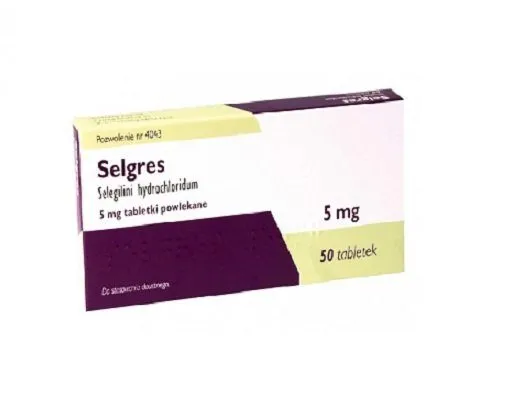
Instructions for Use
Package leaflet: Information for the patient
Selgres, 5 mg, film-coated tablets
Selegilini hydrochloridum
Please read all of this leaflet carefully before taking this medicine, because it contains
important information for the patient.
- Keep this leaflet, so that you can read it again if necessary.
- If you have any questions, please consult your doctor or pharmacist.
- This medicine has been prescribed for a specific individual. Do not pass it on to others. This medicine may harm someone else, even if their symptoms are the same.
- If you experience any adverse reactions, including any possible side effects not listed in this leaflet, inform your doctor or pharmacist. See section 4.
Table of contents of the leaflet
- What Selgres is and what it is used for
- Important information before taking Selgres
- How to take Selgres
- Possible side effects
- How to store Selgres
- Contents of the package and other information
1. What Selgres is and what it is used for
Selgres belongs to a group of medicines called selective monoamine oxidase type B inhibitors.
It selectively reduces the activity of one of the enzymes present in the brain
(monoamine oxidase type B), which is responsible for the breakdown of dopamine. As a result of the drug's action, the amount of dopamine in the brain increases and its duration of action is prolonged. This enhances and prolongs the effect of medications containing levodopa used in the treatment of Parkinson's disease (allowing levodopa doses to be reduced by approximately 30% on average).
Selgres is used in the treatment of Parkinson's disease and symptomatic parkinsonism – as monotherapy in the early stage, and in later stages in combination with levodopa or levodopa and carbidopa.
2. Important information before using Selgres
When not to use Selgres
- if the patient is allergic to the active substance or any of the other ingredients of this medicine (listed in section 6);
- in combination with: selective serotonin reuptake inhibitors (SSRIs) (e.g. fluoxetine), serotonin-norepinephrine reuptake inhibitors (SNRIs) (venlafaxine), tricyclic antidepressants, sympathomimetics, monoamine oxidase inhibitors (e.g. linezolid), and opioids (pethidine). See section "Selgres with other medicines";
- if the patient has active peptic or gastric ulcer.
If selegiline is prescribed together with levodopa, contraindications related to levodopa should also be considered.
Warnings and precautions
- Caution should be exercised when rising from a lying or sitting position, as this may cause hypotension (to reduce the risk of hypotension, patients should rise slowly);
- Selegiline enhances the effect of levodopa, therefore adverse effects of levodopa may be intensified, especially in patients receiving high doses of levodopa. These patients should be closely monitored by their physician. Adding selegiline to levodopa therapy may lead to the development of involuntary movements and/or agitation. These adverse effects usually resolve after reducing the levodopa dose (concomitant use of selegiline allows reduction of levodopa doses by approximately 30%);
- If selegiline is used at doses higher than recommended (10 mg), it may lose its selective MAO-B inhibitor properties and thereby increase the risk of hypertension;
- Particular caution is required when using Selgres in patients with labile hypertension, cardiac arrhythmias, severe angina pectoris, psychosis, or a history of peptic ulcers, as treatment may exacerbate these conditions;
- Caution is required in patients receiving monoamine oxidase inhibitors, including selegiline, during general anesthesia for surgical procedures, as selegiline may potentiate the effects of anesthetic agents on the central nervous system. Transient respiratory failure, circulatory failure, hypotension, and coma have been reported;
- Caution is advised when selegiline is used concomitantly with other substances and medicines acting on the central nervous system;
- Concomitant alcohol consumption should be avoided.
Selgres with other medicines
Inform your doctor about all medicines currently or recently taken, as well as any medicines you plan to take, including those available without a prescription.
Medicines used to treat migraine attacks (e.g. sumatriptan, naratriptan, zolmitriptan, rizatriptan, lasmiditan).
Sympathomimetics
Due to the risk of hypertension, concomitant administration of selegiline and sympathomimetics is contraindicated.
Narcotic analgesics
Concomitant administration of selegiline and pethidine is contraindicated.
Selegiline should not be used simultaneously with narcotic analgesics (including pethidine and meperidine) due to the risk of hypotension or hypertension, respiratory disturbances, coma, seizures, severe hyperthermia, circulatory collapse, and even death.
Selective serotonin reuptake inhibitors and serotonin-norepinephrine reuptake inhibitors
Concomitant administration of selegiline with SSRIs (e.g. fluoxetine) or SNRIs (venlafaxine) is contraindicated due to the risk of confusion, mild manic states, hallucinations, manic episodes, agitation, hyperreflexia, incoordination, shivering, tremor, seizures (including clonic muscle seizures), ataxia, excessive sweating, diarrhea, fever, and hypertension.
Selegiline treatment should not be initiated earlier than 5 weeks after discontinuation of fluoxetine, and fluoxetine treatment should not be initiated earlier than 14 days after discontinuation of selegiline.
Tricyclic antidepressants
Concomitant use of selegiline and tricyclic antidepressants (e.g. amitriptyline and imipramine) is contraindicated. In patients receiving both tricyclic antidepressants and selegiline, severe central nervous system toxicity (serotonin syndrome), sometimes associated with hypertension, hypotension, and excessive sweating, has been reported occasionally.
Tricyclic antidepressants should not be used earlier than 14 days after discontinuation of selegiline.
Monoamine oxidase inhibitors
Concomitant administration of selegiline and other monoamine oxidase inhibitors may cause disturbances of the central nervous system and circulatory system.
Concomitant use of selegiline and non-selective monoamine oxidase inhibitors may lead to significant hypotension.
Oral contraceptives
Concomitant administration of selegiline and oral contraceptives should be avoided.
Concomitant use of medicines containing digitalis and/or anticoagulants should be under medical supervision.
Selgres with food and drink
To date, no increase in blood pressure has been observed when consuming large amounts of tyramine-rich foods (e.g. aged cheeses, fava beans, yeast, smoked and pickled meats, poultry and fish, salami-type cold cuts, overripe fruits, wine, and beer) during treatment with selegiline at recommended doses (this means selegiline does not cause the so-called "cheese reaction"). Therefore, no dietary restrictions are required.
However, dietary restrictions (e.g. avoiding foods high in tyramine such as aged cheeses and yeast products) are recommended when selegiline is combined with moclobemide due to the risk of the so-called "cheese reaction," characterized by sudden increase in blood pressure.
Pregnancy and breastfeeding
If the patient is pregnant or breastfeeding, suspects she may be pregnant, or is planning to become pregnant, she should consult her doctor or pharmacist before using this medicine.
Use of Selgres is not recommended during pregnancy and breastfeeding.
Driving and operating machinery
Since selegiline may cause dizziness, patients should not drive or operate machinery if this adverse effect occurs during treatment.
Selgres contains lactose monohydrate
If the patient has previously been diagnosed with intolerance to certain sugars, she should consult her doctor before taking this medicine.
Selgres contains sodium
The medicine contains less than 1 mmol (23 mg) of sodium per tablet, meaning the medicine is considered "sodium-free."
3. How to use Selgres
This medicine should always be used as directed by the doctor. In case of doubt, consult your doctor or pharmacist.
The usual dose of Selgres is:
Adults:
Orally, usually a daily dose of 10 mg taken once daily (in the morning) or divided into two doses (5 mg in the morning and 5 mg in the early afternoon).
Doses exceeding 10 mg per day should not be used.
Concomitant use of selegiline with levodopa or selegiline with levodopa and carbidopa allows reduction of levodopa doses by an average of 30% (up to 50%).
Use in children and adolescents:
Selgres should not be used in children and adolescents.
Elderly patients:
No dose adjustment is required.
Patients with hepatic or renal impairment:
There is insufficient data on dose adjustment in patients with mild hepatic or renal impairment.
The medicine should be used with caution in patients with moderate to severe hepatic or renal impairment.
Use of a higher than recommended dose of Selgres
Overdose does not present a specific clinical picture. Symptoms of overdose may resemble those observed with non-selective MAO inhibitors (disturbances of the central nervous system and circulatory system).
Symptoms of overdose may develop over 24 hours and may include: agitation, tremor, alternating low and high blood pressure, respiratory disturbances or respiratory failure, severe muscle spasms, very high fever, coma, and seizures.
There is no specific antidote, and treatment should be symptomatic.
In case of ingestion of a higher than recommended dose of Selgres, contact a doctor immediately.
Management of overdose includes:
- removal of selegiline from the gastrointestinal tract (induction of vomiting, gastric lavage, administration of activated charcoal);
- monitoring of the patient's condition (primarily cardiovascular system);
- symptomatic treatment.
Missed dose of Selgres
If a dose is missed at the scheduled time, it should be taken as soon as possible. However, if the time for the next dose is approaching, the missed dose should be skipped. Do not take a double dose to make up for a missed dose.
Discontinuation of Selgres
Stopping treatment with Selgres may lead to worsening of the disease for which it is prescribed. In case of any doubts regarding the use of the medicine, consult your doctor or pharmacist.
4. Possible adverse effects
Like all medicines, this medicine can cause adverse effects, although they do not occur in everyone.
Common (may affect up to 1 in 10 people):
- dizziness, headache
- slow heart rate (bradycardia)
- nausea
- mild increase in liver enzyme activity
Uncommon (may affect up to 1 in 100 people):
- mood changes
- mild transient sleep disturbances
- fast heartbeat (supraventricular tachycardia)
- dry mouth sensation
Rare (may affect up to 1 in 1000 people):
- low blood pressure upon standing from a lying or sitting position (orthostatic hypotension)
- skin reactions
Unknown frequency (frequency cannot be estimated from available data):
- difficulties controlling impulses and compulsive behaviors (such as uncontrollable urge to shop, gambling addiction, binge eating, or excessive sexual activity)
- urinary retention
Combination therapy with levodopa
Since selegiline enhances the action of levodopa, adverse effects of levodopa (such as anxiety,
hyperkinesia, abnormal movements, agitation, confusion, hallucinations, orthostatic hypotension,
cardiac arrhythmias) may become more pronounced during combination therapy (levodopa is usually
administered together with a peripheral decarboxylase inhibitor). Combination therapy with
selegiline may allow for a further reduction in the levodopa dose (even by 30%).
Reporting adverse effects
If any adverse effects occur, including any adverse effects not listed in this leaflet, inform your doctor or pharmacist.
Adverse effects can be reported directly to the Department of Monitoring Adverse Drug Reactions of the Office for Registration of Medicinal Products, Medical Devices and Biocidal Products, Al. Jerozolimskie 181 C, 02-222 Warsaw, Tel.: +48 22 49 21 301, Fax: +48 22 49 21 309, Website: https://smz.ezdrowie.gov.pl
Adverse effects can also be reported to the marketing authorization holder.
Reporting adverse effects helps to provide more information on the safety of the medicine.
5. How to store Selgres medicine
Store below 25°C. Keep in the original packaging.
Keep the medicine out of sight and reach of children.
Do not use this medicine after the expiry date stated on the label.
Medicines should not be disposed of via wastewater or household waste. Ask your pharmacist how to dispose of medicines no longer required. This will help protect the environment.
6. Contents of the packaging and other information
What Selgres contains
The active substance is selegiline hydrochloride.
The other ingredients are: lactose monohydrate, maize starch, microcrystalline cellulose,
colloidal silicon dioxide, magnesium stearate.
Coating composition: colloidal silicon dioxide, hypromellose, sodium docusate, titanium dioxide (E 171),
yellow iron oxide (E 172), hydroxypropylcellulose, macrogol 400, macrogol 6000, talc.
What Selgres looks like and contents of the pack
Selgres is a coated tablet.
It is packed in Al/PCV foil blisters within a cardboard box.
The pack contains 50 coated tablets (2 blisters with 25 tablets each).
Marketing Authorisation Holder
Bausch Health Ireland Limited
3013 Lake Drive
Citywest Business Campus
Dublin 24, D24PPT3
Ireland
Manufacturer
ICN Polfa Rzeszów S.A.
Przemysłowa 2 Street
35-105 Rzeszów
Poland
This page has been machine-translated and may contain inaccuracies. The original data is available in the manufacturing country's language.
Last data check: June 04, 2026 · Data source: Rejestr Produktów Leczniczych (URPL)