Scorbolamid
Poland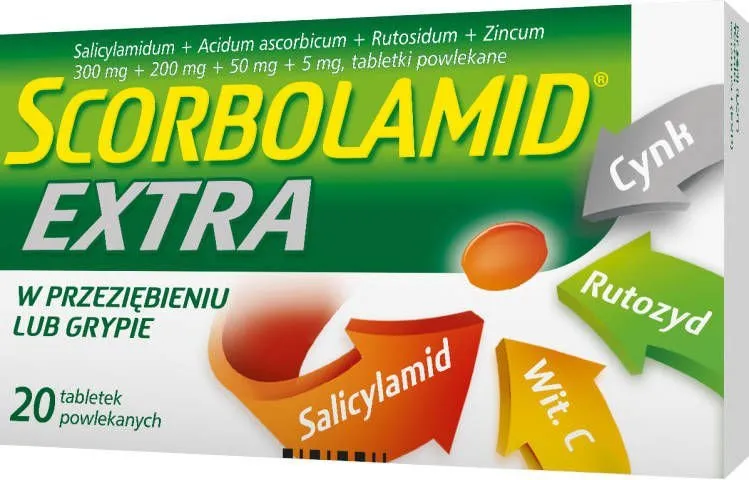
Table of Contents
Package leaflet: Information for the patient
Scorbolamid, 300 mg + 100 mg + 5 mg, coated tablets
Salicylamidum + Acidum ascorbicum + Rutosidum
Please read the entire leaflet carefully before using the medicine, as it contains
important information for the patient.
This medicine should always be used exactly as described in this patient leaflet or as directed by a
physician or pharmacist.
- Keep this leaflet for future reference.
- If you need advice or further information, please consult your pharmacist.
- If the patient experiences any adverse reactions, including any not listed in this leaflet, inform a doctor or pharmacist immediately. See section 4.
- If symptoms do not improve or worsen, contact a physician.
Table of contents
- What Scorbolamid is and what it is used for
- Important information before taking Scorbolamid
- How to take Scorbolamid
- Possible side effects
- How to store Scorbolamid
- Contents of the pack and other information
1. What Scorbolamid is and what it is used for
Scorbolamid is a combination medicine with multiple actions:
Salicylamide – has antipyretic, analgesic, and anti-inflammatory effects.
Ascorbic acid (vitamin C) – replenishes vitamin C deficiency and supports the body's immune system during infections.
Rutoside – stimulates the immune system and supports the body during viral infections. It enhances the absorption of vitamin C and prolongs its action.
Indications for use include: fever and pain associated with colds or influenza, headaches, and neuralgic pain.
2. Important information before using Scorbolamid
When not to use Scorbolamid
- if the patient is allergic to salicylamide, ascorbic acid, rutin, non-steroidal anti-inflammatory drugs, or any of the other ingredients of this medicine (listed in section 6);
- if the patient has asthma with nasal polyps;
- if the patient has active peptic ulcer disease of the stomach and/or duodenum and/or gastrointestinal inflammatory conditions;
- if the patient has acid-base balance disorders (e.g. diabetes, uraemia, tetany);
- if the patient has blood coagulation disorders (e.g. haemophilia, thrombocytopenia);
- if the patient has genetically determined glucose-6-phosphate dehydrogenase deficiency;
- if the patient has kidney stones;
- if the patient has haemochromatosis (bronze diabetes), sideroblastic anaemia, excessive levels of uric acid in blood, or oxalates in urine;
- if the patient is pregnant;
- if the patient is breastfeeding;
- in children under 16 years of age (except in rare conditions such as Kawasaki disease), due to the risk of developing Reye's syndrome, a rare but serious illness causing liver and brain damage.
Warnings and precautions
Before starting treatment with Scorbolamid, discuss it with your doctor or pharmacist.
Special caution is required when using Scorbolamid:
- if the patient has bronchial asthma;
- if the patient has liver or kidney impairment;
- in patients with a history of peptic ulcer disease or gastrointestinal bleeding.
Scorbolamid and other medicines
Inform your doctor or pharmacist about all medicines you are currently taking, have recently taken, or plan to take.
Exercise caution when using Scorbolamid with:
- medicines containing acetylsalicylic acid or other non-steroidal anti-inflammatory drugs (e.g. ibuprofen, diclofenac);
- corticosteroids (potent anti-inflammatory drugs), as salicylamide may intensify gastrointestinal adverse effects;
- oral antidiabetic drugs, anticoagulants, methotrexate (a drug used in oncological diseases), valproic acid (an antiepileptic drug), sulfonamides (antibacterial drugs), and drugs used in gout treatment – medical advice should be sought before using Scorbolamid;
- ascorbic acid, which may reduce the effectiveness of warfarin (an anticoagulant) and decrease plasma concentrations of fluphenazine (a drug used in the treatment of schizophrenia).
Scorbolamid with food, drink, and alcohol
The medicine should preferably be taken during a meal or with a large amount of water or milk.
Alcohol may intensify adverse effects.
Pregnancy and breastfeeding
If the patient is pregnant or breastfeeding, suspects she may be pregnant, or is planning to become pregnant, she should consult a doctor or pharmacist before using this medicine.
The medicine is contraindicated in women during pregnancy and breastfeeding.
Driving and operating machinery
There is no information available regarding contraindications for driving vehicles or operating machinery during treatment with Scorbolamid.
Scorbolamid contains sucrose and quinoline yellow (E104)
If the patient has previously been diagnosed with intolerance to certain sugars, he or she should consult a doctor before taking this medicine.
The medicine may cause allergic reactions.
3. How to use Scorbolamid
This medicine should always be used exactly as described in this patient leaflet or as directed by a
physician or pharmacist. If in doubt, consult a physician or pharmacist.
Adults and adolescents over 16 years of age:
Orally, usually 1 to 2 coated tablets three times daily.
It is best to take the medicine during a meal, or with a glass of water or milk.
Use the lowest effective dose. Symptomatic treatment without medical advice should be continued
for the shortest possible duration.
If symptoms persist or worsen, or if new symptoms occur, consult a physician.
Use of a higher than recommended dose of Scorbolamid
In case of an overdose, seek immediate medical advice from a physician or pharmacist.
Following an overdose of Scorbolamid, transient adverse effects may occur, such as those observed
during treatment with this medicine (see section 4. "Possible side effects").
After an overdose of salicylamide, central nervous system depression may occur, manifesting as
drowsiness, slurred speech, hypotension, respiratory arrest, metabolic acidosis (a disorder
characterized by decreased blood pH, presenting with rapid breathing and impaired consciousness),
or hypoprothrombinemia (manifesting as a tendency to bleed).
In case of acute poisoning, induce vomiting. Then administer activated charcoal and provide
symptomatic treatment based on fluid replacement.
Missed dose of Scorbolamid
If a dose is missed, take the next dose at the scheduled time. Do not take a double dose to make up
for a missed dose.
If there are any further doubts regarding the use of this medicine, consult a physician or pharmacist.
4. Possible adverse effects
Like all medicines, this medicine may cause adverse effects, although not everyone will experience them.
The most common adverse effects involve the gastrointestinal and central nervous systems.
Gastrointestinal disorders
nausea, vomiting, abdominal cramps, heartburn, loss of appetite, diarrhoea, irritation of the gastric and duodenal mucosa (erosions and ulcers), dry mouth.
There has been no clear association observed between the use of salicylamide and gastrointestinal bleeding.
Nervous system disorders
dizziness, drowsiness, headache.
Skin and subcutaneous tissue disorders
facial flushing, rash, excessive sweating.
This medicine should be used with caution in patients in whom acetylsalicylic acid or other non-steroidal anti-inflammatory drugs have previously caused rash, angioedema (swelling of the face, tongue and airways causing breathing difficulties), bronchospasm, rhinitis or anaphylactic shock, as there is a possibility that these adverse effects may occur following administration of Scorbolamid.
Reporting of adverse effects
If any adverse effects occur, including any not listed in this leaflet, inform your doctor or pharmacist. Adverse effects can be reported directly to the Department of Monitoring Adverse Effects of Medicinal Products at the Office for Registration of Medicinal Products, Medical Devices and Biocidal Products
Al. Jerozolimskie 181C
02-222 Warsaw
Phone: +48 22 49 21 301
Fax: +48 22 49 21 309
Website: https://smz.ezdrowie.gov.pl
Reporting adverse effects helps to provide more information on the safety of the medicine.
5. How to store Scorbolamid
Keep the medicine out of sight and reach of children.
Store the medicine in a dry place at a temperature not exceeding 25°C.
Do not use this medicine after the expiry date stated on the carton and blister pack. The expiry date refers to the last day of the stated month.
Medicines must not be disposed of via wastewater or household waste. Ask your pharmacist how to dispose of medicines no longer required. Such measures help protect the environment.
6. Contents of the packaging and other information
What Scorbolamid contains
- The active substances in this medicine are salicylamide, ascorbic acid, and rutoside. Each coated tablet contains 300 mg of salicylamide, 100 mg of ascorbic acid, and 5 mg of rutoside.
- Other components are: potato starch, gelatin, talc, purified water (forming the tablet core) and sucrose, talc, arabic gum, quinoline yellow (E104), carnauba wax, and purified water (forming the coating).
What Scorbolamid looks like and contents of the pack
Yellow, round, biconvex coated tablets.
Packaging contains 6, 10, 20 or 40 coated tablets.
Marketing Authorisation Holder and Manufacturer
Zakłady Farmaceutyczne POLPHARMA S.A.
ul. Pelplińska 19, 83-200 Starogard Gdański
tel. + 48 22 364 61 01