Scopolan
Poland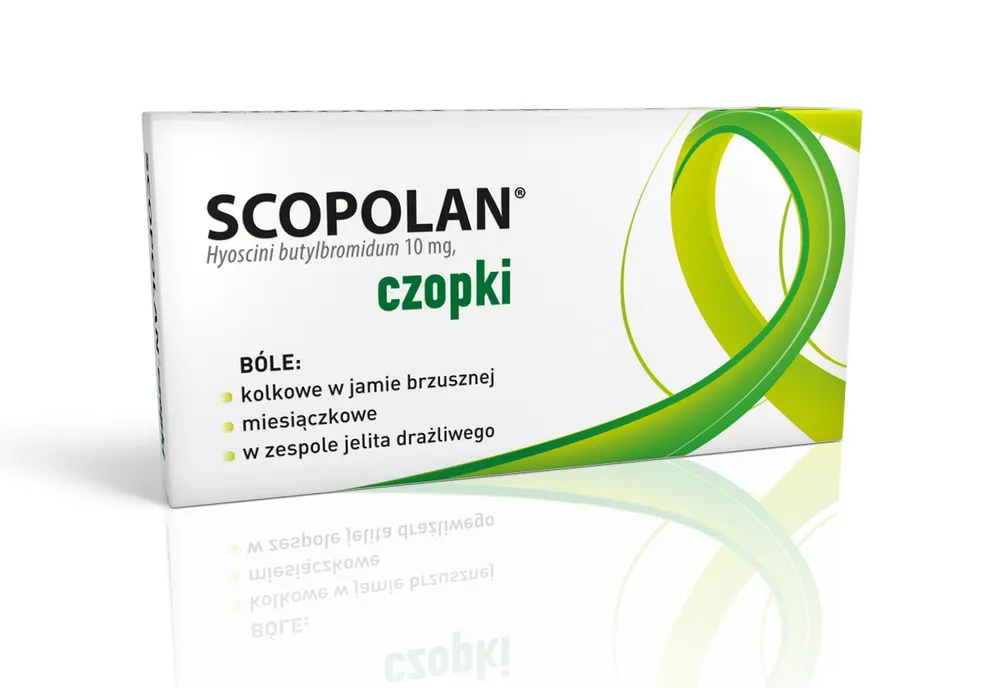
Table of Contents
Patient Information Leaflet
Scopolan
Hyoscini butylbromidum
10 mg, suppositories
Please read carefully all the information in this leaflet before using the medicine, as it contains important information for the patient.
This medicine should always be used exactly as described in this patient leaflet or as directed by the doctor or pharmacist.
- Keep this leaflet so that you can read it again if needed.
- If you need advice or further information, please consult your pharmacist.
- If you experience any adverse reactions, including any possible adverse reactions not listed in this leaflet, inform your doctor or pharmacist. See section 4.
- If there is no improvement after 3 days, or if you feel worse, consult your doctor.
Table of Contents
- What Scopolan is and what it is used for
- Important information before using Scopolan
- How to use Scopolan
- Possible side effects
- How to store Scopolan
- Contents of the pack and other information
1. What Scopolan is and what it is used for
Scopolan is a medicine containing hyoscine butylbromide, which relieves spastic conditions of smooth muscles in the abdominal cavity. The spasmolytic effect helps alleviate painful spasms of the gastrointestinal tract, biliary passages, and the urogenital system.
Indications
Scopolan is used for pain relief in spastic conditions of:
- gastrointestinal tract (e.g. stomach cramps, intestinal colic, irritable bowel syndrome),
- biliary passages (e.g. biliary colic),
- urogenital system (e.g. renal colic, spastic conditions associated with ureteric stones, painful menstruation).
2. Important information before using Scopolan
When not to use Scopolan
Do not use Scopolan if the patient is allergic to the active substance – hyoscine butylbromide – or to any of the other ingredients of this medicine (listed in section 6).
Do not use Scopolan if the patient has:
- allergy to tropane alkaloids (e.g. atropine) and their derivatives,
- narrow-angle glaucoma (an eye disease characterized by increased intraocular pressure),
- benign prostatic hyperplasia (enlargement of the prostate gland),
- atonic constipation,
- paralytic ileus (intestinal obstruction due to lack of intestinal motility),
- narrowing of the esophagus, pylorus or gastric outlet,
- narrowing of the bladder neck,
- tachycardia (a heart rhythm disorder characterized by rapid heartbeat),
- muscle weakness ( myasthenia gravis ) (a disease characterized by impaired muscle function and significant muscle weakness),
- pathological dilation of the colon ( megacolon ).
Do not use Scopolan in children under 6 years of age.
Warnings and precautions
Before starting Scopolan, discuss it with your doctor or pharmacist.
This medicine should be taken only on an as-needed basis (when symptoms occur) and only for the recommended indications.
If abdominal pain develops suddenly and its cause is unknown, and is accompanied by fever, nausea, vomiting, changes in bowel habits (e.g. diarrhea), tenderness upon touching the abdomen, low blood pressure, fainting, or blood in the stool, the patient should not take this medicine without first consulting a doctor. The doctor will recommend appropriate diagnostic tests to determine the cause of symptoms.
The use of Scopolan should be discussed with a doctor if the patient has:
- gastroesophageal reflux disease (backflow of stomach contents into the esophagus),
- ulcerative colitis,
- ischemic heart disease,
- mitral valve stenosis (narrowing of one of the heart valves).
Particular caution is advised in elderly patients. If any disturbances in visual acuity or eye pain caused by increased intraocular pressure occur, the patient should discontinue the medicine and contact a doctor immediately. Due to the possible reduction in sweat secretion, Scopolan should be used with caution in patients with fever.
Children
Do not use in children under 6 years of age.
Use in older children – see section 3.
Scopolan and other medicines
Inform your doctor about all medicines currently used or recently taken, as well as any medicines planned for future use.
Before starting Scopolan, consult a doctor if the patient is taking:
- tricyclic antidepressants – e.g. clomipramine, amitriptyline (medicines used to treat depression),
- neuroleptics (antipsychotics) of the phenothiazine derivatives group – e.g. chlorpromazine, flufenazine; as well as clozapine and olanzapine,
- monoamine oxidase inhibitors (MAO inhibitors) – e.g. selegiline, moclobemide (some medicines used to treat depression and Parkinson's disease),
- antihistamines (antiallergic medicines) – e.g. dimenhydrinate, clemastine,
- amantadine (a medicine used in the treatment of Parkinson's disease),
- pethidine (a medicine used for severe and prolonged pain),
- disopyramide (an antiarrhythmic medicine used to treat irregular heart rhythms),
- other anticholinergic medicines such as ipratropium or tiotropium (medicines used in chronic obstructive pulmonary disease) or other drugs similar to atropine,
- dopamine receptor blockers – e.g. metoclopramide (a medicine used for gastric motility disorders),
- beta-adrenergic drugs (used to treat shortness of breath and asthma).
Pregnancy, breastfeeding, and fertility
If the patient is pregnant, breastfeeding, suspects she may be pregnant, or is planning to become pregnant, she should consult a doctor or pharmacist before using this medicine.
Pregnancy
There are no clinical studies confirming the safety of hyoscine butylbromide during pregnancy. Scopolan should not be used during pregnancy unless the physician considers it absolutely necessary.
Breastfeeding
There is no data on the passage of hyoscine butylbromide into human milk. Medicines in this group may inhibit milk production; therefore, Scopolan is not recommended during breastfeeding.
Fertility
The effect on fertility is unknown.
Driving and operating machinery
Patients should not drive or operate machinery during treatment, as the medicine may impair psychomotor performance and cause visual disturbances.
3. How to use Scopolan
This medicine should always be used exactly as described in this patient information leaflet or as directed by a doctor or pharmacist. If in doubt, consult your doctor or pharmacist.
This medicine should only be used on an as-needed basis (when symptoms occur).
Before use, tear open the triangular end of the foil, remove the suppository from the blister pack and insert it into the rectum.
Recommended dose:
Adults and adolescents over 12 years of age:
- 1 to 2 suppositories rectally, 2 to 3 times daily.
Children aged 6 to 12 years: - 1 suppository rectally, 2 to 3 times daily.
Do not use in children under 6 years of age.
Always use the lowest effective dose.
If symptoms persist for more than 3 days after starting treatment, or worsen despite using the medicine, the patient should stop using the medicine and consult a doctor.
Taking more Scopolan than recommended
If more Scopolan than recommended has been taken, seek immediate advice from a doctor.
Severe symptoms of poisoning have not been observed in humans following a single acute overdose.
Symptoms that may occur include urinary retention, dry mouth, tachycardia (increased heart rate), dizziness, and transient visual disturbances.
If a dose of Scopolan is missed
Do not use a double dose to make up for a forgotten dose.
Stopping Scopolan
Scopolan should only be used when needed and should be discontinued once symptoms have resolved.
If you have any further questions about the use of this medicine, consult your doctor or pharmacist.
4. Possible adverse reactions
Like any medicine, Scopolan may cause adverse reactions, although not everyone experiences them.
The medicinal product, when used at recommended therapeutic doses, is well tolerated, and any possible adverse symptoms are of moderate severity.
Adverse reactions to the medicine are listed below according to organ systems and frequency of occurrence:
not very common (occur less frequently than in 1 out of 100 patients, but more frequently than in 1 out of 1,000 patients);
rare (occur less frequently than in 1 out of 1,000 patients, but more frequently than in 1 out of 10,000 patients);
unknown (cannot be estimated based on available data).
When using Scopolan, the following adverse reactions may occur:
Skin and subcutaneous tissue disorders: erythema, burning sensation of the skin, itching, rash, urticaria, edema – not very common;
Gastrointestinal disorders: dry mouth, constipation – not very common;
Cardiac disorders: tachycardia (accelerated heart rate) – not very common;
Vascular disorders: hypotension (low blood pressure) – not very common;
Renal and urinary disorders: anuria (retention of urine) – rare;
Eye disorders: visual disturbances – rare;
Immune system disorders: anaphylactic (allergic) reactions, anaphylactic shock (sudden and severe allergic reaction characterized by breathing difficulties, significant drop in blood pressure, swelling, rash) – frequency unknown.
If any of the above symptoms occur, administration of the medicine should be stopped immediately and a doctor should be contacted.
Reporting of adverse reactions
If any adverse reactions occur, including any adverse reactions not listed in this leaflet, inform a doctor or pharmacist. Adverse reactions can be reported directly to the Department of Monitoring Adverse Reactions of Medicinal Products at the Office for Registration of Medicinal Products, Medical Devices and Biocidal Products:
Al. Jerozolimskie 181 C, 02-222 Warsaw
Tel.: +48 22 49 21 301
Fax: +48 22 49 21 309
Website: https://smz.ezdrowie.gov.pl
Adverse reactions can also be reported to the marketing authorization holder.
Reporting adverse reactions helps to provide more information on the safety of the medicine.
5. How to store Scopolan
Store below 25°C.
Keep the medicine out of the sight and reach of children.
Do not use this medicine after the expiry date stated on the packaging. The expiry date refers to the last day of the stated month.
Medicines must not be disposed of via wastewater or household waste. Ask your pharmacist how to dispose of medicines no longer in use. This will help protect the environment.
6. Contents of the package and other information
What Scopolan contains
- The active substance is hyoscine butylbromide. Each suppository contains 10 mg of hyoscine butylbromide.
- The excipients are: hard fat, polysorbate 80, liquid paraffin, purified water.
What Scopolan looks like and contents of the pack
Scopolan is in the form of white or cream-colored suppositories.
Packaging: PVC/PE foil blister in a cardboard box.
Pack size: 6 suppositories.
Marketing Authorisation Holder and Manufacturer
Wrocławskie Zakłady Zielarskie „Herbapol” SA
50-951 Wrocław, ul. św. Mikołaja 65/68
Tel.: + 48 71 33 57 225
Fax: + 48 71 37 24 740
e-mail: [email protected]
For further information on this medicinal product, please contact the Marketing Authorisation Holder – tel. 71 321 86 04 ext. 123.