Sativex
Poland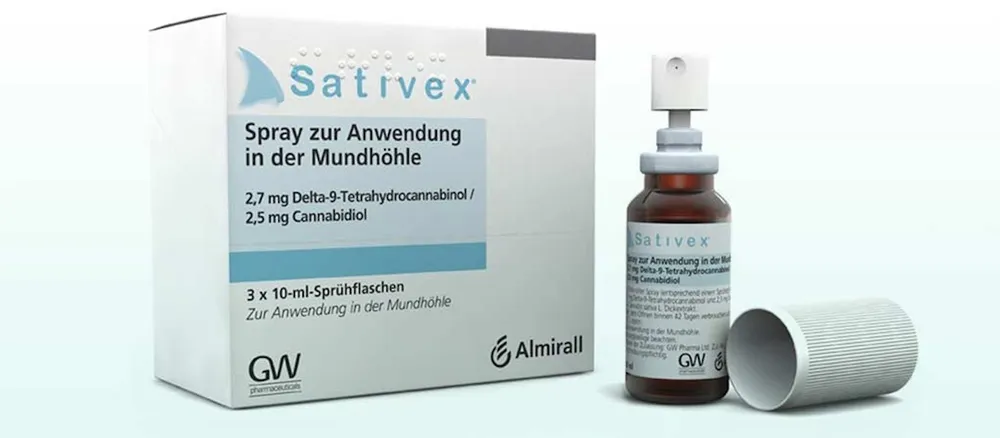
Table of Contents
Patient Information Leaflet
Sativex, oromucosal spray
delta-9-tetrahydrocannabinol + cannabidiol
Please read the entire leaflet before using the medicine, as it contains important information for the patient.
- Keep this leaflet for future reference.
- If you have any doubts, consult your doctor or pharmacist.
- This medicine has been prescribed for a specific individual. Do not pass it on to others. The medicine may harm someone else, even if their symptoms are the same.
- If you experience any adverse effects, including any not listed in this leaflet, inform your doctor or pharmacist. See section 4.
Table of Contents
- What Sativex is and what it is used for
- What you need to know before using Sativex
- How to use Sativex
- Possible side effects
- How to store Sativex
- Contents of the pack and other information
1. What Sativex is and what it is used for
Sativex is an oromucosal spray containing extracts from Cannabis known as cannabinoids.
What Sativex is used for
Sativex is used in multiple sclerosis (multiple sclerosis – MS) to improve symptoms related to muscle stiffness. This muscle stiffness is also referred to as spasticity. Spasticity means that muscle tone is increased, causing muscles to be stiffer or more tense. This makes moving the muscles more difficult than normal.
Sativex is used when other medicines have not helped relieve muscle stiffness.
Four-week trial treatment with Sativex
Only a specialist doctor may initiate treatment with Sativex.
- Before starting Sativex, the specialist doctor will perform a thorough assessment to evaluate the patient's muscle stiffness. The doctor will also check whether other medications previously used by the patient have been effective.
- The patient will then undergo a 4-week trial treatment with Sativex. After this period, the doctor will reassess to determine whether Sativex is helping the patient.
- Only if a significant improvement in spasticity is observed after 4 weeks may the patient continue treatment with Sativex.
2. Important information before using Sativex
When not to use Sativex:
-
If the patient is allergic to extracts of Cannabis or to any of the other ingredients of this medicine (listed in section 6).
-
If the patient or any closely related person has any mental health disorders such as schizophrenia, psychosis,
or other significant psychiatric disorders. This does not apply to depression associated with multiple
sclerosis. -
If the patient is breastfeeding.
Do not use this medicine if any of the above apply to the patient. If in doubt, consult a doctor or pharmacist before using Sativex.
Warnings and precautions
Before starting treatment with Sativex, consult a doctor or pharmacist if:
- The patient is pregnant or planning to become pregnant.
- The patient is under 18 years of age.
- The patient has epilepsy or recurrent seizures (fits).
- The patient has kidney disorders.
- The patient has moderate or severe liver disorders.
- The patient has serious heart disorders, such as angina, poorly controlled hypertension, or disorders related to heart rate or rhythm, or has had a previous heart attack.
- The patient is elderly, particularly if performing daily activities such as preparing hot meals and drinks is difficult.
- The patient has previously abused any drug or substance.
Regardless of whether the patient is male or female, an effective method of contraception must be used during treatment with this medicine [see also below "Pregnancy, breastfeeding and contraception (men and women)"].
If any of the above apply to the patient (or if there are any doubts), consult a doctor or pharmacist before using Sativex.
Sativex and other medicines
Inform the doctor or pharmacist about all medicines currently used or recently used, as well as any medicines the patient plans to use. Sativex may affect the action of other medicines. Other medicines may also affect the action of Sativex.
In particular, inform the doctor or pharmacist if the patient is taking medicines used to treat:
- anxiety or sleep problems (sedatives/sleeping tablets, such as: benzodiazepines, e.g. diazepam, triazolam, or other sedatives, e.g. zopiclone, zolpidem, buspirone, St John's wort)
- increased muscle spasticity (baclofen)
- bacterial infections (antibiotics such as: rifampicin, clarithromycin)
- epilepsy or neuropathic pain (medicines such as: phenytoin, phenobarbital, carbamazepine)
- high blood cholesterol levels (medicines known as statins, such as: atorvastatin, simvastatin)
- fungal infections (medicines such as: itraconazole, fluconazole and ketoconazole)
- HIV infection (e.g. ritonavir)
- to thin the blood (medicines known as coumarins, e.g. warfarin)
- heart problems (medicines known as beta-blockers, e.g. bisoprolol, propranolol)
- use of steroids as anti-inflammatory medicines (such as: hydrocortisone, beclometasone, prednisolone)
- use of hormonal medicines as contraceptives or in the treatment of certain types of cancer (such as: ethinylestradiol, levonorgestrel or dydrogesterone)
- use of muscle relaxants before surgical procedures (such as propofol).
If any of the above apply to the patient (or if there are any doubts), consult a doctor or pharmacist before using Sativex.
If the patient is being treated by another doctor or is admitted to hospital, he or she should inform the medical staff about all medicines being used.
Sativex with food, drink and alcohol
- During treatment with Sativex, avoid drinking alcoholic beverages, especially at the beginning of therapy or when the dose is changed. If alcohol is consumed during Sativex treatment, be aware that using Sativex together with alcohol may intensify the effects of both (such as loss of balance or impaired ability to react quickly), which may increase the risk of falls and other accidents.
- Sativex may be used during meals or between meals (however, see section 3 below "How to use Sativex").
Pregnancy, breastfeeding and contraception (men and women)
- During pregnancy, if pregnancy is suspected, or when planning to have a child, consult a doctor or pharmacist before using this medicine.
- Do not use Sativex during pregnancy unless specifically advised by a doctor.
- Sativex may reduce the effectiveness of hormonal contraceptives such as contraceptive pills or contraceptive implants. This means that an additional method of contraception should be used. Regardless of whether Sativex is used by a woman or a man, a reliable mechanical method of contraception such as condoms, diaphragm or cervical cap should be used. Contraception should be continued for at least 3 months after stopping treatment.
- Do not use Sativex if the patient is breastfeeding.
Driving and operating machinery
- Do not drive or operate machinery from the moment Sativex treatment is started until the daily dose has been stabilized and the patient knows how the medicine affects them.
- Sativex may cause drowsiness or dizziness, which may impair the ability to assess situations and perform tasks requiring specific skills. Rare cases of loss of consciousness have also been reported.
- Even after becoming accustomed to Sativex and once the dose has been established, do not drive or operate machinery if Sativex causes side effects such as drowsiness or dizziness that may impair the ability to perform these activities. If in doubt, do not drive or operate machinery.
The patient should contact a doctor or pharmacist if unsure whether it is safe to drive or operate machinery while using this medicine.
Travelling abroad with Sativex
- Before travelling abroad, check whether carrying this medicine is legal in any country the patient is travelling to or passing through.
- Sativex is a controlled substance and its legal status varies between countries.
- In some countries, driving while using Sativex may be illegal.
Sativex contains ethanol (alcohol) and propylene glycol
-
Sativex contains up to 40 mg of ethanol (alcohol) per single dose. The amount of alcohol in the usually recommended maximum daily dose (12 sprays of aerosol) is equivalent to two teaspoons (10 ml) of beer and about one teaspoon (5 ml) of wine. The small amount of alcohol in this medicine will not cause any noticeable effects.
-
Sativex contains propylene glycol, which may cause irritation. Each 100 microlitres of aerosol contains 52 mg of propylene glycol.
3. How to use Sativex
This medicine should always be used exactly as described in this patient information leaflet or as prescribed by your doctor. If in doubt, consult your doctor or pharmacist.
Sativex must only be used in the mouth – on the inside of the cheek or under the tongue.
- Sativex may be used during meals or between meals. However, using Sativex during meals may affect the amount of medicine absorbed by the body. It is recommended to use Sativex in the same relation to meals each day, as consistently as possible, to achieve the same effect every time.
Opening the aerosol container and preparing for use
- Remove the aerosol from the refrigerator (see section 5 for important information on storage of Sativex).
- Write the date of opening on the label located at the end of this leaflet. Attach the label to the aerosol container so that the date can be checked. Do not use the aerosol after 6 weeks (42 days) from the date of opening.
- Before use, gently shake the aerosol container.
- Remove the protective cap.
- Hold the aerosol container between the thumb and middle finger, with the index finger placed on the top of the spray nozzle.
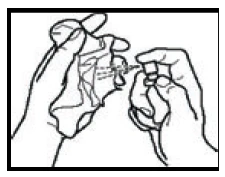
- Holding the container upright, prime the spray by releasing 2 to 3 sprays into a tissue until a fine mist is produced. These priming sprays are intended to prepare the pump and ensure proper function.
- The aerosol is now ready for use. Once primed, no further priming sprays are required until a new aerosol container is opened.
Using the aerosol
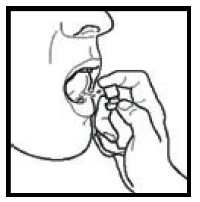
- Hold the aerosol container between the thumb and middle finger, with the index finger on the top of the spray nozzle.
- Hold the container upright and direct it towards the mouth. Position the spray nozzle under the tongue or on the inside of the cheek. Change the spray site within the mouth each time Sativex is used. This helps to avoid discomfort at a single site.
- Gently press down on the spray nozzle. Do not administer more than one spray at a time, even if only a small amount of aerosol is felt to have been delivered.
- Replace the protective cap on the container.
If the aerosol accidentally gets into the eyes, rinse them immediately with water.
- Do not inhale the aerosol.
- Do not spray near children or pets.
- Do not use the aerosol near open flames or sources of heat.
How to determine the number of sprays to use
The number of sprays needed each day is individual and varies from patient to patient. Different patients require different numbers of sprays to achieve the greatest relief from muscle stiffness with the least occurrence of side effects.
- When starting Sativex for the first time, follow the schedule of days and times provided in the table below until the optimal number of sprays for you has been established.
- Stop increasing the number of sprays once you have found the optimal number for you. This may take several days or up to two weeks. Ultimately, you should use this optimal number of sprays daily. The total number of sprays can then be evenly distributed throughout the day.
- Do not administer more than one spray at a time. Always wait at least 15 minutes between sprays.
- Avoid excessive physical activity during the first few days of using Sativex, until you know how the medicine affects you.
- If you experience side effects (usually dizziness), reduce the number of sprays by one per day until you achieve the greatest symptom relief with the least bothersome side effects.
- Once the optimal number of sprays has been established, you should use this number of sprays daily. The sprays can be evenly spaced throughout the day according to your preference. Continue to maintain at least 15-minute intervals between sprays.
| Number of aerosol sprays | |||
| Morning (between | Evening (between 4:00 p.m. | Total number of | |
| Day 1 | 0 | 1 | 1 |
| Day 2 | 0 | 1 | 1 |
| Day 3 | 0 | 2 | 2 |
| Day 4 | 0 | 2 | 2 |
| Day 5 | 1 | 2 | 3 |
| Day 6 | 1 | 3 | 4 |
| Day 7 | 1 | 4 | 5 |
| Day 8 | 2 | 4 | 6 |
| Day 9 | 2 | 5 | 7 |
| Day 10 | 3 | 5 | 8 |
| Day 11 | 3 | 6 | 9 |
| Day 12 | 4 | 6 | 10 |
| Day 13 | 4 | 7 | 11 |
| Day 14 | 5 | 7 | 12 |
Do not use more than 12 sprays per day unless otherwise directed by a doctor.
Use of a higher than recommended dose of Sativex
If you accidentally use more of this medicine than usual, you may:
- see or hear things that are not there (hallucinations);
- feel dizzy, drowsy, or disoriented;
- experience changes in heart rate.
- if you use more Sativex than recommended, inform your doctor or pharmacist.
Missed dose of Sativex
- If you miss a single dose, use the spray as soon as you remember or when you feel the need.
- Do not use 2 sprays at once to make up for a missed spray.
How to know when the spray container is nearly empty
After the 3 preparatory sprays, the container holds up to 90 metered sprays of aerosol. When the aerosol container becomes empty, the sound during spraying may change. You may also experience different sensations when spraying the aerosol in the mouth. This indicates that the aerosol container is nearly empty. A new aerosol container should then be opened.
Stopping treatment with Sativex
If you decide to stop using Sativex for any reason, inform your doctor or pharmacist. If you stop using the medicine suddenly, this may temporarily affect sleep, appetite, and feelings. After stopping Sativex, muscle stiffness usually returns gradually.
If you have any further questions about the use of this medicine, consult your doctor or pharmacist.
4. Possible adverse reactions
Like all medicines, this medicine can cause adverse reactions, although not everyone will experience them.
If any of the following serious adverse reactions occur, treatment must be discontinued and medical advice should be sought immediately from a doctor or hospital, as the patient should be monitored until symptoms resolve:
- seeing or hearing things that are not there (hallucinations);
- believing in things that are not true;
- feeling that other people are hostile;
- thoughts of suicide;
- feelings of depression or disorientation;
- feelings of increased excitement or detachment from reality.
The adverse reactions listed below are more likely to occur at the beginning of treatment. In most cases, these adverse reactions are mild and usually resolve within a few days.
- If any of the following adverse reactions occur, reduce the number of sprays or stop using Sativex until normal well-being returns.
- When restarting treatment, resume the number of sprays that previously did not cause adverse reactions.
- If any adverse reactions occur, inform your doctor or pharmacist. This includes any possible adverse reactions not listed in this leaflet.
Very common (in more than 1 in 10 people)
- Dizziness or fatigue.
Common (in less than 1 in 10 people)
- Memory or concentration disturbances;
- Drowsiness or mild dizziness;
- Blurred vision;
- Speech difficulties;
- Increased or decreased appetite;
- Taste alterations or dry mouth;
- Constipation or diarrhoea;
- Nausea or vomiting;
- Oral cavity disorders, including burning, pain or ulceration;
- Lack of energy, feeling weak, or general malaise;
- Feeling of abnormality or alcohol-like intoxication;
- Loss of balance or falls.
Uncommon (in less than 1 in 100 people)
- Fainting;
- Changes in pulse, heart rhythm, or blood pressure;
- Sore throat or throat irritation;
- Abdominal pain;
- Discoloration in the oral cavity or tooth staining;
- Irritation at the site of Sativex spray application;
- Redness and swelling in the oral cavity or desquamation of the mucosa on the inner side of the oral cavity. Do not spray the aerosol onto these areas.
Reporting of adverse reactions
If any adverse reactions occur, including those not listed in this leaflet, inform your doctor or pharmacist. Adverse reactions can be reported directly to the Department of Monitoring of Adverse Drug Reactions at the Office for Registration of Medicinal Products, Medical Devices and Biocidal Products – Al. Jerozolimskie 181C, 02-222 Warsaw, phone: +48 22 49 21 301, fax: +48 22 49 21 309, website: https://smz.ezdrowie.gov.pl.
Adverse reactions can also be reported to the marketing authorization holder.
Reporting adverse reactions helps to provide more information on the safety of the medicine.
5. How to store Sativex
- Keep the medicine out of the sight and reach of children.
- Do not use this medicine after the expiry date stated on the carton after "Expiry date". The expiry date refers to the last day of the specified month.
- Store unopened Sativex containers upright in the refrigerator (2°C - 8°C). The medicine loses its properties if not stored in the refrigerator and cannot be used again.
- After first opening, store Sativex upright at a temperature below 25°C.
- Do not use Sativex after 42 days from the date of opening the container.
- Medicines must not be disposed of via wastewater or household waste. Ask your pharmacist how to dispose of medicines no longer required. These measures help protect the environment.
6. Contents of the pack and other information
What Sativex contains
- The active substances are extracts from Cannabis. 1 ml contains 38-44 mg and 35-42 mg of two extracts from Cannabis sativa L., leaf and flower, corresponding to 27 mg/ml delta-9-tetrahydrocannabinol (THC) and 25 mg/ml cannabidiol (CBD). Each 100 microliters of aerosol contains 2.7 mg THC and 2.5 mg CBD.
- The other ingredients (excipients) are ethanol anhydrous, propylene glycol and peppermint essential oil.
What Sativex looks like and contents of the pack
Sativex is a yellow-brown liquid in a 10 ml aerosol container with a pump and dispenser.
The pump is protected by a plastic cap.
The container contains up to 90 metered aerosol spray doses (after deducting 3 preparatory doses).
Sativex is packaged in cardboard boxes containing one or 2, 3, 4, 5, 6, 10 or 12 aerosol containers.
Not all pack sizes may be marketed.
Marketing Authorisation Holder
Jazz Pharmaceuticals Ireland Ltd
5th Floor
Waterloo Exchange
Waterloo Road
Dublin
D04 E5W7
Ireland
Manufacturer
GW Pharma (International) B.V.
Databankweg 26
3821AL Amersfoort
The Netherlands
For further information about this medicinal product, please contact the representative of the Marketing Authorisation Holder:
Almirall Sp. z o.o.
ul. Pileckiego 63
02-781 Warsaw
tel.: 22 330 02 57