Sanval
Poland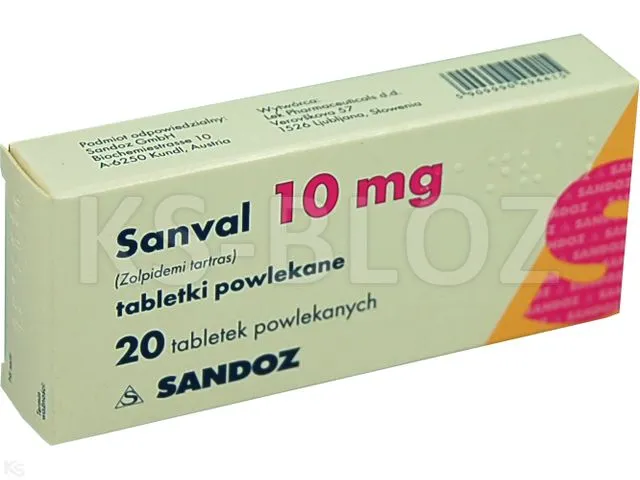
Table of Contents
Patient Information Leaflet
Sanval, 10 mg, film-coated tablets
Zolpidem tartrate
Please read the entire leaflet carefully before taking this medicine, as it contains
important information for the patient.
- Keep this leaflet for future reference.
- If you have any questions, consult your doctor or pharmacist.
- This medicine has been prescribed for a specific individual. Do not pass it on to others. This medicine may harm others, even if their symptoms are the same.
- If you experience any adverse reactions, including any not listed in this leaflet, inform your doctor or pharmacist. See section 4.
Table of contents:
- What Sanval is and what it is used for
- Important information before taking Sanval
- How to take Sanval
- Possible side effects
- How to store Sanval
- Contents of the pack and other information
1. What Sanval is and what it is used for
Sanval is a hypnotic medicine containing zolpidem tartrate as the active substance. The medicine
speeds up the onset of sleep, reduces the number of awakenings, prolongs sleep duration, and improves sleep
quality.
Sanval is indicated for the short-term treatment of insomnia in adults.
2. Important information before using Sanval
When not to use Sanval
if the patient is allergic to zolpidem or to any of the other ingredients of this medicine
(listed in section 6);
if the patient has been diagnosed with sleep apnoea syndrome;
if the patient suffers from myasthenia gravis;
if the patient has severe hepatic insufficiency;
if the patient has acute and/or severe respiratory insufficiency;
if the patient has been diagnosed with neuroleptic or antidepressant drug intoxication;
if the patient has previously experienced complex sleep behaviours after taking zolpidem;
in children and adolescents under 18 years of age.
Warnings and precautions
Before starting treatment with Sanval, discuss this with your doctor or pharmacist.
If possible, before prescribing a sleeping medicine, the doctor should determine the cause of insomnia based on a patient interview and examination, and help the patient eliminate it as much as possible.
Sanval may worsen symptoms of certain diseases.
Before using the medicine, inform your doctor if you currently have or have previously had:
depression,
abuse of or dependence on medicines, narcotics, or alcohol,
psychotic disorders,
liver disease.
Use of the medicine may cause falls and, consequently, serious injuries.
Elderly and weakened patients should strictly follow the recommended dosage.
Due to an increased risk of falls, fractures, and serious injuries, elderly patients should be cautious, especially when getting up at night.
Next-day psychomotor disturbances (see also "Driving and operating machinery")
The risk of next-day psychomotor impairment, including reduced ability to drive, may be increased the day after taking Sanval if:
the patient took the medicine less than 8 hours before activities requiring increased mental alertness;
the patient took a dose higher than the recommended dose;
the patient took zolpidem while being treated with other medicines that depress the central nervous system or other medicines that increase blood levels of zolpidem, while consuming alcohol, or while taking illicit substances – see "Sanval with other medicines".
A single dose should be taken immediately before bedtime.
Do not take another dose during the same night.
Before starting treatment with Sanval, the following information should be considered:
Zolpidem (the active substance in Sanval) acts as a central nervous system depressant.
Frequent use of Sanval over several weeks may reduce the effectiveness of the medicine (so-called tolerance phenomenon).
In patients taking medicines such as Sanval and who are not fully awake, cases of complex sleep behaviours have been reported, including somnambulism (sleepwalking) and other behaviours such as driving while asleep, preparing and eating meals, making phone calls, or engaging in sexual activity, without awareness of the event. If complex sleep behaviours occur, the doctor will recommend discontinuing treatment due to the risk it poses both to the patient and to others. Taking higher than recommended doses of the medicine, drinking alcohol during treatment, and/or using other central nervous system depressants may increase the risk of such behaviours.
Sanval, like other medicines in this class, may cause physical and/or psychological dependence, especially with long-term use. The risk of dependence increases proportionally with the dose and duration of treatment. The risk of abuse and dependence is also higher in patients with current or past psychiatric disorders, alcohol, narcotic, or medicine abuse. Patients in this group should remain under close medical supervision during treatment with Sanval. If dependence occurs, abrupt discontinuation of Sanval may cause withdrawal syndrome (see section 3 "Discontinuing Sanval"). Cases have been described where withdrawal syndrome occurred between consecutive doses, especially when the patient took high doses.
After stopping the medicine, so-called rebound insomnia may occur, characterised by a worsening of symptoms for which the doctor prescribed the sedative-hypnotic medicine. Along with insomnia, mood changes, anxiety, and restlessness may occur.
Use of Sanval may cause so-called anterograde amnesia, characterised by transient inability to remember recent events. After taking the medicine, the patient should ensure 8 hours of uninterrupted sleep.
In patients taking sedative-hypnotic medicines, the following reactions may occur:
anxiety, worsened insomnia, agitation, irritability, aggression, hallucinations, anger outbursts, nightmares, illusions, psychosis, unusual behaviour, and other behavioural disturbances.
In such cases, treatment should be discontinued and immediate contact made with the doctor.
These reactions occur more frequently in elderly patients.
Concomitant use of medicines such as Sanval and opioids (strong painkillers and some cough medicines) may cause excessive sedation, respiratory depression, coma, and death. When using such medicines together, strictly follow the doctor's instructions regarding dosage and duration of treatment. The doctor will inform the patient about the risks and will carefully monitor for signs of respiratory disturbances and excessive sedation. If these symptoms occur, contact the doctor. Informing friends or family about the risk of the above-mentioned symptoms may be helpful. If they occur, contact the doctor.
In patients with and without depression taking benzodiazepines (medicines used to treat insomnia and anxiety disorders) or other hypnotics, including zolpidem, an increased incidence of suicides and suicide attempts has been observed. However, a direct link to zolpidem use has not been established. If the patient has suicidal thoughts, they should contact their doctor as soon as possible for medical advice.
Depression previously present may become apparent during zolpidem treatment. Since insomnia may be a symptom of depression, if insomnia persists, the doctor should re-evaluate the patient.
Sanval with food, drink, and alcohol
The medicine should be taken immediately before bedtime. The tablet should be swallowed whole, without chewing, with liquid.
Do not drink alcohol during treatment, as it may intensify the sedative effect of Sanval.
Do not drink grapefruit juice during treatment with Sanval, as it may intensify the medicine's effect.
Sanval with other medicines
Tell your doctor about all medicines you are currently taking or have recently taken, as well as any medicines you plan to take.
When zolpidem is taken with certain medicines, drowsiness and next-day psychomotor disturbances, including impaired ability to drive, may be intensified.
These medicines include:
medicines used to treat certain mental health disorders (antipsychotics)
medicines used to treat sleep problems (hypnotics)
sedatives or medicines used to reduce anxiety
medicines used to treat depression
medicines used to treat moderate to severe pain (narcotic analgesics)
medicines used to treat epilepsy
medicines used in anaesthesia
medicines used to treat hay fever, rashes, or other allergies, which may cause drowsiness (sedating antihistamines)
some antifungal medicines
macrolide antibiotics.
When zolpidem is taken with antidepressants (including bupropion, desipramine, fluoxetine, sertraline, and venlafaxine), the patient may see things that are not real (visual hallucinations).
Concomitant use of zolpidem with fluvoxamine, ciprofloxacin, rifampicin, carbamazepine, and medicines containing St. John's wort is not recommended.
Concomitant use with opioid painkillers may intensify euphoria and promote the development of psychological dependence.
Concomitant use with ketoconazole may intensify the sedative effect of Sanval.
Concomitant use of Sanval and medicines affecting brain function (i.e. other sedatives, e.g. benzodiazepines or similar medicines, see below) increases the risk of drowsiness, breathing difficulties (respiratory depression), coma, and may be life-threatening. Therefore, the doctor will consider concomitant use only if no other treatment methods are possible.
If the doctor prescribes Sanval together with other sedative medicines, a reduced dose and limited duration of combined treatment will be used. Inform the doctor about all sedative medicines you are taking and strictly follow the prescribed dosage.
Pregnancy, breastfeeding, and effects on fertility
If you are pregnant or breastfeeding, think you may be pregnant, or are planning to have a child, consult your doctor before using this medicine.
Pregnancy
Use of the medicine during pregnancy is not recommended due to the risk of harmful effects on the foetus.
Some studies have shown increased cases of cleft lip and palate, reduced foetal movement, and variable heart rhythm.
Newborns of mothers who took the medicine late in pregnancy or during delivery may experience adverse effects such as lowered body temperature, reduced muscle tone ("floppy infant syndrome"), and respiratory depression.
In children born to mothers who used the medicine for a long time late in pregnancy, physical dependence and withdrawal syndrome may occur.
Breastfeeding
Sanval should not be used in breastfeeding women, as it passes into breast milk.
Fertility
There are no available data on the effect of the medicine on fertility.
Driving and operating machinery
Sanval has a major influence on the ability to drive and operate machinery and may cause events such as "falling asleep while driving". The day after taking Sanval (as with other hypnotic medicines), the patient may:
- feel drowsy, sleepy, dizzy, or disoriented,
- need more time to make quick decisions (impaired reflexes),
- experience blurred or double vision,
- be less alert.
To minimise the risk of the above events, it is recommended to maintain at least an 8-hour interval between taking zolpidem and driving, operating machinery, or working at heights.
Do not consume alcohol or psychoactive substances while taking Sanval, as this may intensify the effects mentioned above.
Sanval contains lactose and sodium
If the patient has previously been diagnosed with intolerance to certain sugars, they should consult their doctor before taking the medicine.
This medicine contains less than 1 mmol (23 mg) of sodium per tablet, meaning the medicine is considered "sodium-free".
3. How to use Sanval
This medicine should always be used as directed by the doctor. If in doubt, consult
your doctor.
Dosage in adults
The recommended dose of Sanval is 10 mg per 24 hours. Some patients may be
prescribed a lower dose by their doctor.
Sanval should be taken:
- as a single dose,
- immediately before going to sleep.
The patient must allow at least 8 hours between taking the medicine and engaging in
activities requiring increased concentration.
Do not exceed the dose of 10 mg per 24 hours.
Dosage in elderly and debilitated patients
The recommended daily dose is 5 mg due to possible increased sensitivity to the medicine.
Do not exceed the recommended doses.
Dosage in patients with hepatic impairment
Treatment should be initiated at a dose of 5 mg per day due to slower elimination of zolpidem
from the body. Particular caution should be exercised in elderly patients. In patients
over 65 years of age, the doctor may increase the initial dose of Sanval to 10 mg per day
only if a lower dose is ineffective and the patient tolerates the medicine well.
Method of administration and duration of treatment
Zolpidem acts very quickly, therefore Sanval should be taken immediately before sleep.
The tablet should be swallowed whole, without chewing, with liquid.
As with all hypnotic medicines, long-term use of Sanval is not recommended.
The recommended duration of use is from several days to two weeks.
Do not exceed 4 weeks of treatment. Persistence of insomnia after 14 days of treatment may
indicate the presence of psychological or physical disorders causing insomnia; therefore, the doctor should regularly monitor the treatment.
Children and adolescents
Do not use in children and adolescents under 18 years of age.
If the effect of Sanval seems too strong or too weak, consult your doctor.
Taking more than the recommended dose of Sanval
If more than the recommended dose has been taken, seek immediate medical advice from a doctor or hospital emergency department.
Symptoms
Depending on the dose taken, poisoning with medicines such as Sanval usually causes
depression of the central nervous system (ranging from drowsiness, lethargy and confusion
to loss of consciousness, respiratory and circulatory arrest, and coma), with risk of death.
Visual disturbances, slurred speech, dystonia (a neurological disorder causing involuntary
abnormal movements), ataxia, muscle weakness, motor restlessness, and hallucinations may also occur.
Management
In case of overdose, the doctor will provide symptomatic and supportive treatment.
Patients with mild symptoms of poisoning should be allowed to sleep under close monitoring of respiration and circulation. In most severe cases, gastric lavage, administration of activated charcoal, intravenous fluids, and intensive medical care may be necessary. Do not use sedatives, even if the patient is agitated.
The medicine is not removed from the body during dialysis.
Missed dose of Sanval
Do not take a double dose to make up for a missed dose.
Stopping Sanval
Abrupt discontinuation of treatment may cause withdrawal symptoms such as:
headache and muscle pain, extreme anxiety and mental tension, restlessness, confusion, and irritability.
In severe cases, the following may occur: derealization (the belief that the surrounding world is not real), depersonalization (loss of sense of personal identity), hyperacusis (increased sensitivity to sound), numbness and tingling of limbs, hypersensitivity to light, sound, and touch, hallucinations, and seizures.
The doctor will inform the patient how to discontinue treatment by gradually reducing the dose.
4. Possible adverse effects
Like all medicines, this medicine can cause adverse effects, although not everyone will experience them.
Adverse effects occur more frequently in elderly patients. There is also a relationship between the dose size of Sanval and the occurrence of adverse effects.
Common adverse effects (may occur in fewer than 1 in 10 people):
upper respiratory tract infections, lower respiratory tract infections, hallucinations, agitation,
nightmares, depression, drowsiness, headache, dizziness, worsening of insomnia, cognitive disorders,
such as anterograde amnesia (memory impairment may be accompanied by behavioural disturbances),
diarrhoea, nausea, vomiting, abdominal pain, back pain, fatigue.
Uncommon adverse effects (may occur in fewer than 1 in 100 people):
appetite disturbances, confusion, irritability, anxiety (mainly motor restlessness), aggression,
sleepwalking, complex sleep behaviours, euphoric mood, paraesthesia, tremor, attention disturbances,
speech disorders, blurred vision, double vision, increased liver enzyme activity, rash, itching,
excessive sweating, joint pain, muscle pain, muscle cramps, neck pain, muscle weakness, pallor,
orthostatic hypotension, reduced cognitive ability, concentration difficulties, emotional lability,
migraine, stupor, difficulty swallowing, bloating with gas release, hiccups, gastritis and enteritis,
cerebral circulation disorders, hypertension, tachycardia, hyperglycaemia, arthritis, menstrual
disorders, vaginitis, bronchitis, cough, dyspnoea, urethritis, urinary incontinence, malaise, oedema,
injury, fever.
Rare adverse effects (may occur in fewer than 1 in 1,000 people):
sexual desire disorders, disturbances of consciousness, visual disturbances, hepatocellular liver damage,
cholestatic or mixed type.
Very rare adverse effects (may occur in fewer than 1 in 10,000 people):
delusions, dependence (withdrawal symptoms or rebound effects may occur after discontinuation of treatment),
respiratory depression.
Adverse effects with unknown frequency (frequency cannot be determined from available data):
angioedema (Quincke's oedema), outbursts of anger, psychoses, unusual behaviour, development of tolerance (reduced effectiveness).
Treatment with zolpidem may unmask pre-existing depression. Since insomnia may be a symptom of depression, patients with persistent sleep disturbances should be re-evaluated by a physician.
Reporting of adverse effects
If any adverse effects occur, including any adverse effects not listed in this leaflet, inform your doctor, pharmacist, or nurse. Adverse effects can be reported directly to the Department of Monitoring of Adverse Drug Reactions at the Office for Registration of Medicinal Products, Medical Devices and Biocidal Products: Al. Jerozolimskie 181C, 02-222 Warsaw
Tel.: +48 22 49 21 301, Fax: +48 22 49 21 309, Website: https://smz.ezdrowie.gov.pl
Adverse effects can also be reported to the marketing authorisation holder.
Reporting adverse effects helps to collect more information on the safety of the medicine.
5. How to store Sanval
Keep the medicine out of sight and reach of children.
Store below 25°C.
Do not use the medicine after the expiry date stated on the packaging after EXP.
The expiry date refers to the last day of the stated month.
Medicines must not be disposed of via wastewater or household waste. Ask your pharmacist how to dispose of medicines no longer in use. This will help protect the environment.
6. Contents of the pack and other information
What the medicine Sanval contains
The active substance is zolpidem tartrate.
Each tablet contains 10 mg of zolpidem tartrate.
The other ingredients are: monohydrate lactose, microcrystalline cellulose, sodium carboxymethyl starch, povidone, colloidal anhydrous silica, magnesium stearate.
The tablet coating contains: hypromellose, hydroxypropylcellulose, polyethylene glycol 400, talc, titanium dioxide, carnauba wax.
What Sanval looks like and contents of the pack
Sanval is a coated tablet. It is available in aluminium/PVC blisters, packed in a cardboard box containing 10 or 20 tablets.
Marketing Authorisation Holder
Sandoz GmbH
Biochemiestrasse 10
A-6250 Kundl, Austria
Manufacturer
Lek Pharmaceuticals d.d.
Trimlini 2d
9220 Lendava, Slovenia
Lek Pharmaceuticals d.d.
Verovškova 57
1526 Ljubljana, Slovenia
For further information, please contact:
Sandoz Polska Sp. z o.o.
ul. Domaniewska 50 C
02-672 Warsaw, Poland
tel. 22 209 70 00