Salvacyl
Poland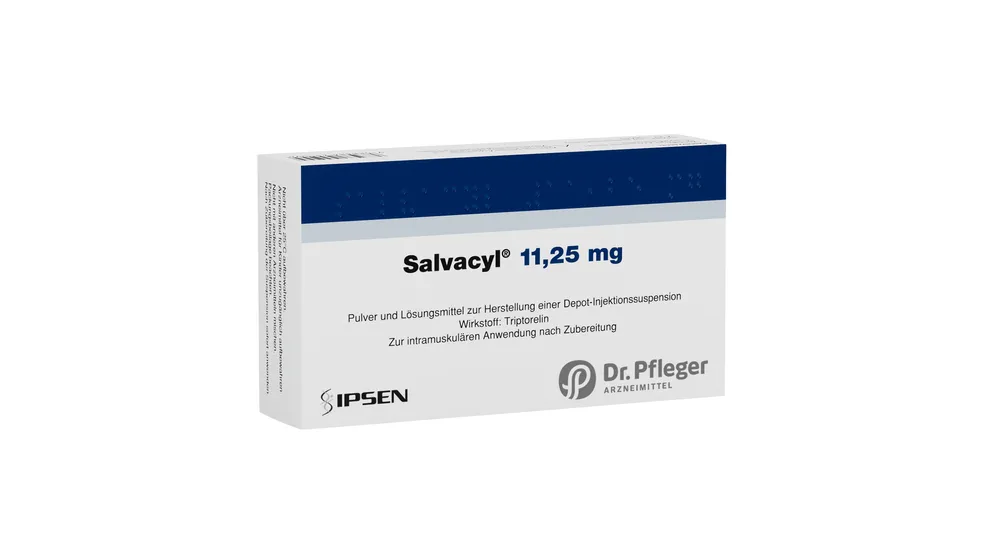
Table of Contents
- Package leaflet: Information for the patient
- 1. What Salvacyl is and what it is used for
- 2. Important information before using Salvacyl
- 3. How to use Salvacyl
- 4. Possible adverse reactions
- 5. How to store Salvacyl
- 6. Contents of the pack and other information
- Information intended exclusively for healthcare professionals:
Package leaflet: Information for the patient
Salvacyl, 11.25 mg,
powder and solvent for extended-release injection suspension
Tryptorelin
Please read the entire leaflet carefully before using the medicine, as it contains
important information for the patient.
- Keep this leaflet for future reference.
- If you have any questions, consult your doctor or pharmacist.
- This medicine has been prescribed for a specific individual. Do not share it with others. This medicine may harm others, even if their symptoms are the same.
- If you experience any adverse effects, including any not listed in this leaflet, inform your doctor or pharmacist. See section 4.
Table of contents
- What Salvacyl is and what it is used for
- Important information before using Salvacyl
- How to use Salvacyl
- Possible side effects
- How to store Salvacyl
- Contents of the pack and other information
1. What Salvacyl is and what it is used for
Salvacyl contains tryptorelin, which is similar to a hormone called gonadotropin-releasing hormone (GnRH analog). It is a long-acting formulation delivering 11.25 mg of tryptorelin over more than twelve weeks. It works by reducing the level of the male hormone testosterone in the body.
Salvacyl is used to reduce sexual drive in adult males with severe sexual deviations.
Treatment with Salvacyl should be initiated and supervised by a psychiatrist. Treatment should be carried out in combination with psychotherapy to help reduce deviant sexual behaviors.
2. Important information before using Salvacyl
When not to use Salvacyl
- if the patient has severe osteoporosis (a condition that weakens bones).
- if the patient is allergic to triptorelin or other drugs that regulate the production and release of sex hormones, or to any of the other ingredients of this medicine (listed in section 6).
Warnings and precautions
At the beginning of treatment, the amount of testosterone in the body increases. This may result in increased sexual drive. The doctor may prescribe a medication (antiandrogen) to counteract this effect.
Consult a doctor if:
- depressive mood occurs during treatment with Salvacyl. Cases of severe depression have been reported in patients receiving Salvacyl. The doctor may recommend monitoring for depression during treatment.
- anticoagulant drugs (medications that inhibit blood clotting) are being used, as this may lead to bruising at the injection site.
- large amounts of alcohol are consumed, tobacco is smoked, osteoporosis (a condition that weakens bones) is present or there is a family history of osteoporosis, nutritional deficiencies exist, or anticonvulsant drugs (medications for epilepsy or seizures) or glucocorticosteroids are being taken. Prolonged use of Salvacyl carries a risk of bone weakening, especially when combined with the above conditions. To prevent bone fragility, maintain a healthy lifestyle, avoid smoking, limit alcohol consumption, and engage in regular weight-bearing exercise (e.g. walking, running, other forms of physical activity that strengthen the skeleton). Ensure adequate dietary intake of calcium and vitamin D.
- gonadal function testing of the pituitary gland is scheduled soon. Results may be misleading during or after treatment with Salvacyl.
- sudden headache, vomiting, visual disturbances, or eye muscle paralysis occur. These may be signs of a benign pituitary gland tumor, which may develop during treatment with Salvacyl.
- the patient has diabetes, or heart or vascular diseases.
- any heart or vascular conditions are present, including cardiac rhythm disorders (arrhythmia), which should be treated with appropriate medications. The risk of cardiac rhythm disturbances may be increased during treatment with Salvacyl.
- medications that lower testosterone levels may cause ECG changes related to cardiac rhythm disturbances (prolongation of the QT interval).
- treatment with GnRH analogs, including Salvacyl 11.25 mg, may increase the risk of anemia (defined as a reduction in red blood cell count). When treatment is discontinued, testosterone levels will return to previous values and sexual drive may increase again. The doctor may prescribe another medication to prevent this.
Children and adolescents
Salvacyl must not be administered to newborns, infants, children, or adolescents.
Salvacyl with other medicines
If Salvacyl is used together with other drugs affecting pituitary hormone secretion, additional medical check-ups should be scheduled.
Inform the doctor or pharmacist about all medicines currently used, recently used, or planned for use.
Salvacyl may interact with certain drugs used to treat cardiac rhythm disorders (e.g. quinidine, procainamide, amiodarone, and sotalol), or may increase the risk of cardiac rhythm problems when used with certain other drugs (e.g. methadone used for pain relief or as a medication supporting detoxification in the treatment of narcotic addiction), moxifloxacin (as an antibiotic), and antipsychotic drugs used in severe psychiatric disorders.
Pregnancy, breastfeeding, and effects on fertility
Salvacyl is not intended for use in women.
Driving and operating machinery
Patients may feel dizzy, fatigued, or experience visual problems such as blurred vision. These are possible side effects of the medicine. If any of these effects occur, patients should not drive or operate machinery.
Salvacyl contains sodium
Salvacyl contains less than 1 mmol (23 mg) of sodium per vial. Therefore, this medicine is considered practically sodium-free and may be used on a low-sodium diet.
3. How to use Salvacyl
Salvacyl is always prepared and administered by a doctor or nurse.
The recommended dose is one vial of Salvacyl given as a single intramuscular injection every twelve weeks.
If the effect of the medicine seems too strong or too weak, consult your doctor.
If you have any doubts concerning the use of this medicine, consult your doctor or pharmacist.
4. Possible adverse reactions
Like all medicines, this medicine can cause adverse reactions, although not everyone will experience them.
Due to changes in testosterone levels in the body, various adverse reactions may be expected.
These include hot flushes and impotence.
In rare cases (1 in 1,000 patients), a severe allergic reaction may occur, and allergic reactions may occur frequently (in up to 1 in 10 patients).
Discontinue use of Salvacyl and contact your doctor or go immediately to the nearest emergency department if any of the following symptoms occur: difficulty swallowing or breathing, swelling of the lips, face, throat or tongue, or rash. You should inform your doctor immediately.
Other adverse reactions that may occur:
Very common: may affect more than 1 in 10 patients
- Hot flushes
- Weakness
- Excessive sweating
- Back pain
- Tingling sensation in the legs
- Decreased libido
- Impotence
Common: may affect up to 1 in 10 patients
- Nausea, dry mouth
- Pain, bruising, redness, and swelling at the injection site; muscle and bone pain; pain in arms and legs; swelling (due to fluid retention in body tissues); lower abdominal pain
- Allergic reaction
- High blood pressure
- Weight gain
- Dizziness and headache
- Loss of libido, depression, mood changes
Uncommon: may affect up to 1 in 100 patients
- Increased platelet count
- Awareness of heartbeat (palpitations)
- Ringing in the ears, dizziness (sensation of spinning or spinning vision)
- Blurred vision
- Abdominal pain, constipation, diarrhoea, vomiting
- Drowsiness, severe chills with sweating and fever, insomnia, pain
- May affect results of certain blood tests (such as liver function tests)
- Increased arterial blood pressure
- Weight loss
- Loss of appetite, increased appetite, gout (sudden pain and swelling in joints, usually the big toe), diabetes, excess lipids in the blood
- Joint pain, cramps, muscle weakness, muscle pain, swelling and tenderness, bone pain
- Tingling or numbness
- Insomnia, irritability
- Breast enlargement, breast pain, testicular shrinkage and pain
- Breathing difficulties
- Acne, hair loss, itching, rash, skin redness, urticaria
- Waking up to pass urine, problems with urination
- Nosebleeds
Rare: may affect up to 1 in 1,000 patients
- Red or purple skin discolouration
- Unusual sensations in the eye or visual disturbances
- Abdominal distension, bloating, altered taste sensation
- Chest pain
- Difficulty standing
- Influenza-like illnesses, fever
- Nasopharyngitis (inflammation of nose and throat)
- Increased levels of enzymes, e.g. in bones and liver
- Elevated body temperature
- Joint stiffness, joint swelling, musculoskeletal stiffness, osteoarthritis
- Memory disturbances
- Feeling disoriented, reduced activity, elevated mood or well-being
- Shortness of breath when lying down
- Blisters
- Low blood pressure
Frequency not known (cannot be estimated from available data)
- Changes in ECG (prolongation of QT interval)
- General discomfort
- Restlessness
- Inability to retain urine
- In patients with an existing pituitary tumour, increased risk of pituitary haemorrhage
- Anaemia (reduced number of red blood cells)
During treatment with the medicinal product Salvacyl, an increase in white blood cell count may occur in patients, as seen with other GnRH analogues.
Reporting of adverse reactions
If any adverse reactions occur, including any unlisted side effects not mentioned in this leaflet, inform your doctor or pharmacist. Adverse reactions can be reported directly to the Department of Monitoring Adverse Drug Reactions, Office for Registration of Medicinal Products, Medical Devices and Biocidal Products
Al. Jerozolimskie 181C
02-222 Warsaw
Tel.: +48 22 49 21 301
Fax: +48 22 49 21 309
Website: https://smz.ezdrowie.gov.pl
Adverse reactions can also be reported to the marketing authorisation holder or its representative.
Reporting adverse reactions helps provide more information on the safety of the medicine.
5. How to store Salvacyl
Keep this medicine out of sight and reach of children.
Do not use this medicine after the expiry date stated on the packaging, vial,
and ampoule following "EXP". The expiry date refers to the last day of the stated month.
Lot (batch number).
Do not store above 25°C.
Chemical and physical in-use stability has been demonstrated for 24 hours at 25°C. From a microbiological point of view, the product should be used immediately. If not used immediately, the responsibility for storage conditions and duration lies with the user; however, storage should not exceed 24 hours at a temperature of 2°C to 8°C.
Medicines must not be disposed of via wastewater or household waste. Ask your pharmacist how to dispose of medicines no longer required. Such measures will help protect the environment.
6. Contents of the pack and other information
What Salvacyl contains
- The active substance is triptorelin. One vial of powder contains 11.25 mg triptorelin as triptorelin pamoate. The prepared suspension (2 ml) contains 11.25 mg triptorelin as triptorelin pamoate.
- Other ingredients are:
Powder: poly(DL-lactic-co-glycolic acid), mannitol, sodium carboxymethylcellulose and polysorbate 80.
Solvent: water for injections.
What Salvacyl looks like and contents of the pack
Salvacyl is a white or almost white powder.
The solvent is a clear solution.
Pack contents:
1 vial of powder
1 ampoule containing 2 ml solvent
1 syringe
2 needles
Marketing Authorisation Holder and Manufacturer
Marketing Authorisation Holder
Ipsen Pharma
70 rue Balard
75015 Paris
France
Manufacturer
Ipsen Pharma Biotech
Parc d'activités du plateau de Signes
Chemin départemental n˚ 402
83870 Signes
France
This medicinal product is authorised in the European Economic Area countries under the following names:
Sweden: Moapar 11.25 mg
Austria, Belgium, Netherlands, Ireland, Germany, United Kingdom: Diphereline SR 11.25 mg
France: Decapeptyl LP
Greece: Salvapar
Poland: Salvacyl
For further information about this medicinal product, please contact the local representative of the Marketing Authorisation Holder:
Ipsen Poland Sp. z o.o.
ul. Chmielna 73
00-801 Warsaw
tel.: 22 653 68 00
fax: 22 653 68 22
<------------------------------------------------------------------------------------------------------------------------>
Information intended exclusively for healthcare professionals:
1 – PATIENT PREPARATION PRIOR TO DRUG RECONSTITUTION
Prepare the patient by disinfecting the buttock at the site where the medication will be administered.
This should be done first, as the drug must be injected immediately after reconstitution.
2 – PREPARATION OF THE INJECTION SOLUTION
The package contains 2 needles:
- Needle 1: 20 G needle (38 mm in length) without safety device, for reconstitution
- Needle 2: 20 G needle (38 mm in length) equipped with a safety device, for injection
Needle 1: 38 mm
Needle 2: 38 mm
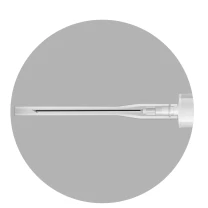
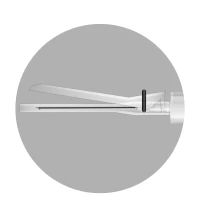
The presence of bubbles on the surface of the lyophilized powder is a normal appearance of the product.
The following steps must be performed continuously without interruption.
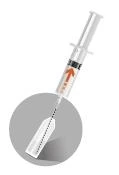
2a
- Remove the vial containing the solvent. Gently tap the vial with your finger to move the liquid from the upper part of the vial to the main compartment.
- Attach Needle 1 (without safety device) to the syringe. Do not remove the needle shield yet.
- Break the ampoule at the scored mark, directed upwards.
- Remove the shield from Needle 1. Insert the needle into the ampoule and withdraw the entire volume of solvent into the syringe.
- Set aside the syringe containing the solvent.
2b
- Remove the vial containing the powder. Gently tap the vial with your finger to move the powder from the upper part of the vial to the main compartment.
- Remove the plastic cap from the vial.
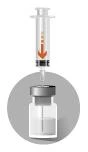
- Take the syringe with solvent again and insert the needle vertically through the rubber stopper of the vial. Slowly inject the solvent into the vial, aiming to rinse the entire upper portion of the vial if possible.
2c
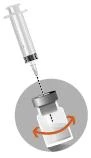
- Pull Needle 1 above the fluid level. Do not remove the needle from the vial. Prepare the suspension for injection by gently moving the vial from side to side. Do not invert the vial.
- Ensure that mixing has continued for a sufficient duration (at least 30 seconds) to obtain a homogeneous, milky suspension for injection. Important: Check that no undissolved powder remains in the vial (if powder clumps are present, continue mixing until they disappear).
2d
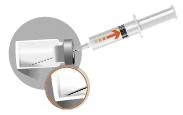
After achieving a homogeneous suspension for injection, insert the needle fully
and, without inverting the vial, withdraw the entire volume of suspension into the syringe. A small
amount of suspension will remain in the vial; this should be discarded. The intended overfill
in the vial compensates for this residual volume.
- Holding the colored hub, unscrew the needle. Remove used Needle 1 (used for reconstitution). Attach and screw on Needle 2 to the end of the syringe.
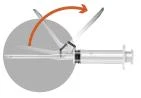
Slide the safety shield away from the needle and toward the syringe barrel. The safety shield will remain in this position.
- Remove the needle cap.
- Hold the syringe with needle vertically upright to expel air, then administer the injection immediately. Disinfect the injection site.
3 – INTRAMUSCULAR INJECTION
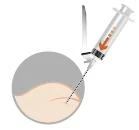
- To avoid precipitation, inject immediately at the disinfected site as quickly as possible (within 1 minute after reconstitution).
4 – AFTER USE
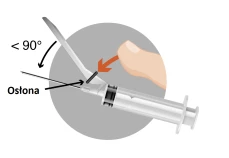
With one hand, activate the safety shield.
- Note: keep your finger behind the shield at all times. There are two alternative methods to activate the safety shield:
- Method A: push the shield toward the needle or
- Method B: press the shield against a flat surface.
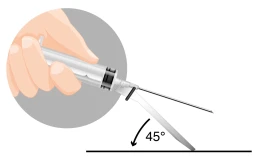
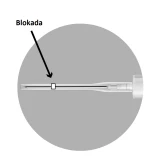
- In both cases, press down the shield with a quick, firm motion until a distinct click is heard.
- Check visually that the entire needle is enclosed and locked under the shield.
Used needles, unused suspension, and all waste materials must be disposed of in accordance with local regulations.