Salbutamol wzf
Poland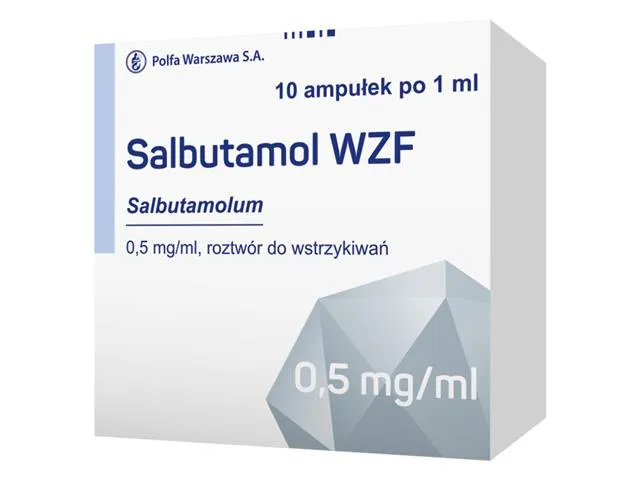
Table of Contents
Package leaflet: Information for the user
SALBUTAMOL WZF, 0.5 mg/ml, solution for injection
Salbutamolum
Please read all of this leaflet carefully before using this medicine because it contains important information for you.
- Keep this leaflet. You may need to read it again.
- If you have any further questions, ask your doctor, pharmacist, or nurse.
- This medicine has been prescribed for a specific individual. Do not pass it on to others. It may harm other people, even if their symptoms are the same.
- If you experience any adverse reactions, including any not listed in this leaflet, tell your doctor, pharmacist, or nurse. See section 4.
Contents of the leaflet
- What Salbutamol WZF is and what it is used for
- Important information before using Salbutamol WZF
- How to use Salbutamol WZF
- Possible side effects
- How to store Salbutamol WZF
- Contents of the pack and other information
1. What Salbutamol WZF is and what it is used for
Salbutamol WZF belongs to a group of medicines called beta-adrenergic agonists. It causes relaxation of the muscles in the airways and bronchi.
Salbutamol WZF in the form of solution for injection is used:
- in severe bronchospastic conditions (e.g. severe breathing difficulties in patients with asthma).
2. Information before using Salbutamol WZF
When not to use Salbutamol WZF
- If the patient is allergic to salbutamol sulfate or any of the other ingredients of this medicine (listed in section 6).
- If the patient is pregnant for less than 22 weeks.
- If the patient has ischaemic heart disease or established risk of developing ischaemic heart disease (a condition characterised by reduced blood supply to the heart muscle, causing symptoms such as chest pain (angina)).
- If the patient has previously experienced miscarriage during the first two trimesters of pregnancy.
- If the patient is pregnant and either the patient or the foetus has certain medical conditions or disorders which would make prolonging the pregnancy dangerous (such as severe hypertension, intrauterine infection, bleeding, placenta blocking the birth canal or detaching from the uterine wall, or intrauterine foetal death).
- If the patient suffers from heart disease with palpitations (e.g. heart valve disorder) or chronic lung disease (e.g. chronic bronchitis, pulmonary emphysema), causing increased blood pressure in the pulmonary vessels (pulmonary hypertension).
Warnings and precautions
Before starting treatment with Salbutamol WZF, discuss this with your doctor or nurse.
- If the patient has any of the following health problems, they should inform the doctor before using the medicine:
- Heart diseases and circulatory disorders (symptoms such as chest pain, rapid or irregular heartbeat, shortness of breath, high blood pressure, rapid pulse) – see section "When not to use Salbutamol WZF",
- Hyperthyroidism,
- Epilepsy,
- Diabetes (elevated blood glucose levels).
- Exercise caution if Salbutamol WZF is used as the sole or primary treatment in patients with severe or unstable asthma, as there is a risk of severe asthma attack.
- If the patient experiences allergic reactions during treatment with Salbutamol WZF, such as bronchospasm, throat swelling, skin rash, or urticaria, especially in children, contact a doctor immediately – see section 4. "Possible side effects".
- Do not increase the dose or frequency of administration without consulting a doctor.
Salbutamol WZF and other medicines
Inform the doctor about all medicines currently used, recently used, or planned for use.
- Salbutamol WZF must not be used concomitantly with other bronchodilators administered orally or intravenously, as this may cause serious cardiovascular adverse effects, such as rapid or irregular heartbeat.
- Salbutamol WZF should only be used after consultation with a doctor:
- With medicines used for arrhythmia or excessively rapid heartbeat (such as digoxin);
- With beta-adrenergic blocking agents (such as atenolol or propranolol), including ophthalmic formulations (e.g. timolol), as this may cause bronchospasm in patients with asthma;
- With xanthine derivatives (e.g. theophylline or aminophylline);
- With diuretics, especially those causing potassium loss from the body, e.g. furosemide;
- With steroid medicines (e.g. prednisolone);
- With antidiabetic medicines used to lower blood glucose levels (e.g. insulin, metformin or glibenclamide);
- With antidepressants, including monoamine oxidase inhibitors (MAOIs) and tricyclic antidepressants.
If the patient is scheduled for a surgical procedure requiring general anaesthesia, the treating physician will discontinue administration of Salbutamol WZF 6 hours before the procedure, if possible, to prevent adverse effects (e.g. cardiac arrhythmia).
Pregnancy and breastfeeding
If the patient is pregnant or breastfeeding, suspects she may be pregnant, or is planning to have a child, she should consult a doctor before using this medicine.
The medicine inhibits uterine contractions and may complicate delivery.
The doctor may recommend using Salbutamol WZF during pregnancy only if, in their opinion, the benefit to the mother outweighs the potential risk to the foetus.
Salbutamol is likely excreted into breast milk. If use of the medicine is necessary, the patient should discontinue breastfeeding.
Driving and operating machinery
There is no data available on the effect of salbutamol on driving or operating machinery.
Salbutamol WZF contains sodium
Salbutamol WZF contains 3.55 mg of sodium (a main component of table salt) per ml of solution. This corresponds to 0.18% of the maximum recommended daily dietary sodium intake for adults.
The medicine may be diluted with 0.9% NaCl solution or 5% glucose solution. The sodium content originating from the diluent should be taken into account when calculating the total sodium content of the prepared diluted solution. For precise information on the sodium content of the solution used to dilute the medicine, refer to the patient leaflet of the diluent used.
3. How to use Salbutamol WZF
- Salbutamol WZF is administered by medical personnel.
- The medicine can be given subcutaneously, intramuscularly, or intravenously.
- Dosage is determined individually by the physician for each patient.
Adults
Subcutaneously or intramuscularly: 0.5 mg (8 micrograms/kg body weight). If necessary, the dose may be
repeated every 4 hours.
Intravenously: slowly inject from 0.25 mg to 0.5 mg (from 4 micrograms/kg body weight to
8 micrograms/kg body weight).
If necessary, the dose may be repeated after 15 minutes, preferably as a continuous infusion
at a rate of 5 micrograms/min, with monitoring of pulse and arterial pressure.
Note: During intravenous administration, oxygen and potassium supplementation are recommended.
The medicine may also be administered by nebulization at a dose of 2.5 mg to 5 mg (in acute asthma every
1 to 3 hours).
Children
There are insufficient data to determine the dosage of salbutamol in the form of injection solution in children.
Detailed dosage information is provided in the section "Information intended exclusively for healthcare professionals."
Use of a higher than recommended dose of Salbutamol WZF
After administration of a higher than recommended dose, the following may occur: chest pain, increased
or decreased blood pressure, rapid or irregular heartbeat, nervousness, headache, tremor, seizures,
dryness of the oral mucosa, dizziness, nausea, insomnia.
A decrease in blood potassium concentration may occur.
If a higher than recommended dose has been administered, seek immediate medical advice; the doctor will initiate appropriate treatment.
Missed dose of Salbutamol WZF
Since the medicine is administered by medical personnel, a missed dose is unlikely.
4. Possible adverse reactions
Like all medicines, this medicine can cause adverse reactions, although not everyone experiences them.
If the patient experiences the first symptoms of hypersensitivity (e.g. swelling of the face, lips, tongue,
throat, causing difficulty in breathing or swallowing, bronchospasm, acute
cardiovascular failure), seek immediate medical advice. Such symptoms
are very rare.
Very common (more than 1 in 10 people):
- tremor;
- increased heart rate.
Common (less than 1 in 10 people):
- decreased blood potassium levels, which may cause muscle weakness, increased thirst or tingling sensations;
- headache;
- strong or rapid heartbeat (palpitations);
- decreased arterial blood pressure, possibly causing a "dizzy" or "lightheaded" feeling;
- muscle cramps.
Uncommon (less than 1 in 100 people):
- fluid accumulation in the lungs (pulmonary edema), which may cause breathing difficulties.
Rare (less than 1 in 1,000 people):
- increased levels of blood sugar (glucose) and/or lactic acid;
- heart rhythm disorders (including atrial fibrillation, supraventricular tachycardia and extrasystoles), myocardial ischemia;
- irregular or abnormal heartbeat;
- sudden facial flushing;
- peripheral vasodilation.
Very rare (occurring in less than 1 in 10,000 people):
- hyperexcitability;
- muscle stiffness;
- urticaria.
Very rarely, some individuals may experience chest pain (associated with heart conditions such as angina). In the event of such symptoms, the patient should not abruptly discontinue the medicine, but should contact their doctor as soon as possible.
Reporting of adverse reactions
If any adverse reactions occur, including any not listed in this leaflet, inform your doctor, pharmacist or nurse. Adverse reactions can be reported directly to the Department of Monitoring Adverse Drug Reactions at the Office for Registration of Medicinal Products, Medical Devices and Biocidal Products
Al. Jerozolimskie 181C
02-222 Warsaw
Tel.: +48 22 49 21 301
Fax: +48 22 49 21 309
Website: https://smz.ezdrowie.gov.pl
Adverse reactions can also be reported to the marketing authorization holder.
Reporting adverse reactions helps provide more information on the safety of the medicine.
5. How to store Salbutamol WZF
Store below 25 °C.
Keep ampoules in the outer packaging to protect from light; do not freeze.
Keep this medicine out of sight and reach of children.
Do not use this medicine after the expiry date stated on the carton and on the ampoule. The expiry date refers to the last day of the stated month.
The marking on the packaging following "EXP" indicates the expiry date, and that following "Lot" indicates the batch number.
Medicines must not be disposed of via wastewater or household waste. Ask your pharmacist how to dispose of medicines no longer required. Such measures will help protect the environment.
6. Contents of the package and other information
What Salbutamol WZF contains
- The active substance is salbutamol sulfate. Each ml of solution contains 0.5 mg of salbutamol (as salbutamol sulfate).
- The other ingredients are: disodium edetate, sodium chloride, hydrochloric acid 10% (for pH adjustment), water for injections.
What Salbutamol WZF looks like and contents of the pack
Salbutamol WZF is a colourless, clear liquid.
The pack contains 10 glass ampoules of 1 ml in a cardboard box.
Marketing Authorisation Holder and Manufacturer
Zakłady Farmaceutyczne POLPHARMA S.A.
ul. Pelplińska 19, 83-200 Starogard Gdański
tel. +48 22 364 61 01
Information intended exclusively for healthcare professionals:
SALBUTAMOL WZF, 0.5 mg/ml, solution for injection
Salbutamolum
- Dosage should be individually determined by a physician for each patient.
- The medicine is administered subcutaneously, intramuscularly, or intravenously. When administered intravenously, oxygen therapy and potassium supplementation are recommended.
- The medicine may be diluted with 0.9% sodium chloride solution (see section 2, subsection "Salbutamol WZF contains sodium") or 5% glucose solution. After dilution, the resulting solution may be stored for no longer than 24 hours.
- In bronchospastic conditions, the medicine rapidly (within 5 minutes) but transiently (4 to 6 hours) relaxes the airways.
Instructions for opening the ampoule
Before opening the ampoule, ensure that the entire solution is in the lower part of the ampoule.
Gently shake the ampoule or tap it with a finger to help the solution flow down.
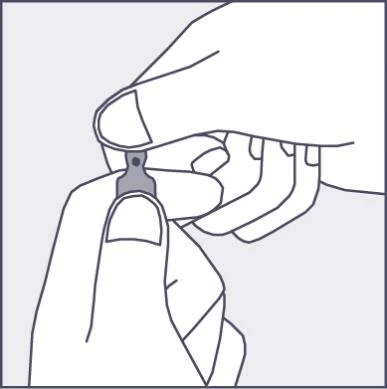
Each ampoule has a coloured dot (see Figure 1) indicating the location of the score line below it.
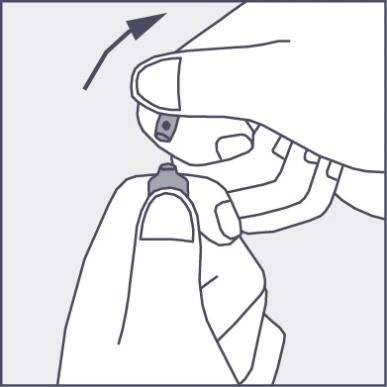
- To open the ampoule, hold it vertically with both hands, with the coloured dot facing towards you – see Figure 2. The upper part of the ampoule should be held so that the thumb is positioned above the coloured dot.
- Press in the direction of the arrow shown in Figure 3. Ampoules are intended for single use only and should be opened immediately before use. Any unused portion of the product should be discarded in accordance with applicable regulations.
Figure 1 Figure 2 Figure 3

Dosage
Adults
Subcutaneously or intramuscularly: 0.5 mg (8 micrograms/kg body weight). If necessary, the dose may be repeated every 4 hours.
Intravenously: slowly inject between 0.25 mg and 0.5 mg (4 micrograms/kg to 8 micrograms/kg body weight).
Before administration, 0.5 mg of salbutamol (1 ml of solution) may be diluted to 10 ml with water for injections (resulting concentration: 50 micrograms/ml), and 5 ml of the diluted solution (250 micrograms/5 ml) may be administered slowly intravenously.
If necessary, the dose may be repeated after 15 minutes, preferably by continuous infusion at a rate of 5 micrograms/min, with monitoring of pulse and arterial pressure.
Note: During intravenous administration, oxygen therapy and potassium supplementation are recommended.
The medicine may also be administered by nebulization at a dose of 2.5 mg to 5 mg (in asthmatic conditions every 1 to 3 hours).
In severe cases of asthma, serum potassium levels should be monitored during salbutamol administration, as significant hypokalaemia may occur (especially if other medicines such as methylxanthines, steroids, diuretics, or laxatives have been used).
Children
There are insufficient data to establish dosage recommendations for salbutamol solution for injection in children.