Salazopyrin en
Poland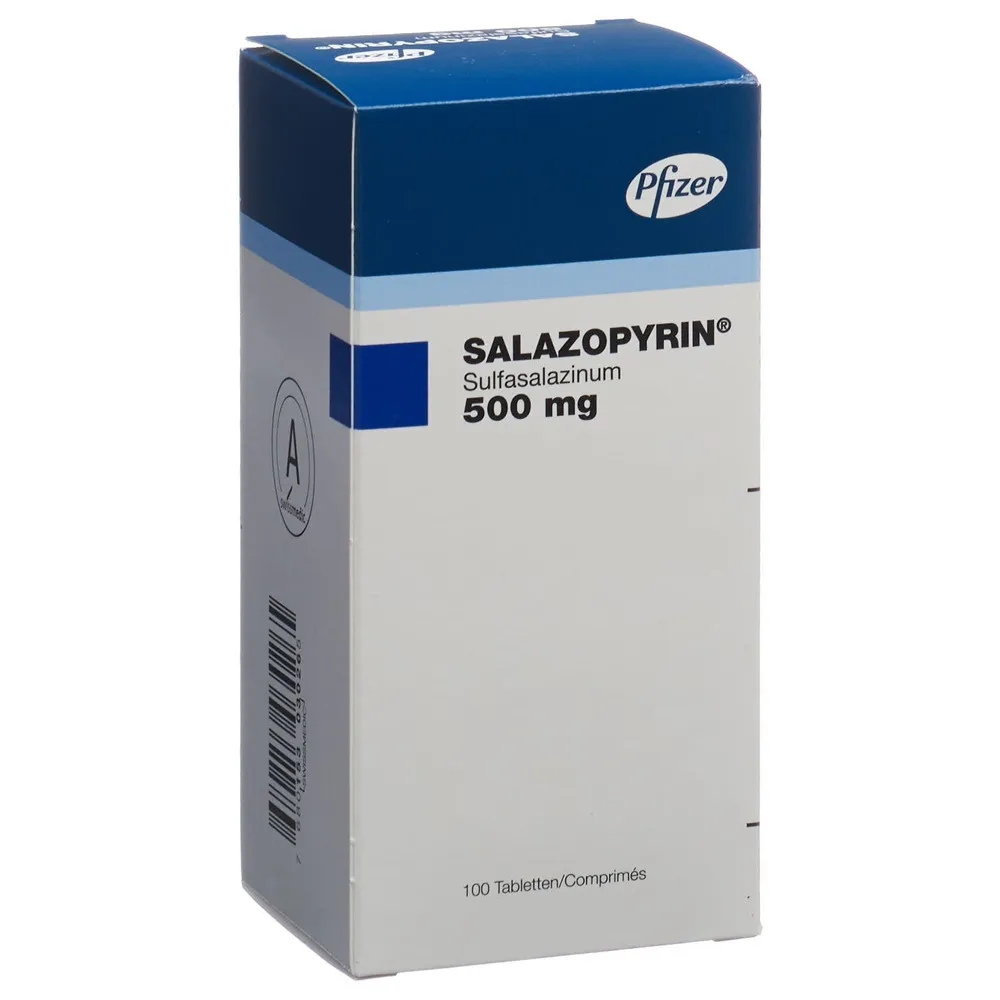
Table of Contents
Patient Information Leaflet: Information for the User
SALAZOPYRIN EN, 500 mg, enteric-coated tablets
Sulfasalazinum
Please read all of this leaflet carefully before taking this medicine, because it contains
important information for you.
- Keep this leaflet, as you may need to read it again.
- If you have any further questions, please consult your doctor or pharmacist.
- This medicine has been prescribed for a specific individual. Do not pass it on to others. It may harm other people, even if their symptoms are the same.
- If you experience any adverse reactions, including any possible side effects not listed in this leaflet, inform your doctor or pharmacist. See section 4.
Table of Contents
- What Salazopyrin EN is and what it is used for
- Important information before taking Salazopyrin EN
- How to take Salazopyrin EN
- Possible side effects
- How to store Salazopyrin EN
- Contents of the pack and other information
1. What Salazopyrin EN is and what it is used for
Salazopyrin EN contains sulfasalazine as the active substance.
Salazopyrin EN belongs to a group of anti-inflammatory drugs used in the treatment of:
rheumatoid arthritis resistant to treatment with non-steroidal anti-inflammatory drugs (NSAIDs),
inflammatory bowel diseases (e.g. ulcerative colitis, Crohn's disease).
2. Important information before using Salazopyrin EN
When not to use Salazopyrin EN
- if the patient is allergic to sulfasalazine or any of the other ingredients of this medicine (listed in section 6);
- if the patient is allergic to sulfonamides or salicylates and their derivatives;
- if the patient has acute intermittent porphyria, mixed porphyria;
- if the patient has urinary or intestinal obstruction;
- in children under 2 years of age.
Warnings and precautions
Before starting treatment with Salazopyrin EN, discuss the following with your doctor:
- if the patient has severe allergies and/or bronchial asthma;
- if the patient has glucose-6-phosphate dehydrogenase deficiency, as this may cause haemolytic anaemia in such patients;
- if the patient has impaired kidney or liver function;
- if the patient has blood disorders.
Severe infections, including cases of sepsis and pneumonia associated with bone marrow suppression, have been reported.
If the patient develops an infection during treatment with Salazopyrin EN, medical advice should be sought immediately. In case of severe infection, the doctor may decide to discontinue the treatment.
In patients with a history of recurrent or chronic infections, or who currently have infections, or who have other diseases that may increase susceptibility to infections, the doctor will carefully consider whether sulfasalazine treatment is necessary.
In patients with mild hypersensitivity, desensitisation should be considered. In case of severe hypersensitivity reactions, treatment must be discontinued.
Severe hypersensitivity reactions may involve internal organs and may lead, for example, to hepatitis, nephritis, myocarditis, a mononucleosis-like syndrome (e.g. "pseudo-mononucleosis"), blood disorders and/or pneumonia.
During treatment with Salazopyrin EN, severe, life-threatening generalised hypersensitivity reactions have been reported, such as drug rash with eosinophilia and systemic symptoms (DRESS), characterised by widespread rash (transient rash of various types, disseminated almost over the entire body) with eosinophilia (increased levels of a certain type of white blood cells – acidophilic granulocytes in blood) and systemic symptoms. Early signs of hypersensitivity, such as fever and swollen lymph nodes, may occur even in the absence of a rash.
Very rarely, severe skin reactions (in some cases leading to death), such as exfoliative dermatitis, Stevens-Johnson syndrome, and toxic epidermal necrolysis, may occur during treatment with Salazopyrin EN. The highest risk of these adverse effects occurs early in treatment, and in most cases within the first month. If the patient develops influenza-like symptoms, rash, mucosal disorders [e.g. oral, pharyngeal, nasal, or genital ulcers, and conjunctivitis (red, swollen eyes)], extensive blisters, or large areas of skin peeling, medical advice must be sought immediately. In such cases, Salazopyrin EN must be discontinued.
The best outcomes in treating Stevens-Johnson syndrome and toxic epidermal necrolysis are achieved when these conditions are recognised as early as possible and the drug is immediately withdrawn. Early discontinuation of the drug improves prognosis.
If the patient develops Stevens-Johnson syndrome or toxic epidermal necrolysis while taking Salazopyrin EN, the treatment with this medicine must never be restarted.
The appearance of clinical symptoms such as sore throat, fever, pallor, petechiae, and jaundice during treatment with sulfasalazine may indicate bone marrow suppression, haemolysis (breakdown of red blood cells), and hepatotoxicity (liver damage). Treatment with sulfasalazine should be discontinued while awaiting blood test results.
If certain blood disorders occur, the doctor may recommend folic acid supplementation.
Adequate fluid intake is recommended during treatment to reduce the risk of kidney stone formation.
After opening the container containing Salazopyrin EN, an intense odour may sometimes be noticeable. This odour is related to the manufacturing process and has no negative impact on the patient's health. The odour results from the coating process of enteric-coated tablets using a solvent. The solvent evaporates during manufacturing, leaving trace amounts in the final product, which may be detected by smell.
Note! To reduce the unpleasant odour, tablets may be left in fresh air to allow residual solvent to evaporate.
Monitoring tests during treatment:
Before starting treatment, the doctor may recommend baseline blood tests, including white blood cell differential and liver function tests, followed by repeat testing every 2 weeks during the first 3 months of treatment. For the following 3 months, monitoring should be performed every 4 weeks, and thereafter every 3 months, or more frequently if clinically indicated.
Kidney function assessment (including urine analysis) should be performed in all patients at the start of treatment and at least once a month during the first 3 months of treatment. Subsequently, monitoring should be performed as clinically indicated.
During treatment with Salazopyrin EN, the doctor will closely monitor the patient for skin reactions.
Inform your doctor if you are currently taking or have recently taken Salazopyrin EN or other medicines containing sulfasalazine, as they may affect blood and urine test results.
Salazopyrin EN and other medicines
Tell your doctor about all medicines you are currently taking or have recently taken, as well as any medicines you plan to take.
Salazopyrin EN may:
reduce the absorption of digoxin (used in the treatment of heart failure and atrial fibrillation);
reduce the absorption of folic acid (recommended by a doctor as a dietary supplement), leading to folic acid deficiency.
Concomitant oral administration of sulfasalazine and mercaptopurine (used in the treatment of certain leukaemias and autoimmune diseases, i.e. diseases in which the immune system attacks its own tissues) or azathioprine (used in transplantation and autoimmune disease treatment) may cause bone marrow dysfunction and leukopenia (reduced white blood cell count).
In patients taking sulfasalazine or its metabolites – mesalazine or mesalamine, falsely elevated urinary normetanephrine concentrations may be obtained when measured by liquid chromatography.
Salazopyrin EN with food and drink
See section 3.
Pregnancy and breastfeeding
If the patient is pregnant or breastfeeding, suspects she may be pregnant, or is planning to have a child, she should consult her doctor before using this medicine.
As the risk associated with using the medicine during pregnancy cannot be excluded, sulfasalazine may be used in pregnant women only when absolutely necessary.
The medicine may reduce sperm count and motility, which may affect fertility. This effect is usually reversible after discontinuation of treatment.
Sulfasalazine and sulfapyridine pass into breast milk in small amounts. This is not expected to pose a risk to a healthy infant.
Caution is advised in preterm infants and newborns with physiological jaundice. Bloody stools or diarrhoea have been reported in infants breastfed by mothers taking Salazopyrin EN. In these cases, bloody stools or diarrhoea in infants resolved after the mother discontinued Salazopyrin EN.
Driving and operating machinery
No effects on the ability to drive or operate machinery have been observed.
Salazopyrin EN contains propylene glycol
The medicine contains 5 mg of propylene glycol in each tablet.
3. How to use Salazopyrin EN
This medicine should always be taken exactly as directed by your doctor. If in doubt, consult your doctor or pharmacist.
Rheumatoid arthritis
Adults and elderly
The recommended dose is from 1 g to 3 g per day. The most commonly used dose is 2 enteric-coated tablets twice daily. Treatment is started at lower doses, which are gradually increased according to the schedule shown in the table below.
| Day 1 to 4 | Day 5 to 8 | Day 9 and onwards | |
| Morning | 1 enteric-coated tablet | 1 enteric-coated tablet | 2 enteric-coated tablets |
| Evening | 2 enteric-coated tablets | 2 enteric-coated tablets | 2 enteric-coated tablets |
If after 2-3 months the doctor determines that the patient's response to treatment is unsatisfactory, the daily dose of sulfasalazine may be increased up to a maximum of 3 g.
In patients who experience adverse reactions, the dose may be temporarily reduced.
Inflammatory bowel diseases (e.g. ulcerative colitis, Crohn's disease)
The doctor will recommend an appropriate dose depending on the clinical condition, the patient's tolerance to the drug, and the response to treatment.
It is recommended that in patients who have never previously been treated with sulfasalazine, the dose should be gradually increased (over several weeks). The daily dose should be evenly divided into multiple divided doses.
Acute phase of the disease
Adults and elderly patients
Severe exacerbations: 2 to 4 tablets 3 to 4 times daily (3 g to 8 g per day).
Mild to moderate flare-ups: 2 tablets 3 to 4 times daily.
Children
40–60 mg/kg body weight/day in 3 to 6 divided doses.
Maintenance treatment
Adults and elderly patients
The recommended maintenance dose for patients with ulcerative colitis or Crohn's disease in remission is 2 tablets 2 to 3 times daily. This treatment should not be interrupted and should be continued long-term, provided no adverse reactions occur.
In case of disease exacerbation, the doctor may decide to increase the dose to 2 to 4 tablets administered 3 to 4 times daily.
Children
20–30 mg/kg body weight/day in 3 to 6 divided doses.
Method of administration:
Tablets should be taken during meals, swallowed whole. They must not be crushed or broken.
An adequate fluid intake should be maintained during treatment with sulfasalazine (see "Warnings and precautions" in section 2).
Use of a higher than recommended dose of Salazopyrin EN
Single oral ingestion of large amounts of the drug has in rare cases led to severe poisoning.
Symptoms of poisoning may include: nausea, vomiting, crystalluria (crystal formation in urine), hematuria, oliguria and anuria, hypoglycemia, methemoglobinemia (in rare cases, loss of hemoglobin's ability to carry oxygen), cyanosis, hepatic symptoms, and sulfhemoglobinemia. Hypersensitivity reactions such as blood morphology changes (which may lead to fatal agranulocytosis – lack of certain white blood cells, granulocytes), urticaria, polyneuritis, and central nervous system symptoms may also occur.
In case of administration of a higher than recommended dose of Salazopyrin EN, the patient should contact a doctor. Depending on the symptoms present, the doctor will initiate appropriate treatment.
Missed dose of Salazopyrin EN
Do not take a double dose to make up for a missed dose.
Discontinuation of Salazopyrin EN
The decision to discontinue treatment is made by the doctor.
If you have any further questions regarding the use of this medicine, consult your doctor or pharmacist.
4. Possible adverse reactions
Like all medicines, this medicine can cause adverse reactions, although not everyone will experience them.
Adverse reactions occur in approximately 1/3 of patients treated with sulfasalazine. These are usually
gastrointestinal disorders or headaches. Some adverse reactions are dose-dependent.
Approximately 75% of adverse reactions occur within 3 months of starting treatment.
Assessment of adverse reactions is based on the following frequency criteria:
Very common (may occur in more than 1 in 10 people)
- Gastrointestinal disturbances, nausea
Common (may occur in no more than 1 in 10 people)
- Leukopenia (reduced number of white blood cells in peripheral blood)
- Loss of appetite
- Dizziness, headache, taste disturbances
- Tinnitus
- Cough
- Abdominal pain, diarrhea *, bloating, vomiting *
- Purpura *, itching
- Joint pain
- Proteinuria (presence of protein in urine)
- Fever
Uncommon (may occur in no more than 1 in 100 people)
- Thrombocytopenia (reduced number of blood platelets)
- Jaundice *
- Depression
- Dyspnea (difficulty breathing)
- Alopecia, urticaria
- Facial swelling
- Increased liver enzyme activity
Rare (may occur in no more than 1 in 1,000 people)
- Nail changes
Very rare (may occur in no more than 1 in 10,000 people)
- Potentially life-threatening skin rashes: toxic epidermal necrolysis (Lyell's syndrome) – a condition characterized by large flaccid blisters on erythematous areas (especially in pressure-prone areas), which rapidly rupture, leading to extensive erosions; Stevens-Johnson syndrome (fever, severe rash with blistering of mucous membranes).
Frequency not known (cannot be estimated from available data)
- Aseptic meningitis, pseudomembranous colitis
- Agranulocytosis, aplastic anemia, hemolytic anemia, macrocytosis, megaloblastic anemia, pancytopenia (reduction in all cellular blood components: red blood cells, white blood cells, and platelets), pseudo-mononucleosis *
- Anaphylactic shock* (symptoms of anaphylactic shock include: rapidly worsening general condition, itching, urticaria, pale and clammy skin, rapid and shallow breathing, dyspnea, tachycardia, significant drop in blood pressure, vomiting, diarrhea, swelling of the throat and tongue, disturbances in consciousness), serum sickness (an allergic, systemic reaction to intravenously administered heterologous serum or medication)
- Folic acid deficiency *
- Encephalopathy, peripheral neuropathy, olfactory disturbances, pericarditis, cyanosis, myocarditis *
- Pallor*
- Fibrosing alveolitis, interstitial lung disease*, eosinophilic infiltrates, oral and throat pain *
- Exacerbation of symptoms in ulcerative colitis *, pancreatitis
- Liver failure*, fulminant hepatitis*, hepatitis, cholestatic hepatitis *, cholestasis (bile stasis) *
- Drug-induced eosinophilic pneumonia with systemic symptoms*, angioedema*, toxic pustular dermatitis, erythema, rash, exfoliative dermatitis, lichen planus, photosensitivity
- Systemic lupus erythematosus (a chronic autoimmune disease causing damage to various organs, particularly skin, joints, blood, and kidneys), Sjögren's syndrome
- Nephrotic syndrome (a syndrome caused by excessive loss of protein in urine), interstitial nephritis, crystals in urine, hematuria, nephrolithiasis *
- Transient oligospermia
- Yellow discoloration of skin and body fluids*
- Induction of autoantibodies
* Adverse reactions identified after marketing authorization of the medicinal product.
† See "Warnings and precautions" in section 2
Reporting of adverse reactions
If any adverse reactions occur, including any adverse reactions not listed in this leaflet, inform your doctor or pharmacist. Adverse reactions can be reported directly to the Department of Monitoring Adverse Reactions to Medicinal Products of the Office for Registration of Medicinal Products, Medical Devices and Biocidal Products,
Al. Jerozolimskie 181C
02-222 Warsaw
Phone: +48 22 4921301
Fax: +48 22 4921309
Website: https://smz.ezdrowie.gov.pl
Adverse reactions can also be reported to the marketing authorization holder or its representative.
Reporting adverse reactions helps provide more information on the safety of the medicine.
5. How to store Salazopyrin EN
Keep this medicine out of sight and reach of children.
Store below 30 °C.
Do not use this medicine after the expiry date stated on the carton after (EXP). The expiry date refers to the last day of the stated month.
Medicines should not be disposed of via wastewater or household waste. Ask your pharmacist how to dispose of medicines no longer required. These measures will help protect the environment.
6. Contents of the pack and other information
What Salazopyrin EN contains
- The active substance is sulfasalazine. One enteric-coated tablet contains 500 mg of sulfasalazine.
- Other ingredients are: povidone, corn starch, magnesium stearate, colloidal silicon dioxide.
- Coating composition: cellulose acetate phthalate, propylene glycol (E1520) (see section 2 "Salazopyrin EN contains propylene glycol"), white wax, carnauba wax, self-emulsifying glyceryl monostearate, polyethylene glycol 20,000, talc.
What Salazopyrin EN looks like and contents of the pack
Salazopyrin EN 500 mg are yellow-orange, oval, convex enteric-coated tablets, marked with the symbol "KPh" on one side and "102" on the other side of the tablet.
The pack contains a white HDPE container closed with an orange PP cap, containing 50 or 100 tablets, placed in a cardboard box.
Marketing Authorisation Holder
Pfizer Europe MA EEIG, Boulevard de la Plaine 17, 1050 Bruxelles, Belgium
Manufacturer
Recipharm Uppsala AB, Björkgatan 30, Uppsala Domkyrkofors, Uppsala, 753 23, Sweden
For further information, please contact the local representative of the Marketing Authorisation Holder:
Pfizer Polska Sp. z o.o.
tel. 22 335 61 00
Detailed and up-to-date information about this product can be obtained by scanning the QR code located on the outer packaging using a mobile device. The same information is also available at the URL: https://pfi.sr/ulotka-salazopyrinen and on the website of the Office for Registration of Medicinal Products, Medical Devices and Biocidal Products http://www.urpl.gov.pl.