Sabril
Poland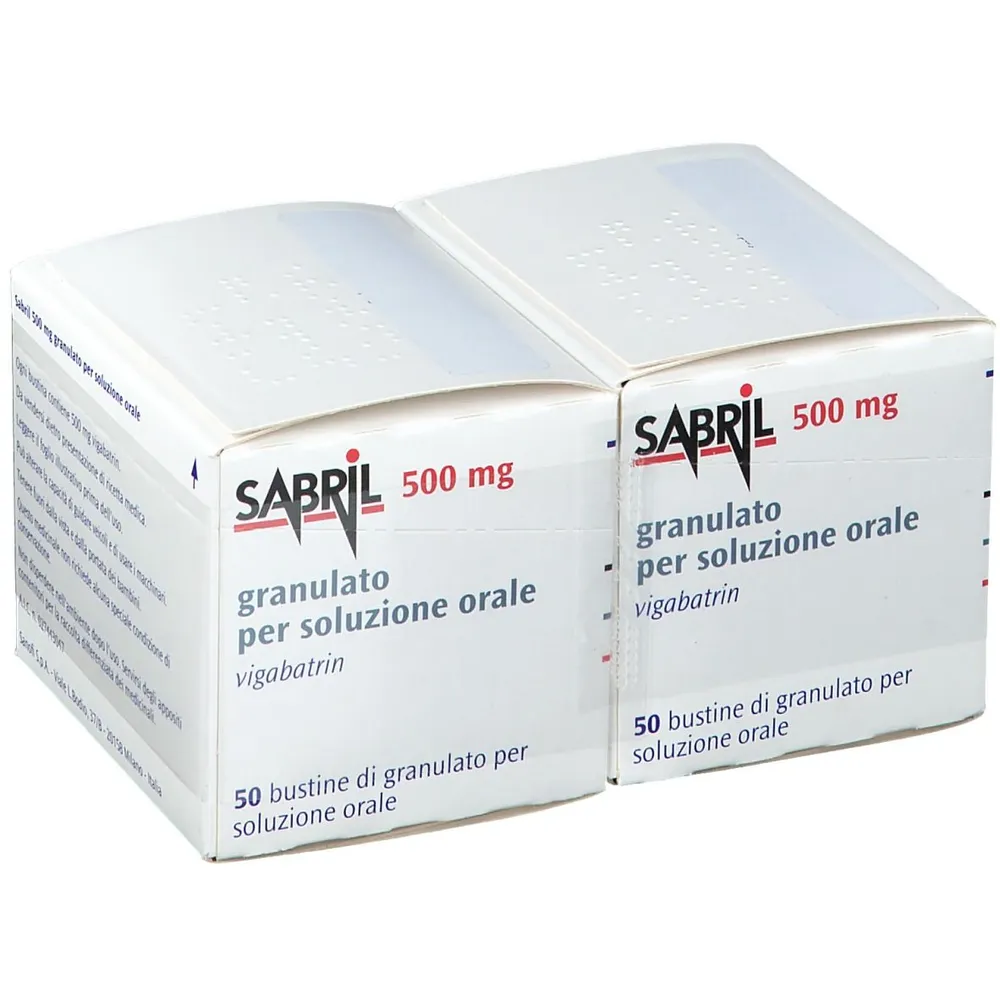
Table of Contents
Package leaflet: Information for the patient
Sabril, 500 mg, granules for oral solution
Vigabatrinum
Please read carefully the entire leaflet before taking this medicine, as it contains
important information for the patient.
- Keep this leaflet, as you may need to read it again.
- If you have any questions, consult your doctor or pharmacist.
- This medicine has been prescribed for a specific individual. Do not pass it on to others. This medicine may harm someone else, even if their symptoms are the same.
- If you experience any adverse reactions, including any not listed in this leaflet, inform your doctor or pharmacist. See section 4.
Table of contents:
- What Sabril is and what it is used for
- Important information before taking Sabril
- How to take Sabril
- Possible side effects
- How to store Sabril
- Contents of the pack and other information
1. What Sabril is and what it is used for
Sabril contains vigabatrin, which is a selective, irreversible inhibitor of GABA aminotransferase (an enzyme responsible for the breakdown of GABA). Vigabatrin increases the concentration of gamma-aminobutyric acid (GABA) in brain tissue, one of the main inhibitory neurotransmitters in the brain.
Sabril is indicated as adjunctive therapy (in combination with other antiepileptic drugs) in patients with refractory partial seizures, with or without secondary generalization, when all other combination therapies with antiepileptic drugs have proven insufficient or poorly tolerated.
Additionally, it is used as monotherapy (as the sole treatment) for epileptic seizures in infants (West syndrome).
2. Important information before using Sabril
When not to use Sabril
- If the patient has a known hypersensitivity to vigabatrin or to any of the other ingredients listed in section 6.
Warnings and precautions
Before starting treatment with Sabril, discuss with the doctor if:
- the patient currently has or has previously experienced psychotic, depressive, and/or behavioural disorders (see section 4),
- the patient has kidney problems or is elderly; in these patients, adverse effects such as sedation and confusion (disorientation) should be carefully monitored (see section 3),
- the patient is taking clonazepam (a medicine used in the treatment of epilepsy). Concomitant use of these medicines may enhance sedative effects or lead to coma. The doctor will decide, after careful assessment, whether simultaneous use of these medicines is necessary.
- if the patient has vision problems.
Visual field defects have been observed in approximately 1/3 of patients receiving vigabatrin.
These visual field defects may be severe, up to tunnel vision or even vision loss,
and may be irreversible. It cannot be ruled out that visual field defects may worsen after discontinuation of vigabatrin treatment.
The patient should immediately inform the doctor if any visual disturbances occur. In such a case, the doctor will refer the patient to an ophthalmologist and may decide to discontinue the treatment.
Vigabatrin should not be used concomitantly with other medicines known to have toxic effects on the retina.
Use of vigabatrin is not recommended in patients with existing visual field defects of clinical significance.
It is recommended that the doctor perform an eye examination (including assessment of peripheral vision) and visual acuity (i.e. the ability to read letters on an eye chart) before initiating treatment with Sabril or within 4 weeks of starting treatment, and then every 3 to 6 months throughout treatment. It is also recommended to perform an eye examination approximately 3 to 6 months after discontinuation of Sabril treatment.
Sabril may impair vision, causing eye disorders such as: retinal disorders, blurred vision, optic nerve atrophy, or optic neuritis (see section 4 "Undesirable effects"). If the patient notices any vision impairment, they should contact an ophthalmologist.
Sabril should not be used as monotherapy except for the treatment of infantile epileptic spasms.
As with other antiepileptic medicines, abrupt discontinuation of Sabril may lead to increased seizure frequency. If treatment needs to be stopped, the doctor will recommend gradually reducing the dose over a period of 2–4 weeks.
Patients treated with Sabril should remain under close medical supervision due to the risk of adverse effects on the nervous system.
A small number of people taking antiepileptic medicines containing vigabatrin have had thoughts about harming or killing themselves.
If such thoughts occur at any time, the patient should contact their doctor immediately.
Children
Motor disturbances and abnormalities on brain magnetic resonance imaging (MRI) have been observed in young infants treated for infantile epileptic spasms (West syndrome). If unusual motor disturbances are observed in a child, contact the doctor, who will decide whether a change in treatment should be considered.
Sabril and other medicines
Inform the doctor about all medicines currently or recently taken, as well as any medicines the patient plans to take.
Vigabatrin is not metabolized, does not bind to proteins, and does not induce cytochrome P450 liver enzymes involved in drug metabolism; therefore, interactions with other medicines are unlikely.
Vigabatrin may increase the amount of amino acids in urine, which may lead to false-positive results in tests used to detect certain rare genetic metabolic disorders.
Clonazepam
Concomitant use of vigabatrin and clonazepam may enhance the sedative effect of clonazepam or lead to coma (see section 2 "Warnings and precautions").
Taking Sabril with food and drink
Sabril may be taken before or after meals.
The contents of the sachet can be mixed into a drink (e.g. water, fruit juice, or milk) immediately before consumption.
Pregnancy and breastfeeding
Pregnancy
If the patient becomes pregnant or plans to become pregnant, the doctor should re-evaluate the necessity of treatment. Abruptly stopping effective antiepileptic treatment may worsen the disease in the mother, which could harm the fetus.
Vigabatrin may be used during pregnancy only if absolutely necessary.
Breastfeeding
Vigabatrin passes into human milk. Therefore, breastfeeding is not recommended during treatment with vigabatrin.
Driving and operating machinery
Patients with uncontrolled epilepsy should not drive or operate potentially dangerous machinery. In clinical studies, somnolence has been observed in patients after administration of vigabatrin.
Visual field defects, which may significantly affect the ability to drive and operate mechanical equipment, have been frequently associated with the use of Sabril. Patients should be monitored for the presence of visual field defects (see also section 2 "Warnings and precautions").
3. How to use Sabril
The medicine should be used as directed by the physician. In case of doubt, consult your
doctor.
Sabril should be taken orally once or twice daily, before or after a meal.
Sabril should be used in combination with other antiepileptic medicines currently taken by the patient.
Adults
Maximum efficacy is usually observed at a daily dose of 2 to 3 g. Vigabatrin at an initial dose of 1 g daily should be added to the antiepileptic medicines currently used by the patient. The daily dose should then be gradually increased by 0.5 g per week, depending on the clinical response and patient's tolerance to the medicine. The recommended maximum dose is 3 g daily.
Children
Refractory partial seizures
The recommended initial dose in infants, children and adolescents is 40 mg/kg body weight/day.
Dosing should be based on body weight:
| Body weight [kg] | Number of sachets per day | Dosage [g per day] |
| 10–15 | 1–2 | 0.5–1 |
| 15–30 | 2–3 | 1–1.5 |
| 30–50 | 3–6 | 1.5–3 |
| >50 | 4–6 | 2–3 |
Do not exceed the maximum recommended dose for each of the groups.
Monotherapy for infantile spasms (West syndrome):
The recommended initial dose is 50 mg/kg body weight/day. If necessary, it may be gradually
increased over one week.
Doses up to 150 mg/kg body weight/day are used.
Elderly patients and patients with renal impairment:
The medicinal product should be used with caution in elderly patients and in patients with creatinine
clearance less than 60 mL/min. In such cases, the physician will consider dose adjustment and dosing
frequency. A lower maintenance dose may be effective in these patients.
These patients should be closely monitored for the occurrence of adverse effects such as sedation
or confusion (see section 2 and section 4).
Method of administration
Oral administration.
The granules contained in the sachets must be dissolved in cold water, fruit juice, or milk
immediately before consumption.
Sabril may be taken before or after food.
If the effect of Sabril seems too strong or too weak, consult your doctor.
Use of a higher than recommended dose of Sabril
In case of overdose, contact your doctor immediately.
In the event of overdose, the doctor will administer symptomatic treatment, as there is no specific
antidote for vigabatrin.
The most commonly observed symptoms of overdose included somnolence or coma. Other, less
frequent symptoms included: dizziness, headache, psychosis, respiratory depression or apnea,
bradycardia, hypotension, agitation, irritability, confusion, behavioral disturbances, or speech
disturbances.
Missed dose of Sabril
If a dose of the medicine is missed, it should be taken as soon as possible, except when it is almost
time for the next dose. Do not take a double dose to make up for a missed dose.
If in doubt about the use of the medicine, consult your doctor.
4. Possible adverse effects
Like any medicine, Sabril may cause adverse effects, although not everyone experiences them.
The following adverse effects have been observed in patients treated with vigabatrin:
Visual field defects (mild to severe), which may impair functioning, commonly occur in patients receiving vigabatrin. Symptoms typically begin after several months or years of treatment with vigabatrin. According to studies, as many as 1 in 3 patients treated with vigabatrin develop visual field defects (see also section 2).
In controlled clinical trials, adverse effects occurred in approximately 50% of patients during treatment with vigabatrin. In adults, these were mainly effects on the central nervous system, such as sedation, somnolence, fatigue, and concentration difficulties. In children, however, psychomotor excitation or restlessness is common. The frequency of these adverse effects is generally higher at the beginning of treatment and decreases over time.
As with other antiepileptic drugs, during treatment with vigabatrin, an increase in seizure frequency, including status epilepticus, may occur in some patients. This particularly applies to patients with myoclonic seizures. In rare cases, new seizures may appear or previously existing myoclonic seizures may worsen.
Adverse effects are listed below according to the following frequency classification:
Very common (at least 1 in 10 people):
- somnolence
- visual field defects
- fatigue
- joint pain
Common (less than 1 in 10 people):
- weight gain
- speech disorders, headache, tremor, dizziness, paresthesia (tingling sensation), concentration and memory impairment, thinking disorders
- blurred vision, double vision, nystagmus
- nausea, vomiting, abdominal pain
- edema, irritability
- psychomotor restlessness, aggression, nervousness, depression, paranoid reaction (presence of delusions, hallucinations), insomnia
- anaemia
- alopecia
Uncommon (less than 1 in 100 people):
- ataxia (lack of motor coordination), movement disorders
- rash
- hypomania, mania (mood disorders associated with hyperactivity, agitation), psychosis
Rare (less than 1 in 1,000 people):
- encephalopathic symptoms (marked sedation, stupor, confusion)
- retinal disorders (mainly peripheral)
- angioedema, urticaria
- suicide attempt
Very rare (less than 1 in 10,000 people):
- optic neuritis
- optic nerve atrophy
- hepatitis
- hallucinations
Frequency not known (cannot be estimated from available data):
- cases of abnormalities in brain MRI images, which may indicate cytotoxic edema
- decreased visual acuity
- swelling in the protective layer of nerve cells in a part of the brain, observed in brain MRI images
Additional adverse effects occurring in children:
Very common:
- psychomotor excitation, restlessness
Adverse effects with unknown frequency:
- movement disorders in young infants treated for infantile spasms
- cases of abnormalities in brain MRI images, particularly in infants
- swelling in the protective layer of nerve cells in a part of the brain, observed in brain MRI images, particularly in infants
Reporting of adverse effects
If any adverse effects occur, including any not listed in this leaflet, inform your doctor or pharmacist. Adverse effects can be reported directly to the Department of Monitoring of Adverse Drug Reactions at the Office for Registration of Medicinal Products, Medical Devices and Biocidal Products,
Al. Jerozolimskie 181C, 02-222 Warsaw
Tel: +48 22 49 21 301
Fax: +48 22 49 21 309
Website: https://smz.ezdrowie.gov.pl
Adverse effects can also be reported to the marketing authorisation holder or its representative in Poland.
Reporting adverse effects helps gather more information on the safety of the medicine.
5. How to store the medicine Sabril
Before use, check the expiry date shown on the packaging.
Keep the medicine in a place out of sight and reach of children.
Do not use the medicine Sabril after the expiry date stated on the packaging.
Storage - no special requirements.
Medicines must not be disposed of via wastewater or household waste. Ask your pharmacist
how to dispose of medicines no longer required. This will help protect the environment.
6. Contents of the packaging and other information
What Sabril contains
Each sachet of oral solution granules contains as the active substance:
500 mg of vigabatrin
and the excipient: povidone K30
What Sabril looks like and contents of the pack
Sabril 500 mg oral solution granules are packed in sachets contained in a cardboard box.
White or almost white granular powder.
The pack contains 50 sachets.
Marketing Authorisation Holder and Manufacturer
Marketing Authorisation Holder:
Sanofi Winthrop Industrie
82, Avenue Raspail
94250 Gentilly
France
Manufacturer:
Patheon France S.A.
40, Boulevard de Champaret
38300 Bourgoin-Jallieu
France
For further information, contact the local representative of the Marketing Authorisation Holder in Poland:
Sanofi Sp. z o.o.
ul. Marcina Kasprzaka 6
01-211 Warsaw
Tel.: +48 22 280 00 00