Roxiper
Poland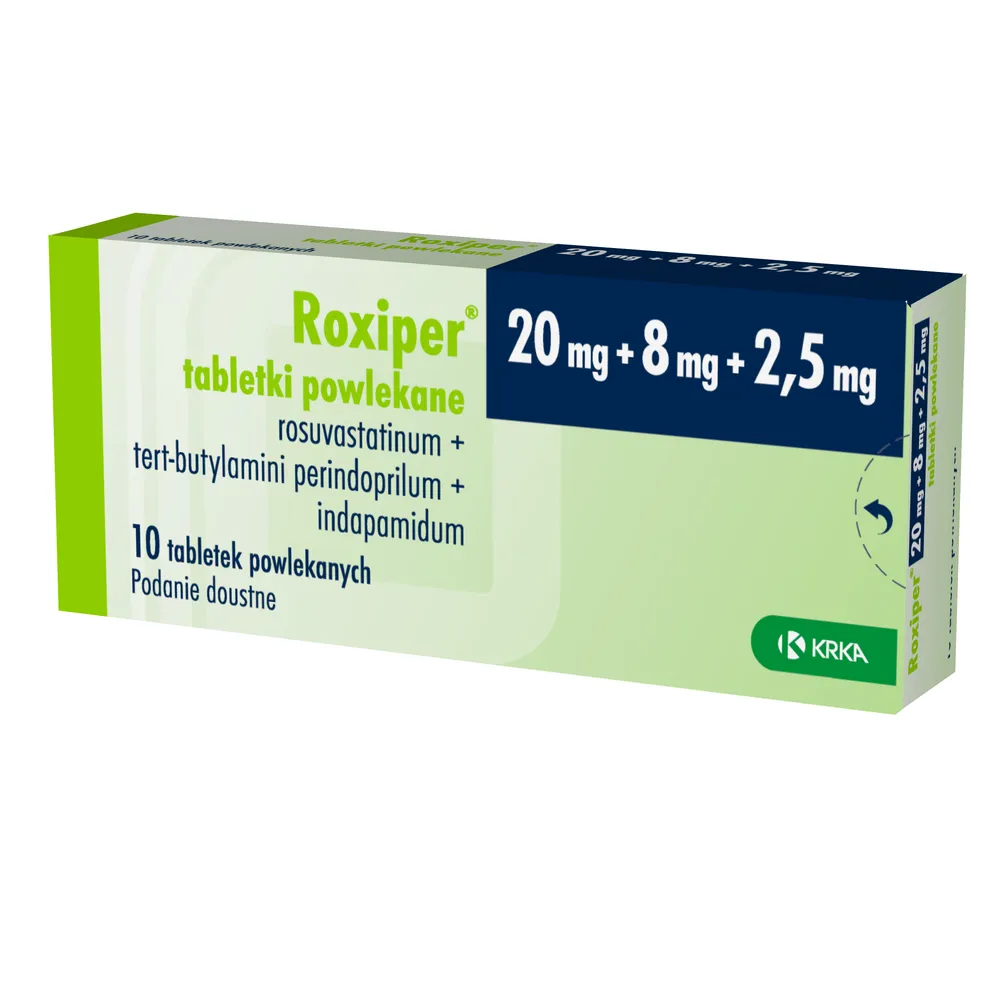
Table of Contents
Patient Information Leaflet
Roxiper, 10 mg + 4 mg + 1,25 mg, film-coated tablets
Roxiper, 20 mg + 4 mg + 1,25 mg, film-coated tablets
Roxiper, 10 mg + 8 mg + 2,5 mg, film-coated tablets
Roxiper, 20 mg + 8 mg + 2,5 mg, film-coated tablets
Rosuvastatin + Perindopril tert-butylamine + Indapamide
Please read all of this leaflet carefully before taking this medicine, because it contains important information for you.
- Keep this leaflet. You may need to read it again.
- If you have any further questions, ask your doctor or pharmacist.
- This medicine has been prescribed for you only. Do not pass it on to others. It may harm them even if their symptoms are the same as yours.
- If you experience any side effects, including any not listed in this leaflet, tell your doctor or pharmacist. See section 4.
Leaflet Contents
- What Roxiper is and what it is used for
- What you need to know before taking Roxiper
- How to take Roxiper
- Possible side effects
- How to store Roxiper
- Contents of the pack and other information
1. What Roxiper is and what it is used for
Roxiper is a combination of three active substances: rosuvastatin, perindopril and indapamide.
Rosuvastatin belongs to a group of medicines called statins. Perindopril is an ACE (angiotensin-converting enzyme) inhibitor. Indapamide is a diuretic.
Rosuvastatin helps control high cholesterol levels. Perindopril and indapamide help control high blood pressure (hypertension).
Roxiper is prescribed for the treatment of high blood pressure (hypertension) and high cholesterol levels at the same time. Patients who are already taking rosuvastatin, perindopril and indapamide as separate tablets may instead take one tablet of Roxiper, which contains all three components.
2. Important information before taking Roxiper
When not to take Roxiper
- If the patient is allergic to rosuvastatin, perindopril, or any other ACE inhibitor, or to indapamide, or any other sulphonamide-containing medicine, or to any of the other ingredients of this medicine (listed in section 6);
- if the patient has previously experienced symptoms such as wheezing, facial or tongue swelling, intense itching, or severe skin rash while taking ACE inhibitors, or if such symptoms occurred in the patient or a family member under any circumstances (a condition called angioedema);
- if the patient has diabetes or kidney problems and is being treated with a blood pressure-lowering medicine containing aliskiren;
- in case of low potassium levels in the blood;
- in patients with suspected untreated or uncontrolled heart failure (symptoms may include fluid retention and breathing difficulties);
- if the patient has severe kidney disease causing reduced blood flow to the kidneys (renal artery stenosis);
- if the patient is undergoing dialysis or another form of blood filtration. Depending on the device used, Roxiper may not be suitable for the patient;
- if the patient has liver disease or a condition called hepatic encephalopathy (brain disorder caused by liver disease);
- if the patient has severe kidney impairment (creatinine clearance below 30 mL/min);
- if the patient has moderate kidney impairment (creatinine clearance 30–60 mL/min) when taking Roxiper 10 mg/8 mg/2.5 mg or 20 mg/8 mg/2.5 mg;
- if the patient has experienced recurrent or unexplained muscle pain;
- if the patient is taking the combination sofosbuvir/velpatasvir/voxilaprevir (used to treat viral hepatitis C);
- if the patient is taking cyclosporine (used, for example, after organ transplantation);
- if the patient is pregnant or breastfeeding. If pregnancy occurs while taking Roxiper, treatment must be stopped immediately and the doctor informed. Women of childbearing age should use effective contraception during treatment with Roxiper;
- if the patient has taken or is currently taking sacubitril with valsartan, a medicine used to treat certain types of chronic heart failure in adults, due to increased risk of angioedema (rapid swelling of tissues under the skin, e.g. in the throat). See "Warnings and precautions" and "Roxiper with other medicines".
Warnings and precautions
Before starting Roxiper, discuss with your doctor or pharmacist if:
- the patient has aortic valve stenosis (narrowing of the main artery leaving the heart), hypertrophic cardiomyopathy (a heart muscle disease), or renal artery stenosis (narrowing of the artery supplying blood to the kidney);
- the patient has heart failure or any other heart disease;
- the patient has kidney disease or is undergoing dialysis;
- the patient has muscle disorders, including pain, tenderness, weakness, or cramps;
- the patient has abnormally high levels of a hormone called aldosterone in the blood (primary hyperaldosteronism);
- the patient has liver disease;
- the patient has connective tissue diseases (skin disorders), such as systemic lupus erythematosus or systemic sclerosis;
- the patient has ever had severe skin rash, skin peeling, blisters, and/or mouth ulcers after taking Roxiper or similar medicines;
- the patient has severe respiratory insufficiency;
- the patient has excessive acid levels in the blood, which may cause rapid breathing;
- the patient is on a low-salt diet or uses salt substitutes containing potassium;
- the patient is taking lithium or potassium-sparing diuretics (spironolactone, triamterene) or potassium supplements, as these should be avoided with Roxiper (see "Roxiper with other medicines");
- the patient has hyperparathyroidism;
- the patient has gout;
- the patient is elderly and a dose increase is needed;
- the patient has had photosensitivity reactions;
- the patient develops a severe allergic reaction with swelling of the face, lips, mouth, tongue, or throat, causing difficulty swallowing or breathing (angioedema) – swelling may occur at any time during treatment. If such symptoms occur, stop treatment immediately and contact a doctor;
- the patient has diabetes;
- the patient has thyroid dysfunction;
- the patient has atherosclerosis (hardening of the arteries);
- the patient is of Asian descent (Japanese, Chinese, Filipino, Vietnamese, Korean, or Indian). The doctor should select an appropriate starting dose of perindopril, indapamide, and rosuvastatin for the patient;
- in black patients, angioedema (swelling of the face, lips, mouth, tongue, or throat, causing difficulty swallowing or breathing) may occur more frequently, and the medicine may be less effective in lowering blood pressure;
- if the patient is undergoing dialysis using high-flux membranes;
- if the patient has recurrent or unexplained muscle pain, or if such pain occurred in the past in the patient or family members, or if muscle disorders occurred previously during treatment with other cholesterol-lowering medicines. If unexplained muscle pain occurs, especially with malaise or fever, inform the doctor immediately. If the patient experiences persistent muscle weakness, medical advice should also be sought;
- if the patient has or has had myasthenia (a disease causing generalised muscle weakness, including in some cases muscles involved in breathing) or ocular myasthenia (a disease causing eye muscle weakness), as statins may sometimes worsen symptoms or trigger myasthenia (see section 4);
- if the patient is taking other medicines called fibrates to lower cholesterol or any other cholesterol-lowering medicines (such as ezetimibe). Read the package leaflet carefully, even if the patient has previously taken other cholesterol-lowering medicines;
- if the patient is taking medicines used to treat HIV infection, e.g. ritonavir with lopinavir and/or atazanavir – see section "Roxiper with other medicines";
- if the patient regularly drinks large amounts of alcohol;
- if the patient is taking any of the following medicines for high blood pressure:
- an angiotensin II receptor antagonist (AIIRA) (also called a sartan – e.g. valsartan, telmisartan, irbesartan), especially if the patient has kidney problems related to diabetes,
- aliskiren. The doctor may recommend regular monitoring of kidney function, blood pressure, and blood electrolyte levels (e.g. potassium) at regular intervals. See also the section "When not to take Roxiper".
If the patient has taken or is currently taking, orally or by injection, a medicine called fusidic acid (used to treat infections) within the last seven days. The combination of fusidic acid and rosuvastatin may lead to severe muscle damage (rhabdomyolysis).
If the patient is taking any of the following medicines, the risk of angioedema increases:
- racecadotril (used to treat diarrhoea),
- sirolimus, everolimus, temsirolimus, and other medicines belonging to the so-called mTOR inhibitors (used to prevent organ transplant rejection and in cancer treatment),
- linagliptin, saxagliptin, sitagliptin, vildagliptin, and other medicines belonging to the group of drugs called gliptins (medicines used to treat diabetes).
Angioedema
In patients treated with ACE inhibitors, including Roxiper, cases of angioedema (severe allergic reaction with swelling of the face, lips, tongue, or throat, and difficulty swallowing or breathing) have been reported. This reaction may occur at any time during treatment. If such symptoms occur, stop taking Roxiper immediately and contact a doctor without delay. See also section 4.
Serious skin reactions, including Stevens-Johnson syndrome and drug reaction with eosinophilia and systemic symptoms (DRESS), have been reported with Roxiper. If any of the symptoms described in section 4 occur, stop taking Roxiper and contact a doctor immediately.
Inform your doctor immediately if you are pregnant, suspect pregnancy, or plan to become pregnant. Roxiper is not recommended during early pregnancy and must not be taken after the third month of pregnancy, as it may seriously harm the unborn child (see "Pregnancy and breastfeeding").
Inform your doctor or healthcare provider if:
- a dry cough develops;
- anaesthesia and/or surgery is planned;
- diarrhoea, vomiting, or dehydration has recently occurred;
- dialysis or LDL cholesterol apheresis (a procedure to remove cholesterol from the blood using a special device) is planned;
- allergen immunotherapy for bee or wasp venom is planned;
- a diagnostic procedure involving intravenous iodine-containing contrast agents (substances used to visualise organs such as kidneys or stomach on X-ray images) is planned;
- vision disturbances or eye pain occur in one or both eyes during treatment with Roxiper. These may be symptoms of fluid accumulation in the vascular layer surrounding the eye (excessive fluid accumulation between choroid and sclera) or glaucoma, increased pressure in one or both eyes – these may occur from several hours to weeks after taking Roxiper. Untreated, this may lead to permanent vision loss. Patients with a history of allergy to sulphonamides or penicillin may be at higher risk of developing this condition. Stop taking Roxiper and contact a doctor.
Athletes should be aware that Roxiper contains an active substance (indapamide) that may lead to a positive result in anti-doping tests.
In a small number of people, statins may affect the liver. This can be detected by a simple blood test showing increased liver enzyme activity. Therefore, the doctor usually performs blood tests (liver function tests) before and during treatment with Roxiper.
Patients with diabetes or at risk of developing diabetes will remain under close medical supervision during treatment. Individuals with high blood sugar and fat levels, overweight, and high blood pressure may be at increased risk of developing diabetes.
Children and adolescents
Roxiper must not be used in children and adolescents.
Roxiper with other medicines
Tell your doctor or pharmacist about all medicines currently or recently taken, and any medicines planned for use.
Avoid taking Roxiper with:
- lithium (used to treat depression);
- aliskiren (a medicine used to treat high blood pressure) in patients without diabetes or kidney problems;
- potassium-sparing medicines (e.g. spironolactone, triamterene), potassium salts, and other medicines that may increase potassium levels in the body (such as trimethoprim and co-trimoxazole, also known as trimethoprim/sulfamethoxazole, used for bacterial infections; cyclosporine, an immunosuppressive medicine used to prevent organ transplant rejection; and heparin, a medicine used to thin the blood to prevent clots);
- estramustine (used to treat cancer);
- sacubitril/valsartan (used to treat chronic heart failure). See sections "When not to take Roxiper" and "Warnings and precautions";
- other medicines used to treat high blood pressure: ACE inhibitors and angiotensin II receptor antagonists.
Other medicines may affect treatment with Roxiper.
Inform your doctor if taking any of the following medicines, as special medical care may be needed:
- other medicines used to treat high blood pressure, including diuretics (medicines that increase urine production by the kidneys);
- potassium-sparing medicines used to treat heart failure: eplerenone and spironolactone at doses of 12.5 mg to 50 mg per day;
- procainamide (used to treat heart rhythm disorders);
- quinidine, hydroquinidine, disopyramide, amiodarone, sotalol, ibutilide, dofetilide, digitalis, bretylium (medicines used for heart rhythm disorders);
- allopurinol (used to treat gout);
- antihistamines used to treat allergic reactions such as hay fever (e.g. mizolastine, terfenadine, or astemizole);
- corticosteroids used to treat various diseases, including severe asthma and rheumatoid arthritis;
- tetracosactide (used to treat Crohn's disease);
- immunosuppressive medicines used to treat autoimmune diseases or to prevent organ transplant rejection (e.g. cyclosporine);
- fluconazole, ketoconazole (antifungal medicines);
- moxifloxacin, sparfloxacin, rifampicin, erythromycin, clarithromycin (antibiotics used to treat infections);
- methadone (used to treat addiction);
- halofantrine (used to treat certain types of malaria);
- pentamidine (used to treat pneumonia);
- intravenous gold (used for rheumatoid arthritis);
- vinpocetine (used to treat cognitive symptoms in the elderly, including memory loss);
- bepridil, verapamil, diltiazem (heart medicines);
- sulpiride (used to treat psychosis);
- benzamides (used to treat psychosis);
- cyproheptadine, difemanil (used to treat gastrointestinal disorders);
- digoxin or other cardiac glycosides (used to treat heart diseases);
- baclofen (used for muscle stiffness in conditions such as multiple sclerosis);
- antidiabetic medicines, such as insulin, metformin, or gliptins;
- calcium, including calcium supplements;
- stimulant laxatives (e.g. senna);
- non-steroidal anti-inflammatory drugs (e.g. ibuprofen) or salicylates in high doses (e.g. acetylsalicylic acid);
- intravenous amphotericin B (used for severe fungal infections);
- medicines used to treat mental disorders such as depression, anxiety, schizophrenia (e.g. tricyclic antidepressants, neuroleptics);
- anaesthetics;
- iodine-containing contrast agents;
- warfarin, ticagrelor, or clopidogrel (or any other medicine used to thin the blood);
- fibrates (e.g. gemfibrozil, fenofibrate) or any other medicine used to lower cholesterol (e.g. ezetimibe);
- medicines for indigestion (used to neutralise stomach acid);
- oral contraceptives (birth control pills) or hormone replacement therapy;
- any of the following medicines used to treat viral infections, including HIV or hepatitis C virus, taken alone or in combination with other medicines: ritonavir, lopinavir, atazanavir, sofosbuvir, voxilaprevir, ombitasvir, paritaprevir, dasabuvir, velpatasvir, grazoprevir, elbasvir, glecaprevir, pibrentasvir – see: "When not to take Roxiper" and "Warnings and precautions";
- a medicine commonly used to treat diarrhoea (racecadotril) or medicines used to prevent organ transplant rejection (sirolimus, everolimus, temsirolimus, or other mTOR inhibitors). See section "Warnings and precautions";
- regorafenib or darolutamide (used to treat cancer);
- trimethoprim (used to treat infections);
- vasodilating medicines, including nitrates;
- medicines used to treat low blood pressure, shock, or asthma (e.g. ephedrine, noradrenaline, or adrenaline);
- if oral fusidic acid is required for bacterial infection treatment, Roxiper should be temporarily discontinued. The doctor will inform the patient when it is safe to resume treatment. Taking Roxiper with fusidic acid may rarely cause muscle weakness, tenderness, or pain (rhabdomyolysis). For more information on rhabdomyolysis – see section 4.
The doctor may recommend dose adjustment and/or additional precautions:
- if the patient is taking an angiotensin II receptor antagonist (AIIRA) or aliskiren (see also sections "When not to take Roxiper" and "Warnings and precautions").
Roxiper with food and drink
Roxiper should be taken before a meal.
Pregnancy and breastfeeding
Do not take Roxiper during pregnancy or while breastfeeding.
Pregnancy
Inform your doctor if you are pregnant, suspect pregnancy, or plan to become pregnant. If pregnancy occurs while taking Roxiper, stop taking the medicine immediately and contact your doctor. The doctor will usually advise discontinuing Roxiper before planned pregnancy or as soon as possible after pregnancy is confirmed, and recommend an alternative medicine. Women of childbearing age should use effective contraception during treatment with Roxiper.
Before taking any medicine, consult your doctor or pharmacist.
Breastfeeding
Inform your doctor if you are breastfeeding or plan to breastfeed. Roxiper is contraindicated during breastfeeding.
Contact your doctor immediately.
Driving and using machines
Roxiper does not affect alertness, but dizziness or weakness due to low blood pressure may occur, which could affect the ability to drive or operate machinery. It is recommended not to drive or operate machinery until the effect of Roxiper on the patient is known.
3. How to use Roxiper
This medicine should always be taken as recommended by your doctor or pharmacist. If in
doubt, consult your doctor or pharmacist.
The recommended dose is one tablet once daily. It is recommended to take the tablet in the morning, before a meal.
The tablet should be swallowed with a glass of water.
Your doctor will determine the appropriate dose of Roxiper. Roxiper is intended for patients
who are already taking rosuvastatin, perindopril and indapamide in separate tablets.
Taking more Roxiper than recommended
If you take too many tablets, contact your doctor immediately or go to the emergency department of the nearest hospital.
The most likely symptom of overdose is low blood pressure. If you experience a significant drop in blood pressure
(symptoms such as dizziness or fainting), lie down on your back with your legs raised above the level of your torso.
Missing a dose of Roxiper
It is important to take the medicine every day, as the effectiveness of hypertension treatment depends on
regular medication intake. However, if you miss a dose of Roxiper, take the next dose at the usual time.
Do not take a double dose to make up for a missed dose.
Stopping Roxiper
Since treatment of high blood pressure usually lasts for life, you should consult your doctor before stopping treatment.
If you have any further doubts regarding the use of this medicine, consult your doctor or pharmacist.
4. Possible adverse reactions
Like all medicines, this medicine can cause adverse reactions, although not everyone will experience them.
If the patient experiences any of the following adverse reactions, which may be
severe, stop taking this medicine immediately and contact a doctor without delay:
- Severe dizziness or fainting due to low blood pressure (common – may occur in less than 1 in 10 patients);
- Bronchospasm (feeling of tightness in the chest, wheezing and shortness of breath; uncommon – may occur in less than 1 in 100 patients);
- Swelling of the face, lips, mouth, tongue or throat, difficulty breathing (angioedema, see section “Warnings and precautions” in section 2); (uncommon – may occur in less than 1 in 100 patients);
- Severe skin reactions, including erythema multiforme (skin rash often starting with red, itchy spots on the face, arms or legs) or red, flat, disc-shaped or circular spots on the trunk, often with blisters in the center, peeling of the skin, mouth ulcers, sores in the throat, nose, genitals and eyes. These potentially life-threatening skin rashes may be preceded by fever and flu-like symptoms (Stevens-Johnson syndrome) or other allergic reactions (very rare – may occur in less than 1 in 10,000 patients);
- Widespread rash, high fever and swollen lymph nodes (DRESS syndrome or drug hypersensitivity syndrome) (frequency unknown – frequency cannot be determined from available data);
- Cardiovascular disorders (heart rhythm disturbances, angina pectoris (chest pain radiating to the jaw and back, triggered by physical exertion), myocardial infarction; very rare – may occur in less than 1 in 10,000 patients);
- Weakness in arms or legs, or speech disturbances, which may be signs of stroke (very rare – may occur in less than 1 in 10,000 patients);
- Pancreatitis, which may cause severe upper abdominal pain radiating to the back and general malaise (very rare – may occur in less than 1 in 10,000 patients);
- Yellowing of the skin or eyes (jaundice), which may indicate liver inflammation (very rare – may occur in less than 1 in 10,000 patients);
- Life-threatening heart rhythm disturbances (frequency unknown – frequency cannot be determined from available data);
- Liver disease-related brain disorder (hepatic encephalopathy; frequency unknown – frequency cannot be determined from available data);
- Muscle weakness, cramps, tenderness or pain, especially if the patient also feels unwell or has a high temperature, which may be due to abnormal muscle breakdown (frequency unknown).
In addition, stop taking Roxiper and contact a doctor immediately
if the patient experiences any unusual muscle pain that lasts longer than expected.
Muscle symptoms occur more frequently in children and adolescents than in adults.
As with other statins, a small number of people have experienced unpleasant
muscle symptoms, which rarely worsened and progressed to potentially life-threatening
muscle damage known as rhabdomyolysis.
The following adverse reactions may occur (listed in decreasing order of frequency):
Common (may occur in less than 1 in 10 patients):
- Skin reactions in patients with a tendency to allergic and asthmatic reactions,
- Low potassium levels in the blood;
- Diabetes (the risk of developing diabetes is higher if the patient's blood sugar and fat levels are high; the doctor will monitor the patient during treatment with this medicine);
- Dizziness, headache, vertigo, tingling or prickling sensations;
- Visual disturbances (including double vision);
- Ringing in the ears;
- A "hollow" feeling in the head due to low blood pressure;
- Shortness of breath, cough;
- Gastrointestinal disturbances (dry mouth, taste disturbances, upper abdominal pain, indigestion or digestive problems, loss of appetite, vomiting, abdominal pain, nausea, diarrhoea, constipation);
- Allergic reactions (such as skin rashes, itching);
- Muscle pain, cramps;
- Feeling of fatigue.
Uncommon (may occur in less than 1 in 100 patients):
- Increased number of eosinophils (a type of white blood cell);
- Changes in laboratory test results: high potassium levels in the blood, which resolve after discontinuation of treatment, low sodium levels in the blood, which may cause dehydration and low blood pressure;
- Hypoglycaemia (very low blood sugar levels) in diabetic patients;
- Mood changes, sleep disturbances;
- Depression;
- Drowsiness, fainting;
- Palpitations (awareness of heartbeat), tachycardia (rapid heartbeat);
- Vasculitis (inflammation of blood vessels);
- Bronchospasm (chest tightness, wheezing and shortness of breath);
- Dryness of the oral mucosa;
- Angioedema (symptoms such as wheezing, swelling of the face or tongue), urticaria, purpura (red spots on the skin), clusters of blisters;
- Kidney function disorders;
- Impotence (inability to achieve or maintain an erection);
- Excessive sweating;
- Photosensitivity reactions (increased skin sensitivity to sunlight);
- Joint pain, muscle pain;
- Chest pain, peripheral oedema, fever;
- Increased blood urea levels, increased blood creatinine levels;
- Falls.
Rare (may occur in no more than 1 in 1,000 patients):
- Worsening of psoriasis;
- Dark urine, nausea or vomiting, muscle cramps, disorientation and seizures. These may be symptoms of a condition called SIADH (syndrome of inappropriate antidiuretic hormone secretion);
- Low chloride levels in the blood;
- Low magnesium levels in the blood;
- Sudden flushing of the face and neck;
- Severe abdominal pain (pancreatitis);
- Changes in laboratory test results: increased liver enzyme activity, elevated serum bilirubin levels;
- Lupus-like syndrome (including rash, joint disorders and effects on blood cells) – stop taking Roxiper and contact a doctor immediately if this syndrome occurs;
- Muscle damage including muscle rupture – as a precaution, stop taking Roxiper and contact a doctor immediately if the patient experiences any unusual muscle pain that lasts longer than expected;
- Reduced or absent urine output;
- Acute kidney failure;
- Fatigue.
Very rare (may occur in less than 1 in 10,000 patients):
- Decreased number of white blood cells, anaemia (reduced number of red blood cells);
- Reduced haemoglobin concentration, reduced platelet count;
- High calcium levels in the blood;
- Nerve damage in legs and arms (e.g. numbness), memory loss;
- Cardiovascular disorders (irregular heartbeat, angina pectoris and myocardial infarction);
- Eosinophilic pneumonia (rare lung inflammation), rhinitis (nasal congestion or runny nose);
- Abnormal liver function, hepatitis, jaundice (yellowing of the skin and eyes);
- Erythema multiforme (skin rash often starting with red spots on the face, hands or legs), severe ulcers or blisters on the skin, in the mouth, around the eyes and in the genital area (Stevens-Johnson syndrome – life-threatening allergic reactions affecting the skin and mucous membranes);
- Joint pain;
- Gynaecomastia (enlargement of breasts in men).
Unknown (frequency cannot be determined from available data):
- Hepatic encephalopathy (brain disorder caused by liver disease);
- Myasthenia gravis (a disease causing generalised muscle weakness, including in some cases muscles involved in breathing);
- Ocular myasthenia (a disease causing weakness of eye muscles); Talk to a doctor if the patient experiences weakness in the arms or legs that worsens after periods of activity, double vision or drooping eyelids, difficulty swallowing or shortness of breath.
- Myopia, blurred vision, reduced vision or eye pain due to increased pressure (possible symptoms of fluid accumulation in the vascular layer surrounding the eye – excessive fluid accumulation between the choroid and sclera – or acute angle-closure glaucoma);
- Widespread rash, high fever and swollen lymph nodes (DRESS syndrome or drug hypersensitivity syndrome);
- Persistent muscle weakness, tendon damage;
- Abnormal ECG results, irregular heart rhythm, potentially life-threatening (heart rhythm disturbances known as torsade de pointes);
- Cyanosis, numbness and pain in fingers or toes (Raynaud's phenomenon); changes in laboratory test results: high uric acid levels in the blood;
- If the patient has systemic lupus erythematosus (a type of collagenosis), symptoms of the disease may worsen.
Blood, kidney, liver or pancreas disorders and changes in laboratory parameters
(blood tests) may occur. The doctor may order blood tests to monitor the patient's condition.
Reporting of adverse reactions
If any adverse symptoms occur, including any adverse symptoms not listed
in this leaflet, inform a doctor or pharmacist. Adverse reactions can be reported
directly to the Department of Monitoring Adverse Drug Reactions of the Office for Registration of Medicinal Products, Medical Devices and Biocidal Products:
Al. Jerozolimskie 181C, 02-222 Warsaw
Tel.: +48 22 49 21 301
Fax: +48 22 49 21 309
Website: https://smz.ezdrowie.gov.pl
Adverse reactions can also be reported to the marketing authorisation holder.
Reporting adverse reactions helps to provide more information on the safety of this medicine.
5. How to store Roxiper
Keep this medicine out of sight and reach of children.
Do not use this medicine after the expiry date stated on the packaging following the EXP abbreviation. The expiry date refers to the last day of the specified month.
Store in the original packaging to protect from light.
There are no special storage temperature requirements for this medicinal product.
Medicines must not be disposed of via wastewater or household waste. Ask your pharmacist how to dispose of medicines no longer required. Such measures help protect the environment.
6. Contents of the packaging and other information
What Roxiper contains
- The active substances are rosuvastatin, perindopril with tert-butylamine and indapamide.
Roxiper, 10 mg + 4 mg + 1.25 mg, film-coated tablets
Each film-coated tablet contains 10 mg rosuvastatin (as rosuvastatin calcium),
4 mg perindopril with tert-butylamine (tert-Butylamini perindoprilum) and 1.25 mg
indapamide (Indapamidum).
Roxiper, 20 mg + 4 mg + 1.25 mg, film-coated tablets
Each film-coated tablet contains 20 mg rosuvastatin (as rosuvastatin calcium),
4 mg perindopril with tert-butylamine (tert-Butylamini perindoprilum) and 1.25 mg
indapamide (Indapamidum).
Roxiper, 10 mg + 8 mg + 2.5 mg, film-coated tablets
Each film-coated tablet contains 10 mg rosuvastatin (as rosuvastatin calcium),
8 mg perindopril with tert-butylamine (tert-Butylamini perindoprilum) and 2.5 mg indapamide
(Indapamidum).
Roxiper, 20 mg + 8 mg + 2.5 mg, film-coated tablets
Each film-coated tablet contains 20 mg rosuvastatin (as rosuvastatin calcium),
8 mg perindopril with tert-butylamine (tert-Butylamini perindoprilum) and 2.5 mg indapamide
(Indapamidum).
- Other components:
Tablet core: Microcrystalline cellulose (type 200), microcrystalline cellulose (type 112), crospovidone (type A), colloidal anhydrous silica, magnesium stearate.
Tablet coating: - Roxiper, 10 mg + 4 mg + 1.25 mg, film-coated tablets
- Roxiper, 20 mg + 4 mg + 1.25 mg, film-coated tablets
- Roxiper, 20 mg + 8 mg + 2.5 mg, film-coated tablets: polyvinyl alcohol, macrogol 3350, titanium dioxide (E171), talc, iron oxide red (E172), iron oxide black (E172), iron oxide yellow (E172)
- Roxiper, 10 mg + 8 mg + 2.5 mg, film-coated tablets: polyvinyl alcohol, macrogol 3350, titanium dioxide (E171), talc, iron oxide red (E172)
What Roxiper looks like and contents of the pack
Roxiper, 10 mg + 4 mg + 1.25 mg, film-coated tablets
Brownish-red, round, slightly biconvex film-coated tablets with bevelled edges, imprinted with the code "PIR1" on one side. Diameter: approximately 7.5 mm (defined by punches).
Roxiper, 20 mg + 4 mg + 1.25 mg, film-coated tablets
Pink, round, slightly biconvex film-coated tablets with bevelled edges, imprinted with the code "PIR2" on one side. Diameter: approximately 10 mm (defined by punches).
Roxiper, 10 mg + 8 mg + 2.5 mg, film-coated tablets
Light pink, round, slightly biconvex film-coated tablets with bevelled edges, imprinted with the code "PIR3" on one side. Diameter: approximately 10 mm (defined by punches).
Roxiper, 20 mg + 8 mg + 2.5 mg, film-coated tablets
Light brownish-pink, round, slightly biconvex film-coated tablets with bevelled edges, imprinted with the code "PIR4" on one side. Diameter: approximately 10 mm (defined by punches).
Pack sizes: 10, 20, 30, 60, 90 or 100 film-coated tablets in blister packs within a cardboard carton.
Not all pack sizes may be marketed.
Marketing Authorisation Holder
KRKA, d.d., Novo mesto, Šmarješka cesta 6, 8501 Novo mesto, Slovenia
Manufacturer
KRKA, d.d., Novo mesto,
Šmarješka cesta 6, 8501
Novo mesto, Slovenia
TAD Pharma GmbH
Heinz-Lohmann-Straße 5
27472 Cuxhaven, Germany
For further information regarding this medicinal product, please contact the local representative of the Marketing Authorisation Holder:
KRKA-POLSKA Sp. z o.o.
ul. Równoległa 5
02-235 Warszawa
Tel. 22 57 37 500
This medicinal product is authorised in the Member States of the European Economic Area under the following names:
| Slovenia, Slovakia, Poland, Romania, Estonia, Lithuania, Finland, Portugal, Hungary | Roxiper |
| Bulgaria | Roksiper |
| Latvia | Triemma |