Rosucard
Poland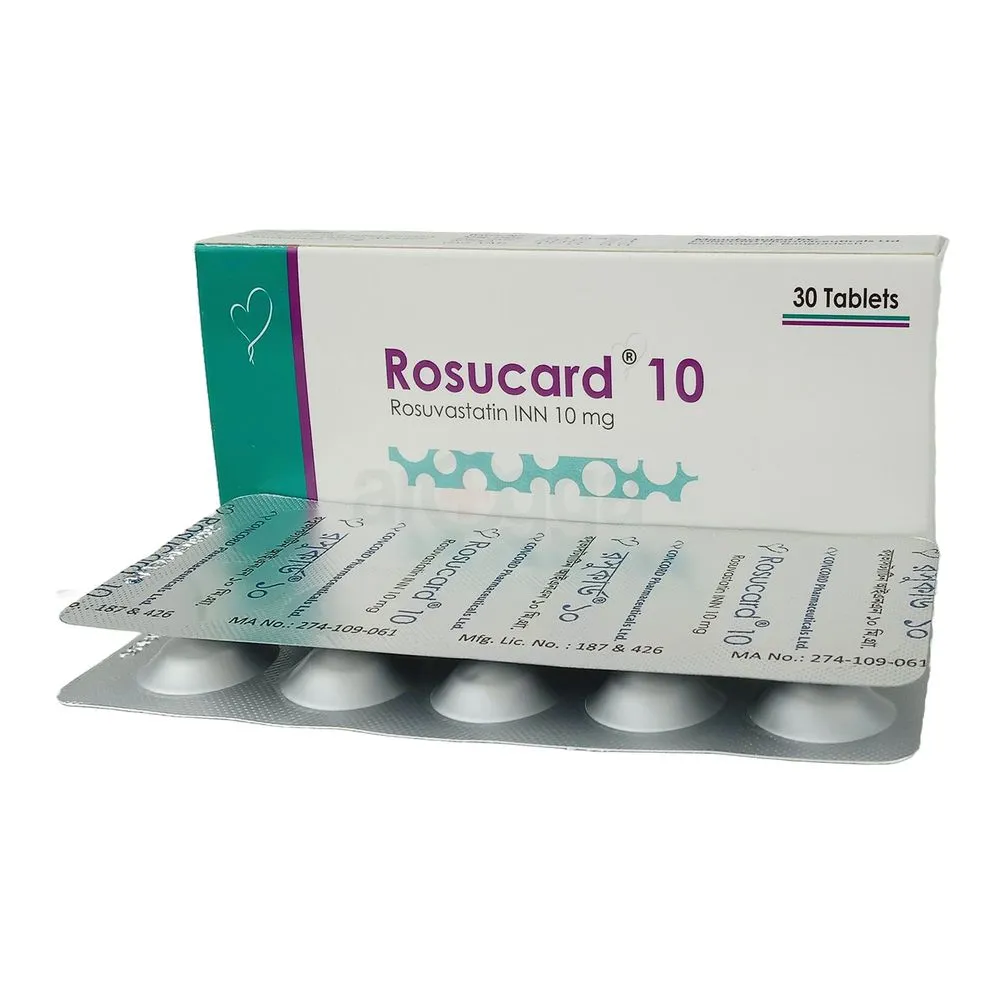
Table of Contents
Package leaflet: Information for the user
Warning! Keep this leaflet! The information on the immediate packaging is in a foreign language.
Rosucard (Rosuvacard)
20 mg, film-coated tablets
Rosuvastatinum
Rosucard and Rosuvacard are different trade names for the same medicine.
Please read this leaflet carefully before taking the medicine, as it contains
important information for the patient.
- Keep this leaflet so that you can read it again if necessary.
- Consult your doctor or pharmacist if you have any further questions.
- This medicine has been prescribed for a specific individual. Do not pass it on to others. The medicine may harm another person, even if their symptoms are the same.
- If you experience any adverse reactions, including those not listed in this leaflet, inform your doctor or pharmacist. See section 4.
Table of contents:
- What Rosucard is and what it is used for
- Important information before taking Rosucard
- How to take Rosucard
- Possible side effects
- How to store Rosucard
- Contents of the pack and other information
1. What Rosucard is and what it is used for
Rosucard belongs to a group of medicines called statins.
Rosucard is recommended for use because:
- The patient has been diagnosed with high cholesterol levels. This indicates an increased risk of heart attack (myocardial infarction) or stroke. Rosucard is used in adults, adolescents, and children aged 6 years and older for the treatment of high cholesterol.
Your doctor has prescribed a statin because changes in diet and increased physical activity have proven insufficient to achieve normal blood cholesterol levels.
Patients taking Rosucard should simultaneously follow a cholesterol-lowering diet and engage in regular physical exercise.
or
- Rosucard is also recommended if the patient has other risk factors that increase the likelihood of heart attack (myocardial infarction), stroke, or similar conditions. Myocardial infarction, stroke, and other related problems may be caused by atherosclerosis. Atherosclerosis results from the buildup of atherosclerotic plaques in blood vessels.
Why consistent use of Rosucard is important
Rosucard is used to achieve normal blood levels of fatty substances known as lipids. The most common of these is cholesterol.
There are different types of cholesterol in the blood: so-called "bad" cholesterol (LDL-C) and "good" cholesterol (HDL-C).
- Rosucard may reduce levels of "bad" cholesterol and increase levels of "good" cholesterol.
- Rosucard works by inhibiting the production of "bad" cholesterol in the body. It also helps remove "bad" cholesterol from the blood.
In most people, high cholesterol does not affect how they feel, as it causes no symptoms. However, if left untreated, fatty deposits build up in the walls of blood vessels, leading to narrowing.
Sometimes, the narrowed blood vessel may become completely blocked, cutting off blood flow to the heart or brain, resulting in a heart attack or stroke. Achieving normal cholesterol levels reduces the risk of heart attack, stroke, or similar conditions.
Even if cholesterol levels become normal after using Rosucard, you should continue taking the medicine. This prevents cholesterol levels from rising again, which could lead to further fatty deposits. You should stop taking the medicine if your doctor advises you to do so, or if you become pregnant.
2. Important information before using Rosucard
When not to use Rosucard:
- if the patient has a known allergy (hypersensitivity) to rosuvastatin or any of the other ingredients of the medicine (listed in section 6),
- if the patient is pregnant or breastfeeding. If a woman taking Rosucard becomes pregnant, she should stop taking the medicine immediately and inform her doctor. Women taking Rosucard should use effective methods of contraception,
- if the patient has liver disease,
- if the patient has severe kidney disease,
- if the patient experiences frequent or unexplained muscle pain or discomfort,
- if the patient is taking the combination of sofosbuvir/velpatasvir/voxilaprevir (used to treat viral hepatitis C),
- if the patient is taking cyclosporine (a medicine used, for example, after organ transplantation).
If any of the above situations apply to the patient or if the patient has any doubts,
they should contact their doctor again.
Warnings and precautions
Before starting to take Rosucard, consult a doctor or pharmacist:
- if the patient has kidney disease,
- if the patient has liver disease,
- if the patient experiences frequent or unexplained muscle pain or discomfort, or if the patient or a family member has previously had muscle disorders, or if the patient previously experienced muscle-related side effects while taking lipid-lowering medicines. The patient should contact their doctor immediately if unexplained muscle pain or discomfort occurs, especially if accompanied by general malaise and fever. The doctor or pharmacist should also be informed if persistent muscle weakness occurs,
- if the patient has ever experienced severe skin rash, skin peeling, blisters, and/or mouth ulcers after taking Rosucard or other similar medicines,
- if the patient regularly consumes large amounts of alcohol,
- if the patient has thyroid disease,
- if the patient has severe respiratory insufficiency,
- if the patient is taking lipid-lowering medicines from the fibrate group. The patient should read the leaflet carefully, even if they have previously taken other cholesterol-lowering medicines,
- if the patient is taking medicines used to treat HIV infection, e.g., ritonavir with lopinavir and/or atazanavir; please refer to the section "Rosucard with other medicines",
- if the patient is taking or has taken within the last 7 days, orally or by injection, a medicine containing fusidic acid (used to treat bacterial infections). Taking fusidic acid together with Rosucard may lead to severe muscle damage (rhabdomyolysis); see section "Rosucard with other medicines",
- if the patient is over 70 years of age (as the doctor must select an appropriate starting dose of Rosucard),
- if the patient is of Asian origin (Japanese, Chinese, Filipino, Vietnamese, Korean, or Indian). In these patients, the doctor will determine the appropriate starting dose of Rosucard.
- if the patient has or has had myasthenia (a disease causing general muscle weakness, including in some cases muscles involved in breathing) or ocular myasthenia (a disease causing weakness of eye muscles), as statins may sometimes worsen symptoms or lead to the development of myasthenia (see section 4).
If any of the above situations apply to the patient (or if the patient has any doubts):
- before taking Rosucard, the patient should consult a doctor or pharmacist. Serious skin reactions, including Stevens-Johnson syndrome and drug reaction with eosinophilia and systemic symptoms (DRESS), have been reported during treatment with Rosucard. If any of the symptoms described in section 4 occur, the patient should stop taking Rosucard and contact their doctor immediately.
In a small number of patients, statins may affect liver function. To confirm this effect, a blood test assessing liver enzyme activity is performed. Usually, the doctor will recommend a blood test to check liver enzyme activity before starting and during treatment with Rosucard.
Patients with diabetes or those at risk of developing diabetes will be under close medical supervision while taking this medicine. Patients with high blood sugar and lipid levels, overweight, and high blood pressure may be at increased risk of developing diabetes.
Children and adolescents
Rosucard should not be used in children under 6 years of age.
Rosucard with other medicines
Tell your doctor or pharmacist about all medicines currently used, recently used, or planned to be used.
Tell your doctor if you are taking:
-
cyclosporine (used, for example, after organ transplantation),
-
darolutamide (used to treat cancer),
-
regorafenib (used to treat cancer),
-
warfarin, clopidogrel, or ticagrelor (or any other blood-thinning medicine),
-
a fibrate medicine (such as gemfibrozil, fenofibrate) or any other medicine that lowers blood cholesterol (e.g., ezetimibe),
-
medicines used for indigestion (used to neutralize stomach acid),
-
erythromycin (an antibiotic),
-
fusidic acid (an antibiotic - see below and section "Warnings and precautions"),
-
oral contraceptives ("the pill"),
-
hormone replacement therapy,
-
capmatinib (used to treat cancer),
-
fostamatinib (used to treat low platelet count),
-
febuxostat (used to treat and prevent high blood uric acid levels),
-
teriflunomide (used to treat multiple sclerosis),
-
any of the following medicines used to treat viral infections, including HIV or hepatitis C virus, taken alone or in combination with other medicines (see: "Warnings and precautions"): ritonavir, lopinavir, atazanavir, sofosbuvir, voxilaprevir, ombitasvir, paritaprevir, dasabuvir, velpatasvir, grazoprevir, elbasvir, glecaprevir, pibrentasvir.
-
roxadustat (used to treat anaemia in patients with chronic kidney disease),
-
tafamidis (used to treat a disease called transthyretin amyloidosis).
Rosucard may alter the effect of these medicines, or these medicines may alter the effect of Rosucard.
If the patient needs to take oral fusidic acid to treat a bacterial infection, Rosucard should be temporarily discontinued. The doctor will inform the patient when it is safe to restart Rosucard. Taking Rosucard with fusidic acid may rarely lead to muscle weakness, tenderness, or pain (rhabdomyolysis).
More information about rhabdomyolysis can be found in section 4.
Pregnancy, breastfeeding, and fertility
If the patient is pregnant or breastfeeding, suspects she may be pregnant, or is planning to have a baby, she should consult her doctor or pharmacist before using this medicine.
Rosucard must not be used during pregnancy or breastfeeding. If a patient becomes pregnant while taking Rosucard, she should stop taking the medicine and consult her doctor immediately. Women should avoid becoming pregnant while taking Rosucard by using appropriate contraceptive methods.
Driving and operating machinery
Most people can drive and operate machinery while taking Rosucard
- as it does not impair their ability. However, some patients may experience dizziness during treatment with Rosucard. If this symptom occurs, the patient should contact their doctor before driving or operating machinery.
Rosucard contains lactose monohydrate and sodium
If the patient has been diagnosed with intolerance to certain sugars (lactose, i.e., milk sugar), they should inform their doctor before taking Rosucard.
This medicine contains less than 1 mmol of sodium (23 mg) per tablet, meaning the medicine is essentially "sodium-free".
3. How to take Rosucard
This medicine should always be taken exactly as directed by your doctor or pharmacist. If you are unsure,
you should consult your doctor or pharmacist.
Rosucard is available in the following doses: 10 mg, 20 mg, 40 mg.
Recommended dose for adults
Use of Rosucard for lowering cholesterol levels
Starting dose
Treatment should be initiated with a dose of 5 mg or 10 mg of Rosucard, even if the patient has
previously taken higher doses of other statins.
The 5 mg dose can be obtained by splitting the 10 mg tablet along the score line marked on it.
The choice of starting dose depends on:
- cholesterol levels,
- the patient's risk level for heart attack or stroke,
- the presence of factors increasing the patient's susceptibility to adverse effects.
You should ask your doctor or pharmacist which starting dose of rosuvastatin is most appropriate
for you.
Your doctor may decide to use the lowest dose (5 mg) if:
- the patient is of Asian origin (Japan, China, Philippines, Vietnam, Korea or India),
- the patient is over 70 years of age,
- the patient has moderate to severe kidney disease,
- the patient is at risk of developing muscle disorders or muscle pain (myopathy).
Dose escalation and maximum daily dose
Your doctor may decide to increase the dose as appropriate for the patient's needs.
If the patient started treatment with a 5 mg dose, the doctor may decide to increase it to 10 mg, then
to 20 mg or 40 mg, if necessary. If the patient started treatment with a 10 mg dose, the doctor may
decide to increase it to 20 mg, and then to 40 mg, if necessary.
The treatment period at a fixed dose between each dose increase should last 4 weeks.
The maximum daily dose of Rosucard is 40 mg. This dose is used in patients with high
cholesterol levels and a high risk of heart attack or stroke, in whom a 20 mg dose was
insufficient to reduce cholesterol levels.
Use of Rosucard to reduce the risk of heart attack, stroke, or similar health problems
The recommended daily dose is 20 mg; however, your doctor may decide to reduce it if the
patient has any of the factors described above.
Use in children and adolescents aged 6–17 years
The dose range used in children and adolescents aged 6 to 17 years is 5 to 20 mg once daily.
The usual starting dose is 5 mg once daily, and the doctor may gradually increase the dose as
appropriate for the patient. The maximum daily dose of Rosucard is 10 mg or 20 mg for children
aged 6 to 17 years, depending on the type of disease being treated.
Rosucard should be taken once daily. The 40 mg dose of Rosucard should not be used in
children.
How to take the medicine
The tablet should be swallowed whole with water.
Rosucard should be taken once daily, at any time of day, with or without food.
It is recommended to take the medicine at the same time each day to help remember.
Cholesterol monitoring tests
To ensure that cholesterol levels have decreased and remain within the normal range, regular
follow-up visits and blood tests should be performed.
Your doctor may decide to increase the dose of Rosucard as appropriate for the patient.
Taking more than the recommended dose of Rosucard
If you take more than the recommended dose of Rosucard, contact your doctor or go to the
nearest hospital immediately.
If you are in hospital or being treated for another condition, you should inform your doctor or
healthcare staff that you are taking Rosucard.
Missing a dose of Rosucard
There is no need to worry; take the next dose at the usual time. Do not take a double dose to
make up for a missed dose.
Stopping Rosucard
You should inform your doctor if you wish to stop taking Rosucard. Cholesterol levels may rise
again if treatment with Rosucard is stopped.
If you have any further questions about the use of this medicine, consult your doctor or pharmacist.
4. Possible adverse reactions
Like all medicines, this medicine can cause adverse reactions, although not everyone will experience them.
It is important for the patient to be aware of which adverse reactions may occur. Usually, they are
mild and resolve shortly after starting treatment.
The use of Rosucard must be stopped immediately and medical help must be sought if the following
allergic reactions occur:
- Difficulty breathing, with or without swelling of the face, lips, tongue and (or) throat;
- Swelling of the face, lips, tongue and (or) throat, which may cause difficulty in swallowing;
- Severe skin itching (with hives);
- Red, flat, disc-shaped or circular rashes on the trunk, often with blisters in the center, peeling skin, mouth ulcers, throat, nose, genital organs and inside the eyes. Such potentially life-threatening skin rashes may be preceded by fever and flu-like symptoms (Stevens-Johnson syndrome).
- Widespread rash, high body temperature and swollen lymph nodes (DRESS syndrome or drug hypersensitivity syndrome).
The use of Rosucard must be stopped and the doctor must be contacted immediately if:
- Unexpected muscle discomfort or pain that persists longer than expected. Muscle-related symptoms occur more frequently in children and adolescents than in adult patients. As with other statins, muscle-related adverse effects have been observed in a very small number of patients, which very rarely may progress to a potentially life-threatening muscle damage called rhabdomyolysis (rare adverse reactions).
- Symptoms of lupus-like syndrome (such as rash, joint disorders and effects on blood cells).
- Muscle rupture. The following adverse reactions have been reported with the use of rosuvastatin (the active substance in Rosucard):
Common (may occur in up to 1 in 10 patients):
- Headache,
- Abdominal pain,
- Constipation,
- Nausea,
- Muscle pain,
- Weakness,
- Dizziness,
- Diabetes. The risk of developing diabetes is higher if the patient has high blood sugar and fat levels, overweight and high blood pressure. The treating physician will monitor patients during treatment with this medicine.
Uncommon (may occur in up to 1 in 100 patients):
- Rash, itching or other skin reactions,
- Increased protein in urine. This symptom usually resolves spontaneously and does not require discontinuation of Rosucard.
Rare (may occur in up to 1 in 1000 patients):
- Severe allergic reactions – symptoms include swelling of the face, lips, tongue and (or) throat, difficulty swallowing and breathing, severe skin itching (with hives). If the patient suspects an allergic reaction, they should immediately stop taking Rosucard and seek medical help,
- Muscle damage in adults – caution should be exercised, i.e. stop taking Rosucard and contact the doctor immediately if muscle pain or other muscle complaints persist longer than expected,
- Severe abdominal pain (pancreatitis),
- Increased levels of liver enzymes in blood,
- Bleeding or bruising more easily than usual due to low platelet count (thrombocytopenia),
- Symptoms of lupus-like syndrome (such as rash, joint disorders and effects on blood cells).
Very rare (may occur in up to 1 in 10,000 patients):
- Jaundice (yellowing of the skin and eyes),
- Hepatitis,
- Joint pain,
- Blood in urine,
- Nerve damage in upper and lower limbs (felt as numbness),
- Memory loss,
- Breast enlargement in men (gynaecomastia).
Frequency not known (frequency cannot be estimated from available data):
- Depression,
- Persistent muscle weakness,
- Tendon damage,
- Sleep disorders (including insomnia and nightmares),
- Diarrhea (loose stools),
- Cough,
- Shallow breathing,
- Swelling,
- Sexual dysfunction,
- Breathing problems (persistent cough and (or) shallow breathing or fever),
- Myasthenia (a disease causing general muscle weakness, including in some cases muscles involved in breathing),
- Ocular myasthenia (a disease causing weakness of the eye muscles). Patients should consult a doctor if they experience weakness in hands or legs worsening with activity, double vision or drooping eyelids, difficulty swallowing or shortness of breath.
Reporting of adverse reactions
If any adverse reactions occur, including any not listed in this leaflet, the patient should inform their doctor or pharmacist. Adverse reactions can be reported directly to the Department of Monitoring Adverse Drug Reactions of the Office for Registration of Medicinal Products, Medical Devices and Biocidal Products, Al. Jerozolimskie 181C, 02-222 Warsaw, tel.: +48 22 49 21 301, fax: +48 22 49 21 309, website: https://smz.ezdrowie.gov.pl.
Reporting adverse reactions helps to gather more information on the safety of the medicine.
5. How to store the medicine Rosucard
Keep this medicine out of the sight and reach of children.
Do not use this medicine after the expiry date stated on the packaging. The expiry date refers to the last day of the stated month.
Store below 25°C.
Keep in the original packaging to protect from light and moisture.
Medicines must not be disposed of via wastewater or household waste. Ask your pharmacist how to dispose of medicines no longer required. These measures will help protect the environment.
6. Contents of the packaging and other information
What Rosucard contains
The active substance is rosuvastatin.
One coated tablet contains 20 mg of rosuvastatin (in the form of rosuvastatin calcium).
The other ingredients are: monohydrate lactose, microcrystalline cellulose, sodium croscarmellose,
anhydrous colloidal silicon dioxide, magnesium stearate.
Coating: hypromellose 2910/5, macrogol 6000, titanium dioxide (E 171), talc, iron oxide red (E 172).
What Rosucard looks like and contents of the pack
Pink, coated, oval, biconvex tablets approximately 11.1 mm in length and 5.6 mm in width.
Pack size:
30 coated tablets.
For more detailed information, please contact the responsible entity or the parallel importer.
Responsible entity in Lithuania, the country of export:
Zentiva, k. s., U Kabelovny 130, Dolní Měcholupy, 102 37 Prague 10, Czech Republic
Manufacturer:
Zentiva, k. s., U Kabelovny 130, Dolní Měcholupy, 102 37 Prague 10, Czech Republic
Parallel importer:
InPharm Sp. z o.o., ul. Strumykowa 28/11, 03-138 Warsaw, Poland
Repackaged by:
InPharm Sp. z o.o. Services sp. k., ul. Chełmżyńska 249, 04-458 Warsaw, Poland
Marketing authorization number in Lithuania, the country of export: LT/1/10/1961/006
Marketing authorization number for parallel import: 254/20
This medicinal product is authorized for sale in the European Economic Area countries under the following names:
Bulgaria: РOCYKAPД
Czech Republic, Estonia, Poland, Romania, Slovakia: Rosucard
Latvia, Lithuania: Rosuvacard