Rocuronium bromide noridem
Poland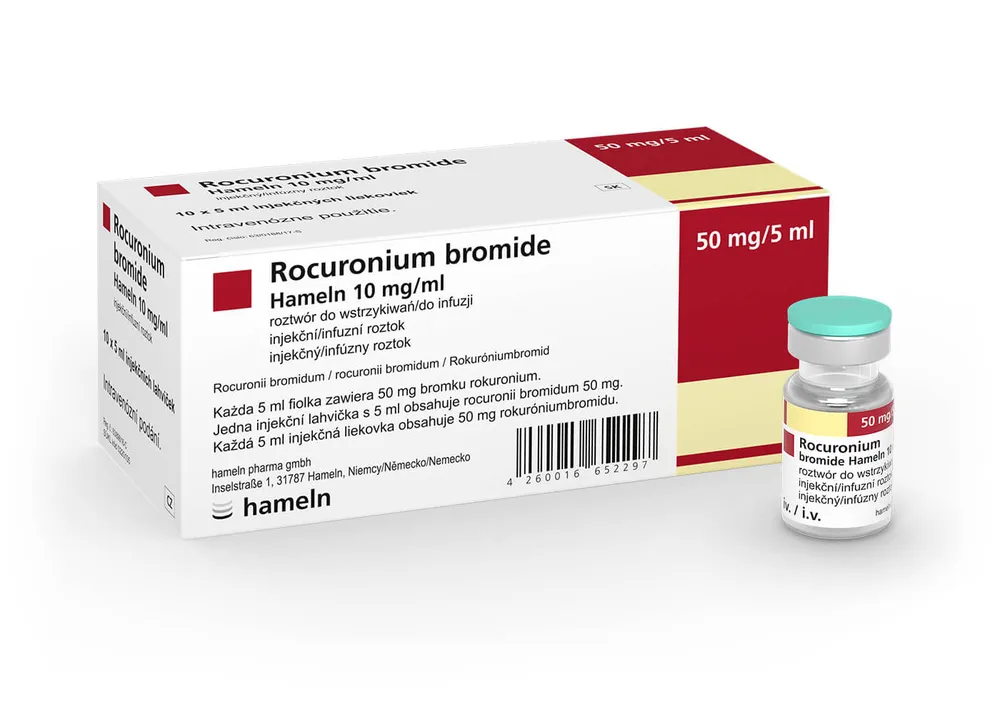
Table of Contents
- Package leaflet: Information for the user
- 1. What Rocuronium bromide Noridem is and what it is used for
- 2. Important information before using Rocuronium bromide Noridem
- 3. How to use Rocuronium bromide Noridem
- 4. Possible adverse reactions
- 5. How to store Rocuronium bromide Noridem
- 6. Contents of the pack and other information
- Information intended exclusively for medical professionals:
Package leaflet: Information for the user
Rocuronium bromide Noridem, 10 mg/mL, solution for injection/infusion
Rocuronii bromidum
Please read the entire leaflet carefully before use, as it contains
important information for the patient.
- Keep this leaflet for future reference.
- If you have any questions, consult your doctor, pharmacist, or nurse.
- This medicine has been prescribed for a specific individual. Do not share it with others. This medicine may harm others, even if their symptoms are identical.
- If any adverse reactions occur in the patient, including any adverse reactions not listed in this leaflet, inform your doctor, pharmacist, or nurse. See section 4.
Contents of the leaflet
- What Rocuronium bromide Noridem is and what it is used for
- Important information before using Rocuronium bromide Noridem
- How to use Rocuronium bromide Noridem
- Possible side effects
- How to store Rocuronium bromide Noridem
- Contents of the pack and other information
1. What Rocuronium bromide Noridem is and what it is used for
Rocuronium bromide Noridem belongs to a group of medicines called muscle relaxants.
Muscle relaxants are used during surgical procedures as an adjunct to general anaesthesia. During surgery, the patient's muscles must remain completely relaxed, which greatly facilitates the surgeon's work. Normally, nerves communicate with muscles by sending impulses. Rocuronium bromide Noridem works by blocking these impulses, resulting in muscle relaxation. Since the muscles required for breathing also become relaxed, the patient will be placed on artificial ventilation (mechanical respiratory support) until they are able to breathe independently again. During surgery, the effect of the muscle relaxant will be continuously monitored, and if necessary, the patient will receive additional doses of Rocuronium bromide Noridem. After surgery, the effect of Rocuronium bromide Noridem wears off, and the patient can resume spontaneous breathing. Occasionally, another medicine may be administered to accelerate this process.
Rocuronium bromide Noridem may also be administered in intensive care units.
2. Important information before using Rocuronium bromide Noridem
When not to use Rocuronium bromide Noridem:
- If the patient is allergic to rocuronium or to any of the other ingredients of this medicine (listed in section 6). The patient should inform the doctor about this.
Warnings and precautions
-
Information about the patient's health status may be important when deciding on the administration of Rocuronium bromide Noridem. The doctor should be informed if the patient has ever experienced any of the following symptoms:
- Allergy to muscle relaxants
- Impaired kidney function or kidney disease
- Cardiovascular disease
- Edema (fluid accumulation, e.g. swelling around the ankles)
- Liver disease, gallbladder disease, biliary tract disease, or liver dysfunction
- Neuromuscular disorders
- Malignant hyperthermia in the past (sudden fever with rapid heartbeat, rapid breathing, and/or muscle stiffness, pain, and/or weakness)
-
Certain medical conditions may affect the action of Rocuronium bromide Noridem, such as:
- Low blood potassium levels (hypokalemia)
- High blood magnesium levels (hypermagnesemia), e.g. during treatment of pregnancy-related toxemia with magnesium salts
- Low blood calcium levels (hypocalcemia)
- Low blood protein levels (hypoproteinemia)
- Dehydration
- High acid levels in the blood (acidosis)
- High carbon dioxide levels in the blood (hypercapnia)
- General debilitation
- Obesity
- Burns. If any of the above conditions are present, the doctor will determine the appropriate dose of Rocuronium bromide Noridem for the patient individually.
Children and elderly patients
Rocuronium bromide Noridem may be used in children (from newborns up to puberty) and in elderly patients.
Rocuronium bromide Noridem and other medicines
The patient should tell the doctor about all medicines currently used, recently used, or planned to be used. This will help the doctor determine the appropriate dose of Rocuronium bromide Noridem for the patient.
The following medicines may affect the action of Rocuronium bromide Noridem:
-
Medicines that enhance the effect of Rocuronium bromide Noridem:
- Certain anesthetics
- Long-term use of corticosteroids (anti-inflammatory drugs) in combination with Rocuronium bromide Noridem in intensive care units
- Certain antibiotics used to treat bacterial infections
- Certain medicines used to treat bipolar affective disorder (e.g. lithium salts)
- Certain medicines used to treat cardiovascular disorders or hypertension (quinidine, calcium channel blockers, adrenergic receptor blockers (beta-blockers))
- Medicines used to treat malaria, e.g. quinine
- Diuretics (water pills)
- Magnesium salts
- Local anesthetics (lidocaine, bupivacaine)
- Short-term use of anticonvulsants (phenytoin), e.g. during surgery
-
Medicines that reduce the effect of Rocuronium bromide Noridem:
- Long-term use of corticosteroids (anti-inflammatory drugs) or anticonvulsants (phenytoin and carbamazepine)
- Medicines used in pancreatitis, blood coagulation disorders, or acute blood loss (protease inhibitors: gabexate, ulinastatin)
-
Medicines with variable effects on Rocuronium bromide Noridem:
- Other muscle relaxants
Rocuronium bromide Noridem may affect the action of the following medicines:
- Accelerates the effect of local anesthetics (lidocaine)
Pregnancy, breastfeeding, and fertility
If the patient is pregnant or breastfeeding, suspects she may be pregnant, or is planning to have a child, she should consult the doctor before using this medicine.
Pregnancy
Animal studies have not shown harmful effects, but there are no clinical data on the use of rocuronium bromide in pregnant women. Therefore, caution should be exercised when administering rocuronium bromide to pregnant women.
Caesarean section
The doctor will decide whether rocuronium bromide can be administered during caesarean section. A dose of 0.6 mg of rocuronium bromide per kilogram of body weight has been shown to be safe during caesarean section and does not have harmful effects on the newborn.
Breastfeeding
Breastfeeding should be postponed for 6 hours after administration of this medicine.
Driving and operating machinery
The doctor will inform the patient when it is safe to resume driving or operating potentially dangerous machinery after administration of Rocuronium bromide Noridem.
Rocuronium bromide Noridem contains sodium
Each vial/ampoule contains 8.2 mg (0.36 mmol) of sodium.
The medicine contains less than 1 mmol (23 mg) of sodium per vial/ampoule, meaning the medicine is considered "sodium-free".
3. How to use Rocuronium bromide Noridem
Dosage
The doctor will determine the appropriate dose of Rocuronium bromide Noridem based on:
- the type of anesthesia used
- the expected duration of the surgical procedure
- other medications the patient is taking
- the patient's age and health condition.
Rocuronium bromide Noridem will be administered before and (or) during the surgical procedure.
The usual dose is 0.6 mg of rocuronium bromide per kilogram of body weight, which lasts
for 30 to 40 minutes. The effect of Rocuronium bromide Noridem must be monitored during the procedure.
If necessary, an additional dose may be administered.
Method and route of administration
Rocuronium bromide Noridem is not intended for self-administration by the patient.
Rocuronium bromide Noridem is given as an intravenous solution, either as a single injection or by continuous infusion.
The drug must be administered by a physician or a nurse.
Use of a higher than recommended dose of Rocuronium bromide Noridem
Medical personnel monitor the drug's effects, so overdose of Rocuronium bromide Noridem is unlikely.
However, if an overdose occurs, artificial ventilation will be continued until the patient regains spontaneous respiration.
The duration of action of Rocuronium bromide Noridem can be shortened by administering a reversal agent.
4. Possible adverse reactions
Like all medicines, this medicine can cause adverse reactions, although not everyone will experience them. If the doctor observes any of these adverse reactions during anaesthesia, appropriate treatment will be administered.
The following adverse reactions may occur:
Common (may affect less than 1 in 10 patients):
- fast heartbeat (tachycardia) in children (from newborns to adolescents).
Uncommon/rare (may affect less than 1 in 100/1,000 patients):
- fast heartbeat (tachycardia) in adults
- low blood pressure (hypotension)
- lack of effect of Rocuronium bromide Noridem or its excessive or insufficient effect
- pain at the injection site
- redness or itching at the injection site
- prolonged muscle-relaxing effect of Rocuronium bromide Noridem
- delayed recovery from anaesthesia.
Very rare (may affect less than 1 in 10,000 patients):
- allergic reactions, such as difficulty breathing, changes in blood pressure or heart rate, shock (sudden drop in blood pressure) due to insufficient circulating blood volume, or skin changes (e.g. fluid accumulation, redness, or rash)
- shortness of breath caused by constriction of airway muscles (bronchospasm)
- muscle weakness or paralysis
- prolonged muscle disorders usually observed after administration of Rocuronium bromide Noridem in combination with corticosteroids (anti-inflammatory drugs) in intensive care units in critically ill patients (steroid myopathy)
- sudden accumulation of fluid in the skin and mucous membranes (e.g. throat or tongue), breathing difficulties and (or) itching or rash, often as an allergic reaction (angioedema)
- fluid accumulation (oedema) in the face
- airway problems caused by anaesthesia
- rash, sometimes with intense itching and wheezing (urticaria)
- skin redness
- hot flushes.
Frequency not known (frequency cannot be estimated from available data):
- severe allergic coronary artery spasm (Kounis syndrome) causing chest pain (angina) or heart attack (myocardial infarction)
- dilated pupils (mydriasis) or fixed pupils that do not react to light or other stimuli.
Reporting of adverse reactions
If any adverse reactions occur, including any adverse reactions not listed in this leaflet, inform your doctor, pharmacist, or nurse. Adverse reactions can be reported directly to the Department of Monitoring Adverse Drug Reactions of the Office for Registration of Medicinal Products, Medical Devices and Biocidal Products
Al. Jerozolimskie 181C
PL-02 222 Warsaw
Tel.: + 48 22 49 21 301
Fax: + 48 22 49 21 309
Website: https://smz.ezdrowie.gov.pl
Adverse reactions can also be reported to the marketing authorisation holder.
Reporting adverse reactions helps provide more information on the safety of the medicine.
5. How to store Rocuronium bromide Noridem
Keep this medicine out of the sight and reach of children.
Store in a refrigerator (2°C - 8°C).
Rocuronium bromide Noridem should be used immediately after opening the vial/ampoule.
The diluted medicine remains chemically and physically stable for 72 hours at a temperature of 28°C - 32°C or for 72 hours at 2°C - 8°C. From a microbiological standpoint, the medicine should be used immediately after dilution. If not used immediately, the user/administering personnel are responsible for the storage duration and conditions of the ready-to-use solution.
Usually, this time should not exceed 24 hours at a temperature of 2°C to 8°C, unless dilution has been carried out under controlled and validated aseptic conditions.
Do not use this medicine after the expiry date stated on the outer carton, ampoule label, and vial label after "EXP". The expiry date refers to the last day of the stated month.
Before use, visually inspect the medicine. Do not use the solution if solid particles are observed, if the solution is not clear, or if the container is damaged.
Medicines must not be disposed of via wastewater or household waste. Ask a pharmacist how to dispose of medicines no longer required. Such measures will help protect the environment.
6. Contents of the pack and other information
What Rocuronium bromide Noridem contains
- The active substance is rocuronium bromide. Each mL of solution contains 10 mg of rocuronium bromide.
- The other ingredients are: sodium acetate trihydrate, sodium chloride, glacial acetic acid, and water for injections.
What Rocuronium bromide Noridem looks like and contents of the pack
Rocuronium bromide Noridem is a clear, colourless to pale yellow solution for injection/infusion, containing 10 mg of rocuronium bromide per millilitre.
Rocuronium bromide Noridem is available in 3 presentations:
- Glass vials containing 50 mg of rocuronium bromide (10 or 50 vials per pack)
- Glass ampoules containing 50 mg of rocuronium bromide (10 or 50 ampoules per pack)
- Plastic ampoules containing 50 mg of rocuronium bromide (10 or 50 ampoules per pack)
Not all pack sizes may be marketed.
Marketing Authorisation Holder
Noridem Enterprises Limited
Makariou & Evagorou 1
Mitsi Building 3, Office 115
1065 Nicosia
Cyprus
Tel.: +302108161802, Fax: +302108161587
Manufacturer
Demo S.A. Pharmaceutical Industry
21st Km National Road Athens Lamia
145 68 Kryoneri
Greece
This medicinal product is authorised for marketing in the European Economic Area and in the United Kingdom (Northern Ireland) under the following names:
| Netherlands: | Rocuronium bromide Noridem 10 mg / mL solution for injection / infusion |
| Cyprus: | ROCUDEM 10 mg / mL Solution for injection / infusion |
| Greece: | ROCUDEM 10 mg / mL Solution for injection / infusion |
| Germany: | Rocuronium bromide Noridem 10 mg / mL solution for injection / infusion |
| France: | Rocuronium Noridem 10 mg / mL, solution for injection / perfusion |
| Belgium: | Rocuronium bromide Noridem 10 mg / mL solution for injection / perfusion – solution for injection / infusion – Injections- / Infusionslösung |
| Ireland: | Rocuronium bromide 10 mg / mL Solution for injection / infusion |
| United Kingdom (Northern Ireland): | Rocuronium bromide 10 mg / mL Solution for injection / infusion |
| Italy: | Rocuronium bromide Noridem |
| Czech Republic: | Rocuronium bromide Noridem |
| Slovakia: | Rocuronium bromide Noridem 10 mg / mL concentrate for solution for injection / infusion |
| Sweden: | Rocuronium bromide Noridem |
| Denmark: | Rocuronium bromide Noridem |
| Norway: | Rocuronium bromide Noridem |
| Finland: | Rocuronium bromide Noridem |
| Hungary: | Rocuronium bromide Noridem 10 mg / mL solution for injection |
| Poland: | Rocuronium bromide Noridem |
| Spain: | Rocuronium bromide Noridem 10 mg / mL solution for injection and for perfusion |
| Portugal: | Rocuronium bromide Noridem |
| Austria: | Rocuronium bromide Noridem 10 mg / mL solution for injection / infusion |
Information intended exclusively for medical professionals:
Preparation method
Incompatibilities
Rocuronium bromide Noridem exhibits physical incompatibility when added to
solutions containing the following drugs: amphotericin, amoxicillin, azathioprine, cefazolin,
cloxacillin, dexamethasone, diazepam, enoximone, erythromycin, famotidine, furosemide, sodium
salt of hydrocortisone succinate, insulin, methohexital, methylprednisolone, sodium salt of
prednisolone succinate, thiopental, trimethoprim and vancomycin. Rocuronium bromide Noridem
also shows physical incompatibility with soybean oil.
Do not mix this medicinal product with other drugs except those listed in section "Method of administration".
If Rocuronium bromide Noridem is administered via the same infusion line used for other drugs, it is essential that the infusion line is adequately flushed (e.g. with 0.9% NaCl solution) between administration of Rocuronium bromide Noridem and drugs known to be incompatible or for which compatibility with Rocuronium bromide Noridem has not been established.
Dosage and method of administration
In adults, the following dosage recommendations serve as general guidelines for endotracheal intubation and muscle relaxation during surgical procedures of short to long duration, as well as for use in intensive care units.
Surgical procedures
Endotracheal intubation
The standard dose for intubation during routine anaesthesia is 0.6 mg/kg body weight of rocuronium bromide. Adequate conditions for intubation are achieved within 60 seconds after administration in most patients. During rapid sequence induction of anaesthesia, a dose of 1.0 mg/kg body weight of rocuronium bromide is recommended, providing suitable conditions for intubation within 60 seconds in nearly all patients. When using a dose of 0.6 mg/kg body weight of rocuronium bromide during rapid sequence induction, intubation should be performed 90 seconds after administration.
Caesarean section
Doses of 0.6 mg/kg body weight of rocuronium bromide have no effect on Apgar scores, fetal muscle tone or cardiovascular-respiratory adaptation. Umbilical cord blood samples have shown that only limited amounts of rocuronium bromide cross the placenta, without causing clinically relevant adverse effects in the newborn.
Doses of 1 mg/kg body weight have been studied during rapid sequence induction of anaesthesia, but not in patients undergoing caesarean section.
Higher doses
When higher doses are required, initial doses of up to 2 mg/kg body weight of rocuronium bromide have been administered without cardiovascular or vascular adverse effects. Higher doses of rocuronium bromide accelerate onset and prolong the duration of therapeutic effect.
Maintenance doses
The recommended maintenance dose is 0.15 mg/kg body weight of rocuronium bromide. During prolonged anaesthesia with inhalational agents, the dose should be reduced to 0.075–0.1 mg/kg body weight of rocuronium bromide. Maintenance doses should be administered when the twitch response to stimulation returns to 25% of control value or when two or three responses are observed in response to train-of-four (TOF) stimulation.
Continuous infusion
When rocuronium bromide is administered by continuous infusion, an initial dose of 0.6 mg/kg body weight of rocuronium bromide is recommended. When neuromuscular blockade begins to wear off, continuous infusion should be initiated. The infusion rate should be adjusted so that the twitch response to stimulation is maintained at 10% of the control value or to sustain one or two responses to train-of-four (TOF) stimulation. In adults, during intravenous anaesthesia, the infusion rate required to maintain neuromuscular blockade at this level ranges from 0.3 to 0.6 mg/kg/h. In patients receiving inhalational anaesthetics, the infusion rate ranges from 0.3 to 0.4 mg/kg/h. Continuous monitoring of neuromuscular blockade is recommended due to individual patient variability and differences in anaesthetic technique.
Children and adolescents
In neonates (aged 0 to 27 days), infants (aged 28 days to 2 months), young children (aged 3 to 23 months), children (aged 2 to 11 years) and adolescents (aged 12 to 17 years), the recommended intubation dose during routine anaesthesia and the maintenance dose are similar to those in adults.
However, the duration of action of a single intubation dose is longer in neonates and infants than in older children.
Infusion rates in children and adolescents (except children aged 2 to 11 years) are the same as in adults. In children aged 2 to 11 years inclusive, higher infusion rates may be required.
Therefore, in children aged 2 to 11 years, the same initial infusion rate as in adults is recommended, followed by adjustment to maintain the twitch response at 10% of control value or to sustain one or two responses to train-of-four stimulation.
Experience with rocuronium bromide for rapid sequence induction in children and adolescents is limited. Therefore, rocuronium bromide is not recommended for facilitating endotracheal intubation during rapid sequence induction in children and adolescents.
Elderly patients and patients with hepatic and/or biliary disease and/or renal impairment
The standard intubation dose for elderly patients and patients with hepatic and/or biliary disease and/or renal impairment during routine anaesthesia induction is 0.6 mg/kg body weight of rocuronium bromide. For rapid sequence induction in patients in whom prolonged drug effect is expected, a dose of 0.6 mg/kg body weight should be considered.
Regardless of anaesthetic technique, the recommended maintenance dose in these patients is 0.075–0.1 mg/kg body weight of rocuronium bromide, and the recommended infusion rate is 0.3 to 0.4 mg/kg/h (see “Continuous infusion”).
Dosing in overweight and obese patients
In overweight or obese patients (defined as those with body weight 30% or more above ideal body weight), drug doses should be reduced based on ideal body weight.
Short-term use in intensive care units
Endotracheal intubation
The same doses as described above for surgical procedures should be used for endotracheal intubation.
Maintenance doses
An initial bolus dose of 0.6 mg/kg body weight of rocuronium bromide is recommended. When the twitch response returns to 10% of the initial value or when 1 to 2 responses to train-of-four stimulation are observed, continuous infusion should be initiated. Dosing should always be adjusted according to individual patient needs. The recommended initial infusion rate to maintain neuromuscular blockade at 80–90% (1 to 2 responses to train-of-four) in adult patients is 0.3 to 0.6 mg/kg/h during the first hour. During the following 6 to 12 hours, the infusion rate should be reduced according to individual patient response. Thereafter, individual requirements remain relatively stable. Treatment with Rocuronium bromide Noridem should be short-term. Total duration of administration must not exceed 7 days due to insufficient long-term data.
Clinical studies have shown considerable variability in infusion rates. The average infusion rate ranged from 0.2 to 0.5 mg/kg/h, depending on the nature and severity of organ dysfunction, concomitant medications and individual patient status. To optimally adjust dosing to individual needs, monitoring of neuromuscular transmission is strongly recommended. Administration for up to 7 days has been studied.
Special patient groups
Rocuronium bromide Noridem is not recommended for use in children, adolescents or elderly patients to facilitate mechanical ventilation due to lack of efficacy and safety data.
Method of administration
Rocuronium bromide Noridem is administered intravenously as a rapid bolus injection or by continuous infusion.
Compatibility studies have been conducted with the following infusion fluids: Rocuronium bromide Noridem at nominal concentrations of 0.5 mg/mL and 2.0 mg/mL has been found compatible with: 0.9% NaCl solution, 5% glucose solution, 5% glucose in 0.9% NaCl solution, water for injections, Ringer's lactate solution and Hemaccel. Administration should begin immediately after preparation and be completed within 24 hours.
For single use only.
Glass vials should be brought to room temperature before puncture to reduce the risk of breakage. Unused solution should be discarded.
Special precautions for storage
Store in a refrigerator (2°C–8°C).
Rocuronium bromide Noridem contains no preservatives and should be used immediately after opening the vial/ampoule.
The medicinal product diluted with infusion fluids is chemically and physically stable for 72 hours at 28°C–32°C or for 72 hours at 2°C–8°C. From a microbiological standpoint, the product should be used immediately after dilution. If not used immediately, the user/administering personnel are responsible for storage conditions and duration. Usually, this should not exceed 24 hours at 2°C–8°C, unless dilution was performed under controlled and validated aseptic conditions.
Disposal and preparation of the medicinal product
Any unused medicinal product or waste material should be disposed of in accordance with local regulations.
Overdose
In case of overdose and prolonged neuromuscular blockade, assisted ventilation and appropriate sedation should be continued. In such cases, two options are available to reverse neuromuscular blockade:
(1) Sugammadex may be used to reverse profound and deep neuromuscular blockade in adults. The dose of sugammadex administered depends on the degree of neuromuscular blockade.
(2) When spontaneous recovery of neuromuscular transmission begins, an appropriate dose of acetylcholinesterase inhibitor (e.g. neostigmine, edrophonium, pyridostigmine) or sugammadex should be administered. If administration of acetylcholinesterase inhibitor does not reverse neuromuscular blockade, ventilation should be continued until spontaneous respiration returns. Repeated administration of acetylcholinesterase inhibitors may be dangerous.
In animal studies, no severe cardiovascular disturbances leading to cardiac failure were observed up to a total dose of 750 × ED90 (135 mg/kg body weight of rocuronium bromide).