Ritonavir accord
Poland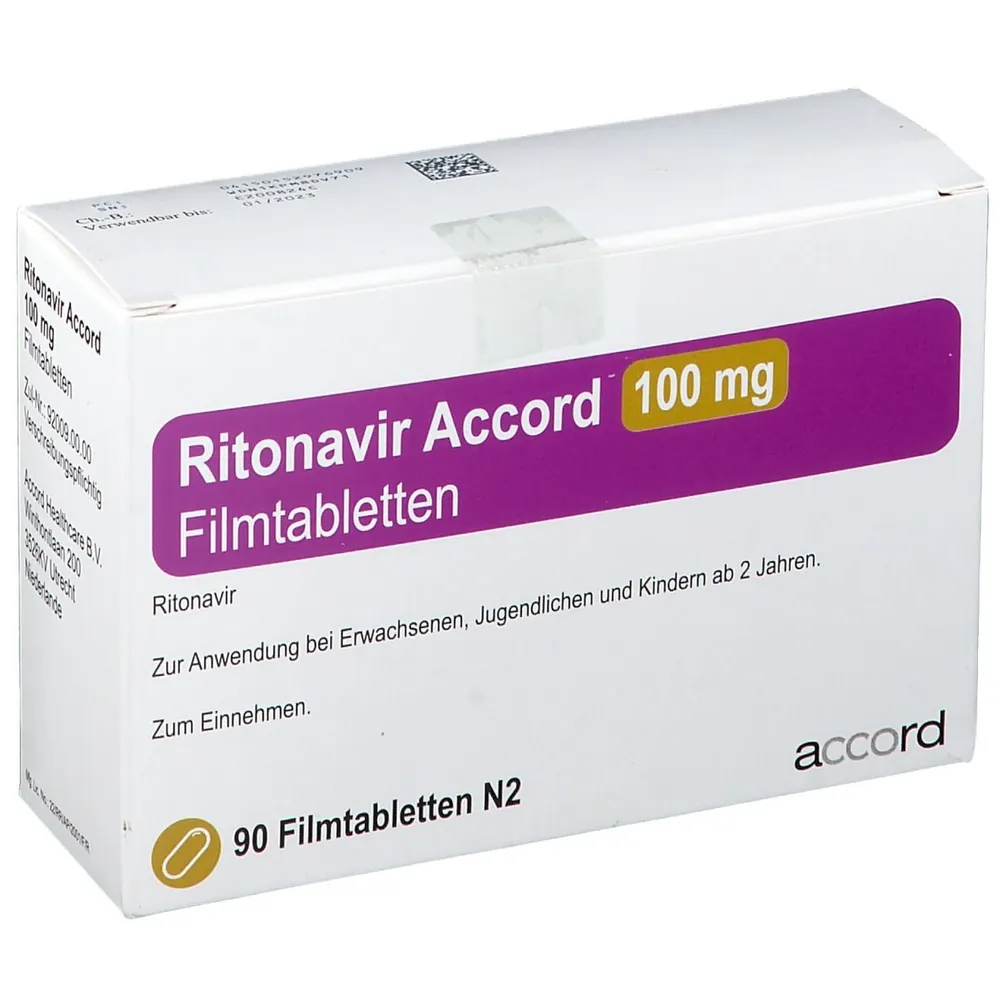
Table of Contents
- Package leaflet: Information for the patient
- 1. What Ritonavir Accord is and what it is used for
- 2. Important information for adult or child patients before taking the medicine
- 3. How to use Ritonavir Accord
- 4. Possible adverse effects
- 5. How to store Ritonavir Accord
- 6. Contents of the pack and other information
Package leaflet: Information for the patient
Ritonavir Accord, 100 mg, film-coated tablets
Ritonavirum
Please read carefully the entire leaflet before taking this medicine, as it contains
important information for the adult patient or child.
- Keep this leaflet for future reference.
- If you have any questions, please consult your doctor, pharmacist, or nurse.
- This medicine has been prescribed for a specific individual. Do not share it with others. This medicine may harm other people, even if their symptoms are the same.
- If the patient experiences any adverse reactions, including any adverse reactions not listed in this leaflet, inform the doctor, pharmacist, or nurse immediately. See section 4.
Leaflet contents:
- What Ritonavir Accord is and what it is used for
- Important information for the adult patient or child before taking Ritonavir Accord
- How to take Ritonavir Accord
- Possible side effects
- How to store Ritonavir Accord
- Contents of the pack and other information
1. What Ritonavir Accord is and what it is used for
Ritonavir Accord contains the active substance ritonavir. Ritonavir is a protease inhibitor
used to slow the progression of human immunodeficiency virus (HIV) infection. Ritonavir is used in combination with other anti-HIV medicines (antiretroviral drugs) to control HIV infection. The optimal combination of medicines for the patient will be determined by the treating physician.
Ritonavir Accord is used in children aged 2 years and older, adolescents, and adults infected with HIV, the virus that causes AIDS.
2. Important information for adult or child patients before taking the medicine
Ritonavir Accord
When not to take Ritonavir Accord
-
if the patient is allergic to ritonavir or any of the other ingredients of this medicine (listed in section 6);
-
if the patient has severe liver disease;
-
if the patient is currently taking any of the following medicines:
- astemizole or terfenadine (commonly used to treat allergy symptoms and may be available without prescription);
- amiodarone, bepridil, dronedarone, encainide, flecainide, propafenone, quinidine (used to treat irregular heart rhythm);
- dihydroergotamine, ergotamine (used to treat migraine headache);
- ergonovine, methylergonovine (used to control severe bleeding that may occur after childbirth or miscarriage);
-
chlorazepate, diazepam, estazolam, flurazepam, triazolam or oral midazolam (used to help sleep and/or relieve anxiety);
-
clozapine, pimozide (used to treat mental disorders or emotional disturbances);
-
quetiapine (used to treat schizophrenia, bipolar affective disorder and major depression);
-
lurasidone (used to treat depression);
-
ranolazine (used to treat chronic chest pain [angina]);
-
pethidine, propoxyphene (used to relieve pain);
-
cisapride (used to treat certain gastrointestinal disorders);
-
rifabutin (used to prevent and/or treat certain infections)*;
-
voriconazole (used to treat fungal infections)*;
-
simvastatin, lovastatin (used to lower blood cholesterol levels);
-
neratinib (used to treat breast cancer);
-
lomitapide (used to lower blood cholesterol levels);
-
alfuzosin (used to treat benign prostatic hyperplasia);
-
fusidic acid (used to treat bacterial infections);
-
sildenafil, if the patient has a lung disease known as pulmonary hypertension causing breathing difficulties. Patients without this condition may take sildenafil for erectile dysfunction under medical supervision (see section “Ritonavir Accord and other medicines”);
-
avanafil or vardenafil (used to treat erectile dysfunction);
-
colchicine (used to treat gout), if the patient has kidney and/or liver impairment (see section “Ritonavir Accord and other medicines”);
-
herbal products containing St John’s wort (Hypericum perforatum), as they may reduce the effectiveness of Ritonavir Accord. St John’s wort is commonly found in herbal remedies available without prescription.
* The doctor may decide to prescribe rifabutin and/or voriconazole together with Ritonavir Accord at a lower dose (used to boost other antiretroviral medicines). However, Ritonavir Accord must not be used at full dose together with these two medicines.
If the patient is currently taking any of the medicines listed above, they should consult their doctor about switching to an alternative medicine during treatment with Ritonavir Accord.
Please also refer to the list of medicines in section “Ritonavir Accord and other medicines” for information on other medicines requiring special caution.
Warnings and precautions
Before starting Ritonavir Accord, discuss this with your doctor.
Important information
- If Ritonavir Accord is taken together with other antiretroviral medicines, it is important to carefully read the package leaflets of these other medicines, as they may contain additional information about when Ritonavir Accord should not be used. If you have any doubts about Ritonavir Accord or other prescribed medicines, consult your doctor or pharmacist.
- Ritonavir Accord does not cure HIV infection or AIDS.
- Patients taking Ritonavir Accord may still develop infections or other illnesses related to HIV or AIDS. Therefore, it is important that the patient remains under medical supervision while taking Ritonavir Accord.
Tell your doctor if the patient has or has had:
- liver disease in the past.
- hepatitis B or C virus infection and is currently receiving combination antiretroviral therapy, as there is an increased risk of severe and potentially life-threatening adverse effects due to liver toxicity. Regular blood tests to monitor liver function may be necessary.
- haemophilia, as increased bleeding has been reported in haemophiliac patients taking this type of medicine (protease inhibitors). The cause is unknown. Additional treatment with a blood clotting agent (factor VIII) may be required to control any bleeding.
- erectile dysfunction, as medicines used for erectile dysfunction may cause low blood pressure and prolonged erection.
- diabetes, as worsening of diabetes or new-onset diabetes has been reported in some patients taking protease inhibitors.
- kidney disease, as the treating doctor may need to review the dosage of other medicines taken by the patient (such as protease inhibitors).
Tell the treating doctor if any of the following occur:
- diarrhoea or vomiting that does not resolve, as this may reduce the effectiveness of the medicines taken;
- nausea, vomiting or abdominal pain, as these may be symptoms of pancreatitis. Some patients taking Ritonavir Accord may develop serious pancreatic problems. If these symptoms occur, inform the doctor as soon as possible.
- signs of infection – inform the doctor immediately. In some patients with advanced HIV infection (AIDS) who have started anti-HIV treatment, symptoms of past infections may appear, even though they may not have been previously aware of them. This is believed to result from improved immune response, which helps the body fight these infections. In addition to opportunistic infections, autoimmune disorders (where the immune system attacks healthy tissues) may also occur after starting anti-HIV treatment. These disorders may appear several months after treatment initiation. If the patient notices any signs of infection or other symptoms such as muscle weakness, weakness starting in the hands and feet and spreading to the trunk, palpitations, tremors or hyperactivity, they should immediately inform the treating doctor, who will initiate appropriate treatment.
- joint stiffness, pain (especially in hips, knees and shoulders) and difficulty moving. Inform the doctor, as these may be symptoms of a disease causing bone tissue damage (avascular necrosis). This condition may develop in some patients taking multiple antiretroviral medicines.
- muscle pain, tenderness or weakness, especially when occurring in patients treated with antiretroviral protease inhibitors and nucleoside analogues. In rare cases, muscle disorders have been serious (see section 4 “Possible side effects”).
- dizziness, drowsiness, fainting or irregular heartbeat. Some patients taking Ritonavir Accord may experience changes in the electrocardiogram (ECG). Inform the doctor if the patient has heart disease or conduction disorders.
- If the patient has any health problems, they should discuss them with the doctor as soon as possible.
Children and adolescents
Ritonavir Accord is not recommended for children under 2 years of age.
Ritonavir Accord and other medicines
Inform your doctor or pharmacist about all medicines currently or recently taken, including those available without prescription.
There are certain medicines that must never be taken together with Ritonavir Accord. These have already been listed in section 2 under “When not to take Ritonavir Accord”. There are also other medicines that can only be used under specific circumstances, as described below.
The following warnings apply when Ritonavir Accord is used at full dose. They may also apply when Ritonavir Accord is used at lower, boosting doses with other antiretroviral medicines.
Tell your doctor if the patient is taking any of the following medicines, as special precautions are required:
- sildenafil or tadalafil used to treat erectile dysfunction. Dose reduction and/or less frequent administration may be necessary to avoid hypotension and prolonged erection. Patients with pulmonary hypertension must not take Ritonavir Accord with sildenafil (see section 2 “Important information before taking Ritonavir Accord”). If a patient with pulmonary hypertension is being treated with tadalafil, they should inform their doctor.
- colchicine (used to treat gout), because Ritonavir Accord may increase blood levels of this medicine. Ritonavir Accord must not be used with colchicine if the patient has kidney and/or liver impairment (see also section “When not to take Ritonavir Accord” above).
- digoxin (a medicine used for heart conditions). The doctor may need to adjust the digoxin dose and closely monitor the patient taking both digoxin and Ritonavir Accord to avoid cardiac complications.
- hormonal contraceptives containing ethinylestradiol, as Ritonavir Accord may reduce their effectiveness. It is recommended to use condoms or a non-hormonal method of contraception instead. Irregular vaginal bleeding may also occur during hormonal contraception and treatment with Ritonavir Accord.
- atorvastatin or rosuvastatin (used to treat high cholesterol levels), as Ritonavir Accord may increase their blood concentrations. Consult your doctor before taking any cholesterol-lowering medicine with Ritonavir Accord (see also above “When not to take Ritonavir Accord”).
- steroids (e.g. dexamethasone, fluticasone propionate, prednisolone, triamcinolone), as Ritonavir Accord may increase blood levels of these medicines, potentially leading to Cushing's syndrome (development of a “moon-shaped” face) and reduced cortisol production. The doctor may reduce the steroid dose or monitor more closely for adverse effects.
- trazodone (an antidepressant), as increased frequency of adverse effects such as nausea, dizziness, low blood pressure and fainting may occur when used with Ritonavir Sandoz.
- rifampicin (a medicine used to treat tuberculosis) and saquinavir (a medicine used to treat HIV infection), as severe liver damage may occur when used with Ritonavir Accord.
- bosentan, riociguat (medicines used to treat pulmonary hypertension), as Ritonavir Accord may increase blood levels of these medicines.
There are medicines that should not be taken together with Ritonavir Accord because their effects may be increased or decreased when used concurrently. In some cases, the doctor may recommend appropriate tests, adjust dosing or monitor treatment regularly. Therefore, inform your doctor about all medicines being taken, including those available without prescription or herbal remedies. It is especially important to inform the doctor about the use of medicines such as:
- amphetamine or its derivatives;
- antibiotics (e.g. erythromycin, clarithromycin);
- anticancer medicines (e.g. abemaciclib, afatinib, apalutamide, ceritinib, encorafenib, dasatinib, ibrutinib, nilotinib, venetoclax, vincristine, vinblastine);
- medicines used to treat low platelet count (e.g. fostamatinib);
- anticoagulants (e.g. edoxaban, dabigatran, rivaroxaban, vorapaxar, warfarin);
- antidepressants (e.g. amitriptyline, desipramine, fluoxetine, imipramine, nefazodone, nortriptyline, paroxetine, sertraline, trazodone);
- antifungal medicines (e.g. ketoconazole, itraconazole);
- antihistamines (e.g. loratadine, fexofenadine);
- antiretroviral medicines, including HIV protease inhibitors (amprenavir, atazanavir, darunavir, fosamprenavir, indinavir, nelfinavir, saquinavir, tipranavir) and non-nucleoside reverse transcriptase inhibitors (NNRTIs) (delavirdine, efavirenz, nevirapine) and others (didanosine, maraviroc, raltegravir, zidovudine);
- anti-tuberculosis medicines (bedaquiline, delamanid);
- antiviral medicines used to treat chronic hepatitis C virus (HCV) infection in adults (e.g. glecaprevir/pibrentasvir and simeprevir);
- sedatives, buspirone;
- anti-asthma medicines, theophylline, salmeterol;
- atovaquone (a medicine used to treat certain types of pneumonia and malaria);
- buprenorphine (a medicine used to treat chronic pain);
- bupropion (a medicine to help stop smoking);
- antiepileptic medicines (e.g. carbamazepine, divalproex, lamotrigine, phenytoin);
- medicines for heart conditions (e.g. disopyramide, mexiletine and calcium channel blockers such as amlodipine, diltiazem and nifedipine);
- immunosuppressive medicines (e.g. cyclosporine, tacrolimus, everolimus); morphine and medicines with similar properties used to treat severe pain (e.g. methadone, fentanyl);
- levothyroxine (used to treat thyroid problems);
- sleeping medicines (e.g. alprazolam, zolpidem) and injectable midazolam;
- tranquilizers (e.g. haloperidol, risperidone, thioridazine);
- colchicine (a medicine used to treat gout);
- levothyroxine (used to treat hypothyroidism).
There are certain medicines that must never be taken with Ritonavir Accord. These have already been listed in section 2 under “When not to take Ritonavir Accord”.
Ritonavir Accord with food and drink
Ritonavir Accord should be taken with food.
Pregnancy and breastfeeding
If the patient is pregnant, suspects she may be pregnant, or is planning to have a child,
she should consult her doctor before taking this medicine.
There is extensive information on the use of ritonavir (the active substance in Ritonavir Accord) during pregnancy. Generally, ritonavir has been used in women after the first trimester at a lower dose (boosting dose) in combination with other protease inhibitors. Ritonavir Accord does not appear to increase the risk of congenital malformations compared to the general population.
Breastfeeding is not recommended for women who are HIV-positive, as HIV can be transmitted to the child through breast milk.
If the patient is breastfeeding or considering breastfeeding, she should consult her doctor as soon as possible.
Driving and operating machinery
Ritonavir Accord may cause dizziness. If this occurs, the patient should not drive or operate machinery.
Ritonavir Accord contains sodium
This medicine contains less than 1 mmol of sodium (23 mg) per tablet, i.e. essentially sodium-free.
3. How to use Ritonavir Accord
This medicine should always be taken exactly as prescribed by your doctor or pharmacist. If you are unsure,
you should consult your doctor or pharmacist. This medicine should be taken daily, once or twice
a day with food.
It is important to swallow Ritonavir Accord tablets whole, without chewing, breaking or crushing them.
The recommended doses of Ritonavir Accord are:
- if Ritonavir Accord is used to boost the effect of certain other anti-HIV medicines, the typical dose for adults is 1 to 2 tablets once or twice a day. More detailed dosing recommendations, including dosing in children, are provided in the patient leaflet included in the packaging of the anti-HIV medicine taken together with Ritonavir Accord.
- if your doctor prescribes a full dose, adults may start treatment with 3 tablets in the morning and 3 tablets after 12 hours, gradually increasing the dose over 14 days to the full dose of 6 tablets twice daily (total 1200 mg per day). In children (aged 2 to 12 years), treatment starts with a lower dose which is gradually increased until the maximum dose allowed for the child's size is reached.
Your doctor will inform you which dose to take.
To suppress the progression of infection, Ritonavir Accord must be taken daily, regardless of how much
your condition has improved. If any side effect prevents you from taking Ritonavir Accord as recommended,
you should inform your doctor immediately. During episodes of diarrhoea, your doctor may decide to monitor you more closely.
Always ensure you have an adequate supply of Ritonavir Accord to avoid running out. If you plan to travel or be admitted to hospital, make sure you have enough Ritonavir Accord to last until your next supply.
Taking more Ritonavir Accord than recommended
Taking too high a dose of Ritonavir Accord may cause feelings of numbness, tingling or pins and needles. If you take more medicine than recommended, contact your doctor or go to the nearest hospital emergency department immediately.
Missing a dose of Ritonavir Accord
If you miss a dose, take it as soon as you remember. However, if it is almost time for your next dose, take the next dose at the scheduled time. Do not take a double dose to make up for a missed dose.
Stopping Ritonavir Accord
Do not stop taking Ritonavir Accord without consulting your doctor, even if you feel better. Taking Ritonavir Accord as directed gives the best chance of delaying the development of drug resistance.
4. Possible adverse effects
During HIV treatment, an increase in body weight and in blood lipid and glucose levels may occur. This is partly associated with improved health and lifestyle, and in the case of blood lipid levels, sometimes with the use of antiretroviral drugs themselves. Your doctor will monitor these changes.
Like all medicines, this medicine can cause adverse effects, although not everyone will experience them. Adverse effects of ritonavir used in combination with other antiretroviral medicines also depend on these other medicines. Therefore, it is important to carefully read the section of the leaflet describing adverse effects of each of these other medicines.
Very common adverse effects: may occur in more than 1 in 10 people
- abdominal or lower abdominal pain
- vomiting
- diarrhoea (may be severe)
- nausea
- skin redness (mainly of the face), sensation of warmth
- headache
- dizziness
- sore throat
- cough
- stomach discomfort or indigestion
- tingling or numbness of hands, feet, or around the lips and mouth
- feeling of weakness and/or fatigue
- unpleasant taste in the mouth
- nerve damage which may cause weakness and pain
- itching
- rash
- joint pain and back pain
Common adverse effects: may occur in up to 1 in 10 people
- allergic reactions, including skin rash (may be red, raised, itchy), severe swelling of the skin and other tissues
- increased cholesterol levels
- difficulty sleeping (insomnia)
- increased triglyceride levels
- anxiety
- gout
- gastrointestinal bleeding
- hepatitis and yellowing of the skin or whites of the eyes
- increased urination
- impaired kidney function
- seizures (epileptic fits)
- low platelet count
- thirst (dehydration)
- abnormally heavy menstrual periods
- bloating with gas
- loss of appetite
- mouth ulcers
- muscle pain, tenderness or weakness
- fever
- weight loss
- changes in laboratory test results: changes in blood test results, i.e. blood biochemistry and blood counts
- confusion
- difficulty concentrating
- fainting
- blurred vision
- swelling of hands and feet
- high blood pressure
- low blood pressure and feeling faint when standing up
- sensation of cold in hands and feet
- acne
Uncommon adverse effects: may occur in up to 1 in 100 people
- heart attack
- diabetes
- kidney failure
Rare adverse effects: may occur in up to 1 in 1,000 people
- severe or life-threatening skin reactions, including blistering (Stevens-Johnson syndrome, toxic epidermal necrolysis)
- severe allergic reaction (anaphylaxis)
- high blood sugar levels
Frequency not known: frequency cannot be estimated from the available data
- kidney stones
If the patient experiences nausea, vomiting, or abdominal pain, inform the treating doctor, as these may be symptoms of pancreatitis. Also inform the doctor if the patient experiences joint stiffness, pain (especially in hips, knees, and shoulders), and difficulty moving, as these may be symptoms of bone necrosis. See also section 2 “Important information before taking Ritonavir Accord”.
In patients with haemophilia A and B, increased bleeding has been reported during treatment with this or other protease inhibitors. In such cases, medical advice should be sought immediately.
Abnormal liver function test results, hepatitis, and rarely jaundice have been reported in patients treated with ritonavir. Some of these patients had other illnesses or were taking other medicines. In patients with liver disease or hepatitis, the condition may worsen.
There have been reports of muscle pain, tenderness, and weakness, especially when cholesterol-lowering medicines are used concomitantly with antiretroviral medicines, including protease inhibitors and nucleoside analogues. Rarely, these were serious muscle disorders (rhabdomyolysis). In case of unexplained or persistent muscle pain, tenderness, weakness, or cramps, treatment should be discontinued and the patient should immediately contact the treating doctor or the nearest hospital emergency department.
Inform the doctor immediately if any symptoms indicating an allergic reaction occur after taking Ritonavir Accord, such as rash, hives, or difficulty breathing.
If any of the adverse effects worsen or if any adverse effects not listed in this leaflet occur, contact the doctor, pharmacist, the nearest hospital emergency department, or (if the adverse effect requires urgent intervention) seek immediate medical help.
Reporting of adverse effects
If any adverse effects occur, including any adverse effects not listed in this leaflet, inform your doctor or pharmacist. Adverse effects can be reported directly to the Department of Monitoring Adverse Drug Reactions, Office for Registration of Medicinal Products, Medical Devices and Biocidal Products
Al. Jerozolimskie 181C
02-222 Warsaw
Tel: +48 22 49 21 301
Fax: +48 22 49 21 309
Website: https://smz.ezdrowie.gov.pl
Adverse effects can also be reported to the marketing authorization holder.
Reporting adverse effects helps to provide more information on the safety of the medicine.
5. How to store Ritonavir Accord
Keep this medicine out of the sight and reach of children.
Do not use this medicine after the expiry date stated on the carton and bottle after:
EXP. The expiry date refers to the last day of the stated month.
Shelf life after first opening the bottle: 120 days.
Store below 25°C.
Medicines should not be disposed of via wastewater or household waste. Ask your pharmacist how to dispose of medicines no longer required. These measures will help protect the environment.
6. Contents of the pack and other information
What Ritonavir Accord contains
The active substance is ritonavir. Each coated tablet contains 100 mg of ritonavir.
The other ingredients are: copovidone (K-25,2-30,8), sorbitan laurate, colloidal anhydrous silica,
anhydrous calcium hydrogen phosphate, sodium stearyl fumarate.
Coating Opadry White 20C58634: hypromellose 6 cP, titanium dioxide (E 171), polyethylene glycol 400,
hydroxypropyl cellulose, talc, polyethylene glycol 3350, colloidal anhydrous silica, polysorbate 80.
What Ritonavir Accord looks like and contents of the pack
Ritonavir Accord tablets are white or almost white, capsule-shaped, with the symbol “H” engraved on one side and “R9” on the other.
The medicine is available in HDPE bottles with a child-resistant PP cap, in a cardboard box, and in unit dose perforated blisters made of Aluminium/Aluminium foil in a cardboard box.
Pack sizes:
HDPE bottle: 30, 90 and 120 tablets.
Unit dose perforated blister: 30 x1, 90 x1 and 120 x1 tablets.
Not all pack sizes may be marketed.
Marketing Authorisation Holder:
Accord Healthcare Polska Sp. z o.o.
ul. Taśmowa 7
02-677 Warsaw
Tel: + 48 22 577 28 00
Manufacturer/Importer:
Pharmadox Healthcare Limited
KW20A Kordin Industrial Park
Paola, PLA 3000
Malta
This medicinal product is authorised in the European Economic Area and the United Kingdom (Northern Ireland)
under the following names:
| Member State | Trade name |
| Austria | Ritonavir Accord 100 mg Filmtabletten |
| Belgium | Ritonavir Accord 100 mg Filmtabletten/ comprimé pelliculé/ filmomhulde tabletten |
| Bulgaria | Ritonavir Accord 100 mg film-coated tablets |
| Croatia | Ritonavir Accord 100 mg filmom obložene tablete |
| Czech Republic | Ritonavir Accord 100 mg potahované tablety |
| Cyprus | Ritonavir Accord 100 mg film-coated tablets |
| Denmark | Ritonavir Accord 100 mg filmovertrukne tabletter |
| Estonia | Ritonavir Accord |
| Finland | Ritonavir Accord 100 mg tabletti, kalvopäällysteinen |
| Spain | Ritonavir Accord 100 mg comprimidos recubiertos con película EFG |
| Netherlands | Ritonavir Accord 100 mg filmomhulde tabletten |
| Ireland | Ritonavir Accord 100 mg film-coated tablets |
| Lithuania | Ritonavir Accord 100 mg plėvele dengtos tabletės |
| Latvia | Ritonavir Accord 100 mg apvalkotās tabletes |
| Malta | Ritonavir Accord 100 mg film-coated tablets |
| Germany | Ritonavir Accord 100 mg Filmtabletten |
| Norway | Ritonavir Accord |
| Poland | Ritonavir Accord |
| Romania | Ritonavir Accord 100 mg comprimate filmate |
| Slovenia | Ritonavir Accord 100 mg filmsko obložene tablete |
| Sweden | Ritonavir Accord 100 mg filmdragerad tabletter |
| Hungary | Ritonavir Accord 100 mg filmtabletta |
| United Kingdom (Northern Ireland) | Ritonavir Accord 100 mg film-coated tablets |
| Italy | Ritonavir Accord |