Ringer
Poland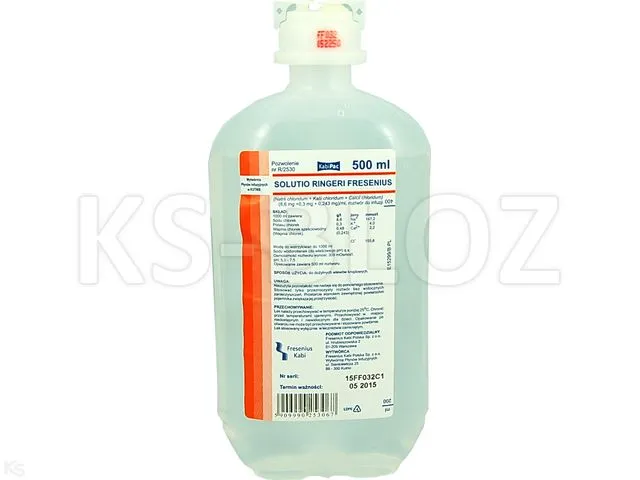
Instructions for Use
Ringer, infusion solution
Active substances: sodium chloride, potassium chloride and calcium chloride dihydrate
Please read the entire leaflet carefully before use, as it contains
important information for the patient.
- Keep this leaflet for future reference.
- If you have any doubts, consult your doctor or nurse.
- If the patient experiences any adverse reactions, including any not listed in this leaflet, inform your doctor or nurse immediately.
Leaflet contents:
- What Ringer is and what it is used for
- Important information before using Ringer
- How to use Ringer
- Possible side effects
- How to store Ringer
- Contents of the package and other information
1. What Ringer is and what it is used for
Ringer infusion solution is an aqueous solution containing the following substances:
- sodium chloride,
- potassium chloride,
- calcium chloride dihydrate.
Ringer infusion solution is used in the treatment of water loss from the body (dehydration) and
loss of chemical substances (e.g. due to excessive sweating, kidney dysfunction).
2. Important information before using Ringer
DO NOT use Ringer, infusion solution, if the patient has any of the following conditions:
- Premature infants and full-term newborns (aged 28 days or younger): the antibiotic named ceftriaxone must not be administered intravenously at the same time as this medicine;
- Excessive accumulation of fluids in the spaces around cells (extracellular fluid overload);
- Higher than normal blood volume in the vessels (hypervolemia);
- Severe kidney failure (when kidneys do not function properly and the patient requires dialysis);
- Uncompensated heart failure. This is heart failure that is not adequately treated and causes symptoms such as:
- Shortness of breath;
- Swelling around the ankles;
- Excessive fluid in the body caused by abnormally high salt levels in the blood (hypertonic dehydration);
- Potassium levels in the blood above normal (hyperkalemia);
- Sodium levels in the blood above normal (hypernatremia);
- Calcium levels in the blood above normal (hypercalcemia);
- Chloride levels in the blood above normal (hyperchloremia);
- Very high blood pressure (hypertension);
- Fluid accumulation under the skin affecting the entire body (generalized edema);
- Liver disease causing fluid accumulation in the abdominal cavity (cirrhosis with ascites);
- When taking cardiac glycosides (cardiotonic drugs) used in the treatment of heart failure, such as digitalis preparations or digoxin (see also "Other medicines and Ringer").
Warnings and precautions
Inform your doctor or nurse if you have or have had any of the following conditions or diseases:
- Respiratory failure (lung disease) (in the above-mentioned cases, special monitoring of the patient may be required);
- Any form of heart disease or impaired heart function;
- Impaired kidney function;
- High blood pressure (hypertension);
- Fluid accumulation under the skin, especially around the ankles (peripheral edema);
- Fluid accumulation in the lungs (pulmonary edema);
- High blood pressure during pregnancy (pre-eclampsia);
- A disease causing high levels of a hormone called aldosterone (aldosteronism);
- Any other conditions associated with sodium retention (when the body retains excessive amounts of sodium), such as steroid therapy (see also "Other medicines and Ringer");
- Disorders of cerebrospinal fluid volume (e.g., due to meningitis, intracranial hemorrhage, or brain injury);
- Conditions that may cause high vasopressin activity, a hormone regulating fluid balance in the body, for example:
- Acute and serious illness or trauma;
- Recent surgery;
- Brain disease;
- Taking certain medications. These conditions may increase the risk of low sodium levels in the blood and may cause headache, nausea, seizures, drowsiness, coma, or brain edema. Patients at higher risk of brain edema include:
- Children;
- Women (especially of childbearing age);
- A condition in which the adrenal glands produce insufficient levels of certain hormones (adrenal insufficiency);
- Loss of body water (acute dehydration, e.g., due to vomiting or diarrhea);
- Extensive tissue damage (e.g., after severe burns);
- Diseases associated with high levels of vitamin D (e.g., sarcoidosis, skin and internal organ disease);
- Diseases associated with kidney stones;
- The antibiotic named ceftriaxone must not be mixed or administered simultaneously with any solutions containing calcium when given intravenously. This medicine contains calcium. In patients older than 28 days of age, ceftriaxone and calcium-containing solutions may be administered sequentially, provided the doctor takes measures to avoid drug interactions. In adult patients or children with low blood volume, the doctor will avoid administering calcium and ceftriaxone one after the other;
- Heart failure.
Patients receiving this infusion will have blood and urine tests performed, and the doctor will also monitor:
- Fluid volume in the body;
- Vital signs;
- Levels of chemical substances such as sodium, potassium, calcium, and chlorides (plasma electrolytes).
Although Ringer infusion solution contains potassium and calcium, the amounts are not sufficient to:
- Maintain adequate levels of these chemical substances;
- Treat very low potassium levels (severe hypokalemia) or calcium levels (severe hypocalcemia) in plasma.
After correcting dehydration with Ringer, the doctor will use another infusion medicine to provide the body with adequate amounts of potassium and calcium. The doctor will also consider whether the patient is receiving parenteral nutrition (nutritional support administered via intravenous infusion). If Ringer is administered for a prolonged period, the patient will receive nutrients from an additional source.
Calcium chloride may be harmful if injected into body tissues. Therefore, Ringer solution must not be administered by intramuscular injection (intramuscular injection). The doctor will also take all necessary precautions to prevent leakage of the solution into tissues surrounding the vein.
Ringer infusion solution must not be administered through the same needle as blood transfusion. This may cause damage to red blood cells or their clumping.
Ringer and other medicines
Tell your doctor or nurse about all medicines you are currently taking, have recently taken, or plan to take.
It is especially important to inform your doctor about the use of:
- Ceftriaxone (an antibiotic) administered intravenously (see Warnings and precautions);
- Cardiac glycosides (cardiotonic drugs) such as digitalis preparations or digoxin used in the treatment of heart failure; they must not be used together with Ringer (see also section "Do not use Ringer if the patient has..."). The effect of these drugs may be enhanced by calcium, which may lead to life-threatening changes in heart rhythm.
The following medicines may cause accumulation of sodium and water in the body, leading to tissue swelling and increased blood pressure:
- Corticosteroids (anti-inflammatory drugs);
- Carbenoxolone (an anti-inflammatory drug used in the treatment of stomach ulcers).
The following medicines may increase potassium levels in the blood. This effect may be life-threatening. Increased potassium levels are more likely in patients with kidney disease:
- Potassium-sparing diuretics (certain diuretic drugs, e.g., amiloride, spironolactone, triamterene) (note that these drugs may be components of combination medicinal products);
- Angiotensin-converting enzyme inhibitors (ACE inhibitors) (used in the treatment of high blood pressure);
- Angiotensin II receptor antagonists (used in the treatment of high blood pressure);
- Tacrolimus (used to prevent transplant rejection and in the treatment of certain skin diseases);
- Cyclosporine (used to prevent transplant rejection).
Some medicines may increase the risk of adverse effects due to low sodium levels in the blood. These may include:
- Diuretics (water pills);
- Painkillers and/or anti-inflammatory drugs (also known as NSAIDs);
- Antipsychotic drugs;
- Drugs used in the treatment of depression (selective serotonin reuptake inhibitors);
- Drugs with morphine-like effects (opioids);
- Some drugs used in the treatment of epilepsy (antiepileptic drugs);
- A hormone called oxytocin (causes uterine contractions);
- Some drugs used in cancer treatment (chemotherapy);
- A cholesterol-lowering drug;
- Antidiabetic drugs.
Other medicines that may affect the action of Ringer or be affected by it include:
- Thiazide diuretics such as hydrochlorothiazide or chlorthalidone;
- Vitamin D.
Use of Ringer with food and drink
Ask your doctor which foods and drinks you may consume during treatment.
Pregnancy, breastfeeding, and fertility
If you are pregnant, breastfeeding, think you may be pregnant, or are planning to have a baby, consult your doctor or nurse before using this medicine.
Ringer infusion solution can be safely used during pregnancy or breastfeeding, provided that electrolyte and fluid balance is monitored by a doctor. Special attention should be paid when oxytocin is used during labor.
Calcium may pass to the baby through the placenta, and after birth, through breast milk. The doctor will monitor levels of chemical substances and fluid volume in the patient's body.
However, if it is necessary to add another medicine to the infusion solution during pregnancy, especially during labor or breastfeeding, you must:
- Consult your doctor;
- Read the package leaflet of the medicine to be added.
Driving and operating machinery
Ringer does not affect the ability to drive or operate machinery.
3. How to use Ringer
Ringer infusion solution is administered by a doctor or nurse. The doctor will decide the dose of the medicine to be used and when to administer it. This will depend on the patient's age, body weight, and the condition and reason for treatment. The amount of medicine given may also depend on other medicines the patient is taking.
DO NOT use Ringer if the solution contains visible particles or if the packaging is damaged in any way.
Ringer is usually administered through a plastic tube connected to a needle placed in a vein. This solution is typically given via a vein in the arm. However, the doctor may choose a different method of administration for the patient.
For patients receiving Ringer infusion solution, the doctor will perform blood tests to monitor:
- blood levels of sodium, potassium, calcium, and chloride;
- fluid balance.
Any unused portions of the solution must be discarded. Partially used bags of Ringer must NOT be reconnected.
Use of a higher than recommended dose of Ringer
If too much Ringer is administered (overdose) or the infusion is given too quickly, the following symptoms may occur:
- fluid and/or sodium overload, with excessive accumulation of fluid in tissues (edema) causing swelling;
- tingling sensation in the hands and feet (paresthesia);
- muscle weakness;
- inability to move (paralysis);
- irregular heartbeat (cardiac arrhythmia);
- heart block (very slow heartbeat);
- cardiac arrest (heart stops beating: life-threatening condition);
- confusion;
- loss of appetite (anorexia);
- nausea;
- vomiting;
- constipation;
- abdominal pain;
- psychiatric disturbances such as irritability or depression;
- excessive thirst (polydipsia);
- increased urine production (polyuria);
- kidney disease caused by calcium deposition in the kidneys (nephrocalcinosis);
- kidney stones;
- coma (loss of consciousness);
- chalky taste in the mouth;
- facial flushing (hot flushes with redness of the face);
- dilation of skin blood vessels (peripheral vasodilation);
- blood acidification (acidosis), causing fatigue, confusion, lethargy, and rapid breathing.
If any of these symptoms occur in the patient, the doctor in charge must be informed immediately. The infusion will be stopped, and the doctor will provide appropriate treatment depending on the symptoms.
If another medicine has been added to the Ringer infusion solution, it may also cause symptoms before signs of infusion overdose appear. Please read the patient information leaflet included in the packaging of any medicine administered together with Ringer to become familiar with the list of possible symptoms.
Stopping the use of Ringer
The doctor will decide when to discontinue the infusion.
If you have any further questions about the use of this medicine, please consult your doctor or nurse.
4. Possible adverse reactions
Like all medicines, this medicine can cause adverse reactions, although not everyone will experience them.
Adverse reactions are listed below according to their frequency of occurrence.
Very common (affecting more than 1 in 10 patients):
- changes in the concentrations of chemical substances in the blood (electrolyte disturbances).
In patients with heart disease or fluid in the lungs (pulmonary edema):
- excessive amount of fluid in the body (overhydration);
- heart failure.
Other
- reactions due to the method of administration:
- fever (febrile response);
- infections at the infusion site;
- pain or reaction at the site of administration (redness or swelling at the infusion site);
- irritation and inflammation of the vein into which the medicine was infused (phlebitis). This may cause redness, pain or burning sensation, and swelling along the course of the vein;
- formation of blood clots in veins (venous thrombosis) at the site of administration, causing pain, swelling or redness in the area of the clot;
- leakage of the solution into surrounding tissues (extravasation). This may lead to tissue damage and scarring;
- low sodium levels in the blood (hyponatremia);
- brain swelling, which may cause brain damage (cerebral edema).
If another medicine has been added to the infusion solution, this additional medicine may also cause adverse reactions. These depend on which medicine has been added. Please read the package leaflet included with the medicine to become familiar with the list of possible symptoms.
If any adverse reactions occur, including any possible adverse reactions not listed in this leaflet, please consult your doctor or nurse.
Reporting of adverse reactions
If any adverse reactions not listed in this leaflet occur, inform your doctor, pharmacist, or nurse. Adverse reactions can also be reported directly to the Department of Monitoring of Adverse Drug Reactions, Office for Registration of Medicinal Products, Medical Devices and Biocidal Products
Al. Jerozolimskie 181C
02-222 Warsaw
Tel.: + 48 22 49 21 301
Fax: + 48 22 49 21 309
Website: https://smz.ezdrowie.gov.pl
Adverse reactions may also be reported to the marketing authorization holder.
By reporting adverse reactions, additional information on the safety of this medicine can be collected.
5. How to store the Ringer medication
Keep this medicine out of sight and reach of children.
There are no special storage instructions for this medicine.
Do not use this medicine after the expiry date stated on the infusion bag. The expiry date refers to the last day of the stated month.
Do not use this medicine if visible particles are observed or if the packaging is in any way damaged.
6. Contents of the pack and other information
What Ringer contains
The active substances are:
- sodium chloride: 8.60 g per litre
- potassium chloride: 0.30 g per litre
- calcium chloride dihydrate: 0.33 g per litre
The other components are:
- water for injections
- sodium hydroxide
What Ringer looks like and contents of the pack
Ringer infusion solution is a clear, particle-free solution.
It is available in polyolefin/polyamide plastic bags (Viaflo). Each bag is enclosed in a sealed protective outer plastic packaging.
Bag sizes:
- 500 ml
- 1000 ml
The bags are supplied in cardboard packages. A cardboard box may contain the following quantities:
- 1 bag of 500 ml
- 20 bags of 500 ml
- 1 bag of 1000 ml
- 10 or 12 bags of 1000 ml
Not all pack sizes may be marketed.
Marketing Authorisation Holder and Manufacturers
Marketing Authorisation Holder:
Baxter Polska Sp. z o.o.
ul. Kruczkowskiego 8
00-380 Warszawa
Manufacturers:
Baxter S.A.
Boulevard René Branquart, 80
7860 Lessines
Belgium
Bieffe Medital S.A.
Ctra de Biescas, Senegüé
22666 Sabiñanigo (Huesca)
Spain
Baxter and Viaflo are trademarks of Baxter International Inc.
The following information is intended for healthcare professionals only:
Handling and Preparation
Use only if the solution is clear, free from visible particles, and the container is undamaged. Administer immediately after connecting the infusion set.
Do not remove from the protective overwrap until ready for use.
The inner bag ensures product sterility.
Plastic containers must not be used in series connection. Such use could result in air embolism due to residual air being drawn from the first container before infusion from the second container is completed. Applying additional pressure to intravenous solutions in flexible plastic containers to increase flow rate may cause air embolism if residual air has not been completely expelled from the container before administration.
Using infusion sets with air-venting capability, with the air vent in the open position, may lead to air embolism. Infusion sets with air-venting capability, with the vent open, must not be used with flexible plastic containers.
The solution must be administered using sterile equipment and aseptic techniques. The infusion set should be pre-filled with the solution to prevent air from entering the system.
Additional medications may be added to the solution before or during infusion via the medication addition port, which is self-sealing.
When adding another medication, isotonicity for parenteral administration must be confirmed. Each added medication must be carefully and thoroughly mixed under aseptic conditions.
Solutions containing added medications should be used immediately and must not be stored.
Adding other drugs or improper administration techniques may lead to febrile reactions due to the potential introduction of pyrogenic substances. If an adverse reaction occurs, infusion must be stopped immediately.
Discard after single use.
Discard any unused solution.
Do not reconnect partially used bags.
-
Opening
a. Remove the Viaflo bag from the protective overwrap immediately before use.
b. Firmly squeeze the inner bag to check for leakage. If leakage is detected, discard the bag, as the contents may no longer be sterile.
c. Check whether the solution is clear and free from insoluble particles. If the solution is not clear or contains insoluble particles, discard it. -
Preparation for Administration
Use sterile materials during preparation and administration.
a. Hang the bag on an infusion stand.
b. Remove the plastic cover from the administration port located at the bottom of the bag:- Hold the smaller wing on the neck of the port with one hand;
- Hold the larger wing on the cap with the other hand and twist;
- The cap will pop off.
c. Maintain aseptic technique when connecting the infusion set.
d. Connect the administration set according to the manufacturer’s instructions for connecting, priming, and administering the solution.
-
Adding Medications
Note: Added medications may be incompatible (see section 5 “Incompatibilities of Added Medications” below).Adding medications prior to administration
a. Disinfect the medication addition port.
b. Using a syringe with a 19G (1.10 mm) to 22G (0.70 mm) needle, insert the needle into the self-sealing medication addition port and inject the medication.
c. Mix the solution thoroughly. For viscous preparations such as potassium chloride, gently tap the ports while the bag is held with ports upward, then mix.
Note: Do not store bags containing added medications.Adding medications during administration
a. Close the clamp on the administration set.
b. Disinfect the medication addition port.
c. Using a sy游戏副本
This page has been machine-translated and may contain inaccuracies. The original data is available in the manufacturing country's language.
Last data check: June 04, 2026 · Data source: Rejestr Produktów Leczniczych (URPL)