Ricordo
Poland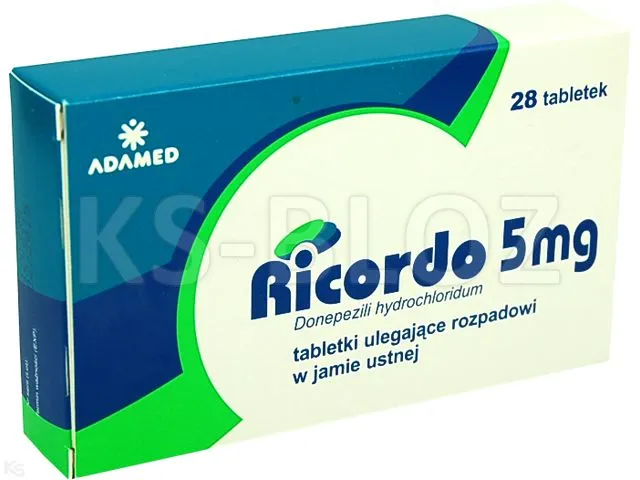
Table of Contents
Ricordo, 5 mg, orally disintegrating tablets
Ricordo, 10 mg, orally disintegrating tablets
donepezil hydrochloride
Please read this leaflet carefully before taking the medicine, as it contains
important information for the patient.
- Keep this leaflet, as you may need to read it again.
- If you have any further questions, please consult your doctor or pharmacist.
- This medicine has been prescribed for a specific individual. Do not pass it on to others. It may harm someone else, even if their symptoms are similar.
- If you experience any adverse effects, including any not listed in this leaflet, inform your doctor or pharmacist. See section 4.
Table of contents:
- What Ricordo is and what it is used for
- Important information before taking Ricordo
- How to take Ricordo
- Possible side effects
- How to store Ricordo
- Contents of the pack and other information
1. What Ricordo is and what it is used for
Ricordo (donepezil hydrochloride) belongs to a group of medicines called acetylcholinesterase inhibitors.
It is used to treat symptoms of dementia (cognitive impairments) in patients diagnosed with Alzheimer's disease (a chronic mental disorder) of mild to moderate severity.
It is intended for use in adults only.
2. Important information before taking Ricordo
When not to take Ricordo
- if the patient is allergic (hypersensitive) to donepezil hydrochloride, piperidine derivatives, or any of the other ingredients of the medicine (listed in section 6).
Warnings and precautions
Before starting Ricordo, discuss with your doctor or pharmacist if the patient:
- has ever had stomach or duodenal ulcers
- has ever had seizures or convulsions
- has or has had heart problems (such as irregular or very slow heartbeat, heart failure, myocardial infarction)
- has or has had a heart condition known as "prolonged QT interval" or has previously been diagnosed with a certain type of arrhythmia called Torsade de Pointes, or has a family history of "prolonged QT interval"
- has or has had low blood levels of magnesium or potassium
- has asthma (shortness of breath) or another chronic lung disease
- has ever had liver disease or hepatitis
- has difficulty urinating or has mild kidney disease
Ricordo and other medicines
Tell your doctor or pharmacist about all medicines the patient is currently taking or has recently taken, as well as any medicines they plan to take, including:
- medicines used to treat heart rhythm disorders, e.g. amiodarone, sotalol
- medicines used to treat depression, e.g. citalopram, escitalopram, amitriptyline, fluoxetine
- antipsychotic medicines, e.g. pimozide, sertindole, ziprasidone
- medicines used for bacterial infections, e.g. clarithromycin, erythromycin, levofloxacin, moxifloxacin, rifampicin
- antifungal medicines, e.g. ketoconazole
- other medicines used in Alzheimer's disease, e.g. galantamine
- painkillers or medicines used to treat arthritis, e.g. acetylsalicylic acid, non-steroidal anti-inflammatory drugs (NSAIDs) such as ibuprofen or sodium diclofenac
- anticholinergic medicines, e.g. tolterodine
- anticonvulsants (medicines used to prevent certain types of epileptic seizures), e.g. phenytoin, carbamazepine
- medicines used for heart conditions, e.g. quinidine, beta-blockers (propranolol and atenolol)
- muscle relaxants, e.g. diazepam, suxamethonium
- general anaesthetics
- over-the-counter medicines, e.g. herbal remedies
If the patient is scheduled for a surgical procedure requiring general anaesthesia, they must inform the attending doctor and anaesthesiologist about taking Ricordo. The medicine may affect the amount of anaesthetic required.
Ricordo can be used in patients with kidney disease and in those with mild or moderate liver impairment. However, patients with severe liver impairment should not take Ricordo. Immediately inform the doctor if the patient has kidney or liver disease.
Ricordo with food, drink and alcohol
Ricordo may be taken with a glass of water after the tablet has disintegrated on the tongue. Food does not affect the action of the medicine. During treatment with Ricordo, alcohol consumption should be limited, as alcohol may reduce the concentration of donepezil.
Pregnancy and breastfeeding
If the patient is pregnant or breastfeeding, suspects she may be pregnant, or is planning to become pregnant, she should consult her doctor or pharmacist before taking this medicine.
The use of donepezil hydrochloride during pregnancy is contraindicated. Women taking donepezil hydrochloride should not breastfeed.
Driving and operating machinery
Alzheimer's disease may impair the ability to drive or operate machinery; therefore, these activities should not be performed unless the doctor confirms it is safe.
This medicine may also cause fatigue, dizziness, and muscle cramps. If such symptoms occur, do not drive or operate machinery.
Ricordo contains aspartame
Ricordo 5 mg contains 5 mg of aspartame per orally disintegrating tablet.
Ricordo 10 mg contains 10 mg of aspartame per orally disintegrating tablet.
Aspartame is a source of phenylalanine. It may be harmful to patients with phenylketonuria. This is a rare genetic disorder in which phenylalanine accumulates in the body due to improper excretion.
Ricordo contains lactose
If the patient has previously been diagnosed with intolerance to certain sugars, they should consult their doctor before taking this medicine.
Ricordo contains sodium
The medicine contains less than 1 mmol (23 mg) of sodium per tablet, meaning it is considered "sodium-free".
3. How to take Ricordo
This medicine should always be taken exactly as prescribed by the doctor or pharmacist. In case of doubt, consult your doctor or pharmacist.
The recommended dose is 5 mg once daily at bedtime. After one month, the prescribing doctor may increase the dose to 10 mg once daily at bedtime.
The maximum recommended dose is 10 mg once daily at bedtime.
Ricordo should be taken orally with water, in the evening, just before sleep. If the patient experiences unusual dreams, nightmares, or difficulty falling asleep (see section 4), the doctor may recommend taking Ricordo in the morning instead.
Place the tablet on the tongue and allow it to disintegrate, then swallow it with or without water, depending on patient preference.
The doctor may adjust the strength of the tablets taken by the patient depending on the duration of treatment. Always follow the doctor's or pharmacist's instructions regarding how and when to take the medicine. Do not change the dose independently without consulting your doctor. Your doctor or pharmacist will advise how long treatment should continue. The patient should periodically consult the doctor to reassess symptoms and treatment progress.
Taking more Ricordo than recommended
Do not take more than one tablet per day. If an overdose is taken, symptoms may include: nausea, vomiting, salivation, sweating, slowed heart rate, low blood pressure (dizziness or lightheadedness when standing), breathing difficulties, collapse, and seizures. In such a case, contact your doctor immediately or go to the nearest hospital emergency department. Always bring the medicine and its packaging to the hospital so the doctor knows which medicine has been taken.
If you miss a dose of Ricordo
If a dose is missed, take one tablet the next day at the usual time. If treatment has been interrupted for more than one week, consult your doctor before resuming. Do not take a double dose to make up for a missed dose.
Stopping Ricordo treatment
Do not stop taking the medicine unless instructed by your doctor.
If you have any further questions about the use of this medicine, consult your doctor or pharmacist.
4. Possible adverse reactions
Like all medicines, Ricordo may cause adverse reactions, although not everyone experiences them.
In most cases, adverse reactions resolve without the need to discontinue treatment.
You should inform your doctor if any of the listed adverse reactions occur and if they are troublesome for the patient.
The following adverse reactions have been reported in patients taking donepezil:
Inform your doctor if any of the following symptoms occur during treatment with Ricordo.
Serious adverse reactions:
If any of the serious adverse reactions described below occur, you should immediately inform your doctor. Immediate medical treatment may be necessary.
- Rapid or irregular heartbeat, fainting – these may be symptoms of a potentially life-threatening condition called Torsade de Pointes (frequency unknown: cannot be estimated based on available data)
- Liver damage, e.g. hepatitis. Symptoms of hepatitis include nausea, loss of appetite, malaise, fever, itching, yellowing of the skin and eyes (jaundice), and dark-coloured urine (frequency: rare, may occur in less than 1 in 1,000 patients)
- Gastric or duodenal ulcers. Symptoms of peptic ulcer disease include abdominal pain and discomfort (dyspepsia) felt between the navel and the breastbone (frequency: uncommon, may occur in less than 1 in 100 patients)
- Bleeding from the stomach or intestines. This may present as black, tarry stools or rectal bleeding (likely to occur in less than 1 in 100 patients)
- Seizures or convulsions (frequency: uncommon, may occur in less than 1 in 100 patients)
- Fever and muscle stiffness, excessive sweating, or disturbances in consciousness (a condition known as "neuroleptic malignant syndrome") (frequency: very rare, may occur in less than 1 in 10,000 patients)
- Muscle weakness, tenderness or pain, especially when accompanied by malaise, high fever, or dark urine. This may be due to abnormal muscle breakdown, which can be life-threatening and lead to kidney dysfunction (a condition called rhabdomyolysis) (frequency: very rare, may occur in less than 1 in 10,000 patients)
Very common (may occur in more than 1 in 10 patients):
- Diarrhoea
- Nausea, vomiting
- Headache
Common (may occur in up to 1 in 10 patients):
- Cold symptoms
- Loss of appetite
- Hallucinations (seeing or hearing things that are not real)
- Vomiting
- Restlessness
- Aggressive behaviour
- Fainting
- Dizziness
- Insomnia (difficulty falling asleep)
- Accidents (patients may be more prone to falls and accidental injuries)
- Dyspepsia
- Urticaria
- Itching
- Muscle cramps
- Urinary incontinence
- Fatigue
- Pain
Uncommon (may occur in up to 1 in 100 patients):
- Slow heart rate
- Slight increase in blood creatine kinase activity
Rare (may occur in up to 1 in 1,000 patients):
- Muscle stiffness or uncontrolled muscle movements, particularly in the face and tongue, but also in the limbs
- Sinoatrial block, atrioventricular block
Frequency not known (cannot be estimated from available data):
- Changes in heart function visible on ECG, known as "prolongation of QT interval"
- Increased libido, hypersexuality
- Pisa syndrome (characterized by involuntary muscle contractions causing abnormal twisting of the body and head to one side)
Reporting of adverse reactions
If any adverse reactions occur, including any not listed in this leaflet, inform your doctor, pharmacist, or nurse. Adverse reactions can also be reported directly to the Department of Monitoring Adverse Drug Reactions at the Office for Registration of Medicinal Products, Medical Devices and Biocidal Products,
Al. Jerozolimskie 181C,
02-222 Warsaw,
Phone: 22 49-21-301,
Fax: 22 49-21-309,
Website: https://smz.ezdrowie.gov.pl
Reporting adverse reactions helps to provide more information on the safety of the medicine.
Adverse reactions can also be reported to the responsible entity.
5. How to store Ricordo
Keep the medicine out of the reach and sight of children.
Do not use Ricordo after the expiry date stated on the blister pack and the outer cardboard
box.
The expiry date refers to the last day of the specified month.
No special storage instructions are required.
Medicines must not be disposed of via wastewater or household waste. Ask your
pharmacist what to do with medicines no longer required. This will help protect the
environment.
6. Contents of the package and other information
What Ricordo contains
The active substance is donepezil hydrochloride.
Each tablet contains 5 mg or 10 mg of donepezil hydrochloride.
Other ingredients are:
Potassium polacrilin, microcrystalline cellulose, monohydrate lactose (spray-dried), anhydrous sodium citrate, aspartame (E 951), sodium croscarmellose, colloidal anhydrous silica, magnesium stearate, hydrochloric acid for pH adjustment.
What Ricordo looks like and contents of the pack
Orally disintegrating tablets 5 mg: white or almost white, round, flat tablets with bevelled edges, embossed with "5" on one side and smooth on the other.
Orally disintegrating tablets 10 mg: white or almost white, round, flat tablets with bevelled edges, embossed with "10" on one side and smooth on the other.
Packaging:
PVC/Aclar/Aluminium or Aluminium/Aluminium blister containing 14 tablets in a cardboard box.
Ricordo, 5 mg: The package contains 28 tablets.
Ricordo, 10 mg: The package contains 28 or 56 tablets.
Marketing Authorisation Holder
Adamed Pharma S.A.
Pieńków, ul. M. Adamkiewicza 6A
05-152 Czosnów
Manufacturer
Genepharm S.A.
18 km Marathonos Avenue,
Pallini 15351, Attikis, Greece
Adamed Pharma S.A.
Pieńków, ul. M. Adamkiewicza 6A
05-152 Czosnów
This medicinal product is authorised in the European Economic Area member states under the following names:
PL: Ricordo